Christian woman finds a way to discuss her faith with non-Christians

I found an interesting article where a Christian woman explains how she used to share her testimony with non-Christians. But that wasn’t working. So she decided to try something different.

She writes:

I’ll never forget the first time I shared my personal testimony with a non-Christian.

When the opportunity arose and I shared my story with an unbelieving friend, she replied, “That’s so cool. I’m so happy you found something that works for you.”

For me?

“It’s not about what works for me,” I said, trying to hide my discouragement. “It’s about what’s true for everyone.”

“That doesn’t make sense,” she responded. “That’s your experience, not mine. I had a similar revelation when I realized I could leave the church, and I’ve become a better person for my decision. Just as you were freed from your heaviest burdens by finding God, I was freed from mine by leaving God behind.”

I was devastated but I chalked it up to my friend’s hardheartedness. I decided to shake the dust off my feet and look forward to the next opportunity.

But time after time of sharing my testimony resulted in similar responses. People expressed enthusiasm that I was happy, that Christianity worked for me, and that I had “found my niche.” Yet no one considered my experience as anything more than just that—my own personal experience.

[…]I had been taught that sharing what God had done in my life was the ideal way to witness to non-Christians. A personal testimony was interesting yet non-confrontational, compelling but inoffensive. And yet, despite having shared my testimony with dozens of unbelievers, not a single person felt challenged to consider the truth claims of Christianity.

She noticed that her approach wasn’t actually in the Bible. There was a different approach being demonstrated by Jesus, and later by his disciples.

She writes:

When Jesus called his first disciples, he taught truth and provided evidence (miracles) to support his claims, then he asked people to follow him (Luke 5:1–11). In fact, this was his method whenever he went into new regions (see Luke 4:14–44; John 4:7–26). People decided to follow Jesus not on blind faith or a subjective feeling, but based on the evidence they had seen and heard.[i]

Jesus also used evidence to assuage the doubts of even those who had been with him a long time. John the Baptist was Jesus’ cousin, who leapt in the womb during Mary’s visit (Luke 1:39–45), baptized Jesus in the Jordan River, heard God’s voice from heaven, and saw the Holy Spirit descend on Jesus in bodily form like a dove (Luke 3:21–22). Yet when John experienced unexpected suffering, he began to doubt.

Jesus didn’t respond as many do today, by insisting that John “just believe” or “have faith” or “prayer harder.” Rather, he responded with more evidence, saying, “Go and tell John what you hear and see: the blind receive their sight and the lame walk, lepers are cleansed and the deaf hear, and the dead are raised up, and the poor have good news preached to them. And blessed is the one who is not offended by me.” (Matt. 11:2–6).

[…]At Pentecost, the apostle Peter offered signs and wonders, fulfilled prophecy, and relayed eyewitness testimony to persuade people from all over the Roman Empire that the most reasonable explanation for what they were seeing was not morning drunkenness, but a risen Messiah (Acts 2:1–41).

On his missionary journeys, the apostle Paul reasoned with the Jews from the Scriptures, explaining and proving that Jesus was the Messiah who needed to suffer and rise from the dead (Acts 17:1–3, 17). And he reasoned with the Gentiles from outside the Scriptures, making a case with their own accepted beliefs to convince them (Acts 17:17–34).

In fact, in describing his mission, Paul told the Philippians, “I am put here for the defense of the gospel” (1:7, 16). This word translated defense is the same word from which we get our English word “apologetics,” meaning to make reasoned arguments or to provide evidence as justification. Using this same word, Peter commanded believers to “always [be] prepared to make a defense to anyone who asks you for a reason for the hope that is in you”(1 Pet. 3:15).

So, she decided to dump the testimony approach, and try the Biblical approach. But she had to change it a little bit, since she couldn’t perform miracles herself:

We are not eyewitnesses to Jesus’s life and resurrection, but we have the accounts of those who were. We don’t typically see miracles, but we have millennia of biblical scholarship and archaeology that provide reasons to believe the accounts are trustworthy. We don’t often hear God speaking audibly or see him parting seas, but we have significant scientific evidence that shows the universe had a beginning, and millennia of observation to confirm the scientific principle that everything that begins to exist has a cause.

I think a lot of Christians never move on from approach she described that wasn’t getting results. And there’s a reason for that – studying evidence is hard work. But I can tell you from my experience as a software engineer, there is no better way to convince other people to adopt your view than to show them working code that produces results. If they have a prototype, they will adopt your design. Similarly with Christianity. If you have evidence, then you will be persuasive.

When talking about spiritual things with non-Christians, always remember the joke about the two men walking in the woods who meet a bear. One man starts to put on his running shoes. The other man says “what are you doing? you can’t outrun a bear!” And the first man says “I don’t have to. I only have to outrun you”. It’s the same with apologetics. You don’t have to be William Lane Craig to talk about your faith to non-Christians. You just have to know more than your non-Christian opponent knows about evidence.

The way things are going these days with the public schools and the mainstream news media, this is actually pretty easy to do. One or two introductory books on the origin of the universe, the fine-tuning for intelligent life, the origin of biological information, the origin of body plans, the historical reliability of the New Testament, the minimal facts case for the resurrection, etc. will do the job. You might need another one on philosophical challenges like evil, suffering, divine hiddenness, etc. But we’re talking no more than 5 books, and you’ll be effective in the vast majority of your conversations. If you can only get one book, I like Sean McDowell and Jonathan Morrow’s “Is God Just a Human Invention?” best.
Why do Americans own so many guns?

I’m not originally from the United States, and when I go back home to visit, one of the questions that I get asked a lot is “why do Americans own so many guns?” So in this post, I wanted to look at some stories from the United States about crime and gun violence and see why so many Americans own guns.

My favorite writer on these issues is Amy Swearer, who writes for the Daily Signal. I find that her articles are useful for explaining to people who don’t own guns, or want to ban guns, why it might be a good idea to own a gun, and to know how to use it.

The first article to see is a review of 14 examples of defensive gun use from December 2021.

She writes:

As 2022 begins, cities across the nation are experiencing unprecedented spikes in serious, violent crimes. Meanwhile, many public officials continue to push overly lenient and nonsensical prosecution policies that further endanger the public and embolden criminals.

Americans are becoming increasingly aware of just how important the right to keep and bear arms can be, especially when the government cannot be counted upon to protect them from violent threats.

Almost every major study on the issue has found that Americans use their firearms in self-defense between 500,000 and 3 million times annually, according to a 2013 report by the Centers for Disease Control and Prevention.

She has 14 examples in the article, and here are a few of them:

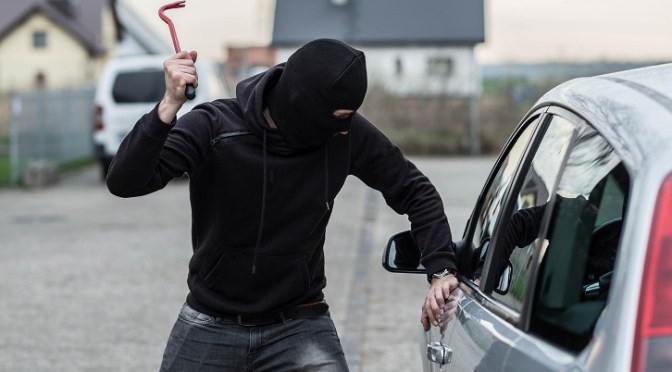
Dec. 12, Fairfax, Virginia: Police said a burglar armed with a knife entered a home through an unlocked door and refused to leave after residents confronted him. When the burglar lunged toward one resident with the knife, the resident—armed with a gun—fired a warning shot into the floor. The resident then held the burglar at gunpoint until police arrived.

Dec. 15, Lakeland, Florida: A homeowner shot an intruder who used a flowerpot to smash through a glass door. Police arrested the intruder, who had an extensive criminal history including 14 felony convictions. The homeowner “did exactly what he had a right to do,” Sheriff Grady Judd said in a press release. “I commend him for protecting himself and defending his home.”

Dec. 18, Cairo, Georgia: An elderly woman, awakened by noise in the middle of the night, confronted several armed intruders who had broken in. At least one intruder opened fire and wounded the woman, but she shot back with her own gun, prompting the intruders to flee. Police later arrested seven suspects in the home invasion, including five under age 16.

Dec. 22, Abbottstown, Pennsylvania: A disturbed man wearing nothing but a shirt broke into an elderly couple’s home and violently assaulted them, police said. The woman’s husband was able to grab a handgun from the bedroom and fatally shot the attacker as he beat her. The husband and wife suffered serious injuries, but were expected to recover.

Like Amy says, if you live in a blue state, or even in a blue city in a red state, then you can’t count on law enforcement to protect you. They are too busy being politically correct, or trampling unarmed peaceful protesters with horses. You have to be able to defend yourself, and your loved ones.

And here are some more from January 2022:

Just one month into 2022, it became clear that the new year hasn’t brought relief from the unprecedented spikes in violent crime in many cities since the summer of 2020.

Take Philadelphia, for example. With 140 carjackings reported through the first five weeks of 2022, the city is well on pace to surpass last year’s total of 757 carjackings.

Portland, Oregon, meanwhile, experienced more homicides and shootings in January 2022 than in January 2021—doubly concerning, since 2021 was by far the most violent year in Portland’s history.

And here are a few of the stories:

Jan. 13, Philadelphia: After a good Samaritan intervened to help a woman who was being harassed on a commuter train, police said, the harasser followed him off the train and attacked him with a knife. However, the good Samaritan had a concealed carry permit and happened to be armed that day. He shot and wounded his assailant.

Jan. 27, Fort Worth, Texas: An armed carjacker opened fire on a driver, wounding him. But the driver was able to draw his own gun and shoot back, potentially saving his life and sending the carjacker fleeing. The  car was recovered a short time later after the carjacker, wounded and in serious condition, stopped to ask for help.

The  one about the Good Samaritan was interesting. One of the reasons why armed men are inclined to help women is because they know that if anything happens, they have a weapon to fight back with. So many young, unmarried women voters want to disarm law-abiding men. But do they realize that if they do that, then only the criminals will have weapons? Do these progressive women think that unarmed men are going to stand up for them against threats?

The peer-reviewed research

Whenever I get into discussions about gun control, I always mention two academic books by John R. Lott and Joyce Lee Malcolm.

The book by economist John Lott, linked above, compares the crime rates of all U.S. states that have enacted concealed carry laws, and concludes that violent crime rates dropped after law-abiding citizens were allowed to carry legally-owned firearms. That’s the mirror image of Dr. Malcolm’s Harvard study, which shows that the 1997 UK gun ban caused violent crime rates to MORE THAN DOUBLE in the four years following the ban. But both studies affirm the same conclusion – more legal firearm ownership means less crime.

One of the common mistakes I see anti-gun advocates making is to use the metric of all “gun-related deaths”. First of all, this completely ignores the effects of hand gun ownership on violent crime, as we’ve seen. Take away the guns from law-abiding people and violent crime skyrockets. But using the “gun-related deaths” number is especially wrong, because it includes suicides committed with guns. This is the majority (about two thirds) of gun related deaths, even in a country like America that has a massive inner-city gun violence problem caused by the epidemic of single motherhood by choice. If you take out the gun-related SUICIDES, then the actual number of gun homicides has decreased as gun ownership has grown.

For a couple of useful graphs related to this point, check out this post over at the American Enterprise Institute.

Global warming activists attacked fracking and nuclear energy, funding Putin’s invasion of Ukraine

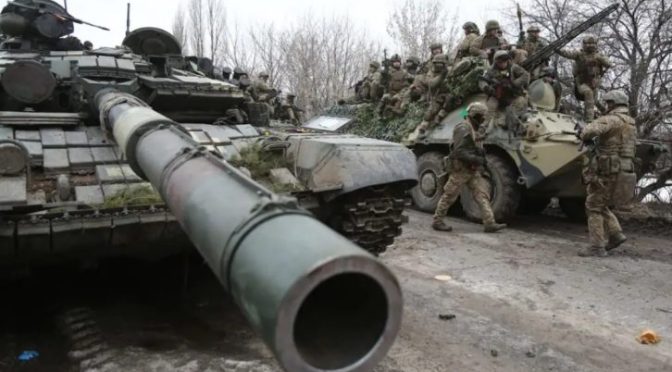
I’m seeing a lot of people on the secular left posting Ukraine flags on social media and “feeling sad” about getting the exact result that they voted for. How does Putin have the money for this invasion? He’s been selling oil and gas to Canada, the United States, and especially to Europe. Those countries curtailed their own energy production in response to global warming activists.

This Twitter thread featuring nuclear-advocate Michael Schellenberger explains:

After Russia invaded, a few people demanded that Europe stop buying its natural gas, but European utilities snatched up long-term Russian contracts, and the White House said, “Our sanctions are not designed to cause any disruption to the flow of energy from Russia to the world.”

People who believe that nothing could have been done to prevent Russia from invading Ukraine thus imply that Russia’s chokehold over European energy supplies was inevitable, but it wasn’t. Europe could have easily increased, rather than closed, nuclear plants and natural gas.

Britain, too:

Britain could have increased fracking for natural gas but didn’t. Why? Because Russia pumped $95M into anti-fracking advocacy. Noted the head of NATO, Russia “engaged actively with environmental organizations… to maintain Europe’s dependence on Russian gas”.

Russia was paying global warming alarmists to attack natural gas (fracking) and nuclear power? Yes! That’s how he was able to get the money for his invasion of Ukraine. Western democracies paid him to do it, rather than develop our own energy sources. That’s what the global warming alarmists insisted on.

Do you remember how our mainstream news media made such a big deal out of this no-credential angry child “Greta Thunberg”? Well, she had a huge impact helping Russia to get its army funded:

Europe could have kept operating and expanded its nuclear power plants but instead, under pressure from climate activists, including Greta Thunberg, shut them down.

Climate activists even forced nuclear-heavy France to throttle its nuclear plants so order to use more industrial wind energy. The result was significant outages over the last few weeks at a time when French nuclear plants were needed most.

The big banks joined up with global warming activists and left-wing politicians:

Efforts to make Europe less energy independent, and thus more dependent on Russian gas imports, were led by powerful banking interests in coordination with climate activists and center-Left parties around the world.

So we are now seeing increased prices at the pump because oil and gas are scarce. Who will pay for this? You will. You will pay at the pump, and you will pay through your utility bill:

Biden and Democrats would like to see the whole of the US follow the California model

California saw electricity prices rise 7x more than the rest of the US over the last decade, is experiencing blackouts, and intends to shut down its last nuclear plant.

And the Biden administration hasn’t learned a thing. They are doubling down on shutting down pipelines and denying drilling permits. MSN reported this last week:

The Biden administration has once again put a pause on new leases and permits for federal oil and gas drilling after a judge blocked the administration from using a metric that estimates the societal cost of carbon emissions.

Earlier this month, US District Judge James Cain of the Western District of Louisiana issued an injunction preventing the Biden administration from using what’s known as the “social cost of carbon” in decisions around oil and gas drilling on public land, or in rules governing fossil fuel emissions. The ruling has consequences for a range of Biden administration actions on climate change, but especially on the Interior Department’s federal oil and gas leasing program.

Democrat voters are fine with this – they voted for it, even after Trump lowered gas prices and made us energy independent. We’ll see if they’ve learned anything in the November 2022 mid-terms.

I just want everyone to understand what is really going on when you see all these left-wing global warming alarmists suddenly concerned and sad about Ukraine. You can’t have it both ways. If you vote to restrict natural gas (fracking) and nuclear power at home, then you are necessarily voting for more money for Russia – and Russia’s powerful armed forces. Canada wants to fund Russia. The European Union wants to fund Russia. And America wants to fund Russia. These weak Western countries don’t want to develop their own energy at home. They want to pay Russia to develop their energy. And now we know the price of their naivete.