
What criteria do historians use to get to the minimal facts about the historical Jesus?

Sherlock Holmes and John Watson: let's take a look at the facts
Sherlock Holmes and John Watson: let’s take a look at the facts

Have you ever heard Gary Habermas, Michael Licona or William Lane Craig defend the resurrection of Jesus in a debate by saying that the resurrection is the best explanation for the “minimal facts” about Jesus? The lists of minimal facts that they use are typically agreed to by their opponents during the debates. Minimal facts are the parts of the New Testament that meet a set of strict historical criteria. These are the facts that skeptical historians agree with, totally apart from any religious beliefs.

So what are the criteria that skeptical historians use to derive a list of minimal facts about Jesus?

Dr. Craig explains them in this article.

Excerpt:

The other way, more influential in contemporary New Testament scholarship, is to establish specific facts about Jesus without assuming the general reliability of the Gospels. The key here are the so-called “Criteria of Authenticity” which enable us to establish specific sayings or events in Jesus’ life as historical. Scholars involved in the quest of the historical Jesus have enunciated a number of these critieria for detecting historically authentic features of Jesus, such as dissimilarity to Christian teaching, multiple attestation, linguistic semitisms, traces of Palestinian milieu, retention of embarrassing material, coherence with other authentic material, and so forth.

It is somewhat misleading to call these “criteria,” for they aim at stating sufficient, not necessary, conditions of historicity. This is easy to see: suppose a saying is multiply attested and dissimilar but not embarrassing. If embarrassment were a necessary condition of authenticity, then the saying would have to be deemed inauthentic, which is wrong-headed, since its multiple attestation and dissimilarity are sufficient for authenticity. Of course, the criteria are defeasible, meaning that they are not infallible guides to authenticity. They might be better called “Indications of Authenticity” or “Signs of Credibility.”

In point of fact, what the criteria really amount to are statements about the effect of certain types of evidence upon the probability of various sayings or events in Jesus’ life. For some saying or event S and evidence of a certain type E, the criteria would state that, all things being equal, the probability of S given E is greater than the probability of S on our background knowledge alone. So, for example, all else being equal, the probability of some event or saying is greater given its multiple attestation than it would have been without it.

What are some of the factors that might serve the role of E in increasing the probability of some saying or event S? The following are some of the most important:

(1) Historical congruence: S fits in with known historical facts concerning the context in which S is said to have occurred.

(2) Independent, early attestation: S appears in multiple sources which are near to the time at which S is alleged to have occurred and which depend neither upon each other nor a common source.

(3) Embarrassment: S is awkward or counter-productive for the persons who serve as the source of information for S.

(4) Dissimilarity: S is unlike antecedent Jewish thought-forms and/or unlike subsequent Christian thought-forms.

(5) Semitisms: traces in the narrative of Aramaic or Hebrew linguistic forms.

(6) Coherence: S is consistent with already established facts about Jesus.

For a good discussion of these factors see Robert Stein, “The ‘Criteria’ for Authenticity,” in Gospel Perspectives I, ed. R. T. France and David Wenham (Sheffield, England: JSOT Press, 1980), pp. 225-63.

Notice that these “criteria” do not presuppose the general reliability of the Gospels. Rather they focus on a particular saying or event and give evidence for thinking that specific element of Jesus’ life to be historical, regardless of the general reliability of the document in which the particular saying or event is reported. These same “criteria” are thus applicable to reports of Jesus found in the apocryphal Gospels, or rabbinical writings, or even the Qur’an. Of course, if the Gospels can be shown to be generally reliable documents, so much the better! But the “criteria” do not depend on any such presupposition. They serve to help spot historical kernels even in the midst of historical chaff. Thus we need not concern ourselves with defending the Gospels’ every claim attributed to Jesus in the gospels; the question will be whether we can establish enough about Jesus to make faith in him reasonable.

And you can see Dr. Craig using these criteria to defend minimal facts in his debates. For example, in his debate with Ehrman, he alludes to the criteria when making his case for the empty tomb.

Here, he uses multiple attestation and the criteria of embarrassment:

Among the reasons which have led most scholars to this conclusion are the following:

1. The empty tomb is also multiply attested by independent, early sources.

Mark’s source didn’t end with the burial, but with the story of the empty tomb, which is tied to the burial story verbally and grammatically. Moreover, Matthew and John have independent sources about the empty tomb; it’s also mentioned in the sermons in the Acts of the Apostles (2.29; 13.36); and it’s implied by Paul in his first letter to the Corinthian church (I Cor. 15.4). Thus, we have again multiple, early, independent attestation of the fact of the empty tomb.

2. The tomb was discovered empty by women.

In patriarchal Jewish society the testimony of women was not highly regarded. In fact, the Jewish historian Josephus says that women weren’t even permitted to serve as witnesses in a Jewish court of law. Now in light of this fact, how remarkable it is that it is women who are the discoverers of Jesus’ empty tomb. Any later legendary account would certainly have made male disciples like Peter and John discover the empty tomb. The fact that it is women, rather than men, who are the discoverers of the empty tomb is best explained by the fact that they were the chief witnesses to the fact of the empty tomb, and the Gospel writers faithfully record what, for them, was an awkward and embarrassing fact.

There are actually a few more reasons for believing in the empty tomb that he doesn’t go into in the debate, but you can find them in his written work. For example, in his essay on Gerd Ludemann’s “vision” hypothesis. That essay covers the reasons for all four of his minimal facts.

So, if you are going to talk about the resurrection with a skeptic, you don’t want to invoke the Bible as some sort of inerrant/inspired Holy Book.

Try this approach instead:

  1. Explain the criteria that historians use to get their lists of minimal facts
  2. Explain your list of minimal facts
  3. Defend your list of minimal facts using the criteria
  4. Cite skeptics who admit to each of your minimal facts, to show that they are widely accepted
  5. List some parts of the Bible that don’t pass the criteria (e.g. – guard at the tomb, Matthew earthquake)
  6. Explain why those parts don’t pass the criteria, and explain that they are not part of your case
  7. Challenge your opponent to either deny some or all the facts, or propose a naturalistic alternative that explains the facts better than the resurrection
  8. Don’t let your opponent attack any of your minimal facts by attacking other parts of the Bible (e.g. – the number of angels being one or two, etc.)

And remember that there is no good case for the resurrection that does not make heavy use of the early creed in 1 Corinthians 15:3-8. You have to use that – it’s the law.

Back to the minimal facts criteria. The best essay on the minimal facts criteria that I’ve read is the one by Robert H. Stein in “Contending with Christianity’s Critics“. It’s a good short essay that goes over all the historical criteria that are used to derive the short list of facts from which we infer the conclusion “God raised Jesus from the dead”. That whole book is really very, very good.
NYPD cop murdered by criminal who was released early

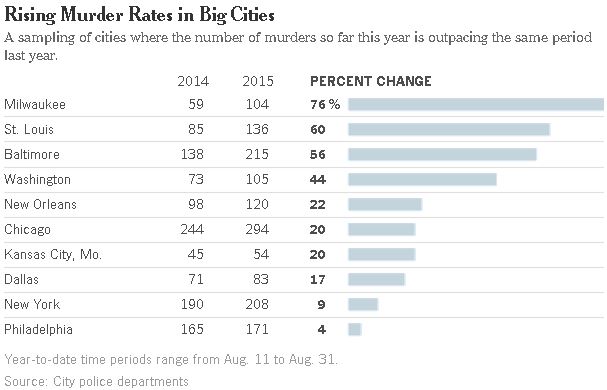
Crime rates in major cities, all Democrat-run

I keep hearing all these compassionate Democrats complaining that too many people are behind bars.  The solution? Release lots and lots of prisoners.

The leftist Washington Post reports on efforts by the Obama administration to release harmless drug offenders at the federal level:

The Justice Department is set to release about 6,000 inmates early from prison — the largest one-time release of federal prisoners — in an effort to reduce overcrowding and provide relief to drug offenders who received harsh sentences over the past three decades, according to U.S. officials.

The inmates from federal prisons nationwide will be set free by the department’s Bureau of Prisons between Oct. 30 and Nov. 2. About two-thirds of them will go to halfway houses and home confinement before being put on supervised release. About one-third are foreign citizens who will be quickly deported, officials said.

[…][Democrat Attorney General Eric]Holder supported the change, but he proposed more restrictive criteria that would exclude people who had used weapons or had significant criminal histories. But the Sentencing Commission decided to leave the decisions to individual judges.

It always seems to be the Democrats who want to release criminals and confiscate the guns of law-abiding civilians. The Republicans always want to put criminals in jail and let law-abiding civilians defend themselves.

Anyway, let’s see what happened in New York where one of these harmless drug-offenders was allowed to go free, thanks to the rules made by one of the most Democrat-dominated cities in the United States.

The Washington Times reports:

The suspect in the fatal shooting of a New York police officer was only on the street because he was not sent to jail earlier this year for dealing crack as part of a diversion program for drug offenders.

Tyrone Howard, 30, had a lengthy rap sheet featuring 28 arrests since age 13 when he pleaded guilty again in May to selling crack at an East Harlem public-housing complex. He was sentenced to two years in jail but rather than being sent behind bars, he was ordered into an outpatient drug-rehabilitation program for that period.

The diversion program is designed to reduce overcrowding in the city’s jails, and courts in New York and across the country are increasingly turning to rehabilitation and treatment options rather than incarceration for drug offenses.

[…][A] spokesman for the New York state court system said that Howard was an addict and thus should not be in jail for drug offenses.

“Actually, he’s the perfect candidate in many ways” for diversion programs, state court system spokesman David Bookstaver told The Associated Press in an interview.

[…]According to NYPD Chief of Department James O’Neill, Howard was wanted in connection with a gang-related shooting in Manhattan in September but police couldn’t find him for arrest — even though he was on supervised release for two years.Howard didn’t show up for status meetings and would not be home when investigators made repeated efforts to find him there.

An arrest warrant was issued for Howard on Sept. 21.

Howard’s long criminal record included two terms in state prison since 2007 on drug-related charges. He also was arrested in connection with a 2009 shooting, but the AP said the disposition of that case was unclear.

OK so that’s one measly case. Let’s see the aggregate numbers so we can make a real conclusion here.

This is from the radically leftist BBC:

Nearly half of prisoners released from prison go on to commit further offences, government figures indicate.

The percentage re-offending went up for the second year on a row to 49.4% – but is lower than in 2002 when 55% of prisoners committed further crimes.

The statistics show re-offending rates by women went up by four times that for men – by 16.4%, compared with 4.2%.

The National Audit Office recently found reoffending in England and Wales costs the taxpayer up to £10bn a year.

The Ministry of Justice (MoJ) assesses re-offending rates by measuring the number of further offences committed by a group of criminals in England and Wales within a year of their release.

Those let out in the first three months of 2008 committed 37,178 offences within a year.

Shadow justice secretary Dominic Grieve said the prison system was “dilapidated and overcrowded” and was “failing to turn offenders around”.

He said: “Half of prisoners commit another recordable offence within a year of release.

If you don’t believe the BBC, believe the peer-reviewed academic study:

This study explores the recidivism outcomes of 1,804 serious and violent delinquents sentenced under a blended sentencing statute and released early by juvenile correctional authorities without continuing their blended sentence in adult prisons. Released at an average age of 19, roughly 50% of releases were rearrested for a felony-level offense postrelease. The remaining 50% of all releases did not incur a postrelease arrest or were rearrested for an offense no higher than a misdemeanor. Measures for assaultive institutional misconduct and prior delinquent adjudications were predictive of recidivism in models examining rearrest for any offense and rearrest for a felony only. Substance abusers, gang members, those with a gang-related commitment offense, and homicide-related state commitments were significantly more likely to be rearrested for any offense postrelease. This article ends with a discussion of implications specific to this high risk cohort of released delinquent offenders.

If you really want to do something about the crime rate, then government needs to promote natural marriage and stability during parenting. That’s not what selfish adults want to hear, but it is what works to lower crime rates. Instead of paying women to have fatherless babies outside of marriage, we should pay them to get married and have kids and stay together to raise the kids. That’s what REALLY lowers the crime rates, and empties the prisons. It probably doesn’t help that we are throwing pastors out of the prisons, either.

Look. We all have to decide whether we have more sympathy for convicted criminals, or whether we have more sympathy for law-abiding taxpayers. Democrats are there to serve the criminals: give them goodies and disarm their victims. Republicans are there to serve the law-abiding taxpayers, and let them defend themselves from criminals. Please vote accordingly.

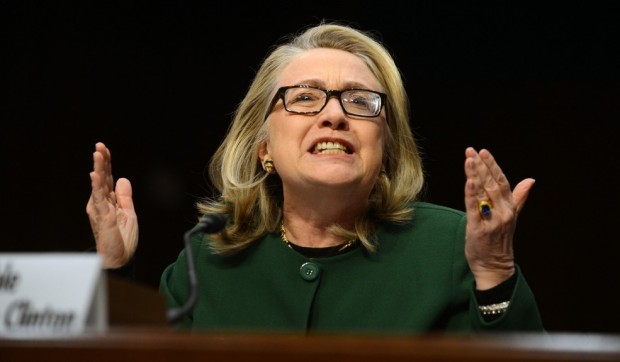
Why did Hillary Clinton blame the Benghazi terrorist attack on an “Internet video”?

What difference does national security make?

Who should I link to to prepare us to understand and discuss the showdown between the Benghazi Select Committee and Hillary Clinton? How about Stephen Hayes from the Weekly Standard – you can’t do better than that.

He says:

Critics of Clinton on Benghazi are most angry about the exchange she had with surviving family members at the solemn ceremony held to receive the bodies of the victims. Pat Smith, the mother of information specialist Sean Smith, who was killed in the attacks, says Clinton told her that the Obama administration would bring to justice the man who made the anti-Islam video that the administration initially blamed for the attacks. “She blamed the video just like all the rest of them did and she also told me she was going to get back to me.”

Charles Woods, father of Tyrone Woods, a NAVY Seal killed in the attacks, says Clinton told him the same thing. “She said we’re going to have the person responsible for that video arrested. I knew she was lying. Her body language, the look in her eyes…I could tell she wasn’t telling the truth.”

But contemporaneous documents and testimony from US officials who were in Libya during the attacks make no mention of the video that would become the centerpiece of the Obama administration’s public narrative about the attacks. Indeed, in messages as the attacks unfolded and in the hours and days that followed, show security and intelligence officials immediately placing blame on al Qaeda and affiliated fighters and pushing back on suggestions from Washington that the video had played a role. Senior State Department officials, including Clinton’s chief of staff, Cheryl Mills, were copied on emails indicating Ansar al Sharia had claimed responsibility for the attacks.

Michael Morell, deputy CIA director at the time of the attacks, and a loyal water-carrier for the administration on Benghazi, testified that the video was simply not part of the intelligence picture during and after the attacks. “There was no mention of the video defaming the Prophet Muhammad as a motivation for the attacks in Benghazi. In fact, there was no mention of the video at all.”

Why did Clinton promise to pursue the filmmaker after the US government understood that the attacks were not a result of an out-of-control protest over the video?

Recall that Hillary Clinton blamed the Benghazi attack on “an Internet video”:

However, we now know that the top Democrats knew from the beginning that this was a terrorist attack:

Judicial Watch announced today that on February 11, 2015, it uncovered documents from the U.S. Department of State revealing that top aides for then-Secretary of State Hillary Clinton, including her then-chief of staff Cheryl Mills, knew from the outset that the Benghazi mission compound was under attack by armed assailants tied to a terrorist group.  The documents were produced as a result of a Freedom of Information Act lawsuit against the State Department (Judicial Watch v. U.S. Department of State ((No. 1:14-cv-01511).  The documents make no reference to a spontaneous demonstration or Internet video, except in an official statement issued by Hillary Clinton.

The Benghazi Select Committee was finally able to get 1300 e-mails sent by Ambassador Stevens (after two years of asking for them). Many of those e-mails requested additional security right before the attack, and they were ignored:

Two months before the fatal 2012 terrorist attack on the U.S. compound in Benghazi, then-Ambassador Chris Stevens requested 13 security personnel to help him safely travel around Libya… but he was turned down.

In the July 9, 2012 cable, Stevens reported that, “Overall security conditions continue to be unpredictable, with large numbers of armed groups and individuals not under control of the central government, and frequent clashes in Tripoli and other major population centers.” The cable said 13 security personnel would be the “minimum” needed for “transportation security and incident response capability.”

But a congressional source said Patrick Kennedy, a deputy to then-Secretary of State Hillary Clinton, turned down the request. 

The cable sent under Stevens’ electronic signature shows that he was advocating for additional security and warning that the set-up did not meet State Department standards, as conditions deteriorated in the run-up to the attack that killed Stevens and three other Americans.

This hearing is about finding out why four people were left to die, even after repeatedly requesting additional security from the State Department. The same State Department that Hillary Clinton was in charge of. I hope we can find out why Hillary had so much time to read e-mails from Sidney Blumenthal, and apparently no time to read e-mails from Ambassador Stevens.

UPDATE: The Weekly Standard has posted a new podcast episode with Stephen Hayes on this topic.

UPDATE: Trey Gowdy’s opening statement:

Why did we need this investigation? Because previous “investigations” failed to find Ambassador Stevens’ e-mails, failed to find Hillary Clinton’s e-mails, and failed to interview people on the ground who had direct knowledge of the Benghazi security situation.

Related posts