What criteria do historians use to get to the minimal facts about the historical Jesus?

Sherlock Holmes and John Watson: let's take a look at the facts
Sherlock Holmes and John Watson: let’s take a look at the facts

Have you ever heard Gary Habermas, Michael Licona or William Lane Craig defend the resurrection of Jesus in a debate by saying that the resurrection is the best explanation for the “minimal facts” about Jesus? The lists of minimal facts that they use are typically agreed to by their opponents during the debates. Minimal facts are the parts of the New Testament that meet a set of strict historical criteria. These are the facts that skeptical historians agree with, totally apart from any religious beliefs.

So what are the criteria that skeptical historians use to derive a list of minimal facts about Jesus?

Dr. Craig explains them in this article.

Excerpt:

The other way, more influential in contemporary New Testament scholarship, is to establish specific facts about Jesus without assuming the general reliability of the Gospels. The key here are the so-called “Criteria of Authenticity” which enable us to establish specific sayings or events in Jesus’ life as historical. Scholars involved in the quest of the historical Jesus have enunciated a number of these critieria for detecting historically authentic features of Jesus, such as dissimilarity to Christian teaching, multiple attestation, linguistic semitisms, traces of Palestinian milieu, retention of embarrassing material, coherence with other authentic material, and so forth.

It is somewhat misleading to call these “criteria,” for they aim at stating sufficient, not necessary, conditions of historicity. This is easy to see: suppose a saying is multiply attested and dissimilar but not embarrassing. If embarrassment were a necessary condition of authenticity, then the saying would have to be deemed inauthentic, which is wrong-headed, since its multiple attestation and dissimilarity are sufficient for authenticity. Of course, the criteria are defeasible, meaning that they are not infallible guides to authenticity. They might be better called “Indications of Authenticity” or “Signs of Credibility.”

In point of fact, what the criteria really amount to are statements about the effect of certain types of evidence upon the probability of various sayings or events in Jesus’ life. For some saying or event S and evidence of a certain type E, the criteria would state that, all things being equal, the probability of S given E is greater than the probability of S on our background knowledge alone. So, for example, all else being equal, the probability of some event or saying is greater given its multiple attestation than it would have been without it.

What are some of the factors that might serve the role of E in increasing the probability of some saying or event S? The following are some of the most important:

(1) Historical congruence: S fits in with known historical facts concerning the context in which S is said to have occurred.

(2) Independent, early attestation: S appears in multiple sources which are near to the time at which S is alleged to have occurred and which depend neither upon each other nor a common source.

(3) Embarrassment: S is awkward or counter-productive for the persons who serve as the source of information for S.

(4) Dissimilarity: S is unlike antecedent Jewish thought-forms and/or unlike subsequent Christian thought-forms.

(5) Semitisms: traces in the narrative of Aramaic or Hebrew linguistic forms.

(6) Coherence: S is consistent with already established facts about Jesus.

For a good discussion of these factors see Robert Stein, “The ‘Criteria’ for Authenticity,” in Gospel Perspectives I, ed. R. T. France and David Wenham (Sheffield, England: JSOT Press, 1980), pp. 225-63.

Notice that these “criteria” do not presuppose the general reliability of the Gospels. Rather they focus on a particular saying or event and give evidence for thinking that specific element of Jesus’ life to be historical, regardless of the general reliability of the document in which the particular saying or event is reported. These same “criteria” are thus applicable to reports of Jesus found in the apocryphal Gospels, or rabbinical writings, or even the Qur’an. Of course, if the Gospels can be shown to be generally reliable documents, so much the better! But the “criteria” do not depend on any such presupposition. They serve to help spot historical kernels even in the midst of historical chaff. Thus we need not concern ourselves with defending the Gospels’ every claim attributed to Jesus in the gospels; the question will be whether we can establish enough about Jesus to make faith in him reasonable.

And you can see Dr. Craig using these criteria to defend minimal facts in his debates. For example, in his debate with Ehrman, he alludes to the criteria when making his case for the empty tomb.

Here, he uses multiple attestation and the criteria of embarrassment:

Among the reasons which have led most scholars to this conclusion are the following:

1. The empty tomb is also multiply attested by independent, early sources.

Mark’s source didn’t end with the burial, but with the story of the empty tomb, which is tied to the burial story verbally and grammatically. Moreover, Matthew and John have independent sources about the empty tomb; it’s also mentioned in the sermons in the Acts of the Apostles (2.29; 13.36); and it’s implied by Paul in his first letter to the Corinthian church (I Cor. 15.4). Thus, we have again multiple, early, independent attestation of the fact of the empty tomb.

2. The tomb was discovered empty by women.

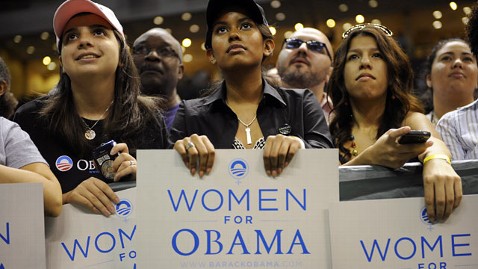
In patriarchal Jewish society the testimony of women was not highly regarded. In fact, the Jewish historian Josephus says that women weren’t even permitted to serve as witnesses in a Jewish court of law. Now in light of this fact, how remarkable it is that it is women who are the discoverers of Jesus’ empty tomb. Any later legendary account would certainly have made male disciples like Peter and John discover the empty tomb. The fact that it is women, rather than men, who are the discoverers of the empty tomb is best explained by the fact that they were the chief witnesses to the fact of the empty tomb, and the Gospel writers faithfully record what, for them, was an awkward and embarrassing fact.

There are actually a few more reasons for believing in the empty tomb that he doesn’t go into in the debate, but you can find them in his written work. For example, in his essay on Gerd Ludemann’s “vision” hypothesis. That essay covers the reasons for all four of his minimal facts.

So, if you are going to talk about the resurrection with a skeptic, you don’t want to invoke the Bible as some sort of inerrant/inspired Holy Book.

Try this approach instead:

  1. Explain the criteria that historians use to get their lists of minimal facts
  2. Explain your list of minimal facts
  3. Defend your list of minimal facts using the criteria
  4. Cite skeptics who admit to each of your minimal facts, to show that they are widely accepted
  5. List some parts of the Bible that don’t pass the criteria (e.g. – guard at the tomb, Matthew earthquake)
  6. Explain why those parts don’t pass the criteria, and explain that they are not part of your case
  7. Challenge your opponent to either deny some or all the facts, or propose a naturalistic alternative that explains the facts better than the resurrection
  8. Don’t let your opponent attack any of your minimal facts by attacking other parts of the Bible (e.g. – the number of angels being one or two, etc.)

And remember that there is no good case for the resurrection that does not make heavy use of the early creed in 1 Corinthians 15:3-8.

The best essay on the minimal facts criteria that I’ve read is the one by Robert H. Stein in “Contending with Christianity’s Critics“. It’s a good short essay that goes over all the historical criteria that are used to derive the short list of facts from which we infer the conclusion “God raised Jesus from the dead”. That whole book is really very, very good.

Reasonable Faith podcast: the real consequences of atheism

I have a key that will unlock a puzzling mystery

If you love to listen to the Please Convince Me podcast, as I do, then you know that in a recent episode, J. Warner Wallace mentioned a blog post on an atheistic blog that clearly delineated the implications of an atheistic worldview. He promised he was going to write about it and link to the post, and he has now done so.

The latest episode of Reasonable Faith discusses the post mentioned in the episode.

Details:

An atheist blogger gets brutally honest about his view and tells other atheists to quit fooling themselves!

The MP3 file is here on the Reasonable Faith web site. (23 minutes)

Kevin Harris (KH) and William Lane Craig: (WLC) discuss this post on the Wintery Knight blog.

Summary:

  • KH: New Atheists always try to portray themselves as having meaningful lives, and good without God
  • WLC: Exactly, they would say you don’t nee God to do positive things, so God makes no difference
  • KH: but what happens when an atheist explains the real consequences of atheism?

KH then reads a quote by an atheist blogger:

“[To] all my Atheist friends.

Let us stop sugar coating it. I know, it’s hard to come out and be blunt with the friendly Theists who frequent sites like this. However in your efforts to “play nice” and “be civil” you actually do them a great disservice.

We are Atheists. We believe that the Universe is a great uncaused, random accident. All life in the Universe past and future are the results of random chance acting on itself. While we acknowledge concepts like morality, politeness, civility seem to exist, we know they do not. Our highly evolved brains imagine that these things have a cause or a use, and they have in the past, they’ve allowed life to continue on this planet for a short blip of time. But make no mistake: all our dreams, loves, opinions, and desires are figments of our primordial imagination. They are fleeting electrical signals that fire across our synapses for a moment in time. They served some purpose in the past. They got us here. That’s it. All human achievement and plans for the future are the result of some ancient, evolved brain and accompanying chemical reactions that once served a survival purpose. Ex: I’ll marry and nurture children because my genes demand reproduction, I’ll create because creativity served a survival advantage to my ancient ape ancestors, I’ll build cities and laws because this allowed my ape grandfather time and peace to reproduce and protect his genes. My only directive is to obey my genes. Eat, sleep, reproduce, die. That is our bible.

We deride the Theists for having created myths and holy books. We imagine ourselves superior. But we too imagine there are reasons to obey laws, be polite, protect the weak etc. Rubbish. We are nurturing a new religion, one where we imagine that such conventions have any basis in reality. Have they allowed life to exist? Absolutely. But who cares? Outside of my greedy little gene’s need to reproduce, there is nothing in my world that stops me from killing you and reproducing with your wife. Only the fear that I might be incarcerated and thus be deprived of the opportunity to do the same with the next guy’s wife stops me. Some of my Atheist friends have fooled themselves into acting like the general population. They live in suburban homes, drive Toyota Camrys, attend school plays. But underneath they know the truth. They are a bag of DNA whose only purpose is to make more of themselves. So be nice if you want. Be involved, have polite conversations, be a model citizen. Just be aware that while technically an Atheist, you are an inferior one. You’re just a little bit less evolved, that’s all. When you are ready to join me, let me know, I’ll be reproducing with your wife.

I know it’s not PC to speak so bluntly about the ramifications of our beliefs, but in our discussions with Theists we sometimes tip toe around what we really know to be factual. Maybe it’s time we Atheists were a little more truthful and let the chips fall where they may. At least that’s what my genes are telling me to say.”

Back to the summary:

  • WLC: this quote explains that on naturalism, moral values and duties are just the by products of biological evolution
  • WLC: he is deriding other atheists who put on a civil facade, and that the superior atheist is the one who acts openly like an atheist
  • KH: he wants atheists to stop acting like Christians (being outwardly nice)
  • WLC: there is no evidence for atheism presented in the quote, so why should he think that morality and meaning are illusory
  • WLC: he is saying that morality is not real because our beliefs form by Darwinian evolution
  • WLC: even if those beliefs formed that way, that doesn’t mean that our moral judgments are not true (genetic fallacy)
  • KH: the moral judgments are only false if naturalism is true, and he didn’t defend that
  • WLC: if objective moral values and duties exist, then naturalism is false

KH quotes Richard Dawkins:

In a universe of blind physical forces and genetic replication, some people are going to get hurt, other people are going to get lucky, and you won’t find any rhyme or reason in it, or any justice. The universe that we observe has precisely the properties we should expect if there is, at bottom, no design, no purpose, no evil and no good, nothing but blind, pitiless indifference… DNA neither knows nor cares. DNA just is. And we dance to its music.

More:

  • WLC: yes, that’s his view, but what reason is there to accept the naturalism that requires all that?
  • KH: yet he pushes various moral judgments
  • WLC: yes, in his book, he pushes a bunch of moral judgments in his book, all of which are invalid on naturalism?
  • KH: he wants humans to choose to show pity, even though nature is pitiless
  • WLC: he thinks that these altruistic behaviors can emerge because humans are sociable beings
  • WLC: but this “herd morality” is just an evolved convention, there are not objective moral truths

KH quotes Will Provine:

Let me summarize my views on what modern evolutionary biology tells us loud and clear — and these are basically Darwin’s views. There are no gods, no purposes, and no goal-directed forces of any kind. There is no life after death. When I die, I am absolutely certain that I am going to be dead. That’s the end of me. There is no ultimate foundation for ethics, no ultimate meaning in life, and no free will for humans, either.

More:

  • WLC: it’s his naturalism that is causing him to say that, theistic evolution is compatible with morality
  • WLC: naturalism is what conflicts with objective morality, science doesn’t invalidate objective morality
  • KH: atheists deny objective meaning, but atheists can invent subjective meanings and purposes
  • WLC: yes, but these invented subjective meanings and purposes are illusory
  • WLC: I don’t think that anyone can live happily by think

KH quotes Michael Ruse:

“The position of the modern evolutionist is that humans have an awareness of morality because such an awareness of biological worth. Morality is a biological adaptation no less than are hands and feet and teeth. Considered as a rationally justifiable set of claims about an objective something, ethics is illusory. I appreciate when someone says, ‘Love thy neighbor as thyself,’ they think they are referring above and beyond themselves. Nevertheless, such reference is truly without foundation. Morality is just an aid to survival and reproduction, . . . and any deeper meaning is illusory.”

  • WLC: again, science is neutral against morality, it’s the philosophy of naturalism that is inconsistent with objective morality
  • KH: just because theists and atheists get along, it’s still important to remind atheists of the consequences of their view
  • WLC: I do that in my work on the absurdity of life without God, and in the moral argument for God’s existence
  • WLC: I love it when they say things like this, because it supports the first premise in Craig’s moral argument
  • KH: even if the evidence were 50-50, why would atheists lean towards the meaningless view
  • WLC: yes, if the evidence is 50-50, then people ought to prefer life, significance and moral value
  • KH: you’re not saying that people ought to the believe that in theism because it’s more palatable to us
  • WLC: right, I am saying that naturalism should be rejected on the evidence, including our experience of moral values

If you like this podcast, the RSS feed for the Reasonable Faith podcast is here. I subscribe to it. If you liked the post they were discussing, please click here and share and/or tweet it.

17-year-old girl uses firearm to defend herself from burglar

Guns are for self-defense against criminals

My friend Terrell posted this story from Fox 59 local news.

Excerpt:

A 17-year-old girl in Franklin Township is safe after a scary brush with a burglar at her family’s home on Knapp Road Wednesday.

Faith Shilkett was home alone around 2 p.m., when her dog Duke started barking. She walked out of her room and saw a man knocking on the front door.

“He was big. He was muscular. He looked like he could do damage if he got a hold of you,” said the teen. “I was scared if he got in, he could’ve hurt me.”

Faith then took off through the house to lock the other doors. When she did that, she got a glimpse of the man at a deck door. She says the man then went to the garage door and jiggled the handle, trying to get in, and even peered in the window. Faith then ran to her mom’s room and pulled out a gun.

“I stayed back here and I started yelling ‘I’m here. I have a gun. I’m going to shoot,’” she said.

Faith called for help and waited. She said she heard rustling in the garage and the man took off in a white van.

[…]Faith says the man was roughly six feet tall, white, and had brown hair.

Guns are a great equalizer for a contest between a 17-year-old girl and a 6-foot-tall man.

It’s very important that everyone remember what the second amendment is used for in the United States. The second amendment allows law-abiding people to purchase firearms in order to defend themselves from criminals.

Although there is opposition to gun ownership in certain circles, the academic literature is quite clear and decisive. Legal ownership of firearms reduces rates of violent crime. Whenever laws that allow law-abiding citizens to carry firearms for self-defense, violent crime rates decrease. Whenever laws are passed that restrict law-abiding citizens from owning and carrying firearms for self-defense, violent crime rates increase.

The peer-reviewed research

Whenever I get into discussions about gun control, I always mention two academic books by John R. Lott and Joyce Lee Malcolm.

Here is a paper by Dr. Malcolm that summarizes one of the key points of her book.

Excerpt:

Tracing the history of gun control in the United Kingdom since the late 19th century, this article details how the government has arrogated to itself a monopoly on the right to use force. The consequence has been a tremendous increase in violent crime, and harsh punishment for crime victims who dare to fight back. The article is based on the author’s most recent book, Guns and Violence: The English Experience (Harvard University Press, 2002). Joyce Malcom is professor of history at Bentley College, in Waltham, Massachusetts. She is also author of To Keep and Bear Arms: The Origins of an AngloAmerican Right (Harvard University Press, 1994).

Upon the passage of The Firearms Act (No. 2) in 1997, British Deputy Home Secretary Alun Michael boasted: “Britain now has some of the toughest gun laws in the world.” The Act was second handgun control measure passed that year, imposed a near-complete ban on private ownership of handguns, capping nearly eighty years of increasing firearms restrictions. Driven by an intense public campaign in the wake of the shooting of schoolchildren in Dunblane, Scotland, Parliament had been so zealous to outlaw all privately owned handguns that it rejected proposals to exempt Britain’s Olympic target-shooting team and handicapped target-shooters from the ban.

And the result of the 1997 gun ban:

The result of the ban has been costly. Thousands of weapons were confiscated at great financial cost to the public. Hundreds of thousands of police hours were devoted to the task. But in the six years since the 1997 handgun ban, crimes with the very weapons banned have more than doubled, and firearm crime has increased markedly. In 2002, for the fourth consecutive year, gun crime in England and Wales rose—by 35 percent for all firearms, and by a whopping 46 percent for the banned handguns. Nearly 10,000 firearms offences were committed.

[…]According to Scotland Yard, in the four years from 1991 to 1995 crimes against the person in England‟s inner cities increased by 91 percent. In the four years from 1997 to 2001 the rate of violent crime more than doubled. The UK murder rate for 2002 was the highest for a century.

I think that peer-reviewed studies – from Harvard University, no less – should be useful to those of us who believe in the right of self-defense for law-abiding people. The book by economist John Lott, linked above,compares the crime rates of all U.S. states that have enacted concealed carry laws, and concludes that violent crime rates dropped after law-abiding citizens were allowed to carry legally-owned firearms. That’s the mirror image of Dr. Malcolm’s Harvard study, but both studies affirm the same conclusion – more legal firearm ownership means less crime.