The radically leftist Washington Post reports on the latest round of accusations against Seattle’s gay Democrat mayor:
Seattle Mayor Ed Murray, a nationally famous champion of gay rights and progressive causes, has been accused by three men of having sex with them as children.
An unnamed man filed a child sex abuse lawsuit against the mayor on Thursday, alleging Murray “repeatedly criminally raped and molested” him when he was a homeless 15-year-old in the 1980s.
The unnamed plaintiff and two other men gave interviews to the Seattle Times — all telling similar stories about a politico in his late 20s and 30s, who befriended street kids, paid them and had his way with them.
“I don’t necessarily think that he destroyed my life,” Jeff Simpson told the newspaper after describing years of molestation from age 13 on. “But I believe a lot of the problems I have stemmed from this.”
Murray, a gay rights pioneer-turned-leading opponent of President Trump’s immigration policies, canceled a planned event after news of the lawsuit broke Thursday and held a brief news conference the next day.
[…]Toward the end of the decade, according to the lawsuit, he met a homeless, drug-addicted 15-year-old on a bus.
“Young and curious, D.H. encountered Ed Murray upon the bus and developed a friendly interaction,” reads the lawsuit.
This quickly turned into a regular negotiation, it reads, with the teen “willing to do whatever Mr. Murray asked for as little as $10 to $20.”
The plaintiff, now 46, was named only by initials in the lawsuit. But he gave an interview to the Times, recalling: “He’d be doing certain things, and I’d tell him to stop, and he wouldn’t stop.”
[…]The lawsuit — filed because the statute of limitations precludes criminal charges after so many years — goes into explicit detail about the alleged sexual encounters between the two.
This isn’t the first round of accusations against the Democrat gay activist:
It describes the apartment’s floor plan. It also describes intimate physical descriptions of Murray that match the account of another accuser who did not sue: Lloyd Anderson.
Anderson told the Times that he met the future mayor as a teen in the early 1980s — when he and Simpson were both living in a group home in Portland.
Murray invited Anderson home and gave him $30 and some marijuana in return for oral sex, he told the newspaper.
Simpson told the Times he lived off-and-on with Murray for years, having sex regularly, and reported the molestation to his group home manager after an argument in 1984 — though nothing came of it.
Authorities pursued a sodomy investigation against Murray that same year, according to the Associated Press, but dropped it.
Anderson and Simpson took their accusations to the media and Washington lawmakers in 2008, the Times reported — when Murray was a state senator known for championing same-sex marriage and other gay rights causes.
While searching for previous stories along these lines, I found this old story about how Democrats voted to subsidize Viagra for child molesters and rapists. Yes, really. That blog post quoted from the Washington Times, a respected national newspaper. This actually happened.
Although you don’t often hear much about the kinds of causes that the Democrat party really care about, their real priorities are there, if you pay attention to the news. While Republicans are trying to eject MS-13 gangsters from the United States, Democrats are voting for Viagra for child molesters and rapists.
Sherlock Holmes and John Watson: let’s take a look at the facts
Have you ever heard Gary Habermas, Michael Licona or William Lane Craig defend the resurrection of Jesus in a debate by saying that the resurrection is the best explanation for the “minimal facts” about Jesus? The lists of minimal facts that they use are typically agreed to by their opponents during the debates. Minimal facts are the parts of the New Testament that meet a set of strict historical criteria. These are the facts that skeptical historians agree with, totally apart from any religious beliefs.
So what are the criteria that skeptical historians use to derive a list of minimal facts about Jesus?
The other way, more influential in contemporary New Testament scholarship, is to establish specific facts about Jesus without assuming the general reliability of the Gospels. The key here are the so-called “Criteria of Authenticity” which enable us to establish specific sayings or events in Jesus’ life as historical. Scholars involved in the quest of the historical Jesus have enunciated a number of these critieria for detecting historically authentic features of Jesus, such as dissimilarity to Christian teaching, multiple attestation, linguistic semitisms, traces of Palestinian milieu, retention of embarrassing material, coherence with other authentic material, and so forth.
It is somewhat misleading to call these “criteria,” for they aim at stating sufficient, not necessary, conditions of historicity. This is easy to see: suppose a saying is multiply attested and dissimilar but not embarrassing. If embarrassment were a necessary condition of authenticity, then the saying would have to be deemed inauthentic, which is wrong-headed, since its multiple attestation and dissimilarity are sufficient for authenticity. Of course, the criteria are defeasible, meaning that they are not infallible guides to authenticity. They might be better called “Indications of Authenticity” or “Signs of Credibility.”
In point of fact, what the criteria really amount to are statements about the effect of certain types of evidence upon the probability of various sayings or events in Jesus’ life. For some saying or event S and evidence of a certain type E, the criteria would state that, all things being equal, the probability of S given E is greater than the probability of S on our background knowledge alone. So, for example, all else being equal, the probability of some event or saying is greater given its multiple attestation than it would have been without it.
What are some of the factors that might serve the role of E in increasing the probability of some saying or event S? The following are some of the most important:
(1) Historical congruence: S fits in with known historical facts concerning the context in which S is said to have occurred.
(2) Independent, early attestation: S appears in multiple sources which are near to the time at which S is alleged to have occurred and which depend neither upon each other nor a common source.
(3) Embarrassment: S is awkward or counter-productive for the persons who serve as the source of information for S.
(4) Dissimilarity: S is unlike antecedent Jewish thought-forms and/or unlike subsequent Christian thought-forms.
(5) Semitisms: traces in the narrative of Aramaic or Hebrew linguistic forms.
(6) Coherence: S is consistent with already established facts about Jesus.
For a good discussion of these factors see Robert Stein, “The ‘Criteria’ for Authenticity,” in Gospel PerspectivesI, ed. R. T. France and David Wenham (Sheffield, England: JSOT Press, 1980), pp. 225-63.
Notice that these “criteria” do not presuppose the general reliability of the Gospels. Rather they focus on a particular saying or event and give evidence for thinking that specific element of Jesus’ life to be historical, regardless of the general reliability of the document in which the particular saying or event is reported. These same “criteria” are thus applicable to reports of Jesus found in the apocryphal Gospels, or rabbinical writings, or even the Qur’an. Of course, if the Gospels can be shown to be generally reliable documents, so much the better! But the “criteria” do not depend on any such presupposition. They serve to help spot historical kernels even in the midst of historical chaff. Thus we need not concern ourselves with defending the Gospels’ every claim attributed to Jesus in the gospels; the question will be whether we can establish enough about Jesus to make faith in him reasonable.
And you can see Dr. Craig using these criteria to defend minimal facts in his debates. For example, in his debate with Ehrman, he alludes to the criteria when making his case for the empty tomb.
Here, he uses multiple attestation and the criteria of embarrassment:
Among the reasons which have led most scholars to this conclusion are the following:
1. The empty tomb is also multiply attested by independent, early sources.
Mark’s source didn’t end with the burial, but with the story of the empty tomb, which is tied to the burial story verbally and grammatically. Moreover, Matthew and John have independent sources about the empty tomb; it’s also mentioned in the sermons in the Acts of the Apostles (2.29; 13.36); and it’s implied by Paul in his first letter to the Corinthian church (I Cor. 15.4). Thus, we have again multiple, early, independent attestation of the fact of the empty tomb.
2. The tomb was discovered empty by women.
In patriarchal Jewish society the testimony of women was not highly regarded. In fact, the Jewish historian Josephus says that women weren’t even permitted to serve as witnesses in a Jewish court of law. Now in light of this fact, how remarkable it is that it is women who are the discoverers of Jesus’ empty tomb. Any later legendary account would certainly have made male disciples like Peter and John discover the empty tomb. The fact that it is women, rather than men, who are the discoverers of the empty tomb is best explained by the fact that they were the chief witnesses to the fact of the empty tomb, and the Gospel writers faithfully record what, for them, was an awkward and embarrassing fact.
There are actually a few more reasons for believing in the empty tomb that he doesn’t go into in the debate, but you can find them in his written work. For example, in his essay on Gerd Ludemann’s “vision” hypothesis. That essay covers the reasons for all four of his minimal facts.
So, if you are going to talk about the resurrection with a skeptic, you don’t want to invoke the Bible as some sort of inerrant/inspired Holy Book.
Try this approach instead:
Explain the criteria that historians use to get their lists of minimal facts
Explain your list of minimal facts
Defend your list of minimal facts using the criteria
Cite skeptics who admit to each of your minimal facts, to show that they are widely accepted
List some parts of the Bible that don’t pass the criteria (e.g. – guard at the tomb, Matthew earthquake)
Explain why those parts don’t pass the criteria, and explain that they are not part of your case
Challenge your opponent to either deny some or all the facts, or propose a naturalistic alternative that explains the facts better than the resurrection
Don’t let your opponent attack any of your minimal facts by attacking other parts of the Bible (e.g. – the number of angels being one or two, etc.)
And remember that there is no good case for the resurrection that does not make heavy use of the early creed in 1 Corinthians 15:3-8.
The best essay on the minimal facts criteria that I’ve read is the one by Robert H. Stein in “Contending with Christianity’s Critics“. It’s a good short essay that goes over all the historical criteria that are used to derive the short list of facts from which we infer the conclusion “God raised Jesus from the dead”. That whole book is really very, very good.
Consider this story from Alliance Defending Freedom, which talks about California State University–San Marcos.
Excerpt:
Although the university says that it prohibits any of those groups from spending activity fee grants on expenses to bring speakers to campus, the Gender Equity Center and the LGBQTA Pride Center enjoy preferential status, and as such, are exempt from that rule and the standard $500 cap. In the 2016-2017 academic year, those two “centers” received a combined $296,498 for speech and expressive activities —more than 21 percent of all mandatory student activity fees the programming board received for that year—compared to only $38,629 for the more than 100 other groups combined (less than 3 percent).
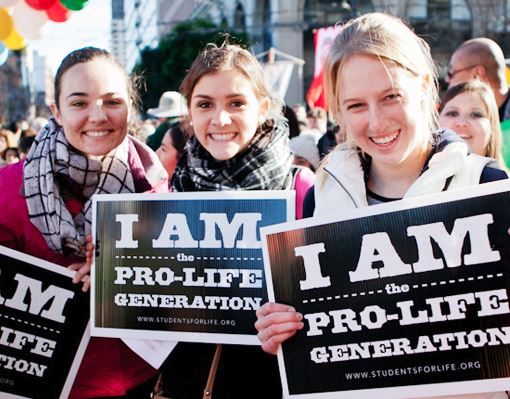
The Students for Life group applied for $500 to bring in a pro-life speaker, and the university wouldn’t even give them that tiny sum.
However, I linked to Alliance Defending Freedom for a reason… somebody is about to get sued:
Alliance Defending Freedom attorneys filed a federal lawsuit Wednesday against California State University–San Marcos officials on behalf of a pro-life student organization and its campus president, Nathan Apodaca, who are prevented from bringing pro-life speakers to campus under the university’s discriminatory funding policies.
[…]“While touting a community that values ‘individual and cultural diversity, and respect[s] multiple perspectives,’ Cal State–San Marcos is not practicing what it preaches,” said ADF Senior Counsel Casey Mattox, director of the ADF Center for Academic Freedom. “Today’s college students will be tomorrow’s legislators, judges, commissioners, and voters. But at Cal-State San Marcos they are learning that government can force citizens to pay for advocacy of the views it decides shall be orthodox and effectively exclude competing views. There can be no marketplace of ideas where the government simply funds its favored views.”
Alliance Defending Freedom is also suing another California university professor who instructed his little thug students to smash a pro-life display.
Excerpt:
In April, the Fresno State Students for Life received permission to chalk positive, life-affirming messages on the sidewalks leading to the university’s library. As its members finished chalking these messages on the morning of May 2, Gregory Thatcher, a public health professor, confronted them and falsely alleged they could not chalk messages near the library, and could only express themselves in the so-called “free speech area.” (The university eliminated this speech zone in June 2015.)
After club president Bernadette Tasy explained she had university permission to chalk messages in that spot, Thatcher announced that he would return to erase the messages shortly. He then recruited at least seven students from his 8:00 a.m. class to erase and deface the pro-life chalk messages. When Ms. Tasy reminded him that the club was acting with full permission, Thatcher walked over to one of the pro-life messages and began erasing it himself, claiming that he was exercising his free speech rights.
[…]The lawsuit, Fresno State Students for Life v. Thatcher, explains that Professor Thatcher’s decision to erase Students for Life’s expression, to recruit students to help in his censorship, and to harass and intimidate the group violates their fundamental right to freedom of speech. Additionally, the complaint asks the court to block Thatcher “and any other persons acting on his behalf or at his direction from interfering, disrupting, or altering any future lawful expressive activities that [Fresno State Students for Life and its members] conduct.”
Lawsuits are fun! As long as it isn’t me being sued.
In many people’s minds, it would have been easy for Blaine Adamson to “just print the shirts” when he was contacted about making shirts promoting the Lexington Pride Festival. He could have saved himself the lengthy legal battle, the lost customers, and the derogatory messages and phone calls. But Blaine’s conscience would have suffered.
“I want God to find joy in what we do and how we work, how we treat our employees, and the messages we print,” says Blaine. “So if someone walks in and says, ‘Hey, I want you to help promote something,’ I can’t promote something that I know goes against what pleases Him.”
Thankfully, a Kentucky appellate court has recognized Blaine’s constitutional freedom not to print messages that he disagrees with. Today the court affirmed the Fayette Circuit Court’s ruling that Blaine, managing owner of Hands On Originals (HOO) in Lexington, Kentucky, is free to decide for himself the ideas and messages he wants to express.
The Gay and Lesbian Services Organization, which requested the shirts and filed the original complaint against Blaine with the Lexington-Fayette Urban Country Human Rights Commission, had tried to make this a case about discrimination. But the truth is that Blaine didn’t discriminate against anyone. And that’s exactly what the Kentucky Court of Appeals said in its ruling.
Both Blaine and HOO regularly do business with and employ people who identify as LGBT. His decision not to print the shirts was because of the message that the shirts would promote. It had nothing to do with any characteristic of the person requesting them.
“Americans should always have the freedom to believe, the freedom to express those beliefs, and the freedom to not express ideas that would violate their conscience,” said ADF Senior Counsel Jim Campbell. “Today’s decision is a victory for printers and other creative professionals who serve all people but cannot promote all messages.”
If this case goes to the Kentucky Supreme Court, ADF has promised to defend the Christian business owners.
If you like Alliance Defending Freedom like I do, be sure and subscribe to their podcast. If you’re looking for a good podcast app that’s free and ad-free, try this one.