Category Archives: Polemics

Should we expect to know what God’s reason is for allowing evil and suffering?

Lets take a closer look at a puzzle

Here is an article by Steven Cowan about the problems of evil and suffering.

Intro:

The problem of evil is no doubt the most serious challenge to belief in God. Even religious believers find it troubling that evil exists in the world—and so much evil! It is puzzling, to say the least, that an all-powerful, absolutely good being would allow evil to exist in his creation. And yet it does. Evil and suffering exist and they are often overwhelming in their magnitude.

Now let’s find out what a noseeum is, and how it relates to the existence of evil and suffering:

However, perhaps God’s existence is incompatible with a certain kind of evil that exists. For example, the atheist William Rowe has argued that God’s existence is inconsistent with pointless or gratuitous evil. By “pointless evil,” Rowe means evil that does not and cannot serve a greater good. And Rowe believes that there is such pointless evil in the world. He thus concludes that God does not exist. Rowe’s argument may be simply stated as follows:

  1. If God exists, there would be no pointless evil.
  2. There is pointless evil.
  3. Therefore, God does not exist.

[…]But, is there pointless evil in the world? Rowe thinks there is. To show that there is pointless evil, Rowe introduces what he calls the “noseeum inference.” Like the pesty little bugs that some readers may be familiar with, a “noseeum” is something that you cannot see—it is a “no-see-um.” And a noseeum inference is a conclusion drawn on the basis of what one does not see. The basic structure of all noseeum inferences looks like this:

  1. I cannot see an x.
  2. Therefore, there probably is no x.

We all make noseeum inferences everyday of our lives. Every time I go to cross a street, I look both ways and I step out into the street only after I “no-see-um” a car coming.

[…]Rowe applies this kind of noseeum reasoning to God and evil. Rowe suggests that if we cannot see a reason for a particular instance of evil, then there is probably not a reason. Suppose we hear about a very young child who is tortured to death to amuse some psychotic person. We think about this event and we examine all the circumstances surrounding it. No matter how hard we try, we cannot see any good reason why this child had to suffer the way she did. Since we cannot see a reason why God would allow this child to suffer, there probably is not a good reason—the child’s suffering was pointless. Of course, Rowe would be quick to point out that he is not speaking merely hypothetically. There are cases like this in the news every day—real-life cases in which we shake our heads in frustration, wondering why God would allow such a thing.

Is Rowe correct in his conclusion? Do such examples prove that there is pointless evil in the world? I don’t think so. To see why, we must recognize that noseeum inferences are not all created equal. Some noseeum inferences, as we have seen, are reasonable and appropriate. But, many are not. Suppose I look up at the night sky at the star Deneb and I do not see a planet orbiting that star. Would it be reasonable for me to conclude that there is no planet orbiting Deneb? Of course not. Suppose that using the best telescopes and other imaging equipment presently available, I still cannot see a planet around Deneb. I would still be unjustified in concluding that there was no such planet.

In that example, the planet is the noseeum. Just because you look really hard, you can’t be confident that the planet is not there. And similarly with the problem of evil and suffering, looking really hard and finding no reason does not mean that there is no reason. It just means that you are not in a good position to see the reason. You don’t know enough to to be sure that there is no reason, because of your limitations as a human being.

To know that any given instance of evil or suffering is gratuitous/pointless requires a high level of knowledge. How much knowledge? Well, consider this paper by the late William Alston of Syracuse University, who lists six problems with the idea that humans can know that any particular instance of evil and suffering is gratuitous. (You can get the PDF here)

According to the paper, human beings just do not have the capability to know for certain that God has NO morally sufficient reason for allowing any particular instance of evil and/or suffering. God’s morally sufficient reason is a noseeum. To know for sure that there is no reason, we would need to have more knowledge than we do.

Also, remember that on the Christian view, the good aim that God has is NOT to make humans have happy feelings in this life, regardless of their knowledge, wisdom and character. That’s what atheists think, though. They think that God, if he exists, is obligated to make them feel happy all the time. They don’t think that God’s goal is being actively involved in forming their knowledge, wisdom and character. God has a purpose – to work in the world so that everyone who can freely respond to him will respond to him. The Bible says that allowing pain and suffering is one of the ways that he gets that group of people who are willing to respond to respond to him – FREELY. To be able to claim that evil is gratuitous, the atheist has to show that God can achieve his goal of saving all the people he wants to save while permitting less suffering in the world. And that is a very difficult thing for an atheist to show, given our human cognitive limitations.

The best place to learn more about no-see-ums is in this excellent lecture by Biola University professor Doug Geivett.

What criteria do historians use to get to the minimal facts about the historical Jesus?

Sherlock Holmes and John Watson: let's take a look at the facts
Sherlock Holmes and John Watson: let’s take a look at the facts

Have you ever heard Gary Habermas, Michael Licona or William Lane Craig defend the resurrection of Jesus in a debate by saying that the resurrection is the best explanation for the “minimal facts” about Jesus? The lists of minimal facts that they use are typically agreed to by their opponents during the debates. Minimal facts are the parts of the New Testament that meet a set of strict historical criteria. These are the facts that skeptical historians agree with, totally apart from any religious beliefs.

So what are the criteria that skeptical historians use to derive a list of minimal facts about Jesus?

Dr. Craig explains them in this article.

Excerpt:

The other way, more influential in contemporary New Testament scholarship, is to establish specific facts about Jesus without assuming the general reliability of the Gospels. The key here are the so-called “Criteria of Authenticity” which enable us to establish specific sayings or events in Jesus’ life as historical. Scholars involved in the quest of the historical Jesus have enunciated a number of these critieria for detecting historically authentic features of Jesus, such as dissimilarity to Christian teaching, multiple attestation, linguistic semitisms, traces of Palestinian milieu, retention of embarrassing material, coherence with other authentic material, and so forth.

It is somewhat misleading to call these “criteria,” for they aim at stating sufficient, not necessary, conditions of historicity. This is easy to see: suppose a saying is multiply attested and dissimilar but not embarrassing. If embarrassment were a necessary condition of authenticity, then the saying would have to be deemed inauthentic, which is wrong-headed, since its multiple attestation and dissimilarity are sufficient for authenticity. Of course, the criteria are defeasible, meaning that they are not infallible guides to authenticity. They might be better called “Indications of Authenticity” or “Signs of Credibility.”

In point of fact, what the criteria really amount to are statements about the effect of certain types of evidence upon the probability of various sayings or events in Jesus’ life. For some saying or event S and evidence of a certain type E, the criteria would state that, all things being equal, the probability of S given E is greater than the probability of S on our background knowledge alone. So, for example, all else being equal, the probability of some event or saying is greater given its multiple attestation than it would have been without it.

What are some of the factors that might serve the role of E in increasing the probability of some saying or event S? The following are some of the most important:

(1) Historical congruence: S fits in with known historical facts concerning the context in which S is said to have occurred.

(2) Independent, early attestation: S appears in multiple sources which are near to the time at which S is alleged to have occurred and which depend neither upon each other nor a common source.

(3) Embarrassment: S is awkward or counter-productive for the persons who serve as the source of information for S.

(4) Dissimilarity: S is unlike antecedent Jewish thought-forms and/or unlike subsequent Christian thought-forms.

(5) Semitisms: traces in the narrative of Aramaic or Hebrew linguistic forms.

(6) Coherence: S is consistent with already established facts about Jesus.

For a good discussion of these factors see Robert Stein, “The ‘Criteria’ for Authenticity,” in Gospel Perspectives I, ed. R. T. France and David Wenham (Sheffield, England: JSOT Press, 1980), pp. 225-63.

Notice that these “criteria” do not presuppose the general reliability of the Gospels. Rather they focus on a particular saying or event and give evidence for thinking that specific element of Jesus’ life to be historical, regardless of the general reliability of the document in which the particular saying or event is reported. These same “criteria” are thus applicable to reports of Jesus found in the apocryphal Gospels, or rabbinical writings, or even the Qur’an. Of course, if the Gospels can be shown to be generally reliable documents, so much the better! But the “criteria” do not depend on any such presupposition. They serve to help spot historical kernels even in the midst of historical chaff. Thus we need not concern ourselves with defending the Gospels’ every claim attributed to Jesus in the gospels; the question will be whether we can establish enough about Jesus to make faith in him reasonable.

And you can see Dr. Craig using these criteria to defend minimal facts in his debates. For example, in his debate with Ehrman, he alludes to the criteria when making his case for the empty tomb.

Here, he uses multiple attestation and the criteria of embarrassment:

Among the reasons which have led most scholars to this conclusion are the following:

1. The empty tomb is also multiply attested by independent, early sources.

Mark’s source didn’t end with the burial, but with the story of the empty tomb, which is tied to the burial story verbally and grammatically. Moreover, Matthew and John have independent sources about the empty tomb; it’s also mentioned in the sermons in the Acts of the Apostles (2.29; 13.36); and it’s implied by Paul in his first letter to the Corinthian church (I Cor. 15.4). Thus, we have again multiple, early, independent attestation of the fact of the empty tomb.

2. The tomb was discovered empty by women.

In patriarchal Jewish society the testimony of women was not highly regarded. In fact, the Jewish historian Josephus says that women weren’t even permitted to serve as witnesses in a Jewish court of law. Now in light of this fact, how remarkable it is that it is women who are the discoverers of Jesus’ empty tomb. Any later legendary account would certainly have made male disciples like Peter and John discover the empty tomb. The fact that it is women, rather than men, who are the discoverers of the empty tomb is best explained by the fact that they were the chief witnesses to the fact of the empty tomb, and the Gospel writers faithfully record what, for them, was an awkward and embarrassing fact.

There are actually a few more reasons for believing in the empty tomb that he doesn’t go into in the debate, but you can find them in his written work. For example, in his essay on Gerd Ludemann’s “vision” hypothesis. That essay covers the reasons for all four of his minimal facts.

So, if you are going to talk about the resurrection with a skeptic, you don’t want to invoke the Bible as some sort of inerrant/inspired Holy Book.

Try this approach instead:

  1. Explain the criteria that historians use to get their lists of minimal facts
  2. Explain your list of minimal facts
  3. Defend your list of minimal facts using the criteria
  4. Cite skeptics who admit to each of your minimal facts, to show that they are widely accepted
  5. List some parts of the Bible that don’t pass the criteria (e.g. – guard at the tomb, Matthew earthquake)
  6. Explain why those parts don’t pass the criteria, and explain that they are not part of your case
  7. Challenge your opponent to either deny some or all the facts, or propose a naturalistic alternative that explains the facts better than the resurrection
  8. Don’t let your opponent attack any of your minimal facts by attacking other parts of the Bible (e.g. – the number of angels being one or two, etc.)

And remember that there is no good case for the resurrection that does not make heavy use of the early creed in 1 Corinthians 15:3-8.

The best essay on the minimal facts criteria that I’ve read is the one by Robert H. Stein in “Contending with Christianity’s Critics“. It’s a good short essay that goes over all the historical criteria that are used to derive the short list of facts from which we infer the conclusion “God raised Jesus from the dead”. That whole book is really very, very good.

What do research studies say about the bond between fathers and daughters?

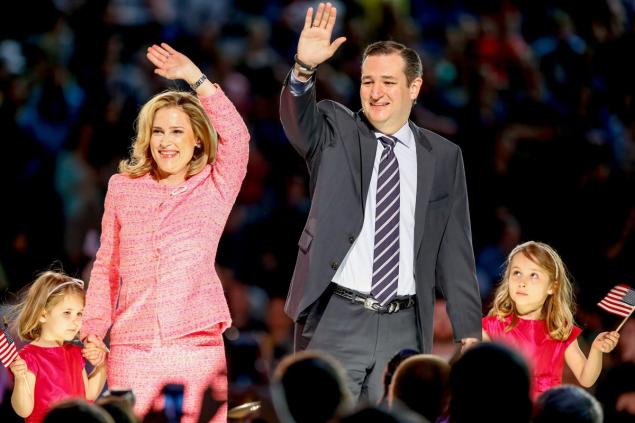
Texas senator Ted Cruz, his wife Heidi Cruz and their two daughters

Many people today think that biological fathers are not essential for raising daughters. In fact, we even support this view by passing no-fault divorce laws, single-mother welfare laws, and by opposing shared parenting laws. The story goes that children do fine without their biological father in the home. Having children is something that women decide to do, and the man is superfluous. So I thought it might be a good idea to take a look at the research.

Here is a recent article from the centrist Institute for Family Studies.

It says:

The dynamic between fathers and their daughters has been characterized by one expert as the most “fragile and unstable” when compared to other parent-child relationships.1 It can be further described as one of the most powerful and vital relationships to individuals, communities, and nations. For instance, fathers have a profound impact on their daughters’ body image,clinical depression, eating disorders,self-esteem, and life satisfaction,to name but a few.

But of all the unique contributions a father makes in his daughter’s life, perhaps there is none of greater significance than in the area of sexual development and activity and romantic relationships.

  • Numerous studies have discovered female pubertal timing occurs later in girls whose fathers are consistently present in their life.5
  • An extensive body of research has revealed that early pubertal maturation in girls is associated with a variety of negative biological, psychological, and social outcomes, including, mood disorders,substance abuse,adolescent pregnancy,and a variety of cancers of the reproductive system.9
  • Fatherless daughters are seven times more likely to become pregnant as teens.10

[…]The conditions in our culture of both rampant fatherlessness and sexual promiscuity are incompatible with forming secure and healthy relationships with boys and with establishing stable families for the next generation. A young girl’s sexual development can significantly outpace her neurological and emotional development—the very resources needed to guide her sexual choices.

Herein lies the danger. Much of our culture today promotes sexual activity but void of healthy attachment or true intimacy. There is a great deal of evidence to suggest that high levels of father involvement (regardless of dad’s marital status) are predictive of high levels of intimacy, commitment, and trust in young female adults’ romantic relationships; whereas low levels of father involvement are predictive of the opposite.11

And:

How a father treats both his daughter and her mother can help a young woman feel safe and secure in her relationships with the boys and men in her life, including her future husband. Family scientists and evolutionary psychologists have discovered that girls appear to be born with an emotional, relational, and evolutionary void that a father is designated to fill. If left vacant, girls will be more likely to seek to fill it in with other, unhealthier substitutes. The father-daughter relationship is the one that best teaches young women about true love and intimacy, self-worth, and respect.

Professor Linda Nielsen summarized this in one profound sentence: “[T]he father has the greater impact on the daughter’s ability to trust, enjoy, and relate well to the males in her life.”

So, a father’s love keeps her from getting into relationships with boys before the boys are ready to commit to her. By the way, I don’t think that boys should even be allowed to TALK to girls about a relationship, unless they have a STEM degree, and two years of private sector work experience. I really hate when unemployed, penniless boys waste a girl’s time when they can’t afford to commit to her. People think I am pretty rough on women, but I really am much meaner to men who don’t have STEM degrees and gapless resumes. (I guess a skilled trade would work as well, in place of the STEM degree – something like electrician, for example).

Anyway, back to the research. When a woman is deciding which men to have sex with, she has to be thinking of more than just her own needs. She has to choose a man who is going to stick around long enough to raise her daughters, so that they grow up with the confidence to resist the advances of boys who aren’t ready to commit. To be pro-woman means to be pro-daughter, and that means that women need to be persuaded to be careful about the choice of sex partner, and the timing of sexual activity. This is why people used to keep sex for marriage in the past: to protect children by making sure that they would get the stability and engagement they need from their parents.

Also, I have talked about the research about father-son bond in a different post.

If you want to do right for your children, then you need to control yourself and make wise choices. And if you’re struggling to make good choices, then don’t leave it up to your emotions and peer approval. Disregard your emotions. Disregard peer approval. Instead, let your decision-making be guided by your Christian convictions, and strengthened with scientific evidence. The Bible tells you not to have sex before you’re married, and science tells you why this is good policy. The Bible gives you the goals, and science tells you how to how the world works, so you know how to make plans that will make sure you are never in a place where you are pressured to do the wrong thing. The more science you pack into your head, the easier it will be for you to convince yourself to do the right thing, and to convince your partner to do the right thing. Science takes moral decision-making outside the realm of feelings and opinions.

And if your partner says “I don’t care about the needs of our future children”, then you have a good reason to dump them and move on. You can’t be in a relationship with someone who thinks that children’s needs are less important than adult desires. In fact, the whole design for relationships should start with what children need from the marriage and parents, and work backward from there to the obligations on the man and the woman. And men and women ought to discuss this. What are we trying to achieve with this relationship anyway? And what is the right way to achieve it? This is where the research comes in – it shows you how to do it right.

Research from the Heritage Foundation