Category Archives: Polemics

Why doesn’t God make his existence more obvious to people?

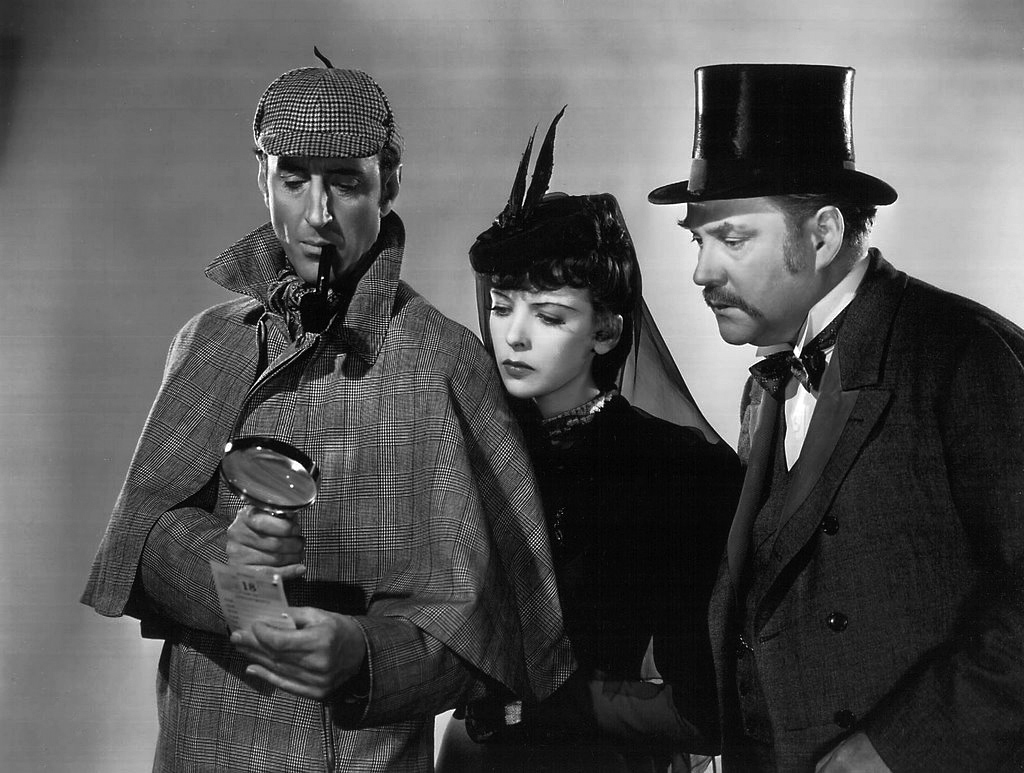
Sherlock Holmes and John Watson about to do philosophy

Have you ever heard someone say that if God existed, he would give us more evidence? This is called the “hiddenness of God” argument. It’s also known as the argument from “rational non-belief”.

Basically the argument is something like this:

  1. God is all powerful
  2. God is all loving
  3. God wants all people to know about him
  4. Some people don’t know about him
  5. Therefore, there is no God.

In this argument, the atheist is saying that he’s looked for God real hard and that if God were there, he should have found him by now. After all, God can do anything he wants that’s logically possible, and he wants us to know that he exists. To defeat the argument we need to find a possible explanation of why God would want to remain hidden when our eternal destination depends on our knowledge of his existence.

What reason could God have for remaining hidden?

Dr. Michael Murray, a brilliant professor of philosophy at Franklin & Marshall College, has found a reason for God to remain hidden.

His paper on divine hiddenness is here:
Coercion and the Hiddenness of God“, American Philosophical Quarterly, Vol 30, 1993.

He argues that if God reveals himself too much to people, he takes away our freedom to make morally-significant decisions, including responding to his self-revelation to us. Murray argues that God stays somewhat hidden, so that he gives people space to either 1) respond to God, or 2) avoid God so we can keep our autonomy from him. God places a higher value on people having the free will to respond to him, and if he shows too much of himself he takes away their free choice to respond to him, because once he is too overt about his existence, people will just feel obligated to belief in him in order to avoid being punished.

But believing in God just to avoid punishment is NOT what God wants for us. If it is too obvious to us that God exists and that he really will judge us, then people will respond to him and behave morally out of self-preservation. But God wants us to respond to him out of interest in him, just like we might try to get to know someone we admire. God has to dial down the immediacy of the threat of judgment, and the probability that the threat is actual. That leaves it up to us to respond to God’s veiled revelation of himself to us, in nature and in Scripture.

(Note: I think that we don’t seek God on our own, and that he must take the initiative to reach out to us and draw us to him. But I do think that we are free to resist his revelation, at which point God stops himself short of coercing our will. We are therefore responsible for our own fate).

The atheist’s argument is a logical/deductive argument. It aims to show that there is a contradiction between God’s will for us and his hiding from us. In order to derive a contradiction, God MUST NOT have any possible reason to remain hidden. If he has a reason for remaining hidden that is consistent with his goodness, then the argument will not go through.

When Murray offers a possible reason for God to remain hidden in order to allow people to freely respond to him, then the argument is defeated. God wants people to respond to him freely so that there is a genuine love relationship – not coercion by overt threat of damnation. To rescue the argument, the atheist has to be able to prove that God could provide more evidence of his existence without interfering with the free choice of his creatures to reject him.

Murray has defended the argument in works published by prestigious academic presses such as Cambridge University Press, (ISBN: 0521006104, 2001) and Routledge (ISBN: 0415380383, 2007). The book chapter from the Cambridge book is here. The book chapter from the Routledge book is here.

Positive arguments for Christian theism

Why does the Wintery Knight have to have an alias?

Gay activist vandalizes pro-marriage sign

To answer that question, let’s look at the latest from The Weekly Standard by Johnathan Last.

It says:

You may recall Brendan Eich. The cofounder and CEO of Mozilla was dismissed from his company in 2014 when it was discovered that, six years earlier, he had donated $1,000 to California’s Proposition 8 campaign. That ballot initiative, limiting marriage to one man and one woman, passed with a larger percentage of the vote in California than Barack Obama received nationally in 2012. No one who knew Eich accused him of treating his gay coworkers badly—by all accounts he was kind and generous to his colleagues. Nonetheless, having provided modest financial support to a lawful ballot initiative that passed with a majority vote was deemed horrible enough to deprive Eich of his livelihood. Which is one thing.

What is quite another is the manner in which Eich has been treated since. A year after Eich’s firing, for instance, Hampton Catlin, a Silicon Valley programmer who was one of the first to demand Eich’s resignation, took to Twitter to bait Eich:

Hampton ‏@hcatlin Apr 2

It had been a couple weeks since I’d gotten some sort of @BrendanEich related hate mail. How things going over there on your side, Brendan?

BrendanEich ‏@BrendanEich

@hcatlin You demanded I be “completely removed from any day to day activities at Mozilla” & got your wish. I’m still unemployed. How’re you?

Hampton ‏@hcatlin Apr 2

@BrendanEich married and able to live in the USA! .  .  . and working together on open source stuff! In like, a loving, happy gay married way!

It’s a small thing, to be sure. But telling. Because it shows that the same-sex marriage movement is interested in a great deal more than just the freedom to form marital unions. It is also interested, quite keenly, in punishing dissenters. But the ambitions of the movement go further than that, even. It’s about revisiting legal notions of freedom of speech and association, constitutional protections for religious freedom, and cultural norms concerning the family. And most Americans are only just realizing that these are the societal compacts that have been pried open for negotiation.

He co-founded the company, invented the most widely-used client-side programming language used on the Internet, and he had to step down for making a donation to the cause of male-female marriage. This guy is a hundred times the programmer that I will ever be. And yet he has not found a job since he was thrown out of the company that he co-founded and made successful.

That’s why I have an alias.  Because I want to be able express my convictions about issues ranging from abortion to marriage to intelligent design to climate change without losing my job. I need my job to be able to help other Christians, and to have any chance at all of getting married and having children.

The Weekly Standard article traces the progress of the gay agenda, quoting from gay activists in Slate, The Daily Beast, The Atlantic, The Economist, The New Republic, etc.

Let’s look at one of them: Jonathan Rauch writing in The Daily Beast:

Then Rauch turned to the question of whether or not the creation of same-sex marriage was an obvious extension of liberty—as gay rights advocates have always insisted—or something much bigger:

Virtually all human societies, including our own until practically the day before yesterday, took as a given that combining the two sexes was part of the essence of marriage. Indeed, the very idea of a same-sex marriage seemed to most people a contradiction in terms. .  .  .

By contrast, marriage has not always been racist. Quite the contrary. People have married across racial (and ethnic, tribal, and religious) lines for eons, often quite deliberately to cement familial or political alliances. Assuredly, racist norms have been imposed upon marriage in many times and places, but as an extraneous limitation. Everyone understood that people of different races could intermarry, in principle. Indeed, that was exactly why racists wanted to stop it, much as they wanted to stop the mixing of races in schools. In both intent and application, the anti-miscegenation laws were about race, not marriage.

Why should this distinction matter today, if both kinds of discrimination are wrong? Because asking people to give up history’s traditional understanding of marriage is a big ask. You don’t expect thousands of years of unquestioned moral and social tradition to be relinquished overnight.

[…]The First Amendment carves out special protections for religious belief and expression. That does not mean, of course, that Christian homophobes can discriminate as much as they want provided they quote the Bible. It does mean, at least for a while, courts and legislatures will strike compromises balancing gay rights and religious liberty, something they did not have to do with black civil rights. This makes gay marriage more complicated—legally, socially, and even ethically—than interracial marriage. And it means gay-marriage supporters will hit a constitutional brick wall if we try to condemn our opponents to immediate and total perdition.

Got that? Gay activists do “expect thousands of years of unquestioned moral and social tradition to be relinquished” – just not overnight. Courts and legislatures can compromise on annihilating freedom of speech and religious liberty – at least for a while. The generous gay rights activists won’t condemn those of us who think that children need a mother and a father to immediate punishment of the sort that Brendan Eich got. Or the punishment that the Oregon bakery got. Or the punishment that the Washington florist got. Or the punishment that the New Mexico photographer got. Only some people will need to be punished – as an example to the others to fall in line.

Are you getting this? This is fascism.

There are three things to do to make it safe for people who believe in natural marriage to speak out without fear. First, never vote for any Democrats ever again, and make sure that the Republicans you vote for are supportive of religious liberty and free speech. Second, we need to get informed in order to be persuasive on the marriage issue. Read a book on pro-marriage apologetics. Read another book on the sociological evidence that shows the importance of mothers and fathers to children. And then read another book on the sociological evidence for the harm caused to children raised by same-sex parents. Then you will know what you have to know to be a change agent for marriage where you are. Finally, it’s never a bad idea to donate to the Alliance Defending Freedom, the team of lawyers who defend Christians in court.

Was Stalin an atheist? Is atheism or communism responsible for mass murders?

Disclaimer: small-government libertarian atheists, you are exempt from this post’s criticism.

Let’s take a look at what Josef Stalin did during his rule of Russia in the 1920s and 1930s.

The Library of Congress offers this in their “Soviet Archives exhibit”:

The Soviet Union was the first state to have as an ideological objective the elimination of religion. Toward that end, the Communist regime confiscated church property, ridiculed religion, harassed believers, and propagated atheism in the schools. Actions toward particular religions, however, were determined by State interests, and most organized religions were never outlawed.

The main target of the anti-religious campaign in the 1920s and 1930s was the Russian Orthodox Church, which had the largest number of faithful. Nearly all of its clergy, and many of its believers, were shot or sent to labor camps. Theological schools were closed, and church publications were prohibited. By 1939 only about 500 of over 50,000 churches remained open.

Let’s see more from a peer-reviewed journal article authored by Crispin Paine of the University College, London:

Atheist propaganda and the struggle against religion began immediately after the Bolsheviks seized power in 1917. While social change would, under Marxist theory, bring religion to disappear, Leninists argued that the Party should actively help to eradicate religion as a vital step in creating ‘New Soviet Man’. The energy with which the Party struggled against religion, though, varied considerably from time to time and from place to place, as did its hostility to particular faith groups. The 1920s saw the closure of innumerable churches and synagogues (and to a lesser extent mosques) and the active persecution of clergy and harassment of believers. From 1930, though, Stalin introduced a less aggressive approach, and wartime support for the government earned for the Russian Orthodox Church, at least, a level of toleration which lasted until Stalin’s death. Under Khrushchev antireligious efforts resumed, if spasmodically, and they lasted until the end of the Soviet Union.

An article from the pro-communism Marxist.com web site says this about Stalin:

During the ultra-left period of forcible collectivisation and the Five Year Plan in Four an attempt was made to liquidate the Church and its influence by government decree. Starting in 1929 churches were forcibly closed and priests arrested and exiled all over the Soviet Union. The celebrated Shrine of the Iberian Virgin in Moscow – esteemed by believers to be the “holiest” in all Russia was demolished – Stalin and his Government were not afraid of strengthening religious fanaticism by wounding the feelings of believers as Lenin and Trotsky had been! Religion, they believed, could be liquidated, like the kulak, by a stroke of the pen. The Society of Militant Atheists, under Stalin’s orders, issued on May 15th 1932, the “Five Year Plan of Atheism” – by May 1st 1937, such as the “Plan”, “not a single house of prayer shall remain in the territory of the USSR, and the very concept of God must be banished from the Soviet Union as a survival of the Middle Ages and an instrument for the oppression of the working masses.”!

Now, if all you read were atheist web sites, you’d think that Stalin loved religion and wasn’t opposed to Christianity at all. An atheist I know told me that Stalin was a Christian because that’s what he was as a child at one point. Funny sort of way to carry out your Christian faith, isn’t it? If you read atheist web sites, you’d expect Stalin to have had the career of a William Lane Craig or a J.P. Moreland. And yet in the fever swamp of atheist web sites, this is what they tell themselves. They believe it because they want to believe it. They have to believe it, in order to keep God at bay.

Now, if you were going to pick a hero of the Christian faith, you’d probably pick a real fundamentalist like William Wilberforce, who freed the slaves – because of his evangelical Christian convictions. Wilberforce took Christianity seriously – he believed every verse of the Bible, he tried to convert people to his faith, and he pushed his faith on others by passing laws. He was the worst nightmare of atheism – a politically active Evangelical Christian.

But who is a great atheist who was politically active? When I think of a great atheist, someone who really did the most to oppose the “lie” of God’s existence, I think of Josef Stalin. So what kind of morality can we expect from someone who takes the message of Richard Dawkins and Dan Barker seriously and has the political power to really do something about it?

The Ukraine Famine

Take a look at this UK Daily Mail article about a great achievement of the atheist Josef Stalin, which occurred in 1932-1933.

Excerpt:

Now, 75 years after one of the great forgotten crimes of modern times, Stalin’s man-made famine of 1932/3, the former Soviet republic of Ukraine is asking the world to classify it as a genocide.

The Ukrainians call it the Holodomor – the Hunger.

Millions starved as Soviet troops and secret policemen raided their villages, stole the harvest and all the food in villagers’ homes.

They dropped dead in the streets, lay dying and rotting in their houses, and some women became so desperate for food that they ate their own children.

If they managed to fend off starvation, they were deported and shot in their hundreds of thousands.

So terrible was the famine that Igor Yukhnovsky, director of the Institute of National Memory, the Ukrainian institution researching the Holodomor, believes as many as nine million may have died.

[…]Between four and five million died in Ukraine, a million died in Kazakhstan and another million in the north Caucasus and the Volga.

By 1933, 5.7 million households – somewhere between ten million and 15 million people – had vanished. They had been deported, shot or died of starvation.

This is what follows when you believe that the universe is an accident, that there is no objective good and evil, that human beings are just animals, that no God will hold us accountable, and that human beings are not made in the image of God for the purpose of freely choosing to come into a relationship with him. The Ukrainian famine is an action that came from a man whose worldview was passionate atheism.

Atheism today

You might think that today’s atheists are much different than Josef Stalin, but understand that according to a recent survey of atheists conducted by atheists, 97% of atheists are pro-abortion. How many people have been killed by abortion? 56 million in the United States alone. Atheists in a society like ours, founded on Judeo-Christian values, are obviously going to live a lot better than Stalin. For one thing, they don’t have the power that Stalin had to eradicate theism, although you can see Stalinism in the anti-Christian activities of groups like the Freedom From Religion Foundation. But take away the Judeo-Christian foundations of this society, and what would you see atheists doing?

Remember the words of Richard Dawkins:

The total amount of suffering per year in the natural world is beyond all decent contemplation. During the minute that it takes me to compose this sentence, thousands of animals are being eaten alive, many others are running for their lives, whimpering with fear, others are slowly being devoured from within by rasping parasites, thousands of all kinds are dying of starvation, thirst, and disease. It must be so. If there ever is a time of plenty, this very fact will automatically lead to an increase in the population until the natural state of starvation and misery is restored. In a universe of electrons and selfish genes, blind physical forces and genetic replication, some people are going to get hurt, other people are going to get lucky, and you won’t find any rhyme or reason in it, nor any justice. The universe that we observe has precisely the properties we should expect if there is, at bottom, no design, no purpose, no evil, no good, nothing but pitiless indifference.

(“God’s Utility Function,” Scientific American, November, 1995, p. 85)

Now, having said that, I readily admit that many atheists adopt Judeo-Christian values if their society is saturated with them, but they are acting better than their worldview requires. They are acting inconsistently with what atheism really teaches. It’s good for us that they do, but for how long?