Category Archives: News

Atheist Jerry Coyne explains why morality is impossible for atheists

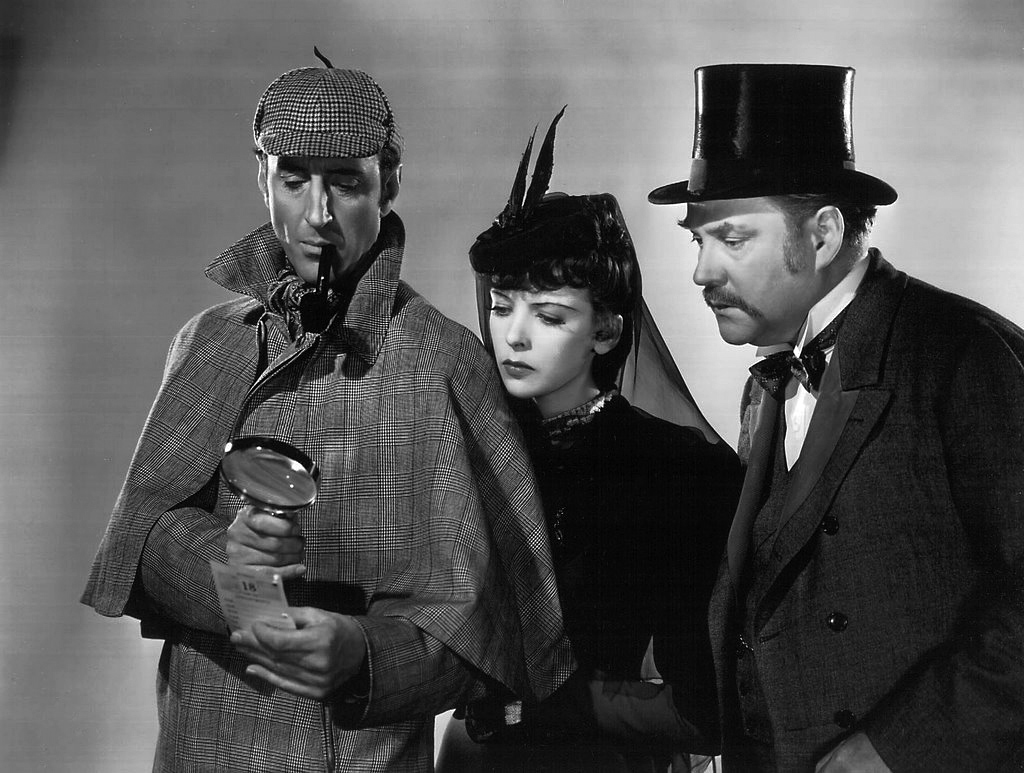
Sherlock Holmes and John Watson about to do philosophy

Let’s review what you need in your worldview in order to have a rationally grounded system of morality.

You need 5 things:

1) Objective moral values

There needs to be a way to distinguish what is good from what is bad. For example, the moral standard might specify that being kind to children is good, but torturing them for fun is bad. If the standard is purely subjective, then people could believe anything and each person would be justified in doing right in their own eyes. Even a “social contract” is just based on people’s opinions. So we need a standard that applies regardless of what people’s individual and collective opinions are.

2) Objective moral duties

Moral duties (moral obligations) refer to the actions that are obligatory based on the moral values defined in 1). Suppose we spot you 1) as an atheist. Why are you obligated to do the good thing, rather than the bad thing? To whom is this obligation owed? Why is rational for you to limit your actions based upon this obligation when it is against your self-interest? Why let other people’s expectations decide what is good for you, especially if you can avoid the consequences of their disapproval?

3) Moral accountability

Suppose we spot you 1) and 2) as an atheist. What difference does it make to you if you just go ahead and disregard your moral obligations to whomever? Is there any reward or punishment for your choice to do right or do wrong? What’s in it for you?

4) Free will

In order for agents to make free moral choices, they must be able to act or abstain from acting by exercising their free will. If there is no free will, then moral choices are impossible. If there are no moral choices, then no one can be held responsible for anything they do. If there is no moral responsibility, then there can be no praise and blame. But then it becomes impossible to praise any action as good or evil.

5) Ultimate significance

Finally, beyond the concept of reward and punishment in 3), we can also ask the question “what does it matter?”. Suppose you do live a good life and you get a reward: 1000 chocolate sundaes. And when you’ve finished eating them, you die for real and that’s the end. In other words, the reward is satisfying, but not really meaningful, ultimately. It’s hard to see how moral actions can be meaningful, ultimately, unless their consequences last on into the future.

Theism rationally grounds all 5 of these. Atheism cannot ground any of them.

Let’s take a look at #4: free will and see how atheism deals with that.

Atheism and free will?

Here’s prominent atheist Jerry Coyne’s editorial in USA Today to explain why atheists can’t ground free will. (Note: link is dead)

Excerpt:

And that’s what neurobiology is telling us: Our brains are simply meat computers that, like real computers, are programmed by our genes and experiences to convert an array of inputs into a predetermined output. Recent experiments involving brain scans show that when a subject “decides” to push a button on the left or right side of a computer, the choice can be predicted by brain activity at least seven seconds before the subject is consciously aware of having made it. (These studies use crude imaging techniques based on blood flow, and I suspect that future understanding of the brain will allow us to predict many of our decisions far earlier than seven seconds in advance.) “Decisions” made like that aren’t conscious ones. And if our choices are unconscious, with some determined well before the moment we think we’ve made them, then we don’t have free will in any meaningful sense.

If you don’t have free will, then you can’t make moral choices, and you can’t be held morally responsible. No free will means no morality.

Here are some more atheists to explain how atheists view morality.

William Provine says atheists have no free will, no moral accountability and no moral significance:

Let me summarize my views on what modern evolutionary biology tells us loud and clear — and these are basically Darwin’s views. There are no gods, no purposes, and no goal-directed forces of any kind. There is no life after death. When I die, I am absolutely certain that I am going to be dead. That’s the end of me. There is no ultimate foundation for ethics, no ultimate meaning in life, and no free will for humans, either.

Richard Dawkins says atheists have no objective moral standards:

In a universe of blind physical forces and genetic replication, some people are going to get hurt, other people are going to get lucky, and you won’t find any rhyme or reason in it, or any justice. The universe that we observe has precisely the properties we should expect if there is, at bottom, no design, no purpose, no evil and no good, nothing but blind, pitiless indifference… DNA neither knows nor cares. DNA just is. And we dance to its music. (Richard Dawkins, River Out of Eden: A Darwinian View of Life (1995))

When village atheists talk about how they can be moral without God, it’s important to ask them to justify the minimum requirements for rational morality. Atheists may act inconsistently with their worldview, believing in free will, expecting praise and blame for complying with the arbitrary standards of their peer group, etc. But there is nothing more to morality on atheism that imitating the herd – at least when the herd is around to watch them. And when the herd loses its Judeo-Christian foundation – watch out. That’s when the real atheism comes out – the atheism that we’ve seen before in countries that turned their backs on God, and the moral law. When God disappears from a society, anything is permissible.

What is the fine-tuning argument for God’s existence, and does the multiverse counter it?

Christianity and the progress of science

One of the best arguments for the existence of a Creator and Designer of the universe is the cosmic fine-tuning argument. The argument argues that individual constants and quantities in nature cannot be much smaller or larger than they are, because it would remove the ability of the universe to support life of any kind. Dr. Michael Strauss, an experimental physicist, explains some examples of the fine-tuning in a recent post on his blog.

He writes:

I liken the finely-tuned universe to a panel that controls the parameters of the universe with about 100 knobs that can be set to certain values. If you turn any knob just a little to the right or to the left the result is either a universe that is inhospitable to life or no universe at all.

Consider the knob that controls the strength of the strong nuclear force that holds quarks inside the neutrons and protons and binds the nucleus of the atom together. If the strength were increased by 2%, the element hydrogen would be either non-existent or very rare. Without hydrogen there would be no water (H2O) or stars that burn hydrogen as their nuclear fuel like our sun.  Without hydrogen there would be no life. If the strength of the strong nuclear force were decreased by about 5%, then hydrogen would be the only element in the universe. That would simplify the periodic table and make Chemistry class very easy, but it would render life impossible.

All known life in this universe is based on the element carbon, which is formed in the final stages of a star’s life. The carbon you and I are made of is the result of the nuclear processes that occurred as previous stars ended their lives. One nice recent study showed that if the mass of the quarks that make up neutrons and protons were changed by just a few percent, then the process that makes carbon as stars die would be altered in such a way that there would not be sufficient carbon in the universe for life. The masses of the lightest sub-atomic quarks are the precise value that is required for carbon to form and for life to exist.

Regarding the multiverse, let me just quote from MIT physicist Alan Lightman, writing in Harper’s magazine about the multiverse:

The… conjecture that there are many other worlds… [T]here is no way they can prove this conjecture. That same uncertainty disturbs many physicists who are adjusting to the idea of the multiverse. Not only must we accept that basic properties of our universe are accidental and uncalculable. In addition, we must believe in the existence of many other universes. But we have no conceivable way of observing these other universes and cannot prove their existence. Thus, to explain what we see in the world and in our mental deductions, we must believe in what we cannot prove.

Sound familiar? Theologians are accustomed to taking some beliefs on faith. Scientists are not. All we can do is hope that the same theories that predict the multiverse also produce many other predictions that we can test here in our own universe. But the other universes themselves will almost certainly remain a conjecture.

The multiverse is not pure nonsense, it is theoretically possible.But even if there were a multiverse, the generator that makes the universes itself would require fine-tuning, so the multiverse doesn’t get rid of the problem. And, as Lightman indicates, we have no independent experimental evidence for the existence of the multiverse in any case. Atheists just have to take it on faith, and hope that their speculations will be proved right. Meanwhile, the fine-tuning is just as easily explained by postulating God, and we have independent evidence for God’s existence, like the the origin of biological information, the sudden appearance of animal body plans, the argument from consciousness, and so on. Even if the naturalists could explain the fine-tuning, they would still have a lot of explaining to do. Theism (intelligent causation) is the simplest explanation for all of the things we learn from the progress of science.

It’s very important to understand that if these values were any different, then it’s not like we would bridges on our foreheads, or have green skin, or have pointy ears, etc. That’s what science fiction teaches you. And many atheists form their view of science by watching science fiction entertainment. But the truth is that the consequences of changing these values are much more consequential: no stars, no planets, no hydrogen, no heavy elements, the universe re-collapses into a hot fireball. You’re not going to have complex, embodied intelligent agents running around making moral decisions and relating to God in a world like that.

Questions like the existence of God should be NOT decided by feelings and faith and superstitious nonsense. They ought to be decided by evidence. Specifically, scientific evidence. Everyone has to account for this scientific evidence for fine-tuning within their worldview, and they have to account for it in a way that is responsible and rational. Punting to the multiverse, without any evidence for it, is neither rational nor responsible. Holding out hope that the evidence we have now will all go away is neither rational nor responsible.

By the way, if you are looking for a good book on the cosmic fine-tuning, especially for evangelism and debating with atheists, you really need to get a copy of “A Fortunate Universe“. Although it is from one of the most prestigious academic presses, it is pretty funny to read, and the main points are made clearly, even if you don’t understand the science. Two astrophysicists wrote it – one who believes that God is the best explanation of the fine-tuning, and one who doesn’t. I really think that Christians need to get used to the idea that evangelism can be pretty easy, so long as you are arguing from peer-reviewed facts. When you get a good book on evidence for God that is not in dispute, then you are invincible. Everybody ought to believe in God in a universe with this much overt scientific evidence spilling out everywhere. Whether this Creator and Designer is the God of the Bible, who visited us as Jesus of Nazareth, takes more work to establish. Working through the emotional objections people have to God, and coaching them to take on the difficulties of living out a authentic Christian life (very unpopular!), is even harder.

Why do some Christians say “all sins are equally bad” and “everyone is equally guilty”?

Young women very supportive of premarital sex

We were having a discussion about whether the Bible teaches that sex before marriage is morally wrong, and someone said “impure thoughts counts as adultery… there isn’t a virgin among us”.

Regarding her point that lust is equal to adultery, and so no one is really a virgin, here’s Ligonier Ministries:

In demonstrating that the seventh commandment was given also to prohibit lust, Jesus is not somehow saying that an unconsummated lustful intent is sinful to the same degree as an actual extramarital affair (though both sins merit punishment). The latter is a more blatant violation of the statute against adultery, and it has greater consequences in the form of divorce and the loss of one’s reputation as a trustworthy person.

Any serious student of the Bible is aware of Jesus’ tendency to exaggerate / use hyperbole.

Also, 1 Corinthians 7 says that wives are not supposed to make a habit of denying their husbands sex. Sex withholding is more of an epidemic today than pornography, and it should also be on the adultery spectrum. It isn’t as bad as adultery, but it definitely breaks the marital covenant.

So why would someone say that lust is the same as adultery, and that there is no such thing as a virgin?

Dr. Michael Krueger recently blogged about this “all sins are equal” view.

Krueger says this:

First, to say all sins are the same is to confuse the effect of sin with the heinousness of sin. While all sins are equal in their effect (they separate us from God), they are not all equally heinous.

Second, the Bible differentiates between sins. Some sins are more severe in terms of impact (1 Cor 6:18), in terms of culpability (Rom 1:21-32), and in terms of the judgment warranted (2 Pet 2:17; Mark 9:42; James 3:1).

Krueger explains the motivation behind the slogans:

[S]ome Christians… use this phrase as way to “flatten out” all sins so that they are not distinguishable from each other. Or, to put it another way, this phrase is used to portray all human beings as precisely the same. If all sins are equal, and all people sin, then no one is more holy than anyone else.

In a world fascinated with “equality,” this usage of the phrase is particularly attractive to folks. It allows everyone to be lumped together into a single undifferentiated mass.

Such a move is also useful as a way to prevent particular behaviors from being condemned. If all sins are equal, and everyone is a sinner, then you are not allowed to highlight any particular sin (or sinner).

Needless to say, this usage of the phrase has featured largely in the recent cultural debates over issues like homosexuality. Yes, homosexuality is a sin, some Christians reluctantly concede. But, they argue, all sins are equal in God’s sight and therefore it is no different than anything else. Therefore, Christians ought to stop talking about homosexuality unless they are also willing to talk about impatience, anger, gluttony, and so on.

Krueger also posted this fascinating follow up post, where he looks at how the phrase is being used by people on Twitter.

Look at these tweets:

  • All sins are equal. People tend to forget that. There is no bigger or smaller sin. Being gay and lying, very equal.

  • all sins are equal in God’s eyes. whatever you’re doing, is no better than what someone else is doing.

  • If you have sex before marriage please don’t come on social media preaching about the wrongs of homosexuality. All sins are equal

  • Need people to realize that all sins are equal… don’t try to look down on me or question my faith just cuz you sin differently than I do.

  • Don’t understand why you’re so quick to judge me, when all sins are equal. So much for family..

  • if you think being gay is a sin, let me ask you something, have you not done anything wrong in your life? all sins are equal. we’re sinners

  • Nope no difference at all. All sins are equal no matter what you’re running for. The bible says do not judge lest ye be judged

  • A huge problem I have with religion is the notion that all sins are equal. Like pre-martial sex and murder are the same amount t of bad.

  • people do bad things because they believe that all sins are equal and ~god~ loves y’all equally so he’s going to forgive you naman ha ha ha

  • It a sin to condemn another sinner and their actions. All sins are equal. So what makes you better than the person you’re condemning?

  • I think so b/c having sex before marriage doesn’t make you less of a women then if you waited until marriage.. all sins are equal soo

  • friendly reminder, all sins are equal in gods eyes so you’re not better than I am in any way. please worry about your own sins before mine.

  • People don’t like when I suggest abortion as an option. This is a free country and all sins are equal so mind your business!!!

  • What I do is no worse than wat you do… all sins are equal no matter what it is… a sin is a sin

  • to god all sins are equal so you have no right to compare your sins to someone else’s bc in the end it doesn’t matter

The first thing that I noticed is that premarital sex and homosexuality are the most popular sins. I would think that divorce and abortion would be up there in the rankings, as well.

People want to be free to follow their hearts when seeking pleasure, then quote the Bible (badly) afterwards, to attack anyone who says that anything they’ve done is morally wrong. They would rather escape the judgment of their peers than admit fault and try to fix the mistake, and do better next time. And they would rather tell people who are hurting themselves by breaking the rules that there are no rules. It makes them feel good to “not judge” – they feel as if they are being kind. Their compassion looks good to non-Christians. And they’re promoting moral relativism which, when it becomes widespread, prevents anyone from judging them.

It’s so bad now, that the people who have morals and who make moral judgments are seen as the real bad people. The immoral people are on the offense, and even trying to ban people from being able to disagree with them.