There seems to be a lot of talk among Democrats and native young people to the effect that European countries have less “income inequality” thanks to bigger government, higher taxes, and more social spending. Is there a downside to this?
The battle over the assumed success of European socialism continues. Many European countries like Sweden have gained a reputation as being very wealthy in spite of their highly regulated and taxed economies. From there, many assume that the rest of Europe is more or less similar, even if slightly poorer. But if we look more closely at the data, a very different picture emerges, and we find that the median household in the US is better off (income-wise) than the median household in all but three European countries.
[…]Using the BEA’s regional price parity index, we can take now account for the different cost of living in different states…
[…]We now see that there’s less variation in the median income levels among the US states. That makes sense because many states with low median incomes also have a very low cost of living. At the same time, many states with high median incomes have a very high cost of living.
Now that we’ve accounted for the low cost of living in Mississippi, we find that Mississippi ($26,517) is no longer the state with the lowest median income in real terms. New York ($26,152) is now the state with the lowest median income due to its very high cost of living.
This has had the effect of giving us a more realistic view of the purchasing power of the median household in US states. It is also more helpful in comparing individual states to OECD members, many of which have much higher costs of living than places like the American south and midwest. Now that we recognize how inexpensive it is to live in places like Tennessee, Florida, and Kentucky, we find that residents in those states now have higher median incomes than Sweden (a place that’s 30% more expensive than the US) and most other OECD countries measured.
Once purchasing power among the US states is taken into account, we find that Sweden’s median income ($27,167) is higher than only six states: Arkansas ($26,804), Louisiana ($25,643), Mississippi ($26,517), New Mexico ($26,762), New York ($26,152) and North Carolina ($26,819).
We find something similar when we look at Germany, but in Germany’s case, every single US state shows a higher median income than Germany. Germany’s median income is $25,528. Things look even worse for the United Kingdom which has a median income of $21,033, compared to $26,517 in Mississippi.
Meanwhile, Colorado ($35,059) has a median income nearly identical to Switzerland ($35,083), and ten states (Connecticut, Iowa, Maryland, Minnesota, New Hampshire, North Dakota, South Dakota, Utah, Virginia, and Washington State) show higher median incomes than Switzerland. Luxembourg ($38,502), on the other hand, shows a median income higher than every state except New Hampshire ($39,034).
None of this analysis should really surprise us. According to the OECD’s own numbers (which take into account taxes and social benefits, the US has higher median disposable income than all but three OECD countries. Sweden ranks below the US in this regard, as does Finland and Denmark.
The fact that the median level in the US is above most OECD countries thus makes it no surprise that most of these countries then rank below most US states. The US states that have income level above the median US level will, not surprisingly, outpace many OECD countries by a considerable margin.
What’s going on here? Well, it turns out that when you have fewer regulations on business, lower business taxes, and an emphasis on working rather collecting welfare, that people have more money in their pockets and a better standard of living. The trouble with Europe is that too many able-bodied people can get by without working. In the United States, we put more emphasis on making your own way, earning your own pay, and spending or saving your money as you please.
In America, the system is geared towards equipping each person to serve their fellows in the private sector workplace. More people working means more wealth is produced, and more wealth produced means that people have a higher standard of living. You wouldn’t have a higher standard of living in a country where most people didn’t work, and just relied on the few who did work. There isn’t enough to go around in society where most people don’t work.
What are the consequences of adopting tariffs for all of the people who are affected? What happens next, after stage one?
Here’s a lesson in basic economics from Joe Carter, writing for the Acton Institute.
He writes:
Both Sanders and Trump propose increasing tariffs on goods imported from other countries — and increase them significantly.* This isn’t that surprising for Sanders, a socialist who, on the issue of economics, is one of the most ill-informed candidates in modern history. But Trump should (and probably does) understand the detrimental impact tariffs have on the poor. And yet he has proposed an economy-crippling, poverty-increasing tariff.
In 2012, Trump proposed a tariff on China of 25 percent. In 2016 he bumped it up to 45 percent. (He later tried to lie and say he never proposed the 45 percent increase, but there is audio of him making the proposal.) A tariff is simply a tax on imports or exports, so Trump is proposing to raise taxes on imported goods by 25 to 45 percent. (To keep this point in mind, I’ll hereafter refer to tariffs as “taxes.”)
You might be thinking, “ So what? That’s a tax the Chinese have to pay.” But that’s not the way tariffs works. China doesn’t pay the tax — you do. If a tariff on Chinese goods is increased by 25 to 45 percent then you pay 25 to 45 percent more for those goods.
Here’s a way to think about it. Imagine there are two hamburger stands in town. One is owned by the mayor’s wife, Veronica, and one is owned by a woman who lives in the next town over, Betty.
Of the two, Betty makes the tastier burger. She is also able to charge $1 a burger since she is able to buy her supplies in her own hometown for much cheaper. Veronica’s burgers aren’t quite as good and cost more to make. She has to charge $1.30 per burger.
The mayor decides to implement a new tax of 45 percent on producers (like Betty) who don’t live in the city limits. Since Betty’s profit margin is already low, she has to pass the bulk of the 45-cent tax on to her customers. Instead of $1 she now has to charge $1.35.
So who is better off in this scenario? The only winner is Veronica. Since her burgers are now cheaper, she is likely to sell more. And who is worse off? The customers who now have to pay 30 to 35 cents more for every burger. That is money they could have used to buy other products or services. Now they have to spend additional money on this new tax.
The same principle applies to taxes on goods and services imported from other countries. Customers simply have to pay more for goods and services they used to get much cheaper.
To understand how Trump’s tax increase would affect consumers, take a trip to Target or Wal-Mart and add 45 percent to almost all the prices. That’s money that comes directly out of your pocket into the hands of the federal government — all to punish you for buying goods that are cheaper to make in China.
Harvard University economist Greg Mankiw explains what most professional economists agree on. The economic benefit of free trade tied for first place, with 93% agreement:
The recent debate over the stimulus bill has lead some observers to think that economists are hopelessly divided on issues of public policy. That is true regarding business cycle theory and, specifically, the virtues or defects of Keynesian economics. But it is not true more broadly.
My favorite textbook covers business cycle theory toward the end of the book (the last four chapters) precisely because that theory is controversial. I believe it is better to introduce students to economics with topics about which there is more of a professional consensus. In chapter two of the book, I include a table of propositions to which most economists subscribe, based on various polls of the profession. Here is the list, together with the percentage of economists who agree:
A ceiling on rents reduces the quantity and quality of housing available. (93%)
Tariffs and import quotas usually reduce general economic welfare. (93%)
He is the author of his “favorite textbook”, which is published by Harvard University Press.
This is not controversial among professional and academic economists. Economists across the ideological spectrum understand that free trade lowers the prices of consumer goods, and allows individuals, families and businesses to get more quality for their dollars. We can do better than Donald Trump and his naive, populist economic pablum.
Canada Election 2015: Socialists in red, Communists in Orange, Conservatives in blue
I’ve been seeing a lot of talk up north in Canada from the substitute drama teacher they elected about how he wants to stimulate the economy by taking money out of the productive private sector and putting into the inefficient, wasteful public sector.
Here’s an example of how he intends to stimulate the economy, as reported by Life Site News. (H/T Kevin the Super-Husband)
It says:
The Liberal government is pledging $81.5 million to the United Nations’ Population Fund to fund “sexual and reproductive health services and rights,” International Development Minister Marie-Claude Bibeau announced Monday.
And that could include access to abortion in countries where it is legal, according to a “senior government official,” who told iPolitics reporter Amanda Connelly that the individual countries in the UN Population Fund (UNFPA) are free to allocate funding to provide access to abortion.
“Sexual and reproductive health services and rights” is well-known UN-speak for contraception and abortion on demand, noted Campaign Life Coalition’s Matt Wojciechowski, who represents CLC at the United Nations.
The Liberals’ decision is a reversal of the Conservatives’ stated ban on abortion funding as part of international aid in the 2010 Muskoka Initiative on Maternal Health.
At that time, the Conservatives pledged $2.8 billion over five years towards improving maternal health and the lives of newborn infants in developing countries, but the initiative, including the Tories apparent refusal to fund abortion, was subject to ongoing criticism.
The Conservatives pledged a further $3.5 billion from 2015 to 2020 for maternal, newborn and child health care projects in developing nations in May 2014, at which time Harper was again criticized when he reiterated that his government would not fund abortion overseas as part of that initiative.
The Liberals promised during the October 2015 election campaign that they would “cover the full range of reproductive health services as part of the [Muskoka] initiatives,” which a Liberal Party official at the time confirmed included abortion where legal, reported Connelly.
“Canada is committed to universal access to sexual and reproductive health services and rights,” Bibeau stated in a press release Monday. “We also believe that programming decisions on these matters should be driven by evidence and outcomes, not ideology.”
Trudeau has been very energetic about how he is going to stimulate the economy by taking money from job creators in the private sector and spending it to “create jobs”. Well, this is what happens when Christians vote for government to “create jobs” by “infrastructure spending”. And they are going to be running budget deficits much worse than what they promised. This is what the vast majority of Canadians voted for in their last election.
But we also waste money down here in the United States, too. Do you ever wonder what happens to the cut that the government takes out of your pay for your private sector activities? The Constitution sets out areas where the federal government is authorized to spend money. But the Democrat Party doesn’t believe in the Constitution, they believe in buying votes and pushing the culture to the left.
Congressional Budget Office: Debt to GDP ratio
Here’s a story from the Daily Caller to explain what stimulating the economy looks like in the United States. (H/T Dad)
Excerpt:
Academics at the University of Oregon have determined that glaciers and the science that studies them are deeply sexist.
“Merging feminist postcolonial science studies and feminist political ecology, the feminist glaciology framework generates robust analysis of gender, power, and epistemologies in dynamic social-ecological systems, thereby leading to more just and equitable science and human-ice interactions,” reads the paper’s abstract. The research was published in the peer-reviewed journal Progress in Human Geography in January.
The study, by historian Dr. Mark Carey and some student researchers, was financially supported by taxpayer dollars. The National Science Foundation (NSF) gave Carey a five-year grant which he used to write his “feminist glaciology” paper. Carey has received $709,125 in grants from the NSF, according to his curriculum vitae.
“Most existing glaciological research – and hence discourse and discussions about cryospheric change – stems from information produced by men, about men, with manly characteristics, and within masculinist discourses,” Carey wrote. “These characteristics apply to scientific disciplines beyond glaciology; there is an explicit need to uncover the role of women in the history of science and technology, while also exposing processes for excluding women from science and technology.”
Carey concluded glacier research is intertwined with gender relations, masculine culture, geopolitics, institutional power and racism — these apparently led to to glacier-related academic and governmental jobs being predominantly filled by men. Damages from melting glaciers target women and ethnic minorities, who “are more vulnerable to glacier changes and hazards than are men,” according to Carey.
That’s a shovel ready project, right there. That will create jobs for sure. And no wonder that people in academia tend to support Democrats. They support Democrats for the same reason that people on welfare support Democrats – because that’s where they get their money for sitting around doing nothing. Private sector research into new products and services is more useful, and doesn’t cost taxpayers a dime.
Public Works
Henry Hazlitt’s book “Economics in One Lesson” explains the problem with taxing the private sector to build public works.
Therefore, for every public job created by the bridge project a private job has been destroyed somewhere else. We can see the men employed on the bridge. We can watch them at work. The employment argument of the government spenders becomes vivid, and probably for most people convincing. But there are other things that we do not see, because, alas, they have never been permitted to come into existence. They are the jobs destroyed by the $10 million taken from the taxpayers. All that has happened, at best, is that there has been a diversion of jobs because of the project. More bridge builders; fewer automobile workers, television technicians, clothing workers, farmers.
And consider Chapter 5 as well, entitled “Taxes Discourage Production”.
In our modern world there is never the same percentage of income tax levied on everybody. The great burden of income taxes is imposed on a minor percentage of the nation’s income; and these income taxes have to be supplemented by taxes of other kinds. These taxes inevitably affect the actions and incentives of those from whom they are taken. When a corporation loses a hundred cents of every dollar it loses, and is permitted to keep only fifty-two cents of every dollar it gains, and when it cannot adequately offset its years of losses against its years of gains, its policies are affected. It does not expand its operations, or it expands only those attended with a minimum of risk. People who recognize this situation are deterred from starting new enterprises. Thus old employers do not give more employment, or not as much more as they might have; and others decide not to become employers at all. Improved machinery and better-equipped factories come into existence much more slowly than they otherwise would. The result in the long run is that consumers are prevented from getting better and cheaper products to the extent that they otherwise would, and that real wages are held down, compared with what they might have been.
There is a similar effect when personal incomes are taxed 50, 60 or 70 percent. People begin to ask themselves why they should work six, eight or nine months of the entire year for the government, and only six, four or three months for themselves and their families. If they lose the whole dollar when they lose, but can keep only a fraction of it when they win, they decide that it is foolish to take risks with their capital. In addition, the capital available for risk-taking itself shrinks enormously. It is being taxed away before it can be accumulated. In brief, capital to provide new private jobs is first prevented from coming into existence, and the part that does come into existence is then discouraged from starting new enterprises. The government spenders create the very problem of unemployment that they profess to solve.
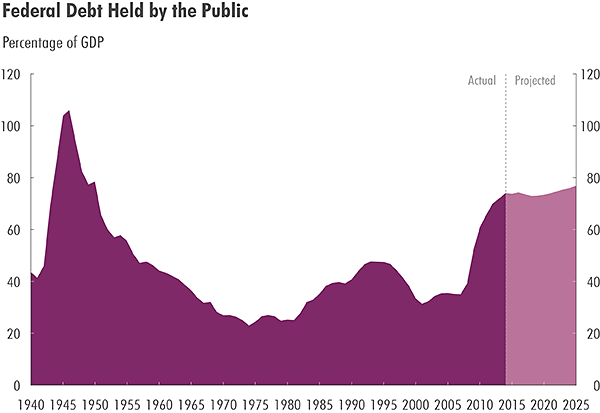
We need to realize that outside of Constitutional spending authority, taxes are a waste of money. We’re $19 trillion in debt. We can’t afford talk of “stimulating the economy” through government spending. It’s a lie. Government spending kills job creation. They can hide the impact by adding the spending to the debt, but eventually, we do feel the impact of wasting money. Especially the foolish young socialists, who are going to have to pay it all back.