
Category Archives: Mentoring

William Lane Craig discusses faith and reason with university students

William Lane Craig lecturing to university students

This is an interview of Dr. William Lane Craig before college students at the University of Central Florida. (95 minutes)

You can get an MP3 of the lecture here. (33 MB)

Questions from the interviewer: (40 minutes)

  • What started you on his journey of studying faith and reason?
  • How would you define the word “faith”?
  • Are faith and reason compatible? How are they related?
  • How can reasonable faith help us to avoid the two extremes of superstition and nihilism?
  • Who makes the best arguments against the Christian faith?
  • Why are angry atheists like Dawkins and Hitchens more well known than better-informed academic atheists?
  • Does the Bible require Christians to give the unbeliever reasons for their faith?
  • How does faith spur Christians to think carefully about the big questions in life?
  • Should the American church prod churchgoers to develop their minds so they can engage the secular culture?
  • When talking about Christianity intellectually, is there a risk of neglecting the experience of being a Christian?
  • Which Christian apologist has shaped your thinking the most?
  • Which Christian philosopher has shaped your thinking the most?
  • Does the confidence that comes from apologetics undermine humility and reverence?
  • If you had to sketch out a 5 minute case for Christianity, what would you present?
  • Can non-Christians use their reason to arrive at truth?
  • Are there cases where atheists must affirm irrational things in order to remain atheists?
  • Can the universe have existed eternal, so that there is no need to explain who created it?
  • Even if you persuade someone that Christianity is true, does that mean they will live it out?

There is also a long period of questions, many of them hostile, from the audience of students (55 minutes).

  • Haven’t you said nasty things about some atheists? Aren’t you a meany?
  • What do you make of the presuppositional approach to apologetics?
  • Can a person stop being a Christian because of the chances that happen to them as they age?
  • Why did God wait so long after humans appeared to reveal himself to people through Jesus?
  • Can a person be saved by faith without have any intellectual assent to truth?
  • How do you find time for regular things like marriage when you have to study and speak so much?
  • How would you respond to Zeitgeist and parallels to Christianity in Greek/Roman mythology?
  • Do Christians have to assume that the Bible is inerrant and inspired in order to evangelize?
  • If the universe has a beginning, then why doesn’t God have a beginning?
  • Can you name some philosophical resources on abstract objects, Platonism and nominalism?
  • How can you know that Christianity more right than other religions?
  • Should we respond to the problem of evil by saying that our moral notions are different from God’s?
  • Define the A and B theories of time. Explain how they relate to the kalam cosmological argument.
  • How can Christians claim that their view is true in the face of so many world religions?
  • What is the role of emotions in Christian belief and thought?
  • Can evolution be reconciled with Christian beliefs and the Bible?
  • When witnessing person-to-person, should you balance apologetics with personal testimony?
  • Is there a good analogy for the trinity that can help people to understand it? [Note: HE HAS ONE!]
  • How can Christians reconcile God’s omniscience, God’s sovereignty and human free will?

This is a nice introductory lecture that is sure to get Christians to become interested in apologetics. As you watch or listen to it, imagine what the world would be like if every Christian could answer the questions of skeptical college students and professors like Dr. Craig. What would non-Christians think about Christianity if every Christian had studied these issues like Dr. Craig? Why aren’t we making an effort to study these things so that we can answer these questions?

It is really fun to see him fielding the questions from the skeptical university students. My favorite question was from the physics student who sounds really foreign, (at 1:19:00), then you realize that he is a Christian. I do think that Dr. Craig went a little far in accommodating evolution, but I put that down to the venue, and not wanting to get into a peripheral issue. I’m also surprised that no one asked him why God allows humans to suffer and commit acts of evil.

If you are looking for a good basic book on apologetics, then I would choose “Is God Just a Human Invention?” by Sean McDowell and Jonathan Morrow. And you can even be part of a reading group that Brian Auten of Apologetics 315 just announced, that I will be participating in. We will all be reading the book together, chapter by chapter, and lots of people will be available to answer your questions.

Who is William Lane Craig?

About William Lane Craig:

William Lane Craig is Research Professor of Philosophy at Talbot School of Theology in La Mirada, California.

Dr. Craig pursued his undergraduate studies at Wheaton College (B.A. 1971) and graduate studies at Trinity Evangelical Divinity School (M.A. 1974; M.A. 1975), the University of Birmingham (England) (Ph.D. 1977), and the University of Munich (Germany) (D.Theol. 1984). From 1980-86 he taught Philosophy of Religion at Trinity… In 1987 they moved to Brussels, Belgium, where Dr. Craig pursued research at the University of Louvain until assuming his position at Talbot in 1994.

He has authored or edited over thirty books, including The Kalam Cosmological ArgumentAssessing the New Testament Evidence for the Historicity of the Resurrection of JesusDivine Foreknowledge and Human FreedomTheism, Atheism and Big Bang Cosmology; and God, Time and Eternity, as well as over a hundred articles in professional journals of philosophy and theology, including The Journal of PhilosophyNew Testament StudiesJournal for the Study of the New TestamentAmerican Philosophical QuarterlyPhilosophical StudiesPhilosophy, and British Journal for Philosophy of Science.

Craig’s CV is here.

Craig’s list of publications is here.

William Lane Craig is, without a doubt, the top living defender of Christianity. He has debated all of the most famous atheists, including Christopher Hitchens, Sam Harris, etc. as well as academic atheists like Quentin Smith, Peter Millican, etc. if you search this blog, you’ll find many debates posted here, sometimes even with snarky summaries.

Young women: one of the best things you can do with your life is care for kids

Does government provide incentives for people to get married?
Should women postpone marriage and raising children for other things?

Super-mom Lindsay sent me this article about by a former feminist who was once opposed to children, then had 4 of them in 5 years.

Introduction:

Up until my mid-20’s I was firm in my belief that I never wanted to have kids. A combination of events made me reconsider the issue, and by the time we got married I was open to the idea of having some pre-set, small number of kids and had begun thinking about the precise timetables on which I would have them.

[…]It would have been inconceivable to me to imagine that constantly having my plans derailed by pregnancies and not even having any idea when I’d be done changing diapers would be an improvement over my fully controlled, well-ordered life, but it has been.

[…]Lately I’ve been imagining what I would say to 2003 Jen if I could go back in time and give her a crystal ball to show her what her future would be like. I’ve been trying to imagine how I would talk her down from the balcony ledge after the crystal ball got to the “four kids in five years — and doing NFP!” part, how I could possibly convince her that this life is not only not a recipe for misery, but the true fulfillment of everything she thought she wanted.

I would love to tell you that I’d simply be able to explain that each child is such a joy and a blessing, but that would not have resonated with Old Jen; I might have agreed, but ultimately I would have said that those joys and blessing are just too much hard work. “I just don’t see how that kind of life could be anything but miserable for someone like me,” I would have said.

So how do you convince a woman that “hard work”, i.e. – self-denial, self-control, self-discipline, self-sacrifice – while caring for children could actually lead to a fulfilling life? And most importantly, that it should not be postponed in pursuit of something that appears more fun, more thrilling or more important (according to a feminist measure of fun, thrills and importance).

She makes 5 points in her post.

Here’s one:

3. “It’s not what you do, it’s whom you serve.”

A product of secular society, I’d fallen into the common notion that the way to find true happiness is to focus on yourself more and other people less. It makes perfect sense, after all: doing pleasurable things for me is fun, sacrifice and hard work are not fun; ergo, the secret to happiness must be to live for myself as much as possible. Right?

How shocked I was to discover that I was wrong — dead wrong. Part of fully understanding the concept of vocation was understanding that a vocation is not to be thought of as “what you do” as much as it is “whom you serve.” It was nothing short of revolutionary to hear the concept that God has called every one of us to serve others, that living for yourself is not a valid option; that the key to deep fulfillment, to finding your very purpose in life, is as simple as finding out the specific way in which you’re called to serve. Do that, and you will find peace.

It sounded not only too simple to be true, but too difficult. As a spoiled only child the idea of living to serve sounded terrible. But once I actually took a leap of faith and tried it, I had no doubt that this was truth.

Next,I want to talk about one of the young Christians I mentor, and then about the woman I supported for President in the 2012 election.

I spent Friday night playing with one of the young women I mentor. This is the one who did the BS in computer science, and is now doing the MS in computer science. After playing a few rounds of “Keep Talking and Nobody Explodes”, she mentioned the salary from her internship this summer. She asked me “what am I going to do with so much money? I think I had better stop thinking so much about myself and find some people out there to help”. And I was so pleased. Because this woman, more than any of the other young people I mentor, is my replacement.

J. Warner Wallace likes to talk about training your replacement, and I have several replacements, but none better than her. I remember when she was younger, she was a bit more selfish than now. She still organized events, like bringing Frank Turek, Tim McGrew, etc. to speak on her campus. But she never showed much interest in one-on-one care for others. It was my hope that just like me, she would react to computer science salary with a sense of obligation to others, and so she has. And that’s how I think women ought to be. They should be educated, they should be successful – but they should be open to the needs of others.

Michele Bachmann

The woman I admire the most in the world is former GOP Congresswoman Michele Bachmann, who was my first choice for President in 2012. I had been following her for many years before that, when she was just a state senator. I liked her because of her interest in apologetics, as well as her focus on her family.

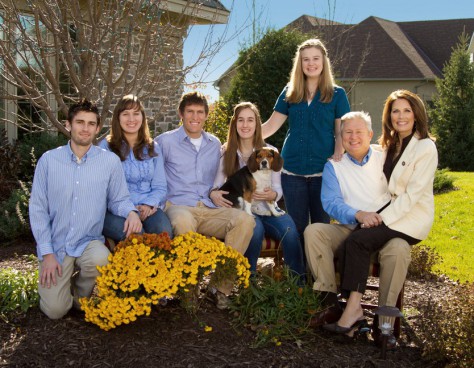
Marcus and Michele Bachmann and family

The  radically leftist New York Times did a profile of her.

It says:

Nearly two decades ago, a stay-at-home mother and onetime federal tax lawyer named Michele Bachmann felt a spiritual calling to open her clapboard home here to troubled teenage girls.

“We had our five biological children that God gave to us, and then he called us to take foster children into our home,” Mrs. Bachmann told a Christian audience in 2006. “We thought we were going to take unwed mothers in,” she continued, adding, “We took 23 foster children into our home, and raised them, and launched them off into the world.”

Today Mrs. Bachmann is Representative Bachmann, a Minnesota Republican, first elected to the House in 2006, and now a candidate for her party’s nomination for president. In Washington, she has grabbed the spotlight as a staunch fiscal conservative and brash Tea Party leader. But a look at her life here shows that it was her role as a mother, both to her biological children and to her adolescent foster daughters, that spurred her to seek public office.

[…]Mrs. Bachmann’s political awakening began with her deep disenchantment with the public school system.

[…]By the late 1990s, with her own children enrolled in private Christian schools, Mrs. Bachman was upset by the education her foster children were getting in public school. Teachers gave them “little special attention,” and many were “placed in lower-level classes, as if they were not expected to succeed,” she told a House subcommittee in 2007.

One brought home “an 11th-grade math assignment that involved coloring a poster,” she testified. Another “spent an entire week watching movies.” A third “remarked to me once that she was in ‘stupid people math.’ ”

So Mrs. Bachmann immersed herself in the minutiae of Minnesota’s graduation requirements. She worked with a conservative researcher and began giving talks in church basements.

[…]The Rev. Marcus Birkholz, the pastor at Salem Lutheran Church, which Mrs. Bachmann attended for years, calls her “a lady with energy and a heart” whose uncompromising “support for the unborn” extends beyond fighting abortion. “She sees the whole picture,” Pastor Birkholz said. “It’s not just bringing a child into the world; that child has to be nurtured and educated.”

[…]Mrs. Bachmann, whose biological children now range in age from 17 to 29, worked until her fourth child was born. (Her youngest, Sophia, is headed to college this fall, while the eldest, Lucas, is a medical resident at the University of Connecticut, pursuing a specialty in psychiatry.) Friends remember her planning neighborhood picnics and organizing bicycle parades.

“I had all these balls in the air that I was juggling,” she said in an interview with Minnesota Monthly last year. In choosing to leave work, she said, “I finally realized my dream, which was to be mom of a big, happy family.”

What does it mean? It means that women ought not be horrified by husband needs or children needs. They should not be opposed to responsibilities, expectations and obligations in relationships. Sometimes, the path to greatness means taking a few years off from work to homeschool your kids. After all, isn’t it better for God to have FIVE Christian kids who will surpass you in influence?  Michele didn’t get involved in politics by thinking of herself. She got involved in politics by thinking of her children, and her 23 foster children.

Here’s my advice to young women: 1) Study something hard that pays. 2) Work a few years and get debt free. 3) Marry a good provider in your mid-to-late 20s. 4) Have as many children as your husband can support. 5) Be actively involved in the education of your kids (with apologetics, too). 6) Open your home to kids who don’t have a mom or a dad. 7) Teach your kids the importance of caring for others. 8) Run for President (as a Republican).

Advice for pro-lifers who want to do sidewalk counseling

I'm Scheming Unborn Baby, and I approve this study
I’m Scheming Unborn Baby, and I approve this resource

Not from me, of course. I’m no lawyer. But here is a good resource about your legal rights, from the Alliance Defending Freedom (ADF).

Description:

Over the past 24 years, a surging pro-life movement has forced the closure of 75 percent of surgical abortion businesses in America. But the work is not done. Over 500 abortion facilities still exist in the United States.

That’s where you come in.

As a sidewalk counselor, you can bring hope and clarity to women and men facing an unplanned or crisis pregnancy by connecting with them and empowering them to choose life. To do this work faithfully and effectively, however, you should familiarize yourself with your rights.

Alliance Defending Freedom (ADF) created this manual to educate you about your legal rights when engaging in sidewalk counseling. We pray this resource will help you be better equipped to serve the women and men entering abortion clinics every day.

ADF has taken on cases where the right to advise women considering abortion was attacked. For example, they had to fight the Democrat governor and attorney general of Massachusetts at the Supreme Court:

On Nov. 13, 2007, Massachusetts Gov. Deval Patrick signed into law S.B. 1353, which created the buffer zone. The U.S. Supreme Court agreed to hear McCullen v. Coakley in June of last year.

Coakley is the Democrat attorney general of Massachusetts, one of the most liberal states in the nation.

Here’s a snip from the decision:

“It is no accident that public streets and sidewalks have developed as venues for the exchange of ideas,” the Supreme Court wrote in its opinion. “Even today, they remain one of the few places where a speaker can be confident that he is not simply preaching to the choir…. In light of the First Amendment’s purpose ‘to preserve an uninhibited marketplace of ideas in which truth will ultimately prevail…,’ this aspect of traditional public fora is a virtue, not a vice.”

ADF won the case 9-0.

There is a bit more about the woman who brought the case against the pro-abortion Democrats in this post.

It says:

The young married couple slide quickly out of their car and onto the busy sidewalk, eyes fixed on the dark glass doors of the huge Planned Parenthood abortion center. Half a block long and three stories high, its imposing facade looms over the busy stream of students milling up and down the mile-long stretch of Commonwealth Avenue near Boston University.

Suddenly, a small figure nudges into the couple’s tunneled vision, moving to engage them.

“Good morning,” she says, arms wide and inviting, in the cheerful tones of someone who actually believes that it is. “I’m Eleanor. How can I help you this morning?’

They quickly brush past her and into the building. Minutes later, the husband comes back out to put money in the meter.  The small woman is still there, still beaming. “Can I help you?”

“You can’t help me,” he says, pulling change from his pocket. To her fine-tuned ear, he sounds as though he’s trying to convince himself, more than her.

“Well, okay. But I just want to ask you—do you know when the baby’s heart starts beating?”

He sighs, but he answers. “Three months.”

“No … not three months. Twenty-one days. Do you know when the brain waves begin to form?”

Fishing for another quarter, he flashes her an expression that mingles surprise, annoyance, and curiosity in about equal measure. “Six months,” he guesses.

“Ten weeks,” she tells him. Their eyes meet.

“Really?”

“Yes.”

He turns back toward the building—then, almost in spite of himself, asks her a question … something about the baby’s DNA. In a moment, they’re deep in conversation. Too deep, to the woman’s mind. She is counting precious minutes, even as her genuine smile and tone warm and envelop the stranger. She fixes him with a clear, sober expression.

“You have to go in there and get her.”

He looks at her for a moment. “All right,” he says at last. “I will.” He runs for the door. Ten minutes later, he’s back, tears in his eyes.

“She’s already in the back. I can’t get to her. They won’t let me speak to her.” He’s visibly upset. “I can’t believe I brought her here.”

A thought seizes her: “Do you have a cell phone? Call her. Tell her there’s help out here and to stop this.”

Incredibly, Planned Parenthood staff members have brought the woman into the procedure room with her cell phone. She answers his call. “You have to come out!” he cries, pleading.

“And she did,” Eleanor says, with a smile that could light up the whole Boston skyline. “I have their little boy’s picture. It’s on my refrigerator.”

There are a lot of pictures on Eleanor McCullen’s refrigerator. All of them children who owe their lives, in large measure, to this 78-year-old woman’s willingness to stand on a Boston curbside five hours a day, two days a week—rain, shine, snow, or sleet—for the last 14 years.

She’s got the facts, and she’s not afraid to use them.

So, if this sounds like something you would be interested in, then listen to the interview with Eleanor, download the ADF guide about legal issues for sidewalk counselors, and then get started saving lives.