Category Archives: Commentary

Why should Christians study church history?

Mary send me this article from Probe. (H/T Mary via The Poached Egg)

Excerpt:

When I was in college, we had to do what was called “evangelism night.” It was a night in which a group of us would pile into someone’s old, broken-down car (we were all poor back then) and skirt downtown to the city’s walking bridge, a large half-mile overpass extending over the Chattanooga River. We were always sure that plenty of people would be there that needed our message. One night I began talking to a man about Christ and he quickly cut me off, “I am a Christian,” he exclaimed. “Great,” I replied. As we continue talking, though, I soon discovered that he was a “different” Christian than me. He said he believed in an expansive New Testament that contained many more books than the twenty-seven I was accustomed to, and he had six or seven Gospels, where I only had four. When I told him that I didn’t think he was right, that the New Testament only contained twenty-seven books and four Gospels, he asked me an important question, “How do you know that there are only four Gospels? Maybe there are more books to the Bible than you think!” I stood there, knowing that he was wrong. But I didn’t know why he was wrong. I had no idea of how to combat him—I didn’t know church history well enough in order to provide, as 1 Peter 3:15 says, an account of the assurance that lies within me.

This is one of the great reasons why we as Christians need to study church history. In this article I am going to make a passionate plea for the study of church history and give five reasons why I believe it is essential for every follower of Christ.

And here’s one of the five reasons:

The second reason is that Christians, just like any other people, go through many times of loneliness and despair. The book of Psalms reveals multiple times where various psalmists reveal that they feel as though God has left them, that their enemies are closing in, and that no one, including God, really cares. Suffice it to say that this often leads to a crisis of faith. Many of us suffer that same crisis from time to time, and the one thing that usually helps to be encouraged is to get around God’s people. When we are with others who believe as we do, it helps to stabilize, and to build, our faith. There is a sense in those moments of being with other Christians that our faith is bigger and more expansive—that it is communal, not merely individual.

Studying church history is about being with the community of faith. Reading the stories, learning the truths, examining the insights of these faithful men and women down through the centuries gives to us the sense that our faith is not shallow, but as the song used to say, it is “deep and wide.” Church historian John Hannah claims that studying Christian heritage “dispels the sense of loneliness and isolation in an era that stresses the peripheral and sensational.”{2} It breaks us away from this modern culture that emphasizes the glitz and the glamour of the here and now, and helps us to establish confidence in the faith by examining the beliefs central to our faith that have been developed over a long period of time. Christian theology does not invent beliefs; it finds beliefs already among Christians and critically examines them. The excavation site for Christian theology is not merely in the pages of Scripture, though that is the starting point, but it expands from there into the many centuries as we find the Holy Spirit leading His church. For us today, it gives us the ability to live each day absolutely sure that what we are believing in actually is true; to know and understand that for over 2000 years men and women have been worshipping, praising, and glorifying the same God that we do today.

It’s similar to those grand, majestic churches, the cathedrals that overwhelm you with the sense of transcendence. The expansive ceilings, high walls, and stained glass leaves the impression that our faith, our Christian heritage, is not small but large. Entering into a contemplation of our faith’s history is like going into one of those churches. It takes away the loneliness, the isolation, and reminds us of the greatness of our faith.

I probably spend too much time focused on science apologetics, so it’s nice to read something different.
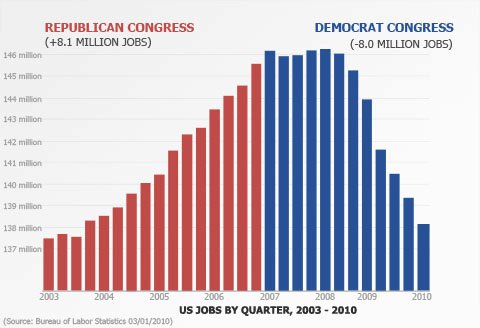
Is it “racial discrimination” to ask someone for a photo ID before they vote?

Does Obama want a fair vote on these results?
Can Obama get re-elected based on these results?

From National Review.

Excerpt:

Once you get past the race-baiting, you will find that opponents of voter ID generally rely on two arguments, equally specious: 1) There is no need for photo ID, because there is no voter fraud in the United States; 2) This is a deliberate effort to suppress the turnout of minority voters, who often don’t have photo ID. Liberals keep repeating these false claims despite the fact that they have been disproved both in the courtroom and at the polling place.

[…]The claim that there is no voter fraud in the U.S. is patently ridiculous, given our rich and unfortunate history of it. As the U.S. Supreme Court said when it upheld Indiana’s photo-ID law in 2008, “Flagrant examples of such fraud . . . have been documented throughout this Nation’s history by respected historians and journalists.” The liberal groups that fought Indiana’s law didn’t have much luck with liberal justice John Paul Stevens, who wrote the 6–3 decision. Before being named to the Supreme Court, Justice Stevens practiced law in Chicago, a hotbed of electoral malfeasance . . .

[…]Election data in Georgia demonstrate that concern about a negative effect on the Democratic or minority vote is baseless. Turnout there increased more dramatically in 2008 — the first presidential election held after the state’s photo-ID law went into effect — than it did in states without photo ID. Georgia had a record turnout in 2008, the largest in its history — nearly 4 million voters. And Democratic turnout was up an astonishing 6.1 percentage points from the 2004 election, the fourth-largest increase of any state. The black share of the statewide vote increased from 25 percent in 2004 to 30 percent in 2008, according to the Joint Center for Political and Economic Studies. According to Census Bureau surveys, 65 percent of the black voting-age population voted in the 2008 election, compared with only 54.4 percent in 2004, an increase of more than ten percentage points.

Read the full refutations of those two arguments in the post, currently the second most popular post on National Review. This is a very, very good article, and it references the relevant studies.

If it’s not close, they can’t cheat. Remember that in 2012.

Is evolution compatible with Christianity?

Denyse O’Leary found this article at the Washington Post about a Christian woman who discovered Darwinian evolution through the works of Richard Dawkins and Jerry Coyne. She found it to be incompatible with Christianity. (H/T Uncommon Descent)

Excerpt:

But of course evolution poses a problem for Christianity. That’s not to say it poses a problem for all Christians, since many Christians happily accept evolution: they see Genesis 1 as merely a metaphor, and declare that if God chose to create us using evolution, that’s fine by them. I used to be this kind of Christian myself; but I must confess that my blitheness was only possible because I had only the vaguest possible idea of how evolution works and certainly didn’t know enough about it to realize that unguided-ness is central to it.

While I welcome anyone who recognizes that the evidence for evolution is such that it cannot sensibly be denied, to attempt to co-opt evolution as part of a divine plan simply does not work, and suggests a highly superficial understanding of the subject.

And:

Evolution poses a further threat to Christianity, though, a threat that goes to the very heart of Christian teaching. … Evolution could not have produced a single mother and father of all future humans, so there was no Adam and no Eve. No Adam and Eve: no fall. No fall: no need for redemption. No need for redemption: no need for a redeemer. No need for a redeemer: no need for the crucifixion or the resurrection, and no need to believe in that redeemer in order to gain eternal life. And not the slightest reason to believe in eternal life in the first place.

That’s the understanding of evolution that she got from Richard Dawkins and Jerry Coyne.

Denyse O’Leary mentions that there is a group of “Christian” Darwinists who have no problem at all with the scientific claims made by atheistic Darwinists. They oppose intelligent design – the idea that science can detect effects in nature, like protein sequences, that are best explained as the result of intelligent causes. When it comes to what the science can show, atheists and “theistic evolutionists” agree: God didn’t do anything. So why are these “theistic evolutionists” pushing a theory that leads people to become atheists, when properly understood?