
All posts by Wintery Knight

https://winteryknight.com/

Trump names pro-life scientist to National Science Board

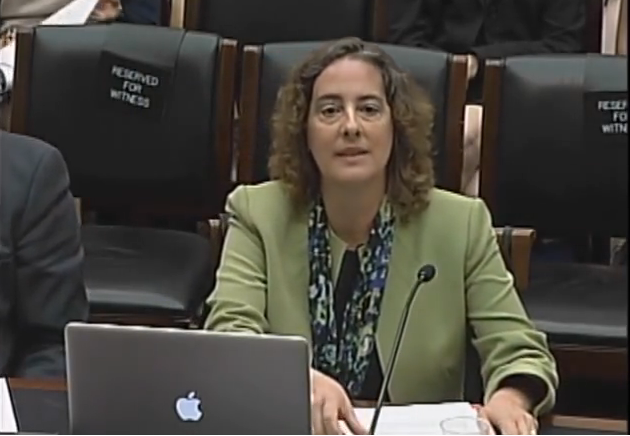
Dr. Maureen Condic
Dr. Maureen Condic

On Friday, I was reading an article in the Christian Research Journal by prominent pro-life debater Scott Klusendorf, and he was analyzing a pro-abortion scholar. But he ended his article with this quote, where he mentions some of the best pro-life scholars.

He wrote:

In a 2008 Los Angeles Times op-ed piece, abortion-choice advocates Kate Michelman and Frances Kissling lament that a new generation of pro-life advocates present “a sophisticated philosophical and political challenge” to what once was considered a settled debate.

Pollitt largely ignores that challenge. She dreams of a day when cleaning out wombs is just another form of housekeeping. Nowhere in her text do you get the sense she’s interacted with leading pro-life thinkers such as Francis Beckwith, Maureen Condic, or Christopher Kaczor. And while Pollitt may indeed fire up like-minded abortion-advocates, she’s no pro when it comes to engaging the best arguments from pro-life apologists.

Now, I recognize Beckwith and Kaczor. I’ve purchased their books. They are seen as two of the top pro-life scholars. And I remember I’ve cited Condic as an authority on the science of fetal development, in this post.

It’s great that we have pro-life scholars like Beckwith, Kaczor and Condic, but it would be even better if those pro-life scholars were in positions of influence. They would have to have the right credentials, of course. But we also need someone to put them in high positions.

Life News reports:

A nationally-recognized scientist who has testified in support of unborn babies is President Donald Trump’s new choice for the National Science Board.

Dr. Maureen Condic, an associate professor at the University of Utah who specializes in neurobiology, is widely known for her work on spinal cord repair, according to the Salt Lake Tribune. Earlier this month, Trump chose her to fill one of the 25 seats on the National Science Board.

“I’m just thrilled that it’s an opportunity to serve my country and the greater scientific community,” Condic said in response to the news.

She obtained her Ph.D. from University of California, Berkeley, and is a widely published scientist whose works have appeared in a variety of peer-reviewed journals.

Her work has been instrumental to the pro-life movement in its pursuit to protect unborn babies from painful abortions. In 2003, Condic testified before Congress that unborn babies have the capacity to feel pain as early as eight weeks.

“The neural circuitry responsible for the most primitive response to pain, the spinal reflex, is in place by 8 weeks of development,” she explained. “This is the earliest point at which the fetus experiences pain in any capacity.”

She asked lawmakers to pass the Pain-Capable Unborn Child Protection Act to protect unborn babies from the “cruel” and unnecessary pain of abortion.

“Imposing pain on any pain-capable living creature is cruelty,” Condic said. “And ignoring the pain experienced by another human individual for any reason is barbaric. We don’t need to know if a human fetus is self- reflective or even self- aware to afford it the same consideration we currently afford other pain-capable species. We simply have to decide whether we will choose to ignore the pain of the fetus or not.”

Many states have passed laws banning abortions when the unborn child can feel pain. And 13 states have laws that include the facts on fetal pain in mandatory counseling. Dr. Condic deserves the credit for her work on the research that supports this legislation.

In addition, earlier this year, the Senate voted on a bill to ban abortions where the unborn child can feel pain:

Next week, the Senate will vote on the Pain-Capable Unborn Child Protection Act (S. 2311), introduced by Sen. Lindsey Graham (R-S.C.). This legislation would protect unborn children by preventing abortions 20 weeks after fertilization, at which time scientific evidence suggests the unborn child can feel pain. The House passed a similar bill last fall by a vote of 237 to 189.

Unfortunately, the Democrats in the Senate were able to defeat the Senate bill. Still, it really helps the pro-life cause for Dr. Condic to get into a position of influence. Maybe we will get a second chance to pass this legislation, when we have more pro-life senators like newly elected Marsha Blackburn.

Study: the early Earth’s atmosphere contained oxygen

Christianity and the progress of science

Here’s a paper published in the prestigious peer-reviewed science journal Nature, entitled “The oxidation state of Hadean magmas and implications for early Earth’s atmosphere”. This paper is significant because it undermines naturalistic scenarios for the origin of life.

Evolution News explains what the paper is about.

Excerpt:

A recent Nature publication reports a new technique for measuring the oxygen levels in Earth’s atmosphere some 4.4 billion years ago. The authors found that by studying cerium oxidation states in zircon, a compound formed from volcanic magma, they could ascertain the oxidation levels in the early earth. Their findings suggest that the early Earth’s oxygen levels were very close to current levels.

[…]Miller and Urey conducted experiments to show that under certain atmospheric conditions and with the right kind of electrical charge, several amino acids could form from inorganic compounds such as methane, ammonia, and water. Several experiments have been done using various inorganic starting materials, all yielding a few amino acids; however, one key aspect of all of these experiments was the lack of oxygen.

If the atmosphere has oxygen (or other oxidants) in it, then it is an oxidizing atmosphere. If the atmosphere lacks oxygen, then it is either inert or a reducing atmosphere. Think of a metal that has been left outside, maybe a piece of iron. That metal will eventually rust. Rusting is the result of the metal being oxidized. With organic reactions, such as the ones that produce amino acids, it is very important that no oxygen be present, or it will quench the reaction. Scientists, therefore, concluded that the early Earth must have been a reducing environment when life first formed (or the building blocks of life first formed) because that was the best environment for producing amino acids. The atmosphere eventually accumulated oxygen, but life did not form in an oxidative environment.

The problem with this hypothesis is that it is based on the assumption that organic life must have formed from inorganic materials. That is why the early Earth must have been a reducing atmosphere. Research has been accumulating for more than thirty years, however, suggesting that the early Earth likely did have oxygen present.

[…]Their findings not only showed that oxygen was present in the early Earth atmosphere, something that has been shown in other studies, but that oxygen was present as early as 4.4 billion years ago. This takes the window of time available for life to have begun, by an origin-of-life scenario like the RNA-first world, and reduces it to an incredibly short amount of time. Several factors need to coincide in order for nucleotides or amino acids to form from purely naturalistic circumstances (chance and chemistry). The specific conditions required already made purely naturalist origin-of-life scenarios highly unlikely. Drastically reducing the amount of time available, adding that to the other conditions needing to be fulfilled, makes the RNA world hypothesis or a Miller-Urey-like synthesis of amino acids simply impossible.

So here’s where we stand. If you are a materialist, then you need a reducing environment on the early Earth in order to get organic building blocks (amino acids) from inorganic materials. However, the production of these organic building blocks (amino acids) requires that the early Earth atmosphere be oxygen-free. And the problem with this new research, which confirms previous research, is that the early Earth contained huge amounts of oxygen – the same amount of oxygen as we have today. This is lethal to naturalistic scenarios for creating the building blocks of life on the Earth’s surface.

Other problems

If you would like to read a helpful overview of the problems with a naturalistic scenario for the origin of life, check out this article by Casey Luskin.

Excerpt:

The “origin of life” (OOL) is best described as the chemical and physical processes that brought into existence the first self-replicating molecule. It differs from the “evolution of life” because Darwinian evolution employs mutation and natural selection to change organisms, which requires reproduction. Since there was no reproduction before the first life, no “mutation – selection” mechanism was operating to build complexity. Hence, OOL theories cannot rely upon natural selection to increase complexity and must create the first life using only the laws of chemistry and physics.

There are so many problems with purely natural explanations for the chemical origin of life on earth that many scientists have already abandoned all hopes that life had a natural origin on earth. Skeptical scientists include Francis Crick (solved the 3-dimensional structure of DNA) and Fred Hoyle (famous British cosmologist and mathematician), who, in an attempt to retain their atheistic worldviews, then propose outrageously untestable cosmological models or easily falsifiable extra-terrestrial-origin-of-life / panspermia scenarios which still do not account for the natural origin of life. So drastic is the evidence that Scientific American editor John Horgan wrote, “[i]f I were a creationist, I would cease attacking the theory of evolution … and focus instead on the origin of life. This is by far the weakest strut of the chassis of modern biology.”3

The article goes over the standard problems with naturalistic scenarios of the origin of life: wrong atmosphere, harmful UV radiation, interfering cross-reactions, oxygen levels, meteorite impacts, chirality, etc.

Most people who are talking about intelligent design at the origin of life talk about the information problem – how do you get the amino acids to form proteins and how do you get nucleotide bases to code for amino acids? But the starting point for solving the sequencing problem is the construction of the amino acids – there has to be a plausible naturalistic scenario to form them.

The pilgrims experiment with communism before the second Thanksgiving

The First Thanksgiving
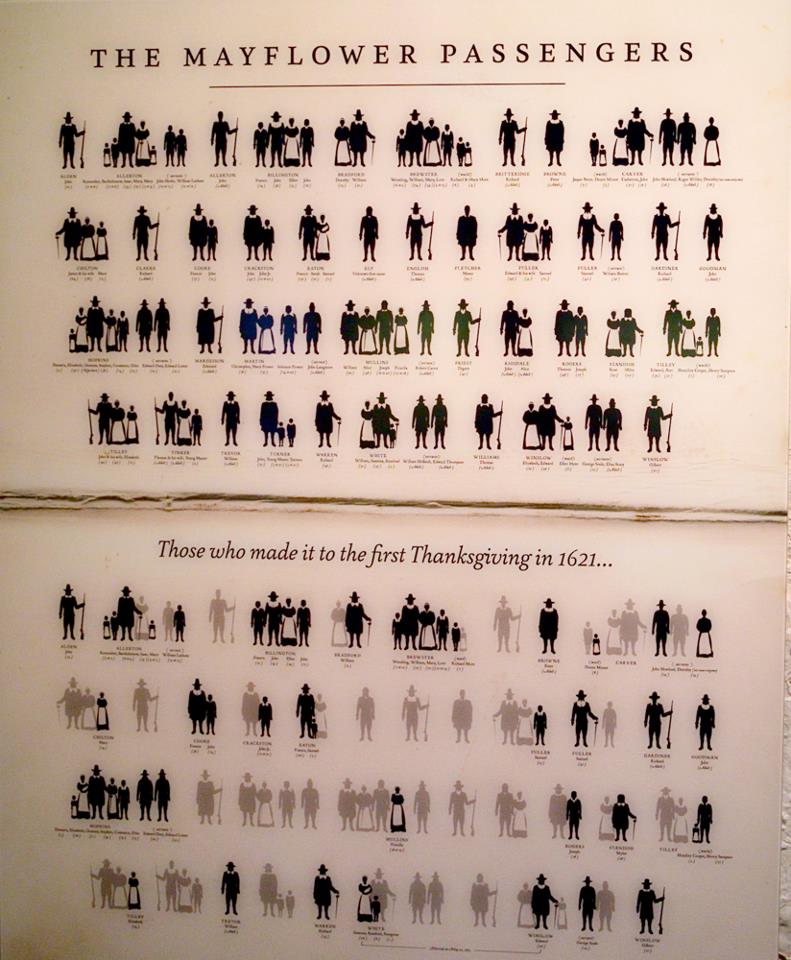
Less than half the original pilgrims made it to the the first Thanksgiving

Here’s an article from The Stream about the second Thanksgiving, by Dante Witt. I like this article because it tells us so much about the character of the United States of America. Why are we so conservative about economics?

She briefly retells the story of how the pilgrims were helped by Squanto, which I blogged about in a previous Thanksgiving Day post, then she talks about the troubles they had next.

Excerpt:

Although Squanto’s farming techniques worked better than their old ones, the pilgrims still could not produce enough food. Was it bad luck? Bad soil? No. The Mayflower pilgrims were part of a joint stock company which stipulated that the pilgrims would pool their resources, and receive a share of the profit.

The strategy turned out to be deeply misguided, working about as well as various communist economic schemes hundreds of years later. The sad state of the colony after two years of communism, wrote William Bradford, “may well evidence the vanity of that conceit of Plato’s and the other ancients applauded by some of later times; that the taking away of property and the bringing of community into a commonwealth would make them happy and flourishing; as if they were wiser than God” (p. 121).

So the pilgrims amended their contract so that each family was now responsible for its own provision. The difference was stark. Bradford explained:

This had good success, for it made all hands very industrious, so that more corn was planted than could have been by any other means the Governor could use, and saved him a great deal of trouble, and gave far better content. The women now went willingly into the field, and took their little ones with them to set corn; which before would allege weakness and inability; whom to have compelled would have been thought great tyranny and oppression.

In fact, it’s estimated the colonists planted about six times the crops they would have planted otherwise.

That shows where Americans get their views of economics, but what about the praying and the gratitude?

More:

With new farming techniques and an amended government, the pilgrims did all they humanly could to ward off starvation. But they could not control the weather. A drought settled on the colony and threatened to kill the corn before the harvest. Recognizing with the Psalmist that “except the Lord build the house, they labor in vain that build it,” the colonists turned to God. According to Bradford, they “set apart a solemn day of humiliation to seek the Lord by humble & fervent prayer, in this great distress.” What was the outcome?

And he was pleased to give them a gracious & speedy answer, both to their own & the Indians admiration, that lived amongst them. For all the morning, and greatest part of the day, it was clear weather & very hot, and not a cloud or any sign of rain to be seen, yet toward evening it began to overcast, and shortly after to rain, with such sweet and gentle showers, as gave them cause of rejoicing, & blessing God. It came, without either wind, or thunder, or any violence, and by degrees in that abundance, as that the earth was thoroughly wet and soaked therewith. Which did so apparently revive & quicken the decayed corn & other fruits, as was wonderful to see, and made the Indians astonished to behold. (p. 131)

Seeing the speedy results of the Puritans’ prayers, an Indian named Hobanak said, “Now I see that the Englishman’s God is a good God, for he hath heard you, and sent you rain, and that without storms and tempests and thunder, which usually we have with our rain, which breaks down our corn, but yours stands whole and good still; surely your God is a good God.” (pp. 64-5)

Then William Bradford again proclaimed a day of Thanksgiving to God, the forerunner of the American tradition of Thanksgiving.

So, this story explains why the United States has this character that values the free enterprise system, hard work, individual achievement, prayer, and gratitude. These are the values that make us American, that made us into such a great nation.