Undeniable: How Biology Confirms Our Intuition That Life Is Designed
The host of the Cross Examined radio show Dr. Frank Turek talks with Stephen C. Meyer and Doug Axe about a recent conference of Royal Society scientists discussing the problems with the theory of macro-evolution.
the main topic was whether naturalistic mechanisms can produce new body plans and new organ types
no one disputes micro-evolution: beaks changing size, antibiotic resistance
many of the naturalistic scientists admitted the problems with current naturalistic theories, but they don’t want to embrace the need for a designer
none of the proposals that were debated solved the real problems with macro-evolution
Problem #1: the sudden origin of body plans in the fossil record
Problem #2: the origin of information (e.g. – in protein molecule)
Problem #3: need for favorable early mutations (for body plans)
Problem #4: the problem of epigenetics
Problem #5: the universality of the design intuition
Some of these problems have actually gotten worse for naturalistic evolution as our scientific knowledge has grown.
If you want the two best books on intelligent design, get Dr. Meyer’s “Signature in the Cell” and “Darwin’s Doubt”. I should note that Dr. Meyer is not a young Earth creationist, and has defended the Big Bang cosmology as a solid evidence for a Creator of the universe. Being in favor of an old universe and an old Earth is compatible with being opposed to evolution – because of scientific reasons.
Which passage of the Bible is the favorite of Christians who like to defend the Christian worldview? I don’t mean which one is most inspirational… I mean “which one is the most useful for winning arguments?” Well, when it comes to the historical Jesus, the most important passage has to be 1 Corinthians 15:3-7.
The tradition in 1 Corinthians 15 is an early creed that was received from the eyewitnesses Peter and John when Paul visited them several times in Jerusalem, as documented in Galatians 1 and 2, where Paul meets the eyewitnesses. And of course, Paul records his own eyewitness experience, documented in 1 Cor 15:8.
So, is this passage accepted as historically reliable by all ancient historians? Or only by the Bible-believing ones?
The evidence that Paul is not writing in his own hand in I Cor. 15.3-5 is so powerful that all New Testament scholars recognize that Paul is here passing on a prior tradition. In addition to the fact that Paul explicitly says as much, the passage is replete with non-Pauline characteristics, including, in order of appearance: (i) the phrase “for our sins” using the genitive case and plural noun is unusual for Paul; (ii) the phrase “according to the Scriptures” is unparalleled in Paul, who introduces Scriptural citations by “as it is written”; (iii) the perfect passive verb “has been raised” appears only in this chapter and in a pre-Pauline confessional formula in II Tim. 2.8; (iv) the phrase “on the third day” with its ordinal number following the noun in Greek is non-Pauline; (v) the word “appeared” is found only here and in the confessional formula in I Tim. 3.16; and (vi) “the Twelve” is not Paul’s nomenclature, for he always speaks of the twelve disciples as “the apostles.”
Now the visit during which Paul may have received this tradition is the visit you mention three years after his conversion on the road to Damascus (Gal. 1.18). This puts the tradition back to within the first five years after Jesus’ death in AD 30. So there’s not even an apparent inconsistency with Paul’s appropriating the language of the formula to encapsulate the Gospel he was already preaching during those first three years in Damascus.
Ancient historian Gary Habermas loves to read non-Christian scholars… and then he writes about what THEY think about Jesus in peer-reviewed articles, published in academic journals. Let’s look at this one: Dialog: A Journal of Theology, Vol. 45; No. 3 (Fall, 2006), pp. 288-297; published by Blackwell Publishing, UK.
He writes:
(1) Contemporary critical scholars agree that the apostle Paul is the primary witness to the early resurrection experiences. A former opponent (1 Cor. 15:9; Gal. 1:13-14; Phil. 3:4-7), Paul states that the risen Jesus appeared personally to him (1 Cor. 9:1; 15:8; Gal. 1:16). The scholarly consensus here is attested by atheist Michael Martin, who avers: “However, we have only one contemporary eyewitness account of a postresurrection appearance of Jesus, namely Paul’s.”[3]
(2) In addition to Paul’s own experience, few conclusions are more widely recognized than that, in 1 Corinthians 15:3ff., Paul records an ancient oral tradition(s). This pre-Pauline report summarizes the early Gospel content, that Christ died for human sin, was buried, rose from the dead, and then appeared to many witnesses, both individuals and groups.
Paul is clear that this material was not his own but that he had passed on to others what he had received earlier, as the center of his message (15:3). There are many textual indications that the material pre-dates Paul. Most directly, the apostle employs paredoka and parelabon, the equivalent Greek terms for delivering and receiving rabbinic tradition (cf. 1 Cor. 11:23). Indirect indications of a traditional text(s) include the sentence structure and verbal parallelism, diction, and the triple sequence of kai hoti Further, several non-Pauline words, the proper names of Cephas (cf. Lk. 24:34) and James, and the possibility of an Aramaic original are all significant. Fuller attests to the unanimity of scholarship here: “It is almost universally agreed today that Paul is here citing tradition.”[4] Critical scholars agree that Paul received the material well before this book was written.[5]
This is important:
The most popular view is that Paul received this material during his trip to Jerusalem just three years after his conversion, to visit Peter and James, the brother of Jesus (Gal. 1:18-19), both of whose names appear in the appearance list (1 Cor. 15:5; 7). An important hint here is Paul’s use of the verb historesai (1:18), a term that indicates the investigation of a topic.[6] The immediate context both before and after reveals this subject matter: Paul was inquiring concerning the nature of the Gospel proclamation (Gal. 1:11-2:10), of which Jesus’ resurrection was the center (1 Cor. 15:3-4, 14, 17; Gal. 1:11, 16).
He’s an eyewitness (verse 8), and he met with the other eyewitnesses, James and Peter. 1 Corinthians is early. Galatians is early. The creed is extremely early – right after the events occurred. There was no time for legends to develop.
And atheistic / critical historians agree, the creed is reliable:
Critical scholars generally agree that this pre-Pauline creed(s) may be the earliest in the New Testament. Ulrich Wilckens asserts that it “indubitably goes back to the oldest phase of all in the history of primitive Christianity.”[7] Joachim Jeremias agrees that it is, “the earliest tradition of all.”[8] Perhaps a bit too optimistically, Walter Kasper even thinks that it was possibly even “in use by the end of 30 AD . . . .”[9]
Indicating the wide approval on this subject, even more skeptical scholars frequently agree. Gerd Ludemann maintains that “the elements in the tradition are to be dated to the first two years after the crucifixion of Jesus. . . . not later than three years. . . . the formation of the appearance traditions mentioned in I Cor.15.3-8 falls into the time between 30 and 33 CE. . . .”[10] Similarly, Michael Goulder thinks that it “goes back at least to what Paul was taught when he was converted, a couple of years after the crucifixion.”[11] Thomas Sheehan agrees that this tradition “probably goes back to at least 32-34 C.E., that is, to within two to four years of the crucifixion.”[12] Others clearly consent.[13]
Overall, my recent overview of critical sources mentioned above indicates that those who provide a date generally opt for Paul’s reception of this report relatively soon after Jesus’ death, by the early to mid-30s A.D.[14] This provides an additional source that appears just a half step removed from eyewitness testimony.
(3) Paul was so careful to assure the content of his Gospel message, that he made a second trip to Jerusalem (Gal. 2:1-10) specifically to be absolutely sure that he had not been mistaken (2:2). The first time he met with Peter and James (Gal. 1:18-20). On this occasion, the same two men were there, plus the apostle John (2:9). Paul was clearly doing his research by seeking out the chief apostles. As Martin Hengel notes, “Evidently the tradition of I Cor. 15.3 had been subjected to many tests” by Paul.[15]
These four apostles were the chief authorities in the early church, and each is represented in the list of those who had seen the resurrected Jesus (1 Cor. 15:5-7). So their confirmation of Paul’s Gospel preaching (Gal. 2:9), especially given the apostolic concern to insure doctrinal truth in the early church, is certainly significant. On Paul’s word, we are again just a short distance from a firsthand report.
(4) Not only do we have Paul’s account that the other major apostles confirmed his Gospel message, but he provides the reverse testimony, too. After listing Jesus’ resurrection appearances, Paul tells us he also knew what the other apostles were preaching regarding Jesus’ appearances, and it was the same as his own teaching on this subject (1 Cor. 15:11). As one, they proclaimed that Jesus was raised from the dead (15:12, 15). So Paul narrates both the more indirect confirmation of his Gospel message by the apostolic leaders, plus his firsthand, direct approval of their resurrection message.
Now, some of the people he lists are really biased against the supernatural, and they really hate the idea that the claims of Christianity exclude other religions. And yet they don’t deny the historical reliability of 1 Corinthians 15, or that it is based on eyewitness testimony.
That’s why when you watch debates about the historical Jesus, you see skeptical historians like Bart Ehrman, Gerd Ludemann, James Crossley, Michael Goulder, etc. accepting that the disciples thought they saw Jesus after his death. They’re not just being nice to Dr. Craig when they give him that. They are forced to accept it, because it passes the historical tests. Every Christian ought to be aware of which passages of the New Testament are seen by the broad spectrum of ancient historians as “historical”, regardless of their various biases. You can believe everything in the Bible. But when you debate non-Christians, you have to use the historical core of Christianity which successfully passes historical analysis.
Abortion rights activist takes on pro-life doctors in formal academic debate
I love to watch formal academic debates, with timed speeches, where scholars with published work get to interact with one another. Even if my side loses, I learn something, because I learn what I can and cannot press in a discussion with the other side. Debates between scholars helps me to tolerate listening quietly to people I disagree with. All good things.
But not everyone agrees with me about this. Some people just prefer to present their views to those who are easily manipulated and uncritical, so that they will change their minds because of stories and feelings, instead of reason and evidence.
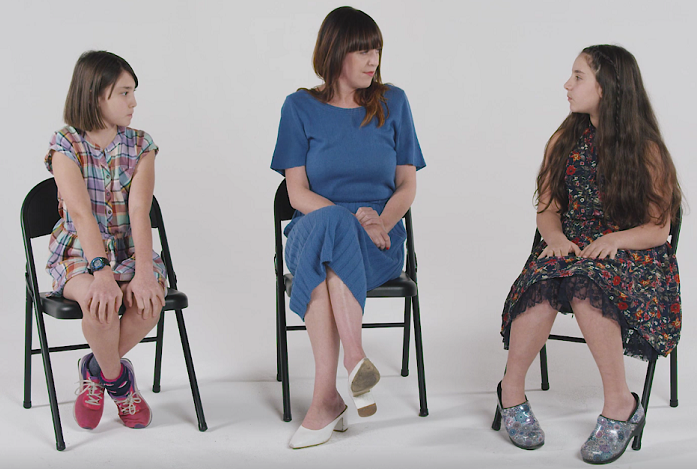
Have you seen the video going around about kids meeting someone who is post-abortive? The video does not talk about the psychological consequences of having an abortion, or talk about how to help women and families who are post-abortive heal from their abortion. No, it normalizes abortion so that 10 and 11-year-olds grow up to think taking an innocent human life is okay–and that no one ever regrets their abortion.
And the actual video:
I noticed that Nathan Apodaca wrote a reasonable response to the content of the video, over at Human Defense initiative.
He writes:
The most common theme in the entire video is the host’s avoidance of the real issue: Can we kill the preborn? What is the preborn?
[…]The problem with the video is the spokeswoman for “Shout Your Abortion,” along with several of the teenagers in the piece, constantly do what philosopher Francis Beckwith aptly calls “Begging the question”; that is, they assume what they should be trying to prove.
Consider the first few conversations. We (the audience) are told indirectly that sometimes mistakes happen, that people can’t afford a child, and other issues influence the decision to get an abortion.
Poverty is obviously a problem, along with people who think they will not be able to afford a child, but a question never gets asked: why stop with abortion to alleviate these problems? Why not allow parents to kill their newborns and toddlers as well to alleviate any problems that may arise? The answer is most assuredly a firm “No, that’s different.”
Ah, but that is the question! Why are the preborn so different we may kill them if we so please? This never seems to occur to anyone in the video, but it does raise a further question which deserves an answer: if the preborn are also human, just like babies and toddlers, should we really be killing them, or should we protect them, just like toddlers and newborns?
OK, this is important.
In the debate over atheism, I always advise you to disregard everything that anyone says until we get the atheist to come to terms with the evidence for the origin of the universe and the fine-tuning – mainstream science. The same thing is the case with the abortion debate. I don’t want to hear any sob-stories about poor people, and so on, until I get a scientific answer to the question “what is the unborn?” Let’s decide what’s true based on what mainstream science tells us.
And guess what? Just like the atheism debate, mainstream science is completely on our side. The same rigorous experimental science that establishes the beginning of the universe, and the fine-tuning of the universe for life, also establishes that a new living human being is created at the moment of conception, with a different DNA signature than either the mother or the father. It’s a new human being! And this is the scientific view – the same view you see in textbooks on human development. (Lots of citations in that PDF, you should download it and share it – it came from the lady that Trump just appointed to the National Science Board)
But it’s not just science textbooks that agree that abortion takes the life of an unborn child, even pro-abortion scholars concede that, as Nathan explains:
Something else Amelia and her interviewees miss is the manytimessupporters of abortion have called abortion for what it is: the intentional killing of an innocent human being.
There are three separate links to citations by abortion defenders in that citation.
Another important point is that abortion defenders always point to something that unborn children can’t do, and use that as the basis for excluding them. But the truth is that their criteria excludes a lot of other people:
[…][O]ne of the teenagers makes the off-the-cuff remark that “Like your arm is incapable of complex thought, a baby in the womb isn’t, either.”
No one bothers to defend this view though, and it is just asserted as if it settles the debate. The problem is, so what? Why does complex thought grant us a protection against being intentionally killed, instead of being protected because we are human in the first place? He never expands on this concept.
And how much complex thought is necessary in order to be protected from being killed? We never get an explanation. Some people, like the sleeping, the mentally ill, and someone in a medically induced coma may happen to not be capable at a given point in time to exercise complex thought; but it seems ludicrous to think they can be justifiably excluded from the community of human beings with a right to not be killed.
I have a whole post about the different criteria that pro-abortion people use to exclude the unborn from the right to life, and in every case, they end up excluding other people who even they would admit have the right to life.
The argument that seems to be the most convincing to the children is the “pro-lifers are stinky poopyheads” argument, also known as the ad hominem fallacy in formal logic.
Nathan responds:
This claim is a flat out lie, and is painfully obvious to anyone paying the slightest bit of attention. Pro-lifers regularly step up to help those in need. In north San Diego county alone, there are more pro-life resource centers for women (and men) in need than abortion clinics. In my own hometown, Escondido, two pro-life pregnancy resourcecenters provide healthcare to those who need it. There are even pro-lifers opening up housing and adoption referrals for women who choose to keep their babies, but are homeless and in need of a place to stay. “Shout Your Abortion”, the organization the host represents, does none of this, and doesn’t help women who decide not to have an abortion find support.
[…]This isn’t all. Consider the following: groups and affiliates like the Obria Group, CareNet, LifeLine, Heartbeat International, and the National Institute of Family and Life Advocates (NIFLA) connect people in need to thousands of care centers; many of whom operate with no tax dollars or government subsidies whatsoever.
Slave owners used similar “arguments” against abolitionists who didn’t like them owning slaves: calling them names, to make other people not want to oppose slavery. Well, I guess if your audience is a bunch of children, then this might be persuasive to them.