All posts by Wintery Knight

https://winteryknight.com/

Democrat legislator wants to decriminalize gay sex between young adults and minors in some cases

Enraged Joe Biden howls out his hatred for Bible-believing Christians

I try to blog about stories where powerful gay rights activists are arrested, charged, convicted or jailed for sex with underage boys. It seems to happen a lot. But what I never expected to see is the gay activists openly lobbying to normalize underage sex with boys. But I guess that’s where the Democrat party is going, and a significant number of American voters are going there with them.

Here’s the story from Daily Wire:

A California state senator is seeking to salvage a bill that could decriminalize gay sex between young adults and minors in some cases, arguing that present state laws governing the sex offender registry unfairly discriminate against the LGBTQ community.

According to The San Francisco Chronicle, California state Sen. Scott Wiener (D-San Francisco) is using the last few weeks of the legislative session to mobilize support for SB145, a bill he introduced last year that stalled in a key committee. The legislation would allow “judges discretion over sex-offender registration in all cases involving voluntary intercourse between teenagers ages 14 to 17, who cannot legally consent, and adults who are less than 10 years older.”

This same Democrat party legislator co-sponsored a 2017 bill that made knowingly exposing a partner to HIV no longer a felony. That’s a big priority for Democrats, along with infanticide. These are the big moral issues that they want to see addressed.

I think it’s fine for this guy to have his view and try to push it into law. It’s a free country. I disagree with him that this is a good law. I also think that voters ought to understand what the Democrat party stands for, and vote accordingly.

Joe Biden

In the photo above, you can see Joe Biden speaking at an organization called the “Hum4n R1ghts Campa1gn”. The HRC have the support of prominent Democrats, like Hillary Clinton, and Barack Obama, and Joe Biden, who have spoken at their events. But did you know about the co-founder of this organization?

Fox News reported in 2019 about the co-founder of the HRC:

Prominent Democrat donor T3rry B3an was indicted earlier this month on two counts of sodomy and one count of sex abuse for allegedly having sex with a teenage boy.

B3an was arraigned Thursday on the charges, TV station KGW8 reported. He pleaded not guilty and was taken into custody at Lane County jail in Oregon. He was released Thursday and told KGW8 he was “innocent.”

The indictment was filed on Jan. 4 but made public following the arraignment.

B3an, a gay rights activist who donated almost $70,000 of his own money to former President Barack Obama’s campaign, was charged with sexual abuse in 2014 but the case was dismissed after the alleged victim did not testify. Prosecutors refiled the charges after this, court records stated, according to The Oregonian. The “alleged victim is not named in the new indictment” but the dates are similar to the previous charges, KGW8 noted.

B3an, a real estate developer, and his former boyfriend, Kiah Lawson, allegedly had sex with a 15-year-old boy in a Eugene, Oregon, hotel in September 2013. They allegedly used the app Grindr to arrange the sexual encounter. Lawson was also charged but his case was dismissed.

The Hum4n R1ghts Campa1gn has a lot of corporate partners, who agree with the vision of Terry B3an and his organization. They don’t see anything wrong with the mission of the HRC.

Anyway, this isn’t the first time that something like this has happened.

The far-left New York Times reported on a recent case:

The mayor of Seattle, Ed Murr4y, said on Tuesday that he would resign after announcing in May that he would not seek a second term. Several men have come forward to accuse Mr. Murr4y of sexually abusing them decades ago, when they were underage.

The announcement came just hours after The Seattle Times published a story with an account by a fifth man, Mr. Murr4y’s cousin, who said Mr. Murr4y had abused him in the 1970s.

[..]Mr. Murr4y, 62, a Democrat, is the city’s first openly gay mayor, and had served in the State Legislature for many years before being elected in 2013.

[…]The liberal Mr. Murr4y is generally considered a father of Washington’s same-sex marriage law, which he pressed in the State Legislature for years.

In a previous blog post, I listed SIX more cases like this:

  • a university professor at USC
  • a member of the San Francisco Human Rights Commission
  • two men who adopted nine children
  • two men who adopted a boy
  • an activist who ran an organization for boys
  • two men who adopted a boy from Russia

The mainstream news media never seems to have much to say about these cases. I wonder why.
A lesson about men for marriage-minded women from the movie “High Noon”

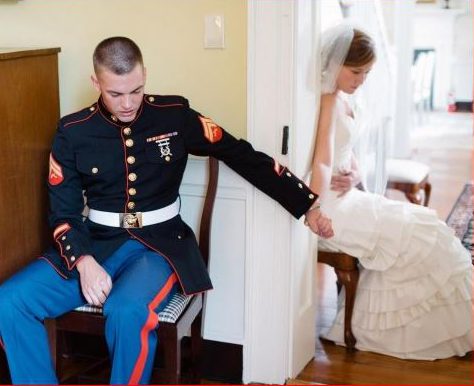
Marine prays with his wife on their wedding day

One of my favorite movies for explaining the differences between men and women is “High Noon” (1952).

Here’s the summary from IMDB:

Former marshal Will Kane (Gary Cooper) is preparing to leave the small town of Hadleyville, New Mexico, with his new bride, Amy (Grace Kelly), when he learns that local criminal Frank Miller has been set free and is coming to seek revenge on the marshal who turned him in. When he starts recruiting deputies to fight Miller, Kane is discouraged to find that the people of Hadleyville turn cowardly when the time comes for a showdown, and he must face Miller and his cronies alone.

The main theme of the film concerns Amy’s decision to break her wedding vows the very day that she makes them. She tells her new husband that he must bow to her will, and give up his male role as protector. When he explains his reasons for standing his ground to her practically (Miller will hunt them down) and morally (he has a duty protect the town), she dismisses both. She tells him that if he doesn’t run away from Miller and his gang with her, that she will get on the train and leave town by herself.

The intro of film shows the member’s of Miller’s gang assembling, and the words of the song explain the central conflict between husband and wife:

Here’s the part of the lyrics we care about:

The noonday train will bring Frank Miller.
If I’m a man I must be brave
And I must face that deadly killer
Or lie a coward, a craven coward,
Or lie a coward in my grave.

O to be torn ‘twixt love and duty!
S’posin’ I lose my fair-haired beauty!
Look at that big hand move along
Nearin’ high noon.

He made a vow while in State’s Prison,
Vow’d it would be my life or his’n
I’m not afraid of death, but O,
What will I do if you leave me?

Do not forsake me O my darlin’
You made that promise when we wed.
Do not forsake me O my darlin’
Although you’re grievin’, I can’t be leavin’
Until I shoot Frank Miller dead.

What’s interesting is that his new wife Amy apparently does not understand the meaning of wedding vows or the natural roles of good men as protectors of the weak, and fighters against evil. Although she vowed to stick by him and help him, the minute anything threatening appears that makes her feel unhappy, she abandons her vows and abandons her man. Let’s break down her mistakes now, using actual conversations from the movie.

First, she doesn’t understand or respect the man she married as a man:

Kane: [while riding out of town] It’s no good. I’ve got to go back, Amy.

Amy: Why?

Kane: This is crazy. I haven’t even got any guns.

Amy: Then let’s go on. Hurry.

Kane: No, that’s what I’ve been thinkin’. They’re making me run. I’ve never run from anybody before.

Amy: I don’t understand any of this.

Kane: [after looking at his vest watch] Well, I haven’t got time to tell ya.

Amy: Then don’t go back, Will.

Kane: I’ve got to. That’s the whole thing. [He turns the buggy around and rides back into town]

Her feelings and her desires for the world to be a happy place for her are so strong that they cloud her judgment.

Second, she doesn’t understand the threat posed by evil men:

More:

Kane: I sent a man up five years ago for murder. He was supposed to hang. But up North, they commuted it to life and now he’s free. I don’t know how. Anyway, it looks like he’s coming back.

Amy: I still don’t understand.

Kane: He was always wild and kind of crazy. He’ll probably make trouble.

Amy: But that’s no concern of yours, not anymore.

Kane: I’m the one who sent him up.

Amy: Well, that was part of your job. That’s finished now. They’ve got a new marshal.

Kane: He won’t be here until tomorrow. Seems to me I’ve got to stay. Anyway, I’m the same man with or without this. [He pins his badge on his vest]

Amy: Oh, that isn’t so.

Kane: I expect he’ll come lookin’ for me. Three of his old bunch are waiting at the depot.

Amy: That’s exactly why we ought to go.

Kane: They’ll just come after us, four of ’em, and we’d be all alone on the prairie.

Amy: We’ve got an hour.

Kane: What’s an hour?…What’s a hundred miles? We’d never be able to keep that store, Amy. They’d come after us and we’d have to run again, as long as we live.

Amy: No we wouldn’t, not if they didn’t know where to find us. Oh Will! Will, I’m begging you, please let’s go.

Kane: I can’t.

Amy: Don’t try to be a hero. You don’t have to be a hero, not for me.

Kane: I’m not trying to be a hero. If you think I like this, you’re crazy.

Instead of recognizing how her feelings are deceiving her about the threat and trusting her husband, she tries to force him to accept her mistaken view of reality by threatening to abandon him.

One of Kane’s ex-girlfriends has a talk with Amy, which helps her to understand who Kane is, and what is expected of her:

Amy: That man downstairs, the clerk, he said things about you and Will. I’ve been trying to understand why he wouldn’t go with me, and now all I can think of is that it’s got to be because of you…Let him go, he still has a chance. Let him go.

Helen: He isn’t staying for me. I haven’t spoken to him for a year – until today. I am leaving on the same train you are…What kind of woman are you? How can you leave him like this? Does the sound of guns frighten you that much?

Amy: I’ve heard guns. My father and my brother were killed by guns. They were on the right side but that didn’t help them any when the shooting started. My brother was nineteen. I watched him die. That’s when I became a Quaker. I don’t care who’s right or who’s wrong. There’s got to be some better way for people to live. Will knows how I feel about it.

Helen: I hate this town. I always hated it – to be a Mexican woman in a town like this.

Amy: I understand.

Helen: You do? That’s good. I don’t understand you. No matter what you say. If Kane was my man, I’d never leave him like this. I’d get a gun. I’d fight.

Amy: Why don’t you?

Helen: He is not my man. He’s yours.

Helen understands the need for a wife to stand by her man. But Amy’s response to evil is to shut her eyes and focus on feeling good and being happy. Notice that her “better way” is unspecified – it’s just a feeling she has that pacificism and no-violence will somehow “work” to stop evil. But in reality, pacifism is not a “better way” of dealing with evil – it does not work. Her pacifist response not only does not make evil go away, it actually encourages more evil. Weakness emboldens evildoers, and laying down your arms provokes them to do more evil. Will Kane knows this, but she won’t listen to him.

You can watch the final gunfight here, as well as Amy’s final decision:

So, this is why I really recommend this movie as a discussion-starter when you like a girl and are thinking of marrying her. It clarifies the essential problem with many young women today not being ready for marriage. To be fair, most women come around to respect their husbands and his different roles after they get married. However, the risk of divorce is so dangerous that it makes sense to bring it up for discussion before the marriage happens. Marriage is supposed to be an engine to serve God, and the success of that enterprise cannot be left to chance. You can’t just rely on the fact that she says the words of the vow, you have to check to see if she has a habit of keeping her promises when it goes against her own self-interest.

Ask yourself: Who are you, as a man? And does your woman accept that you have obligations to stand up to evil and do good ? Will she support you in your battle against evil, or will the marriage just be about her feelings and desires? I would especially beware of women who think that God is speaking to them through their feelings and desires. Look at her friends: are they practical and successful? Or are they irresponsible, unaccountable and reckless? Look at her father: does he have a plan for her, and does he lead her to be practical, frugal and hard-working? If you are not going to get an ally and a supporter in a wife, then you will not be able to serve God well, as a married man. Think about it.

The authors of the gospels of Mark and Luke knew eyewitnesses to the life of Jesus

Lets take a closer look at a puzzle

Were the authors of the gospels of Mark and Luke connected to eyewitnesses to the life of Jesus? Well, it turns out that there are good reasons to think that Mark was linked to the eyewitness Peter, and Luke was linked to Paul, who had a post-mortem appearance of Jesus in 1 Cor 15:8, and who met with Peter and James in Galatians 1 and again in Galatians 2.

There is a list of evidence for Peter’s influence on Mark on the Cold Case Christianity blog.

Here’s my favorite one from the list:

Peter’s Embarrassments Have Been Omitted

There are many details in the Gospel of Mark consistent with Peter’s special input and influence,including omissions related to events involving Peter. How can Mark be a memoir of Peter if, in fact, the book contains so many omissions of events involving Peter specifically? It’s important to evaluate the entire catalogue of omissions pertaining to Peter to understand the answer here. The vast majority of these omissions involve incidents in which Peter did or said something rash or embarrassing. It’s not surprising these details were omitted by the author who wanted to protect Peter’s standing in the Christian community. Mark was quite discreet in his retelling of the narrative (other Gospel writers who were present at the time do, however, provide details of Peters ‘indiscretions’ in their own accounts. See Cold-Case Christianity for a more detailed explanation).

It makes me laugh to imagine Peter looking over Mark’s shoulder and saying “no, don’t put that in it” and “no, don’t tell them I did that”. Funny! But also very good evidence. The rest of Wallace’s list makes it even more clear.

And what about the gospel of Luke? Well, did you know that the author of Luke’s gospel knew Paul? If you read it carefully, you’ll see that Luke switches from describing history from an “I” perspective to describing things from a “we” perspective in the book of Acts (which he also wrote). Who is the “we” he is talking about?

Here’s famous Christian scholar William Lane Craig to explain:

Now who was this author we call Luke? He was clearly not an eyewitness to Jesus’s life. But we discover an important fact about him from the book of Acts. Beginning in the sixteenth chapter of Acts, when Paul reaches Troas in modern-day Turkey, the author suddenly starts using the first-person plural: “we set sail from Troas to Samothrace,” “we remained in Philippi some days,” “as we were going to the place of prayer,” etc. The most obvious explanation is that the author had joined Paul on his evangelistic tour of the Mediterranean cities. In chapter 21 he accompanies Paul back to Palestine and finally to Jerusalem. What this means is that the author of Luke-Acts was in fact in first hand contact with the eyewitnesses of Jesus’s life and ministry in Jerusalem.

[…]There is no avoiding the conclusion that Luke-Acts was written by a traveling companion of Paul who had the opportunity to interview eyewitnesses to Jesus’s life while in Jerusalem. Who were some of these eyewitnesses? Perhaps we can get some clue by subtracting from the Gospel of Luke everything found in the other gospels and seeing what is peculiar to Luke. What you discover is that many of Luke’s peculiar narratives are connected to women who followed Jesus: people like Joanna and Susanna, and significantly, Mary, Jesus’s mother.

Was the author reliable in getting the facts straight? The book of Acts enables us to answer that question decisively. The book of Acts overlaps significantly with secular history of the ancient world, and the historical accuracy of Acts is indisputable.

This has recently been demonstrated anew by Colin Hemer, a classical scholar who turned to New Testament studies, in his book The Book of Acts in the Setting of Hellenistic History. [5] Hemer goes through the book of Acts with a fine-toothed comb, pulling out a wealth of historical knowledge, ranging from what would have been common knowledge down to details which only a local person would know. Again and again Luke’s accuracy is demonstrated: from the sailings of the Alexandrian corn fleet to the coastal terrain of the Mediterranean islands to the peculiar titles of local officials, Luke gets it right.

I know a lot of people (like my Dad) read the Bible devotionally, looking for feelings or trying to “get right with God” so they get blessings. But I think it’s helpful to look at things from an evidential point of view – how am I going to make a case for this? When you look at things from that perspective, the Bible gets a whole lot more interesting. And you can talk about it with non-Christians when you know about these interesting details.