All posts by Wintery Knight

https://winteryknight.com/

Conservative MP’s bill to repeal Section 13 moves to committee

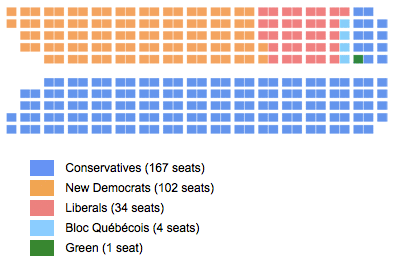
Canada 2011 Federal Election Seats
Canada 2011 Federal Election Results

Andrew sent me this article from the Chronicle Herald.

Excerpt:

To protect freedom of expression in Canada, sometimes you need a majority government in Ottawa.

That’s the moral of the story of a Conservative backbencher’s private member’s bill — which has now cleared second reading in the House of Commons and gone to committee — seeking to repeal Section 13 of the Canadian Human Rights Act.

Let’s recall the exact wording of that infamous clause. Hate messages, according to Section 13 (1), are communications “likely to expose a person or persons to hatred or contempt by reason of the fact that that person or those persons are identifiable on the basis of a prohibited ground of discrimination.”

In other words, if I were to write something critical about Islam, for example, and someone reading my column felt it “likely” that my words could provoke “contempt” towards Muslims, they could lodge a complaint against me with one of Canada’s government-created human rights commissions.

Truth would not be a defence. Neither would my intent. And the person complaining wouldn’t even have to be a Muslim.

That’s because, on top of the appallingly loose wording of this section of federal human rights law — a clause echoed in its provincial counterparts — any complaints are adjudicated by government-appointed tribunals, where the standard protections afforded any accused in a court of law don’t necessarily apply.

When complainants’ cases go forward, taxpayers pick up the tab. Meanwhile, those accused must pay to defend themselves out of their own pockets.

It’s a system ripe for abuse. And that’s exactly what has happened. We’ve seen comics fined for insulting hecklers (B.C. human rights tribunal), former publishers spend $100,000 in legal fees over three years to defend themselves for printing “offensive” cartoons (Alberta human rights commission), and Maclean’s magazine investigated by three human rights bodies (federal, Ontario and B.C.) for running an article on Muslim demographics in Europe.

The Conservatives have long opposed Section 13, but didn’t feel they had the support they needed from the other parties, as a minority government, to push the issue legislatively.

They also were concerned, with good reason, that some opponents might twist the issue for political advantage, slamming the Tories for being soft on hate.

Yes, Bill C-304, which aims to repeal Sections 13 and 54 (dealing with penalties under S.13), was put forward by Alberta MP Brian Storseth (Westlock-St. Paul) and is a private member’s bill, but the legislation has the justice minister’s endorsement. So there’s a good chance the bill will be back in the Commons this spring for final reading, then on to the Senate and, hopefully, passage and royal assent.

The bill, if made law, would take effect a year after receiving royal assent.

Canada does not protect free speech right now. Repealing Section 13 would be good, but Canada is not a good place for families to raise children. Even if they get Section 13 repealed, there is still the recent unanimous Supreme Court decision affirming that the provincial governments have a right to decide what children will believe – not parents. The Supreme Court was mostly selected by the previous Liberal governments.
Obama administration refused to help pro-democracy forces in Iran

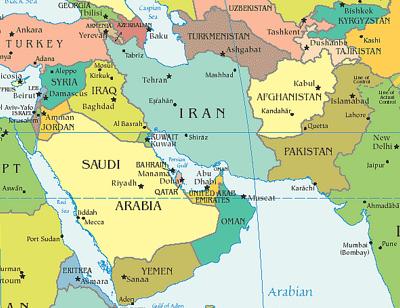
Middle East Map
Middle East Map

From Investors Business Daily.

Excerpt:

During their brutally suppressed protests in 2009, Iranian freedom fighters sent the White House an urgent memo calling for help. Under Obama, America ignored it.

‘So now, at this pivotal point in time, it is up to the countries of the free world to make up their mind,” Iranian opposition leaders told the Obama administration in an eight-page memo in 2009. “Will they continue on the track of wishful thinking and push every decision to the future until it is too late, or will they reward the brave people of Iran and simultaneously advance the Western interests and world peace.”

President Obama made his choice, and like so often before it was to vote “present.”

The memo, written by leaders of Iran’s Green Party after the summer 2009 anti-government demonstrations, was obtained by the Washington Examiner.

The document confirms GOP candidate Rick Santorum’s charge that the U.S. squandered an opportunity to undermine the government established by the Ayatollah Khomeini three decades ago.

In the Arizona GOP debate last week, Santorum noted that “we did absolutely nothing to help” the Green Revolution. But “when the radicals in Egypt and the radicals in Libya, the Muslim Brotherhood … rise against either a feckless leader or a friend of ours in Egypt, the president is more than happy to help them out.”

The memo refutes claims still being made by the State Department that the Green Party “did not desire financial or other support,” because it “would discredit it in the eyes of the Iranian people.”

The secret memo’s warning that the Islamist regime “with its apocalyptic constitution will never give up the atomic bomb” also contradicts conventional wisdom that the Green movement wants a nuclear Iran.

The Obama administration is oddly proud that it does “not provide financial assistance to any political movement, party or faction in Iran.” But Foundation for the Defense of Democracies scholar Michael Ledeen has argued for years that supporting Iran’s real opposition can keep it from becoming the first jihadist nuclear power.

In his 2007 book “The Iranian Time Bomb,” Ledeen insists there must be “an explicit declaration that the United States wants regime change in Iran.” The Voice of America Persian Service could help.

As Ledeen notes, “Several Iraqi ayatollahs, including some who lived in Iran for many years, would love to do this, as would Khomeini’s grandson Hossein Khomeini, who has openly criticized his grandfather’s creation.”

The U.S. can also provide satellite phones and laptops to students, religious leaders and others, and fund large-scale strikes and mass demonstrations to bring Supreme Leader Ayatollah Khamenei’s regime down.

With Iran close to a nuclear weapon, military action may be the only option. But the Green memo is a shameful blemish for a president who could have prevented a threat to the free world of nuclear terror, but didn’t.

This is important. A lot of liberals ask me what I would do to resolve the Iran situation short of war. One of the things we could be doing is supporting pro-democracy movements in Iran with information warfare, money, arms, etc. I was very annoyed when Obama backed dictators in Iran, Venezuela and Honduras, while helping the Islamists to take power in Libya and Egypt. Why does he do that? Is he stupid? Is he evil? Or is it a combination of the two?

Thoughts from William Lane Craig’s debate with Louise Antony

I read Dr. Craig’s report of his debate with Louise Antony on the topic of God and morality. My impression from his review was that she hadn’t prepared for the debate and didn’t understand the moral argument at all (she is from Amherst, Massachusetts, so… they are pretty sheltered). She strikes me as the typical student who goes off to college, starts drinking and partying, and then adjusts her philosophy to suit her peer group – and her superiors.

My impressions of her were confirmed by J.W. Wartick’s blog post.

Summary:

It will be my purpose in the following arguments to show that secular humanistic theories which try to ground moral ontology fail–and fail miserably.

Recently, I listened [again] to the debate between William Lane Craig and Louise Anthony. Some have lauded this debate as a stirring victory for secular ethics. (See, for example, the comments here–one comment even goes so far as to say “I swoon when someone evokes the Euthyphro Dilemma and frown at the impotent, goal-post-moving, ‘Divine nature’ appeal.”) In reality, I think Louise Anthony did indeed present the case for secular metaethics. The problem is that this case is utterly vacuous. 

I’ll break down why this is the case by focusing upon three areas of development in secular and theistic ethics: objective moral truths, suffering, and moral facts.

Here’s the snarkiest part:

Louise Anthony seems to be just confused about the nature of objective morality. She says in response to a question from the audience, “The universe has no purpose, but I do… I have lots of purposes…. It makes a lot of difference to a lot of people and to me what I do. That gives my life significance… The only thing that would make it [sacrificing her own life] insignificant would be if my children’s lives were insignificant. And, boy you better not say that!”

Craig responded, “But Louise, on atheism, their lives are insignificant.” Anthony interjected, “Not to me!”

But then she goes on to make this confused statement, “It’s an objective fact that they [her children] are significant to me.”

Note how Anthony has confused the terms here. Yes, it is an objective fact that according to Louise Anthony, her children matter to her. We can’t question Anthony’s own beliefs–we must trust what she tells us unless we have reason to think otherwise. But that’s not enough. What Craig and other theists are trying to press is that that simple facthas nothing to do with whether her children are actually valuable. Sure, people may go around complaining that “Well, it matters to me, so it does matter!” But that doesn’t make it true. All kinds of things can matter to people, that doesn’t mean that they are ontologically objective facts.

It matters to me whether the Cubs [an American baseball team] win the World Series. That hasn’t happened in 104 years, so it looks like it doesn’t matter in the overall scheme of the universe after all. But suppose I were to, like Anthony, retort, “But the Cubs matter to me! It’s an objective fact that them winning the World Series is significant to me!” Fine! But all the Cardinals [a rival team] fans would just laugh at me and say “SO WHAT!?“

Similarly, one can look at Anthony with incredulity and retort, “Who cares!?” Sure, if you can get enough people around Anthony who care about her children’s moral significance, you can develop a socially derived morality. But that’s not enough to ground objective morality. Why should we think that her values matter to the universe at large? On atheism, what reason is there for saying that her desires and purposes for her children are any better than my desires and purposes for the Cubs?

She doesn’t even understand the difference between objective and subjective morality! Sigh.