
Today, I decided to go back in time, and re-post something from April 2009. I started this blog in January 2009. It’s funny to see what I sounded like when I was just starting out. Dr. Craig has a short video about this argument, and Rose and I did a podcast about it, where we focused on the scientific evidence for a beginning of the universe. This is a simple argument. I wish Christian leaders taught it in church.
I’ve been watching Bill Craig debates for a long time now, ever since I did my first degree in computer science a dozen years ago. Today I thought we could all learn how to argue Craig’s first argument for God, which he used in his debate with Christopher Hitchens.
Let’s go over Craig’s kalam argument in brief.
The kalam cosmological argument
The argument goes like this:
- Whatever begins to exist requires a cause
- The universe began to exist
- Therefore, the universe requires a cause (M.P. 1,2)
The most important thing for you to realize is that nothing can be sustained in a debate unless it can be phrased as a valid argument according the rules of inference. All of Craig’s arguments can be broken down into logical propositions that use the standard laws of logical reasoning in order to force their conclusions deductively, so long as the premises are true.
Understanding the logical form of the kalam argument
The form of the kalam argument is valid because it allows for a modus ponens inference. (Here’s a primer on logical reasoning)
- if p is true, then q is true
- p is true
- therefore, q is true
That means that so long as premise 1 and 2 are true, the conclusion follows necessarily. This is the same form of argument (deductive) used by Sherlock Holmes in his cases.
Proving the premises
Can the atheist deny that either or both of these premises are true?
- “Whatever begins to exist requires a cause”
If the atheist denies this premise, then they are denying a fundamental law of natural science, namely, that matter can neither be created or destroyed. That is natural law. - “The universe began to exist”
The universe came into being. If the atheist denies this they are denying the state of the art in modern cosmology.
First, quantum mechanics is not going to save the atheist here. In QM, virtual particles come into being in a vacuum. The vacuum is sparked by a scientist. The particles exist for a period of time inversely proportional to their mass. But in the case of the big bang, there is no vacuum – there’s nothing. There is no scientist – there’s nothing. And the universe is far too massive to last 14 billion years as a virtual particle.
Secondly, atheists will say that the big bang is speculative physics that could change at any moment. But the trend is in favor of an absolute beginning out of nothing. We have had a string of solid, recent scientific discoveries that point in a definite direction, as follows:
- Einstein’s theory of general relativity, and the scientific confirmation of its accuracy
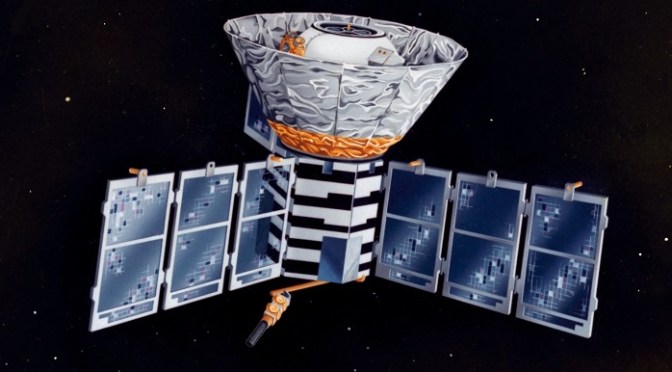
- the cosmic microwave background radiation
- red-shifting of light from galaxies moving away from us
- radioactive element abundance predictions
- helium/hydrogen abundance predictions
- star formation and stellar lifecycle theories
- the second law of thermodynamics applied to nuclear fusion inside stars
So, insofar as atheists question these discoveries and the origin of the entire physical universe out of nothing, they are opposing the progress of science.
What came into being at the moment of creation?
You need to understand that the big bang theory states that space, time and matter were all created at the moment of creation.
- There was no space causally prior to the universe beginning to exist
- There was no time causally prior to the universe beginning to exist
- There was no matter causally prior to the universe beginning to exist
All of these things began to exist at the first moment.
What can we infer about the cause?
So, space, time, and matter began to exist. What could have caused them to begin to exist?
- Whatever causes the universe to appear is not inside of space, because there was no space causally prior to the creation event. The cause must therefore be non-physical, because physical things exist in space.
- Whatever causes the universe to appear is not bound by time (temporal). It never began to exist. There was no passage of time causally prior to the big bang, so the cause of the universe did not come into being. The cause existed eternally.
- And the cause is not material. All the matter in the universe came into being at the first moment. Whatever caused the universe to begin to exist cannot have been matter, because there was no matter causally prior to the big bang.
So what could the cause be? Craig notes that we are only familiar with two kinds of non-material realities:
- Abstract objects, like numbers, sets and mathematical relations
- Minds, like your own mind
Now, abstract objects don’t cause of any effects in nature. But we are very familiar with the causal capabilities of our own minds – just raise your own arm and see! So, by process of elimination, we are left with a mind as the cause of the universe. As Sherlock Holmes says, “When you have eliminated the impossible, whatever remains, however improbable, must be the truth.”
This cause created the entire physical universe. The cause of this event is therefore supernatural, because it brings nature into being and is not inside of nature itself. The cause of the universe violates the law of conservation of matter is therefore performing a miracle.
Responding to alternative naturalistic cosmologies
In this published research paper from the journal Astrophysics and Space Science, William Lane Craig responds to the several naturalistic attempts to evade the implications of the kalam argument. I will list each one by name and explain the main problem with each. I highly recommend you read the paper and become conversant with the arguments and evidences.
- The steady-state model: disproved by recent empirical observations of radio galaxy distributions, as well as red-shifting of light from distant galaxies moving away from us at increasing speeds
- The oscillating model: disproved in 1998 by more empirical measurements of mass density which showed that the universe would expand forever, and never collapse (was named Discovery of the Year)
- The vacuum fluctuation model: the theory allows for universes to spawn at every point in space and coalesce into one extremely old universe, which contradictions observations of our much younger universe
- The chaotic inflationary model: does not avoid the need for an absolute beginning in the finite past
- The quantum gravity model: makes use of imaginary time which cannot be mapped into a physical reality, it’s purely theoretical
Why the kalam cosmological argument matters
We need to make a decision today about how we are going to live. The evidence available today supports the creation of the entire physical universe from nothing, caused by a supernatural mind with immense power. The progress of science has strengthened this theory against determined opposition from rival naturalistic theories.
Those are the facts, and we must all choose what to do with them.


 WINTERY KNIGHT