You can aspire to and achieve greatness no matter who you are and no matter your stage in life
A great leader knows when it’s time to step back and let go
There are some things in life we just have to accomplish on our own
To simply continue on is one of the bravest things that can be done
A great story always has conflict or hardship
And my favorite of the five – the one that had meaning for me – is #5:
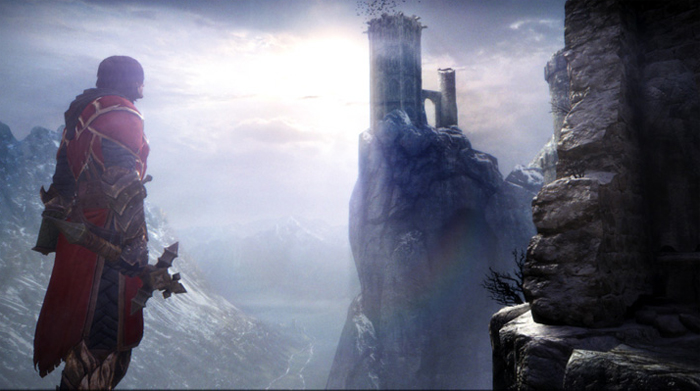
5. A great story always has conflict or hardship. Imagine your life as a story. Not too long ago, we even had a guest post about this — our life is a journey, and a heroic one at that. Imagine yourself sitting down with your grandkids and telling them the story of you. “Well, I made some money, bought a few cars, sat around and watched TV for a few hours every night, and that’s about it.” Pretty boring, isn’t it? Now imagine that you can start hours worth of stories with, “I explored…I traveled…I fell in love…I fought and won…I overcame…I sweated…” Not only would the story be better, but you likely would be far more satisfied with the course of your life.
J.R.R. Tolkien agrees. “Now it is a strange thing, but things that are good to have and days that are good to spend are soon told about, and not much to listen to; palpitating, and even gruesome, may make a good tale, and take a deal of telling anyways.” He is saying that a life of good ease is a boring one. It’s often what the American dream aspires to, but the reality is that personal growth, and even enjoyment, are things that come out of some kind of challenge. Whether it’s huffing and puffing and groaning your way up a mountain for the view at the top, or getting laid off and finally realizing you don’t want to be in a cubicle anymore, joy is often found after a bit of trudging. Don’t shy away from challenge. Embrace it, and know that someday it’ll make for a great story.
The Hobbit was the first big book that I ever read as a child, and I think that it inspired me to move far away from home as soon as I completed graduate school, so I could make my fortune. An adventurous spirit isn’t free – it has to be put into a boy by what he reads. When I was young, I read “The Hobbit”. You should make your children read “The Hobbit”. Put into their minds at a young age the idea that life is an adventure, that dangers and hardships are normal, and that character counts. Put into their minds that all goodness requires sacrifice. I think that things are going to get harder for Christians going forward so it’s better that they be ready for it.
Chris Kyle, Navy SEAL, can hit a very small target from a mile away – very improbable
Review: In case you need a refresher on the cosmological and fine-tuning arguments, as presented by a professor of particle physics at Stanford University, then click this link and watch the lecture.
If you already know about the standard arguments for theism from cosmology, then take a look at this post on Uncommon Descent.
Summary:
In my previous post, I highlighted three common atheistic objections to to the cosmological fine-tuning argument. In that post, I made no attempt to answer these objections. My aim was simply to show that the objections were weak and inconclusive.
Let’s go back to the original three objections:
1. If the universe was designed to support life, then why does it have to be so BIG, and why is it nearly everywhere hostile to life? Why are there so many stars, and why are so few orbited by life-bearing planets? (Let’s call this the size problem.)
2. If the universe was designed to support life, then why does it have to be so OLD, and why was it devoid of life throughout most of its history? For instance, why did life on Earth only appear after 70% of the cosmos’s 13.7-billion-year history had already elapsed? And Why did human beings (genus Homo) only appear after 99.98% of the cosmos’s 13.7-billion-year history had already elapsed? (Let’s call this the age problem.)
3. If the universe was designed to support life, then why does Nature have to be so CRUEL? Why did so many animals have to die – and why did so many species of animals have to go extinct (99% is the commonly quoted figure), in order to generate the world as we see it today? What a waste! And what about predation, parasitism, and animals that engage in practices such as serial murder and infant cannibalism? (Let’s call this the death and suffering problem.)
In today’s post, I’m going to try to provide some positive answers to the first two questions: the size problem and the age problem.
Here’s an excerpt for the size argument:
(a) The main reason why the universe is as big as it currently is that in the first place, the universe had to contain sufficient matter to form galaxies and stars, without which life would not have appeared; and in the second place, the density of matter in the cosmos is incredibly fine-tuned, due to the fine-tuning of gravity. To appreciate this point, let’s go back to the earliest time in the history of the cosmos that we can meaningfully talk about: the Planck time, when the universe was 10^-43 seconds old. If the density of matter at the Planck time had differed from the critical density by as little as one part in 10^60, the universe would have either exploded so rapidly that galaxies wouldn’t have formed, or collapsed so quickly that life would never have appeared. In practical terms: if our universe, which contains 10^80 protons and neutrons, had even one more grain of sand in it – or one grain less – we wouldn’t be here.
If you mess with the size of the universe, you screw up the mass density fine-tuning. We need that to have a universe that expands at the right speed in order to form galaxies, stars and planets. You need planets to have a place to form life – a place with liquid water at the surface.
And an excerpt for the age argument:
(a) One reason why we need an old universe is that billions of years were required for Population I stars (such as our sun) to evolve. These stars are more likely to harbor planets such as our Earth, because they contain lots of “metals” (astronomer-speak for elements heavier than helium), produced by the supernovae of the previous generation of Population II stars. According to currently accepted models of Big Bang nucleosynthesis, this whole process was absolutely vital, because the Big Bang doesn’t make enough “metals”, including those necessary for life: carbon, nitrogen, oxygen, phosphorus and so on.
Basically, you need heavy elements to make stars that burn slow and steady, as well as to make PEOPLE! And heavy elements have to be built up slowly through several iterations of the stellar lifecycle, including the right kinds of stellar death: supernovae.
Read the rest! These arguments come up all the time in debates with village atheists like Christopher Hitchens and Richard Dawkins. It’s a smokescreen they put up, but you’ve got to be able to answer it using the scientific evidence we have today. They always want to dismiss God with their personal preferences about what God should or should not do. But the real issue is the design of the cosmological constants that allow life to anywhere. That’s the part that’s designed. And that’s not a matter of personal preference, it’s a matter of mathematics and experimental science.
One last parting shot. If God made the universe have life everywhere, the first thing atheists would say is “See? Life evolves fine by itself without any God!” The only way to recognize a marksman is when he hits a narrow target (not hostile to life) from a wide range of possibilities that have no value (hostile to life). We don’t credit Chris Kyle for hitting the wall above an Islamic terrorist from a mile away, we credit Chris Kyle for hitting an Islamic terrorist a mile away. The design is not how much of the universe is hospitable to life versus how much is hostile to life. The design is in the cosmological constants – where we are in the narrow band that is hospitable to life and not in the huge regions that are hostile to life.
You can read the best explanation of the design argument in this lecture featuring Robin Collins. That link goes to my post which has a summary of the lecture. He has a new lecture that I also blogged about where he extends the fine-tuning argument down to the level of particle physics. I have a summary of that one as well.
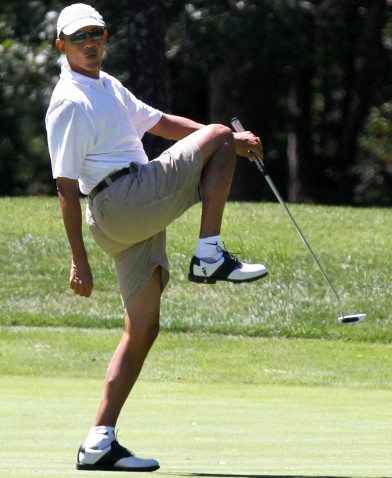
President Obama is playing politics with national defense, and in the process he is taking down the military’s welfare. In an act of partisan gamesmanship, the president on Thursday vetoed the National Defense Authorization Act, a bill that a bipartisan majority of Congress passed and that delivers the resources needed by troops to defend the nation.
[…]He has become the first commander in chief willing to sacrifice national security by vetoing a bill that authorizes pay, benefits and training for U.S. troops, simply because he seeks leverage to pursue his domestic political agenda.
[…]President Obama’s veto was about broader spending issues that have absolutely nothing to do with defense. By vowing recently that he “will not fix defense without fixing nondefense spending,” the president is holding the military hostage to increase funding for Washington bureaucracies like the Environmental Protection Agency and the Internal Revenue Service.
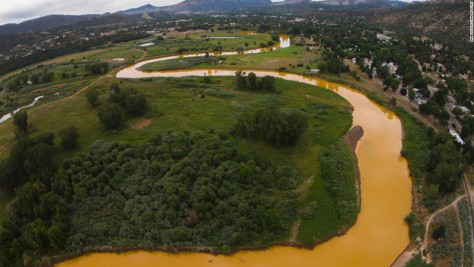
The Environmental Protection Agency is more important?:
EPA dumps 1 million gallons of mining waste into river
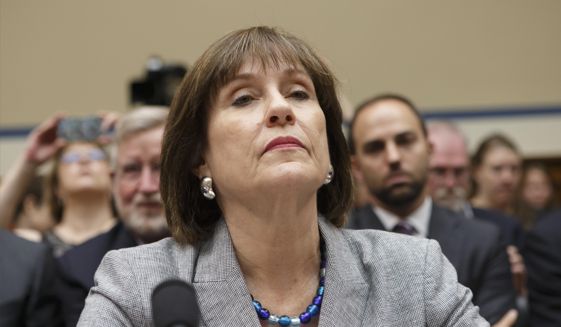
The Internal Revenue Service is more important?:
IRS Chief Fascist Lois Lerner
More Wall Street Journal:
In vetoing this bill, the president imposes more harm and uncertainty on the military at a time when America faces dangerous and complex threats from around the world. He has prevented critical policies from taking effect that would immediately improve the lives of service members and military families while addressing needs of wounded, ill or injured service members. For example, President Obama has rejected measures that open service members’ access to medical care; enhance protections for military sexual-assault victims; extend retirement benefits to more than 80% of service members; make significant, long-overdue reforms to the defense acquisition system; and authorize hundreds of other measures that are critical to national security.
Perhaps most disturbingly, the president’s veto has sent a message to America’s enemies and allies alike that he is more concerned about funding broken Washington bureaucracies than he is about maintaining the nation’s distinction for being defended by the world’s greatest fighting force.
That is the wrong message to send when America faces an array of crises that demand a strong national defense, including war in Afghanistan, China’s illegal activities in the South China Sea, Islamic State’s terrorist reign across Iraq and Syria, Bashar Assad’s bombing campaign—now backed by Russia and Iran—against his own people in Syria,Vladimir Putin’s annexation of Crimea and dismemberment of Ukraine, and Iran’s malign activities propping up terrorist proxies destabilizing the Middle East.
These and other threats make it clear that the U.S. faces more national-security threats than at any time since the end of World War II. It is reckless, cynical and downright dangerous for the president to veto the NDAA, denying the American military the authorizations it desperately needs.
We have to fund the EPA and the IRS, but we can’t fund our armed forces. At a time where Russia, China and Iran are arming up and getting more aggressive, we can’t fund our armed forces. Democrat Party priorities.
UPDATE: Reader tells me that it affects things like hazard pay, enlistment bonuses, not the annual pay increase:
The Thursday veto will jeopardize a host of other specialty pays and bonuses, and has inflamed an already bitter budget standoff between Obama and congressional Republicans.
But it does not alter plans for a 1.3 percent raise for troops effective Jan. 1, which is ensured regardless of how the veto fight shakes out.
[…]The defense authorization bill still affects things like enlistment bonuses, hazard pays, and other specialty compensation for which authorization must be renewed each year. If lawmakers has substituted their own pay raise or tried to supercede the presidential order in the bill, Obama’s veto would have affected that, too.


 WINTERY KNIGHT