Obama covers-up DOJ operation that allowed gun smuggling to Mexican drug cartels

First, a re-cap of the details of the Fast and Furious gun smuggling operation:

Issa argues the documents will shine light on a number of revelations about just how much knowledge Holder and the the U.S. Department of Justice as well as the Obama administration had about the Fast and Furious, including:

  • The Justice Department switching its view from denying whistleblower allegations to admitting they were true.
  • Hiding the identity of officials who led the charge to call whistleblowers liars and retaliate against them.
  • The reactions of top officials when confronted with evidence about gunwalking in Fast and Furious, including whether they were surprised or were already aware.
  • The Justice Department’s assessment of responsibility for officials who knew about reckless conduct or were negligent.
  • Whether senior officials and political appointees at fault in Operation Fast and Furious were held to the same standards as lower level career employees whom the Department has primarily blamed.

Operation Fast and Furious resulted in hundreds of weapons purchased at gun shops in Arizona ending up in Mexico, many of them at crime scenes. Initially, the department denied that gun-walking had taken place.

Relying on the tactic, federal agents from the U.S. Bureau of Alcohol, Tobacco, Firearms and Explosives abandoned their usual practice of intercepting all weapons they believed to be illicitly purchased. Instead, the goal of gun-walking was to track such weapons to high-level arms traffickers, who had long eluded prosecution, and to dismantle their networks.

From The Hill:

A House panel voted Wednesday to place Attorney General Eric Holder in contempt of Congress for his failure to comply with a subpoena, defying an assertion of executive privilege from President Obama.

The House Oversight and Government Reform Committee, led by Republican Chairman Darrell Issa (Calif.), approved a resolution along party lines to place Holder in contempt after battling him for months over access to internal agency documents about the gun-tracking operation known as “Fast and Furious.”

The vote came after Obama escalated the conflict by sending a letter to the committee claiming executive privilege over the documents the panel had sought.

All 23 Republicans on the committee voted for the contempt resolution, while all 17 Democrats voted against it. Every member of the panel was present for the vote.

Minutes after the panel’s decision, House Speaker John Boehner (R-Ohio) and Majority Leader Eric Cantor (R-Va.) announced that the full House will vote on the contempt measure next week.

“While we had hoped it would not come to this, unless the attorney general reevaluates his choice and supplies the promised documents, the House will vote to hold him in contempt next week,” the Republican leaders said in a statement. “If, however, Attorney General Holder produces these documents prior to the scheduled vote, we will give the Oversight Committee an opportunity to review in hopes of resolving this issue.”

How legitimate is it to use executive privilege to block a investigation of a gun-smuggling operation that makes Watergate look like patty-cake?

Here’s what Obama said about it – before he did it:

President Obama criticized former President George W. Bush for trying to “hide” behind executive privilege in 2007 after the Bush administration refused to turn over subpoenaed documents related to the controversial firings of nine U.S. attorneys.

In an interview on CNN’s “Larry King Live,” Obama said there’s been “a tendency on the part of this administration to try to hide behind exec privilege every time there’s something a little shaky that’s taking place.”

“I think the administration would be best served by coming clean on this,” Obama said, after Bush claimed executive privilege on the issue.

“There doesn’t seem to be any national security issues involved with the U.S. attorney question. There doesn’t seem to be any justification for not offering up some clear plausible rationale for why these U.S. attorneys were targeted when by all assessments they were doing an outstanding job. I think the American people deserve to know what was going on there,” he said.

Who knows how many people those guns have murdered? Hundreds? Thousands? Tens of thousands? You can read a statement from the family of the slain Border Patrol agent Brian Terry here. He was one of the victims of the Obama administration’s plan to allow guns to be smuggled across the border into the hands of ultra-violent Mexican drug cartels.

In a way, none of this surprises me – we knew that Obama was heavily involved in illegal drug use during his high school years, as he admits in his own books.

Did Barack Obama order the sale of American firearms to Mexican drug cartels in order to justify stricter gun control measures? Was this gun smuggling plan done in collusion with the Mexican drug cartels who benefited from it? What did Obama know, and when did he know it? Now that Obama has blocked the release of Fas and Furious documents, will we ever get the truth about who ordered Fast and Furious?

Related posts

Free speech hero Mark Steyn reflects on the demise of Section 13 fascism

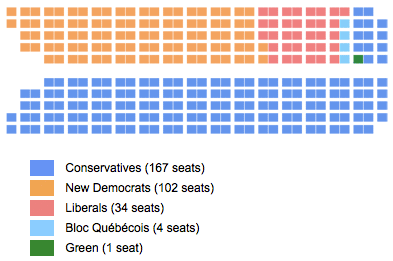
Canada 2011 Federal Election Seats

Kathy Shaidle at Five Feet of Fury linked to this editorial which explains how the battle for free speech was won up in the frozen North.

Excerpt:

Justice Minister Rob Nicholson had voiced support for the legislation. So had the Prime Minister. The result, then, was never in doubt: at 9:35 p.m. on June 6, by a vote of 153-136,  Parliament got Canada’s human rights bureaucrats out of the business of policing speech on the Internet. There was a scattering of applause, and handshakes for Storseth (the bill requires the rubber stamp of Senate approval). “To be honest, it’s all a blur,” says the three-term MP, laughing. But if the passage of Bill C-304 represents a fundamental shift in Canadian culture, you’d never have known it that night. Members dealt with a few housekeeping matters, then waded through a supply bill. Finally, one by one, they trickled out into the cool Ottawa night.

The effect of killing Section 13 will be debated for years among anti-racist groups and civil libertarians. But it is undoubtedly a turning point. Since 1999, Canadians who felt aggrieved by material transmitted online have been encouraged to seek redress under federal human rights law, which targeted material “likely to expose a person or persons to hatred or contempt” based on grounds of discrimination like race, religion or sexual orientation. Storseth’s bill repeals the provision outright, leaving the Criminal Code as the primary bulwark against the dissemination of hate propaganda by electronic means.

With it will go one of the most divisive disputes to grip the country since the introduction of the Charter of Rights itself—a contest of values that over the past five years has pitted Canadians’ desire to protect minorities from discrimination against the bedrock principle of free speech. Mainstream media outlets, most notably Maclean’s, have been hauled before commissions to answer for their published content. The commissions themselves have come under fire for allowing their processes to be used as a bludgeon against legitimate expression, tailored as they are to encourage complainants to come forward. Meantime, a Saskatchewan law similar to Section 13 has become the subject of a Supreme Court challenge that could invalidate hate-speech provisions in most provincial human rights codes. By year’s end, it is conceivable that no human rights commission in the country will be in the business of adjudicating published material.

And here’s a must-read cri-de-coeur from free speech hero Mark Steyn in Maclean’s magazine. (H/T Binks the Web Elf)

Excerpt:

Operationally, Section 13 was stinkingly corrupt. There are some 34 million Canadians, yet just one individual citizen had his name on almost every Section 13 prosecution of the last decade. Just as Matthew Hopkins appointed himself England’s Witchfinder General in 1645 and went around the country turning in raven-tressed crones for the bounty of a pound per witch, so Richard Warman appointed himself Canada’s Hatefinder General and went around turning in shaven-headed tattooed losers in their mums’ basements for far more lucrative bounties of tens of thousands of dollars. He filed his complaints as a supposedly “offended” and “damaged” private citizen while an employee of Her Majesty’s Government. And, in fairness to Matthew Hopkins, he didn’t personally put on a pointy black hat and ride around on a broomstick. Whereas Mr. Warman joined Stormfront and other “white supremacist” websites and posted copious amounts of hate speech of his own, describing, for example, Jewish members of cabinet as “scum” and gays as a “cancer.” That’s how “hateful” Canada is: there’s so little “hate” out there that the country’s most famous Internet Nazi is a taxpayer-funded civil servant.

For Warman, there was little risk: you paid his costs, and the dice were loaded. After Hosni Mubarak was “re-elected” with 97.1 per cent of the vote, he was said to be furious with his officials for stealing too much of the election and making him look like one of those crude ham-fisted dictator-for-life types like Saddam and Kim Il-Sung. So next time round his officials arranged for him to “win” with a mere 96.3 per cent of the vote. Canada’s “human rights” commissars had no such squeamishness: until the tenacious Marc Lemire won his landmark victory in 2009, Section 13 prosecutions had a three-decade 100 per cent conviction rate even the Soviets might envy.

That wasn’t even the most basic affront. Until Maclean’s intervened in 2008, Lemire’s Section 13 trial was scheduled to be held in secret. I couldn’t quite believe this when I chanced to happen upon the “judge’s” rationale, and I suggested en passant that we should get Maclean’s estimable QC Julian Porter to file a whatchamacallit, a brief or motion or whatever, referencing precedents and other jurisprudential-type stuff, and put a rocket up these totalitarian buggers by treating their dank outhouse of pseudo-justice as a real courtroom subject to real law. Secret trials are for Beijing and Tehran, yet in the name of “human rights” they were introduced to Ottawa.

The line that sums up my objection to the racket was formulated by the Toronto blogger Kathy Shaidle: “You’re too stupid to tell me what to think.” In recent days, the last lonely defenders of the Canadian thought police have all volunteered to demonstrate Miss Shaidle’s proposition. The Opposition [NDP] critic for “public safety,” Randall Garrison, bemoaned the demise of the commissars’ “power to educate Canadians.” “We do have a serious problem,” said Garrison. “If you take away the power to take [websites] down, it’s not clear they have any mandate to even talk to people about it and educate them about it.”

The Conservatives held up their end of the deal once they got their majority, didn’t they? Everyone who said they were not going to do anything with their majority should hang their heads in shame, now. They can’t do everything, but they can certainly do some things.

This is a lesson for us down here. If you love your country, then get out and vote in November! And make sure your friends vote, too – you should be convincing them to vote by giving them the facts about Obama’s catastrophic failures even now.

Related posts

In Los Angeles schools, only 45% of students can read at grade level

From Investors Business Daily.

Excerpt:

There’s a law in California that requires school districts to take student progress into account when they evaluate teachers. The statute goes back 40 years; language specifically prescribing the use of statewide tests was added to it in 1999.

Until a court ruling last week, this idea of judging teachers by measurable results was pretty much a dead letter. Union opposition saw to that.

But a group of parents and students filed suit to force the Los Angeles city schools to follow the law. School Superintendent John Deasy, though nominally a defendant, was on their side. This was all about pushing the teachers’ union into the 21st Century.

On June 12, Superior Court Judge James Chalfant ruled for the plaintiffs. He noted that the current system of review gave 99.3% of the district’s teachers the highest possible rating in the 2009-10 academic year, when only 45% of students performed at grade level in reading and 56% did so in math. In a bit of judicial understatement, he said this process “provides little meaningful evaluation.”

The reaction of United Teachers Los Angeles to Chalfant’s decision was a teachable moment about union attitudes. A statement from UTLA President Warren Fletcher praised Chalfant for declining to rule on the question of whether a new evaluation system had to be worked out in collective bargaining. In other words, the union still holds out the hope that results-based assessment of teacher performance can be stymied at the negotiating table.

[…]The real dividing line is between those who cling to the old ways — rewarding teachers by seniority, course work and credentials — and those who believe in making teachers accountable for how well their students learn.

The latter group is a rising force. According to a 2011 report from the National Council on Teacher Quality, 24 states required teacher evaluations to have “objective evidence of student learning.”

California was not among those states at the time, but last week’s ruling should push it in that direction. And the more that unions resist such progress, the more they will cement their public reputation as guardians of mediocrity — or worse — in the teaching ranks.

Teacher unions protect underperforming teachers from having to care about what their customers – parents – think of them. You will never get good service when you are forced to pay for public schools through taxes. The only way to make teachers care about children is to put the money back into the parents’ pockets and then let them choose a school that works for them. Then, and only then, will schools serve parents.