
Tag Archives: War

How the weak Democrat foreign policy caused the Syria crisis, and what to do now

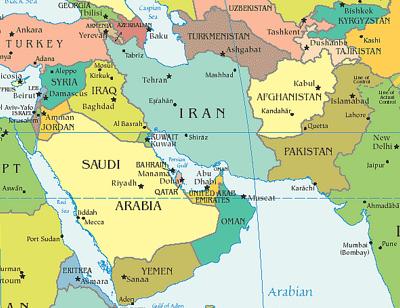
Map of the Middle East

The UK Telegraph’s Nile Gardiner explains how Democrat foreign policy made the current crisis in Syria worse.

Excerpt:

Bashar al-Assad’s regime in Syria is monstrous. A hundred thousand civilians have died at its hands in the last two years, and more than a million Syrians have fled the country since it began its war of attrition against rebel groups. It is almost certainly responsible for the massacre of up to 1,300 people in a suburb of Damascus last week through the use of chemical weapons. Many of the victims included women and children. Assad is a Baathist thug of the highest order, a figure of unremitting evil with few parallels in the modern world. The downfall of his dictatorship cannot come soon enough, and no peace can be realistically achieved in Syria until Assad goes.

In the face of Assad’s brutality, however, Washington and the West as a whole have been largely impotent. The White House’s strategy has been one of abject confusion, with no clear leadership from the president. Barack Obama’s approach has been one of “leading from behind,” a phrase first coined by one of his own advisers. He has been content to farm out US foreign policy to a feckless United Nations, and has kowtowed to a ruthless Moscow, which views Syria as a client state, a useful bulwark against American influence in the Middle East, and a thorn in the side of the world’s superpower.

The Russian “reset,” pioneered by Hillary Clinton as Secretary of State, has been one of the biggest foreign policy flops of the modern era, involving an extraordinary degree of deference towards a major strategic adversary. Clinton, it should be recalled, referred to Assad as “a reformer” as recently as April 2011, while former House Speaker Nancy Pelosi, as well as former Senate Foreign Relations Committee chairman John Kerry, made a number of trips to Damascus to meet with Assad prior to the civil war.

Similarly, the Obama administration has been content to allow the Iranians to plough money, arms and military personnel into Syria in support of Assad, providing a vital lifeline for the pariah state. Washington’s engagement strategy with Tehran has been a massive folly, simply emboldening the Mullahs with no consequences.

My Dad and I were talking about what the United States should do now to deter the use of chemical weapons, and we came up with two alternatives. Use our covert operations capability (such as it is) to kill Assad or go with a tactical military strike against the top of the Assad regime – either surface-to-surface missiles or standoff air strike. I think that Obama has weakened the clandestine services so much over the years by exposing their methods, exposing their sources, prosecuting them for doing their jobs, etc. that they are not strong enough to do the job. So it’s going to have to be a more messy military strike against the top level of the Assad regime, if the goal is to solve the problem.

Foreign policy expert Bret Stephens writes about that option in the Wall Street Journal.

Excerpt:

Should President Obama decide to order a military strike against Syria, his main order of business must be to kill Bashar Assad. Also, Bashar’s brother and principal henchman, Maher. Also, everyone else in the Assad family with a claim on political power. Also, all of the political symbols of the Assad family’s power, including all of their official or unofficial residences. The use of chemical weapons against one’s own citizens plumbs depths of barbarity matched in recent history only by Saddam Hussein. A civilized world cannot tolerate it. It must demonstrate that the penalty for it will be acutely personal and inescapably fatal.

[…]As it is, a strike directed straight at the Syrian dictator and his family is the only military option that will not run afoul of the only red line Mr. Obama is adamant about: not getting drawn into a protracted Syrian conflict. And it is the one option that has a chance to pay strategic dividends from what will inevitably be a symbolic action.

[…]On Monday John Kerry spoke with remarkable passion about the “moral obscenity” of using chemical weapons, and about the need to enforce “accountability for those who would use the world’s most heinous weapons against the world’s most vulnerable people.” Amen, Mr. Secretary, especially considering that you used to be Bashar’s best friend in Washington.

[…]The world can ill-afford a reprise of the 1930s, when the barbarians were given free rein by a West that had lost its will to enforce global order. Yes, a Tomahawk aimed at Assad could miss, just as the missiles aimed at Saddam did. But there’s also a chance it could hit and hasten the end of the civil war. And there’s both a moral and deterrent value in putting Bashar and Maher on the same list that once contained the names of bin Laden and Anwar al-Awlaki.

The rest of the article evaluates alternatives like striking Syria’s chemical weapons dumps, but concludes that a strike against the top of the Assad regime as the best option, if the goal is to solve the problem. I am not even sure if it is possible to get the top of the Assad regime this way, since we need intelligence to know where they are, and maybe even to point LTIDs at the targets. That can’t be done with the push of a button. These options require intelligence work to have been done up front, and we haven’t done it. Now we are stuck with the need to deter chemical weapon use, but we have few options and fewer capabilities.

There are two problems with Bret Stephens’ preferred scenario. First, the Assad regime has the backing of the Russians and the Iranians. They might not like it if we took out their puppet and his helpers. Second, the influence of the moderates in the Syrian opposition is uncertain. We don’t have a clear ally in the Syrian opposition, like we do in Egypt with the Egyptian army. From what I am hearing, the rebels are significantly Al Qaeda. We could have been cultivating those relationships with the moderate faction, but we were not doing that. So the whole thing is very risky. It didn’t need to be this bad, but we elected the pacificist multiculturalist moral relativist CYA Democrats in charge, and they’ve made a mess of the Middle East. Instead of elevating the Muslim Brotherhood in Libya and Egypt, we should have been focused like a laser beam on Syria. We weren’t engaged like we should have been.

To quote again from Nile Gardiner’s UK Telegraph article:

Syria is not Iraq or Afghanistan, where the United States had clear-cut military objectives and national interests at stake when it went to war. The conflict in Syria is further complicated by the rise of Islamist groups with links to al-Qaeda, who have thrived amidst the chaos, and in some cases have targeted the Christian minority in the country. The Obama administration has made little serious effort to cultivate pro-Western, non-Islamist rebels in Syria, whose influence has waned, while the Islamists have gained strength.

Ultimately, the Syrian debacle has exposed the emptiness of the Obama doctrine, one that is based upon hand-wringing, appeasement, and the scaling back of American power. President Obama has been content to weaken US influence, while playing a back seat role on the world stage. There are many things the White House could have done to erode Assad’s regime over the past two years while strengthening the hand of pro-Western rebels, including aggressively challenging Iranian support for Damascus, forcefully standing up to Moscow at the UN Security Council, coordinating support for the Free Syrian Army among the Gulf States and Turkey, and pressuring the Saudis to crack down on Islamist networks fueling al-Qaeda-tied groups in Syria.

But, of course, the Obama administration did none of those things, because those things would require leadership and vision.

By the way, in case you are wondering where Syria’s chemical weapons came from, the most likely scenario is that they were moved from Iraq. We had reliable intelligence before the Iraq war that Saddam had chemical weapons, and evidence emerged later that Iraq’s WMDs were moved to Syria.

UPDATE: Ralph Peters who is an expert in foreign policy is saying no to the strike idea. He prefers do nothing to an effective strike (the Bret Stephens option). But Peters doesn’t think that Obama will do an effective strike. So I am not sure what to do now. I am hearing that the opposition is not moderate in any way, and we shouldn’t be helping them at all by attacking Assad.
Should Christians expect to know God’s will by means of feelings and intuitions?

There are two views on the topic of decision making and the will of God. The view you learn in the church is called “the traditional view”. I call this view the feelings/intuition view. This view that elevates feelings / intuitions to the level of divine communications from God. The more practical view is called “the wisdom view”. I call this view the battlefield commander view. I am a proponent of the wisdom / commander view.

Let’s learn about the two different views:

[The traditional view is] that God has a plan for our lives and that we receive guidance through methods such as “open and closed doors”, “feeling led” and “the still, small, voice”.

[The wisdom view] holds that God does not have an “individual will” for our lives, but rather that all of God’s will can be summed up within two categories, God’s sovereign will and God’s moral will. Basically God’s sovereign will is all the things that god decrees will happen. It is hidden (mostly) from us, and does not play an active part in our decision, although some of it is revealed in the bible. God’s moral will is the part that we must concern ourselves with in making decisions. It is fully revealed in the bible and our decisions must be made within it. We may use wisdom in applying god’s moral will to our lives, or we may be in an area not covered by god’s moral will. We must finally submit in advance to God’s sovereign will, being prepared for him to sovereignty intervene and redirect us through whatever means he wills (see James).

Here’s a bit more from someone else:

Regarding the view that God has a personal will for us individually that we have to discern and find, J.I. Packer says, “The first thing to say is that the idea of guidance is actually a novelty among orthodox evangelicals. It does not go back farther than the last century. Second, it has led people to so much foolish action on the one hand, and so much foolish inaction on the other, as well as puzzlement and heartbreak when the ‘hotline’ to God seems to go silent, that it has to be discredited. Third, it must be said that Scripture gives us no more warrant constantly to expect personal ‘hotline,’ ‘voice-from-the-control-tower’ guidance than to expect new authoritative revelations to come our way for the guidance of the whole church.” (Hot Tub Religion, page 118).

As to the point of the question, how do I make decisions, I attempt to make decisions in light of three factors: God’s moral will, wisdom, and my personal desires. If something is opposed to God’s moral will, then I should obviously flee from it. If it’s not opposed, then I consider the wisdom of the choices. For example, would it be wise for me to marry a woman who loves Jesus, though we have nothing else in common? Probably not. If the options pass the criteria of wisdom, then I’m free to choose how I wish. If I’m offered two jobs, and both are honoring to God, and both would be wise to take, then I’m free to choose the job I would like more. I don’t need to put out a fleece or await some other confirmation from God. If it’s moral and wise, then the only question as to whether or not it will honor Him is my attitude.

Some examples of this model used in the Bible (in theological circles referred to as the Wisdom Model) are in Paul’s planning of a mission to Rome in Romans 1:9-15, 15:22-24, the Jerusalem Council (Acts 15:1-29), and Paul’s instructions for legal disputes (1 Cor 6:3-6).

The best book on this topic is Garry Friesen’s “Decision Making and the Will of God”. In it, you’ll find a full assessment about what the Bible teaches on this topic.

When I am trying to decide what will be effective, I look at Christian scholars, at their papers, books, and public debates. That’s effectiveness because it is addressed to a non-Christian audience in public with the force of reason and evidence. It is persuasion and it is addressed to rational minds. I want to change the minds of people who have a large influence on society on the whole. I don’t think that offering Christianity as life-enhancement or self-help is really “having an influence”. I think that offering Christianity as truth, with support, is “having an influence”.

So let me be clear about what I believe:

  • I don’t think that God normally talks to people directly
  • I don’t believe that life is an Easter egg hunt, filled with clues accessible only to emotion and intuition
  • I don’t believe that God expects people to discover a specific will for their lives using non-rational means
  • I think that people make up their own life plan that is consistent with the Bible
  • The goal of the life plan is to be effective, and there are no other considerations
  • I think that there are many good things a person can do, but that some are more effective than others
  • I think that with respect to the goal of serving God effectively, my happiness is expendable
  • I don’t think that the purpose of doing something for the Lord is to feel good about ourselves
  • I don’t think that people should choose ineffective things to do just because they like them
  • I don’t think that people should choose ineffective things to do just because they are good at them
  • I think people should do hard things that they don’t like – as long as it’s more effective
  • I don’t think that any course of action is as effective as any other – some plans accomplish more
  • I don’t think that life is totally unpredictable and irrational and subjective
  • I think that we can know what is or is not effective by studying and learning about the world
  • I think life is like a battlefield that must be surveyed, understood and acted upon deliberately

I think that every person is the commanding officer of his or her own life, and each person must study everything they can, make a plan that is consistent with the Bible’s moral prescriptions, execute the plan and achieve whatever they can achieve for the Lord. And the goal is not comfort or happy feelings, but real achievements. Not for the purpose of being saved, of course, because salvation is a free gift of God because of what Jesus did on the cross. Life is more like a battle than a vacation resort or a buffet or a shopping center. God’s will for us is not have happy feelings, but that we freely choose to sacrifice ourselves out of obedience and service to him. In my case, that means studying hard things, making money, saving money, and giving money away to good scholars, sponsoring good events and being persuasive to non-Christians. None of this necessarily makes me happy, but it does work to bring glory to God. I cried when I had to learn calculus, because it was so hard. But who cares? The main thing is that I have money now to sponsor Christian speakers or to give books to Christians to read, and God is happy with that.

I think that it is very important to realize that God is not impressed by our not being smart and not being effective. If we have the ability to be smart, then we should be smart, whether it makes us happy or not. If we have the ability to make money, then we should make money, whether it makes us happy or not. If we have the ability have a great influence, then we should have a great influence, whether it makes us happy or not. There will be plenty of time for happiness after we’re dead. But this life is a time of serving, and we should try to serve effectively, whether it makes us happy or not. With respect to God’s purposes in the world, my happiness is expendable.

Whenever someone questions my goals and plans by saying that I am asserting my will over God’s will, the first question I want to ask that person is this: “how do you know what God’s will is?” and “what is your basis for thinking that my plan to serve will not be effective?”. I want to know if I have misunderstood something about the way the world is, or miscalculated in some way. I want someone to look at my calculations and show where they are going to produce a less optimal result for the Lord. That’s the only concern I have – effectiveness for the Lord. Usually what I have found is that the other person wants to make the purpose of life their own happiness, and it makes them happier to choose what to do moment by moment, without having to study anything or make plans. It’s not that they have better goals (for God) or better plans (for God). It’s that they want their goals to be above God, and they don’t want to make plans other than to do whatever makes them happy.

This article by Greg Koukl may be helpful.

And I also found this summary of the Friesen book useful:

In nine parts.

Ronald Reagan’s 40th anniversary D-Day speech: the boys of Pointe du Hoc

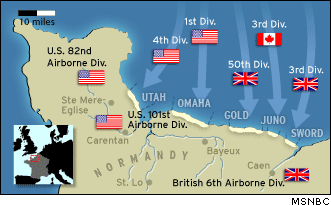
June 6, 1944 D-Day Normandy Invasion Map

It’s June 6th, today, and it’s the anniversary of D-Day: the Allied invasion of northern France – the beginning of the end of World War 2. One of the most pivotal events of that day was the assault on German gun emplacements by members of the Army Rangers at a fortified position called “Pointe du Hoc”.

President Ronald Reagan recognized the soldiers who attacked Pointe du Hoc back in 1984:

You can read the full transcript of that speech here.

Ronald Reagan also made the case for gratitude and vigilance:

Here’s the hymn that starts to play at the end:

The Boys of Pointe du Hoc

Here’s a summary of the Pointe du Hoc mission:

[Lt. Col. James Earl] Rudder took part in the D-Day landings as Commanding Officer of the United States Army’s 2nd Ranger Battalion. His U.S. Army Rangers stormed the beach at Pointe du Hoc and, under constant enemy fire, scaled 100-foot (30 meter) cliffs to reach and destroy German gun batteries. The battalion’s casualty rate for this perilous mission was greater than 50 percent. Rudder himself was wounded twice during the course of the fighting. In spite of this, they dug in and fought off German counter-attacks for two days until relieved. He and his men helped to successfully establish a beachhead for the Allied forces.

You can watch a three-clip documentary on it, too: part 1, part 2, part 3.

You can read the complete story about their successful effort to destroy the 6 155mm German guns here on Military History Online. Although initially, the Rangers did not find the guns where they had expected them, they did find them further back behind the cliffs and destroyed them there, removing a threat to the forces that would be landing later.

What does D-Day mean to Christians in particular?

A female Christian friend asked me what she should be thinking about when I sent her one of the videos above, and so I wrote her this to explain why I sent her the video:

To make you close your eyes and think in a more practical way about what it means for someone to sacrifice their lives to save you, of course. What it means to look up cliffs at machine guns, barbed wire and mortars raining death on you and to take a rope in your hands and to climb up a sheer cliff, under heavy fire, in order to save generations yet unborn and freedom itself.

To think about a concrete example helps us to be able to appreciate what Christ did for us in giving his life for us so that we could be free of sin, as well.

This is the insight that drives my entire interest in war and military history, in fact.

What does this mean: “Greater love has no man than this, that a man lay down his life for his friends.”

The more you know about D-Day, the more fearful what Jesus did appears, and the more you can be grateful.

Bullets and shrapnel are scary… and so are nails and lashes. Why on Earth would anyone endure either for me? And what should my response be to it?

I think it is helpful to explain Christianity to those who are not yet Christian, and for Christians to fully appreciate what Christianity is all about.

We were in peril. And now we have been saved. But at a cost.

I think that it’s important for Christians to look to history, art, poetry and music to help them to reflect and comprehend the sacrifice that Christ made for us in dying on the cross to protect us from peril. What must the cross have looked like to Jesus? It must have been something like what the Omaha beach looked like to the Americans landing in Normandy. Jesus saw whips, thorns and nails, and the heroes of Normandy saw 88 mm AT guns, 81 mm mortars and MG42 machine guns. How should you feel about people who face death on your behalf? Think about it.