Tag Archives: Travel

Andy Bannister and Michael Ruse discuss how atheists find meaning in life

Two horses fight it out, may the best horse win!
Two horses fight it out, and may the best horse win!

I’m summarizing the most recent episode of the Unbelievable show.

Details:

Atheist philosopher Michael Ruse joins Justin as we spend a second week looking at Andy Bannister’s new book ‘The atheist who didn’t exist’.

Its amusingly titled chapters include ‘The Peculiar Case of the Postmodern Penguin (or: Why Life without God is Meaningless). Michael and Andy debate whether it’s a problem that atheists can’t have meaning with a ‘capital M’.

Here is a summary of the discussion between Ruse and Bannister, and my comments below the summary.

The MP3 file is here.

Summary:

  • Ruse: ultimate questions are serious questions, and some religions are attempting to provide serious answers to those questions
  • Ruse: there is a psychological element to belief in God but it’s not a complete explanation, but it can apply to non-belief as well
  • Bannister: there are psychological reasons why people would prefer unbelief (quotes Thomas Nagel and Aldous Huxley)
  • Bannister: (to Ruse) what do you think would follow next if you got new information that caused you to believe in God?
  • Ruse: I’d feel scared, I’d think of all the reasons that God would dislike me, rather than any reasons why God would save me
  • Bannister: according to the Bible, God is not so much interested in mere belief, but in active trust in him
  • Ruse: without being smug, I just completed 50 years as a college professor of philosophy, and I have a sense of worth from that
  • Ruse: if God turns up, and says that 50 years of being a professor is not good enough, well, I don’t know God, I’m sorry, I did my best
  • Brierley: Andy, explain to us this story of how a penguin explained to you how he invented a subjective meaning in life for himself?
  • Brierley: (reads the story)
  • Bannister: when it comes to reading a book, the real meaning is the meaning the author intended the book to have
  • Bannister: readers can inject their own meaning into the book that has nothing to do with it, but the author gives the real meaning
  • Bannister: meaning in life is like reading a book – you can make up your own meaning, but the author’s meaning is the real meaning
  • Brierley: (to Ruse) on atheism, is there any objective meaning?
  • Ruse: “obviously, someone like myself cannot have meaning with a capital M in that sense”
  • Ruse: the real question is and atheist can find a sense of self-worth, “I find that I’m happier within myself, I can find meaning”
  • Bannister: what would you say to someone who drinks away the family inheritance and gets the same sense of happiness you have?
  • Bannister: what would you say to all the people who are unable to get “a sense of self-worth” from their career, because of where they are born, sickness, etc.
  • Ruse: I have nothing to offer them, some people are born into such awful situations that they are bound to be bad people
  • Ruse: these unfair accidents of birth, etc.,  fits with atheism better
  • Ruse: what we should do is change society so that more people can build a sense of self-worth through achievements
  • Ruse: that way, they can say to God “I used my talents” so they can create feelings of self-worth and happiness (apart from God)
  • Bannister: meaning in life cannot be answered without answering questions related to identity, value, which are rooted in the overall worldview
  • Bannister: on the Christian worldview, you have an infinite worth, your value isn’t determined by circumstances, earnings, friends, etc.
  • Bannister: your value comes from what Jesus was willing to pay to save you, namely, giving his own life for you
  • Bannister: when I travel to meet other Christians in other parts of the world, they have a happiness that should not be there if they are getting happiness from wealth, fame, achievements, etc.
  • Bannister: but when you come to the West, many people who have wealth, fame, achievement, etc. are unhappy
  • Ruse: well maybe who look after a flock of sheep every day may get a sense of self-worth from that, or from other jobs
  • Ruse: I do take Christianity very seriously, it is a grown-up proposal to answer grown-up questions – it works if it is true
  • Ruse: we don’t have to follow Nietzche’s statement that if there is no God, there is no meaning in life – we can find a middle way, we can achieve meaning in life by using our talents to achieve things
  • Bannister: I disagree with Michael, I don’t think that the meaning you invent for yourself is authentic meaning
  • Bannister: distracting yourself with amusing things and happiness is not an answer to the problem
  • Brierley: (to Ruse) are you saying that you have searched for ultimate meaning, and you are settling for subjective meaning?
  • Ruse: my subjective meaning is not second class to objective meaning, “I feel a real deep sense of achievement, of meaning, of self-worth, of having used my talents properly, and I don’t feel in any sense a sense of regret” (what matters to him is how he feels)
  • Bannister: notice how Michael keeps bringing in value judgments. e.g. – “use my talents well”, that implies that there is a right way and a wrong to use your talents, which assumes an objective scale of right and wrong, which makes no sense in atheism
  • Bannister: an atheist can sit in a sun room and enjoy the feelings of happiness generated by the light and heat of the Sun, without asking whether there is a Sun out there
  • Bannister: ultimately, at the end of the day, my concern is not whether something makes me happy or makes me feel fulfilled
  • Bannister: ultimately, at the end of the day, I think there is only one real reason to wrestle with these questions of meaning, and that is to find truth
  • Ruse: sometimes we reach a point where we cannot get to true answers to some questions, sometimes we look for truth, but then give up and confess “I cannot find it” and then move on from there

Is it possible to dispense with God’s advice on your decision-making and achieve something that affects a lot of people, or makes people like you, or makes you famous, etc., and then have that please God? “Look, God, I did something I liked that affected a lot of people, and made them feel happy as they were on their way to Hell because they rejected you”. Will rap musicians answer God by pointing to 50 years of leading people away from chastity with godless music? A lot of people went to see the “NWA” movie that celebrated musicians who have an anti-Christian view of women and violence. Can NWA present their “artistic work” to God and claim that God should be pleased with their successful efforts to get rich and famous? Having feelings of achievement doesn’t mean anything to God.

So what is the standard? How you imitate Jesus – self-control, self-denial and self-sacrifice to honor God – that is the standard. If I had to choose between giving up two hours of my life to summarize this discussion for my readers, and all the fame and fortune that people who make godless TV shows, movies and music have, I would choose to make this debate summary. My goal in life is not to have fun, thrills, travel and feel happy in this world. I have a Boss. Doing without fun, thrills, travel and happy feelings in order to put points on the board for my Boss is objectively meaningful. It’s may not seem like much compared to what James Bond does in million-dollar movies, but at least I am wearing the right uniform, and playing for the right team.

I was telling Dina recently, isn’t it remarkable how rarely in our culture that people actually talk about the big questions? If you look out at the culture, everything seems to be about feeling good, having fun, being liked by others. Not much about ultimate questions, and certainly not a truth-based assessment of the alternatives. .

Young women: one of the best things you can do with your life is care for kids

Does government provide incentives for people to get married?
Should women postpone marriage and raising children for other things?

Super-mom Lindsay sent me this article about by a former feminist who was once opposed to children, then had 4 of them in 5 years.

Introduction:

Up until my mid-20’s I was firm in my belief that I never wanted to have kids. A combination of events made me reconsider the issue, and by the time we got married I was open to the idea of having some pre-set, small number of kids and had begun thinking about the precise timetables on which I would have them.

[…]It would have been inconceivable to me to imagine that constantly having my plans derailed by pregnancies and not even having any idea when I’d be done changing diapers would be an improvement over my fully controlled, well-ordered life, but it has been.

[…]Lately I’ve been imagining what I would say to 2003 Jen if I could go back in time and give her a crystal ball to show her what her future would be like. I’ve been trying to imagine how I would talk her down from the balcony ledge after the crystal ball got to the “four kids in five years — and doing NFP!” part, how I could possibly convince her that this life is not only not a recipe for misery, but the true fulfillment of everything she thought she wanted.

I would love to tell you that I’d simply be able to explain that each child is such a joy and a blessing, but that would not have resonated with Old Jen; I might have agreed, but ultimately I would have said that those joys and blessing are just too much hard work. “I just don’t see how that kind of life could be anything but miserable for someone like me,” I would have said.

So how do you convince a woman that “hard work”, i.e. – self-denial, self-control, self-discipline, self-sacrifice – while caring for children could actually lead to a fulfilling life? And most importantly, that it should not be postponed in pursuit of something that appears more fun, more thrilling or more important (according to a feminist measure of fun, thrills and importance).

She makes 5 points in her post.

Here’s one:

3. “It’s not what you do, it’s whom you serve.”

A product of secular society, I’d fallen into the common notion that the way to find true happiness is to focus on yourself more and other people less. It makes perfect sense, after all: doing pleasurable things for me is fun, sacrifice and hard work are not fun; ergo, the secret to happiness must be to live for myself as much as possible. Right?

How shocked I was to discover that I was wrong — dead wrong. Part of fully understanding the concept of vocation was understanding that a vocation is not to be thought of as “what you do” as much as it is “whom you serve.” It was nothing short of revolutionary to hear the concept that God has called every one of us to serve others, that living for yourself is not a valid option; that the key to deep fulfillment, to finding your very purpose in life, is as simple as finding out the specific way in which you’re called to serve. Do that, and you will find peace.

It sounded not only too simple to be true, but too difficult. As a spoiled only child the idea of living to serve sounded terrible. But once I actually took a leap of faith and tried it, I had no doubt that this was truth.

Next,I want to talk about one of the young Christians I mentor, and then about the woman I supported for President in the 2012 election.

I spent Friday night playing with one of the young women I mentor. This is the one who did the BS in computer science, and is now doing the MS in computer science. After playing a few rounds of “Keep Talking and Nobody Explodes”, she mentioned the salary from her internship this summer. She asked me “what am I going to do with so much money? I think I had better stop thinking so much about myself and find some people out there to help”. And I was so pleased. Because this woman, more than any of the other young people I mentor, is my replacement.

J. Warner Wallace likes to talk about training your replacement, and I have several replacements, but none better than her. I remember when she was younger, she was a bit more selfish than now. She still organized events, like bringing Frank Turek, Tim McGrew, etc. to speak on her campus. But she never showed much interest in one-on-one care for others. It was my hope that just like me, she would react to computer science salary with a sense of obligation to others, and so she has. And that’s how I think women ought to be. They should be educated, they should be successful – but they should be open to the needs of others.

Michele Bachmann

The woman I admire the most in the world is former GOP Congresswoman Michele Bachmann, who was my first choice for President in 2012. I had been following her for many years before that, when she was just a state senator. I liked her because of her interest in apologetics, as well as her focus on her family.

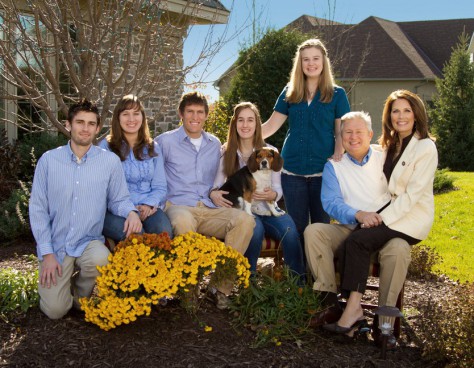
Marcus and Michele Bachmann and family

The  radically leftist New York Times did a profile of her.

It says:

Nearly two decades ago, a stay-at-home mother and onetime federal tax lawyer named Michele Bachmann felt a spiritual calling to open her clapboard home here to troubled teenage girls.

“We had our five biological children that God gave to us, and then he called us to take foster children into our home,” Mrs. Bachmann told a Christian audience in 2006. “We thought we were going to take unwed mothers in,” she continued, adding, “We took 23 foster children into our home, and raised them, and launched them off into the world.”

Today Mrs. Bachmann is Representative Bachmann, a Minnesota Republican, first elected to the House in 2006, and now a candidate for her party’s nomination for president. In Washington, she has grabbed the spotlight as a staunch fiscal conservative and brash Tea Party leader. But a look at her life here shows that it was her role as a mother, both to her biological children and to her adolescent foster daughters, that spurred her to seek public office.

[…]Mrs. Bachmann’s political awakening began with her deep disenchantment with the public school system.

[…]By the late 1990s, with her own children enrolled in private Christian schools, Mrs. Bachman was upset by the education her foster children were getting in public school. Teachers gave them “little special attention,” and many were “placed in lower-level classes, as if they were not expected to succeed,” she told a House subcommittee in 2007.

One brought home “an 11th-grade math assignment that involved coloring a poster,” she testified. Another “spent an entire week watching movies.” A third “remarked to me once that she was in ‘stupid people math.’ ”

So Mrs. Bachmann immersed herself in the minutiae of Minnesota’s graduation requirements. She worked with a conservative researcher and began giving talks in church basements.

[…]The Rev. Marcus Birkholz, the pastor at Salem Lutheran Church, which Mrs. Bachmann attended for years, calls her “a lady with energy and a heart” whose uncompromising “support for the unborn” extends beyond fighting abortion. “She sees the whole picture,” Pastor Birkholz said. “It’s not just bringing a child into the world; that child has to be nurtured and educated.”

[…]Mrs. Bachmann, whose biological children now range in age from 17 to 29, worked until her fourth child was born. (Her youngest, Sophia, is headed to college this fall, while the eldest, Lucas, is a medical resident at the University of Connecticut, pursuing a specialty in psychiatry.) Friends remember her planning neighborhood picnics and organizing bicycle parades.

“I had all these balls in the air that I was juggling,” she said in an interview with Minnesota Monthly last year. In choosing to leave work, she said, “I finally realized my dream, which was to be mom of a big, happy family.”

What does it mean? It means that women ought not be horrified by husband needs or children needs. They should not be opposed to responsibilities, expectations and obligations in relationships. Sometimes, the path to greatness means taking a few years off from work to homeschool your kids. After all, isn’t it better for God to have FIVE Christian kids who will surpass you in influence?  Michele didn’t get involved in politics by thinking of herself. She got involved in politics by thinking of her children, and her 23 foster children.

Here’s my advice to young women: 1) Study something hard that pays. 2) Work a few years and get debt free. 3) Marry a good provider in your mid-to-late 20s. 4) Have as many children as your husband can support. 5) Be actively involved in the education of your kids (with apologetics, too). 6) Open your home to kids who don’t have a mom or a dad. 7) Teach your kids the importance of caring for others. 8) Run for President (as a Republican).

Survey: women explain why they avoid having children

Is it OK to tell women they are wrong?
Are women today genuinely interested in marriage and children, or do they have other plans?

This article comes from the leftist Huffington Post.

They write:

The Huffington Post and YouGov asked 124 women why they choose to be childfree. Their motivations ranged from preferring their current lifestyles (64 percent) to prioritizing their careers (9 percent) — a.k.a. fairly universal things that have motivated men not to have children for centuries. To give insight into the complex, layered decisions women make, HuffPost asked childfree readers to discuss the reasons they have chosen not to have kids and gathered 270 responses here.

They grouped the responses into 5 categories:

  1. I want to prioritize my career
  2. I don’t like children
  3. I had a bad relationship with my parents
  4. I don’t want the financial responsibility
  5. I like my life as it is

And here are some of the ones that I thought were the most interesting, and pay attention to the ones that include fear-of-missing-out travel, which I blogged about before:

Category 1:

I am a first-generation college graduate in my family. My mother was a single mom my entire childhood, and I was there to see that struggle. Being a parent, for a woman, means for life. Being a parent, for men, seems to be something very different. I understand raising children is a big life change and I don’t want to sell myself short on my potential to become something more and maybe even create change. I am childfree because I want to travel, move, pursue my career wholly and be able to push myself to be an inspiration to other women. If a child comes into my life, it won’t be until I am happy and successful in my work life, and not until I am secure with my finances and a marriage. I don’t want to one day wake up as an old woman wishing I had waited to have children so I could live my own life first, make mistakes, learn new things and find myself. Today kids are not for me.

Category 2:

I’m nearly 47; my boyfriend (domestic partner) of 17 years is nearly 50. I’ve never been pregnant and have taken every precaution to remain childfree. I tolerate other people’s children when I have to. I’m happiest when there are NO children around. I definitely don’t want them in my home. I like my life as it is. My boyfriend and I are both scientists. We also raise snakes and spiders! We like to travel. We travel to ride roller coasters (members of ACE — American Coaster Enthusiasts) and to attend rock concerts. I am also a performer in a senior winter guard. My plate overfloweth! I see no reason to procreate. I would be unhappy. Why be unhappy?

Category 3:

I have a great relationship with my husband. We have the time and money to travel, and that gives us precious memories. I had a bad relationship with my dad, and maybe I’m scared to treat my children like that. I’m very happy with my decision. I have a great relationship with myself too.

Category 4:

My spouse and I have talked in depth about having children. However, we both decided that our desire to travel the world is a financial burden in itself. If we have kids, we will never have the means to travel, and at the end of our life, we would rather be 100 percent committed to fulfilling our own realistic dreams rather than only able to provide a subpar life for a child. Comes down to the fact we are selfish, but at least we recognize this and made the choice early enough to avoid damaging a kid

Category 5:

The thought of having to do kiddie crap every weekend makes me want to shoot myself. I like having the extra money to save for retirement and not worry about braces, summer camp or college tuition. I can travel on a moment’s notice. I can give my all to my job and not have to worry about daycare, sick days, or having to leave my co workers to pick up my slack. I’m the “cool aunt” to all my nieces and nephews. I have more time to do the things that make me happy and productive. My relationship with my guy is not strained due to the constant neediness of children. I don’t want to put my body through pregnancy and childbirth. I can give my dog all the attention he needs and deserves.

If I had to choose one comment to represent the entire survey, it would be this one:

The moment you have children, you’re life ceases to be about yourself. Kids always take priority and I feel like I can do more for this world than just generate offspring.

Or maybe this one:

I honestly feel too lazy. I haven’t achieved enough, and if I had a child I would “just be a mom,” which isn’t enough for me or what I want out of life.

I think this is the real reason why young, unmarried women choose not to prepare or plan for marriage and children . Marriage and children “some day” is like planning for your retirement by winning the lottery. Marriage and children “some day” is an excuse to signal to family and friends that you will eventually want the responsibility of a husband and kids, but that you are justified in being self-centered right now.

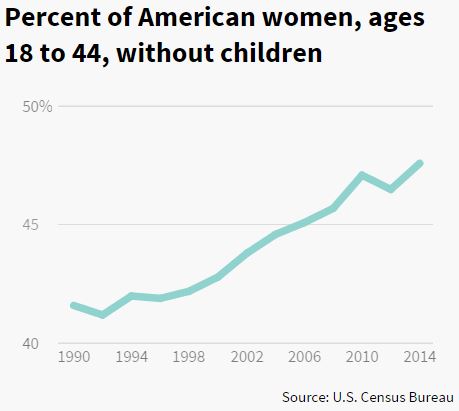
We need to move beyond a survey to quantify this, and this U.S. Census data does that:

Childless by choice, not because of men
Childless by choice, not because of men failing to “man up”

These quotations are very troubling if you are a young man who has been serious about obtaining STEM degrees, saving money by not traveling, and making a plan to have a marriage and family that will serve God. I am seeing real hostility in young, unmarried Christian women to the idea that marriage will impose responsibilities, expectations and obligations on them. And their parents, relatives, friends and co-workers are doing nothing to detect and counter this attitude. As Lindsay argued on this blog before, the marriage / children plan is an excellent way for Christians to make a difference. It will take a lot of work, but it makes much more of a difference for the kingdom than just doing whatever makes you feel happy.

A friend of mine named Bee commented on an early version of this post::

Sad to say this but many Christian voices are encouraging Christian women to travel, date around and delay marriage and childbirth. Here are several negative voices:

Mandy Hale is a Christian woman who is mid 30’s, never married and has wasted years in travel and bad relationships. She has a large twitter following. She promotes her travel oriented, feelings oriented lifestyle.

http://thesinglewoman.net/about/

Christian counselor Stephen Arteburn tells of encouraging his daughter to travel and date around and not think about marriage until her late 20’s. Unfortunately, no one can flip a switch on their 28th birthday and quickly get married to a quality guy. Also, late marriage for women means having more than 1 or 2 children is risky.

[…]Bskillet81 found evangelical american princesses (EAP) obsessed with travel, entitlement, feelings, and personal fulfillment.

https://societyofphineas.wordpress.com/2014/11/24/evangelical-american-princess/

I just read some of Mandy’s quotes from GoodReads and she is certifiably nuts.