
Tag Archives: Theology

Chris Sinkinson debates John Hick on religious pluralism

Looks like Justin Brierley on the Unbelievable radio show found a pastor with a Ph.D in philosophy, and he can really whip some ass.

The players:

John Hick is a noted philosopher and theologian who is a proponent of a pluralist view of religion – that there is one light (God) but many lampshades (religious expressions).

Chris Sinkinson is a pastor and Bible tutor who has critiqued Hick’s work.  He says that pluralism empties Christianity of any content and in its own way disrespects other religions more than his own exclusivist stance.

The MP3 file is here.

Justin does a great job as moderator of this debate. He said what I was thinking a number of times.

One quick thing. If you like this debate, then you need to order the Greer-Heard forum MP3s from the Harold Netland vs. Paul F. Knitter debate. Paul Knitter’s case for pluralism is essentially the same as Hick’s although he emphasizes the “evangelicals are mean” argument more than the “I want people of other religions to like me” argument.

if you can’t buy the Knitter lectures, then at least read this.

Anyway, here is my snarky summary. I creatively paraphrase some of the things that Hick says to make it more clear. And funny.

—-

Hick:
– had an experience looking at the buildings of other religions
– other religions have buildings, so all religions are equal
– I spent some time in the East, and met nice Eastern people
– since Eastern people are nice that means all religions are equal

Justin:
– isn’t Jesus’ claim to be the exclusive path to salvation offensive?

Sinkinson:
– all religions that are exclusive and have to deal with religious pluralism
– even John Hick writes polemically in favor of his own view
– even John Hick thinks that religions that are exclusive are false

Justin:
– what about the blind man and the elephant?
– the story seems to say that other people have a partial grasp?
– but the story-teller himself has the privileged view
– so isn’t the religious pluralist just as arrogant as exclusivists?

Hick:
– well, it’s not arrogant to claim to have the right answer
– Jesus never made the claim to be God incarnate
– Jesus never made the claim to be the exclusive path to God
– historians don’t think that John’s gospel is reliable because it is late
– the proclamation of exclusivity was added by evangelists much later

Sinkinson:
– the historians who doubt the high Christology are radical skeptics
– the mainstream of historical scholarship accepts a high Christology
– the EARLIEST history about Jesus has the highest Christology

Hick:
– the moderate scholars do think Jesus was divine but that he didn’t think he was divine
– the phrase “Son of God” was used to describe any remarkable person
– only later did the early church turn the generic term into “God the Son”

Sinkinson:
– there is reflection on Jesus’ identity and developments, but not invention
– Jesus and his followers were in trouble precisely for linking him to deity
– why else would Jesus get into trouble and get crucified?

Hick:
– the Romans crucified him because people were saying he was the Messiah
– but the Messiah was not identified as being divine, but political
– and that’s why the Romans crucified him

Justin:
– do you (Sinkinson) think that people in other religions can be saved?

Sinkinson:
– the traditional view is exclusivism
– the other world religions are logically contradictory with Christianity
– you have to respect their differences – they are not the same as Christianity
– exclusivists allow that people can be saved by responding to natural theology
– and there are also other cases where non-Christians are saved, like old testament saints and babies who die in infancy

Hick:
– but people’s religions are based on where they are born
– so it’s not fair for God to expect people to be saved in one religion only

Sinkinson:
– the plurality of religions grouped by location doesn’t make christianity false
– that would be the genetic fallacy – rejecting an idea because of its origin
– the real question to consider is whether it is true
– and even the objection assumes that God is a God of love, who should be fair
– but how do you know that God is loving? that is an exclusive view
– how can the “blob” ultimate of religious pluralism be “loving” and “fair”

Hick:
– the ultimate reality is loving or not loving depending on each person’s religion

Sinkinson:
– but some religions and theistic and some are atheistic
– how can those God exist and not exist?

Hick:
– God is beyond everyone’s understanding, except mine
– God is beyond all definitions, except mine
– God is beyond all human understanding, except mine
– i’m not contradicting myself, it’s a mystery! a mystery!
– as long as you don’t look to closely, they’re all the same!
– allow me to tell you about God, which no one can do but me

Justin:
– doesn’t your religious pluralism mean that Christianity is false?

Hick:
– well, Christianity can’t be true, because it disagrees with other religions
– Christianity can’t falsify other religions, that would be mean to them
– other religions are just as “profound” as Christianity – and that’s what matters – not whether a religion makes true claims
– some religions are older than Christianity, that means they can’t be disagreed with
– we can’t let Christianity be true, because then some people will feel bad
– if people feel bad, then they don’t like me and then I feel bad
– if there’s one thing I know about the unknowable ultimate reality, it’s that it wants me to be liked by lots of people

Sinkinson:
– your view seems to be agnosticism – that nothing can be known about the “ultimate real”
– if we can’t express in words what God is like, then why are you saying what God is like?

Hick:
– the indescribable ultimate is described (falsely, but interestingly) by various tradition

Sinkinson:
– does the “ultimate real” exist?

Hick:
– no

Justin:
– are all the exclusive religions wrong, and only you are right?

Hick:
– all propositions about God in all the religions are false
– the experience of being deluded and having feelings about your delusions is “valid” in all religions
– all religions are equally good ways to believe false things and to have feelings about your false beliefs
– only my propositions about God are true
– everyone who disagrees with me is wrong

Sinkinson:
– so all the propositions of all the religions are wrong
– but all the experiences and feelings are “right”

Hick:
– yes
– all propositions about God are humanly constructed, and so false
– except mine – mine are true!

Sinkinson:
– so everything distinctive about Christianity are literally false?

Hick:
– yes, Christian doctrines are all false
– because if they were true, other religions would be false, and they would feel bad
– and we can’t have that, because everyone has to like me
– only things that don’t offend people in other religions can be true

Sinkinson:
– so do we have to then treat all religions as non-propositional?

Hick:
– well just don’t ask people about the content of their beliefs
– just treat their religion as non-cognitive rituals, feelings and experiences
– don’t inquire too deeply into it, because all religions are all nonsense
– i’m very respectful and tolerant of different religions!

Sinkinson:
– but Muslims, for example, think their religion is making truth claims

Hick:
– but there can be tolerance as long as you treat religions as non-propositional nonsense

Sinkinson:
– um, I have a higher respect for religions than you do
– I actually consider that the claims of other religions could be true
– I think that other religions make truth claims and not nonsense claims

Hick:
– well they are all useful because they are all false
– I don’t emphasize beliefs, I emphasize living, experiences and feelings
– as long as everyone accepts my view and rejects their religion, we’ll all be tolerant

Justin:
– erm, isn’t that an exclusive claim?
– you’re trying to say that your view of what religion is is right, and everyone else is wrong

Hick:
– I’m not arrogant, I just think that all the religions of the worlds are false
– only my statements about religion are true – everyone else is wrong
– I’m tolerant, and Christians are arrogant

Justin:
– but you think Sinkinson’s view is wrong
– why should we accept your view and deny his view?

Hick:
– His view of salvation is false, and mine is true

Sinkinson:
– you use words with set meanings, but you mean completely different things
– when I say salvation, I mean deliverance from sins through Jesus

Hick:
– I get to decide what salvation means for everyone, you intolerant bigot

Sinkinson:
– but that word has a specific meaning that has held true in all of Christian history
– but what you mean by salvation is people having subjective delusions that are not true

Hick:
– I don’t like using the word salvation

Sinkinson:
– but you just used it!
– and you think that it is present in different world religions, but it isn’t

Hick:
– God is unknowable and indescribable
– God isn’t a wrathful God though
– and the Christian description of God is false
– Evangelical Christians are mean
– I had experiences with people of other faiths
– and these experiences taught me that religions that think that the universe is eternal are true
– as long as you reduce religion to behaviors and not truth, then religions are all good at producing behaviors
– if you just treat all religions as clothing fashion and food customs, they are all valid
– the main point of religion is for people to agree on cultural conventions and stick to them
– never mind the propositional statements of religions… who cares about truth? not me!
– but Christianity is definitely false

Sinkinson:
– the Judeo-Christian God is different – he reveals himself to humans
– he is distinct from the other religions
– he is personal, and is loving but also angry at sin

Hick:
– But God isn’t a person, and he isn’t a non-person
– I can’t say what he is – I’ll offend someone if I say anything at all!
– except Christians – I can offend them because they are arrogant bigots
– I’m also very spiritual – I meditate on my breathing

Sinkinson:
– you can’t assess a religion by the experiences that people have
– people who have weird experiences do all kinds of evil things
– so the real question has to be about truth – is the New Testament reliable?, etc.
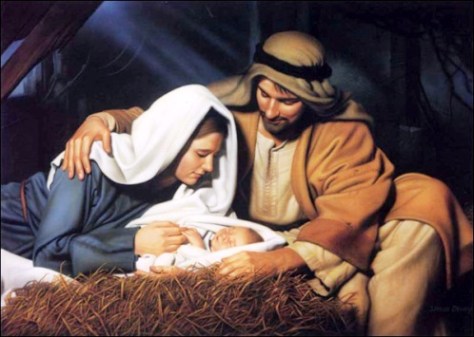
What does Christmas mean to Christians?

It’s the time of year when we explain what Christianity is about.

God exists

Basically, we know from a variety of scientific arguments that the universe was created and fine-tuned for life by an intelligent agent that existed causally prior to the beginning of the universe, because this agent brought the universe into being. Our purpose as humans is to enter into a two-way loving relationship with this Creator/Designer of the universe. This is the only way that we can ultimately be happy and fulfilled.

We avoid God

Now, when you look at human experience, none of us is interested in finding out about the character of this Creator/Designer, because we are afraid that if we find out too much about him then we will have our freedom to do as we please constrained by the demands of a relationship with an all-powerful, all-good being. Just knowing that such a person exists and has a character distinct from our own is enough to cause us to flee from him so that we can stay autonomous from the obligations of the moral law that he expects us to follow.

Christians believe that this universal desire to avoid an all-powerful, all-good God who will judge us is a result of bad behaviors inherited by us from the very first rebellion against God by our ancestors. Ever since that rebellion, the capability for relating to God has been lost, because we no longer have the ability to stop our rebellion against God. Christians call the first rebellion of our ancestors “The Fall of Man”.

What does this rebellion look like for us today? Well, we want to do whatever we want, in order to be happy, and to ignore God’s demands. We want to have happy feelings, including security, community and being morally good, all without a relationship with God. We want to acquire and rearrange matter for our selfish ends without acknowledging and honoring the Creator/Designer of that matter. And, of course, we would like other people to affirm, voluntarily or involuntarily, that our rebellion against God is really the height of moral goodness.

Additionally, some people imagine that God, if he exists at all, must desire our happiness. And of course when their needs are not met by this invented God, then they become even more bitter at God, and eventually decide that God could not really exist since their selfish needs are not being met by him. It never seems to occur to us humans that some pain and suffering may be permitted by God in order to turn our attention away from pleasure and security in this life, and back towards a relationship with him.

This is the mess we find ourselves in. This propensity for turning away from God and trying to pursue selfish happiness and security apart from a relationship with God is what the Bible calls “sin”. Every single one of us deserves severe punishment for refusing to pursue a genuine two-way love relationship with the God who is there. That is the mess we are in before Jesus appears to address this problem.

Jesus saves the day

I cannot say much about how Jesus solves the problem of rebellion against God, because that is really the story of Easter, and today we are dealing with the story of Christmas. But I can say that the solution to the problem requires that God step into history to communicate with his creatures and to perform actions in order to be reconciled with them. That is the message of Christmas: God is stepping into history to do something to end our rebellion. Easter is the story of what he does.

This is talked about in the Bible in John 1, for example.

John 1:1-5:

1In the beginning was the Word, and the Word was with God, and the Word was God.

2He was with God in the beginning.

3Through him all things were made; without him nothing was made that has been made.

4In him was life, and that life was the light of men.

5The light shines in the darkness, but the darkness has not understood it.

You can substitute the word “Word” there for Logos, which really means logic or reason or wisdom. This is a person with a divine nature, identified with the eternal being of God, who exists causally prior to the creation of the universe, who is going to take on an additional human nature, including a human body. (Christians believe that there is one divine “what” being and three divine “who” persons). Software engineers, you can think of Jesus having two natures as multiple inheritance in C++.

And it continues in John 1:10-14:

10He was in the world, and though the world was made through him, the world did not recognize him.

11He came to that which was his own, but his own did not receive him.

12Yet to all who received him, to those who believed in his name, he gave the right to become children of God—

13children born not of natural descent, nor of human decision or a husband’s will, but born of God.

14The Word became flesh and made his dwelling among us. We have seen his glory, the glory of the One and Only, who came from the Father, full of grace and truth.

Here the word grace doesn’t mean like a graceful ballet dancer. It means an instance of mercy received from a superior. A person (a “who”) identified with the divine being (a “what”) has decided to make us a top-down offer of mercy.

The same message of God stepping into history is found in the Christmas carols that people sing at Christmas.

Christmas carols

Here’s the best one, “O, Holy Night“, and it says:

O holy night! The stars are brightly shining.
It is the night of the dear Savior’s birth.
Long lay the world in sin and error pining,
Till He appeared and the soul felt its worth.

When we were in rebellion, we had lost our most valuable capacity – the capacity of being in a direct relationship with God. And if Jesus can accomplish his mission, then we are going to regain that capacity for a direct relationship with God.

Now look at “Hark! The Herald Angels Sing“, which one of my favorites:

Hark! The herald angels sing,
“Glory to the newborn King!
Peace on earth and mercy mild,
God and sinners reconciled.”

Basically, as I often say, there are only two kinds of people in the world. There are people who are willing to respond to the offer of a relationship with God, with all the little sacrifices and compromises that a relationship entails, and then there are people who are not willing to respond. For the people who are willing to respond, the appearance of Jesus is the best thing that could possibly happen, because now we are finally going to have a chance to deal directly with God, face-to-face, to find out what he is like, and change ourselves to be more like him, with his help.

And that is why people celebrate Christmas. It’s the anniversary of the birth of Jesus. It is the story of God stepping into history to be reconciled with his rebellious creatures. It’s the story of the divine Logos divesting himself of his glory and subjecting himself to the life of a creature in order to rescue us from our sinful, self-destructive rebellion. This love for undeserving creatures is above and beyond the call of duty. We didn’t love him, but instead he loved us first, and he loved us enough to come down here and suffer with us so that we could be reconciled with God.

MERRY CHRISTMAS!

Richard Dawkins, who claims to oppose genocide, vows to “destroy” Christianity

Rev. George Pitcher writes about an interview of Christopher Hitchens conducted by Richard Dawkins. (H/T Thinking Christian)

Excerpt:

But the centrepiece of this Christmas edition is the main coup for the New Statesman – an interview by Prof. Dawkins with Christopher Hitchens, the great polymath who today lost his fight against cancer. It’s a fascinating read over three double-page spreads. Not least because Prof. Dawkins reveals a charming humility, allowing Hitchens to show his intellectual superiority at his own expense. Hitchens is thoughtful about CS Lewis and Christianity and rather leaves Prof. Dawkins floundering in his wake, occasionally interjecting little assents to show that he’s still there, as he struggles to keep up.

But one of these interjections is most revealing. About half-way through, the Prof gets this in edgeways: ‘Do you ever worry that if we win and, so to speak, destroy Christianity, that vacuum would be filled by Islam?’

So, ‘if we win…and destroy Christianity’. True, there’s a ‘so to speak’ in there, but it doesn’t do much. Try ‘If we win and, so to speak, kill all the Jews’ as an alternative. Doesn’t really work, does it? And Prof Dawkins can hardly claim that he was misquoted or taken out of context. He was editing the magazine, after all – there’s even a picture of him doing so, pen poised masterfully over page proofs.

Now you might think that Dawkins intends to destroy Christianity in debates, and not in the wars and purges of atheism that occurred last century in North Korea, Cambodia, China, the Soviet Union, and so on. Those atheist regimes caused the deaths of 100 million people, according to Harvard University Press. But Dawkins has refused to debate William Lane Craig on more than one occasion. So whatever he means by “destroy Christianity”, he doesn’t mean “defeat them in rational debate, using superior arguments and evidence”. He had his chance to do that, and he passed on it. So, he must mean something else by “destroying Christianity” other than persuasion.

Let’s find out what Richard Dawkins thinks about morality. Dawkins has previously written this:

The total amount of suffering per year in the natural world is beyond all decent contemplation. During the minute that it takes me to compose this sentence, thousands of animals are being eaten alive, many others are running for their lives, whimpering with fear, others are slowly being devoured from within by rasping parasites, thousands of all kinds are dying of starvation, thirst, and disease. It must be so. If there ever is a time of plenty, this very fact will automatically lead to an increase in the population until the natural state of starvation and misery is restored. In a universe of electrons and selfish genes, blind physical forces and genetic replication, some people are going to get hurt, other people are going to get lucky, and you won’t find any rhyme or reason in it, nor any justice. The universe that we observe has precisely the properties we should expect if there is, at bottom, no design, no purpose, no evil, no good, nothing but pitiless indifference.

(“God’s Utility Function,” Scientific American, November, 1995, p. 85)

Dawkins’ view is that nothing is really good or bad objectively. Cultures just evolve certain conventions, and those conventions vary arbitrarily by time and place. I think we need to interpret his goal of destroying Christianity against the backdrop of his nihilism. 50 million unborn children have been killed in the United States since 1973 alone. That’s 50 million people with distinct genetic codes different from their mothers or their fathers, who will never grow up to achieve their potential.

Dawkins himself is in favor of infanticide:

So what might destroying Christianity look like to an atheist?

Here it what destroying Christianity means in North Korea, the most atheistic country on the planet.

Excerpt:

A Christian woman accused of distributing the Bible, a book banned in communist North Korea, was publicly executed last month for the crime, South Korean activists said Friday.

The 33-year-old mother of three, Ri Hyon Ok, also was accused of spying for South Korea and the United States, and of organizing dissidents, a rights group said in Seoul, citing documents obtained from the North.

The Investigative Commission on Crime Against Humanity report included a copy of Ri’s government-issued photo ID and said her husband, children and parents were sent to a political prison the day after her June 16 execution.

That’s what Kim Jong Il means by “destroy Christianity”. What does Dawkins mean by it?

FLASHBACK: American Atheists calls for the eradication of Christianity.