
Tag Archives: Radical Feminism

Should we only blame boys for the highly-sexualized culture?

Man helping a woman with proper handgun marksmanship

If you wanted to read just one article that summarizes a lot of my views on radical feminism and the Sexual Revolution, based on my experiences with young women in high school, college and the workplace, this article from The Federalist would be a good choice.

I am going to excerpt a piece of this for my post, but you really need to click through and read the whole thing.

Excerpt:

Let’s build on that foundation and ask why porn is driving expectations for young women.

As with the prevalence of porn among boys, the answer to this question has two parts. The victimization half of the answer is that we’ve deliberately avoided giving girls any other kinds of expectations. Think about it for a moment: Why should it be so hard to tell a guy “no,” as girls reported in the survey? Why should she think it’s mean?

Feminists would have you believe that all girls are shrinking violets who never learned how to lean in, but the far better answer is that these girls don’t really know of any good reason to say no. “I don’t want to” is a reason, but it’s the kind of reason one must weigh against others’ desires in any kind of voluntary relationship.

Chastity, which is the view that relationships work better when sex is confined to exclusive, permanent marital commitments, is out of favor in our society, thanks to feminism. In place of chastity, feminism encourages young people to have recreational sex outside of marriage.

What happened next?

If sex is just meaningless fun without any moral or spiritual dimension, and if youth is just a time for sexual adventures without any thought to actually forging a lasting relationship—as we are all taught these days—then surely it would indeed be mean to arbitrarily withhold that meaningless fun from someone she is fond of.

In a sexually amoral context, having sex with him so he’ll watch a movie with her is a decision with no more gravitas than watching “American Ninja Warrior” with him so he’ll watch “The Bachelorette” with her. Without bringing chastity back into the conversation, there’s no meaningful objection. The only expectation is that the boy and girl work out their different wants together, and they have already done so.

In the past, sexual expectations were founded in marriage and family—that sex is part of a permanent and exclusive partnership rooted in a mutual commitment to one another’s well-being and the promise of future children to whom that commitment is extended. Those are the expectations girls were taught, and they generally navigated relationships according to them. They provided a foundation to undergird their refusals.

Unfortunately, feminists found such expectations restrictive and demeaning, and over a generation successfully uprooted them only to replace them with… nothing of substance. It’s only natural that media depictions of sex—porn included—would fill that void and create new expectations.

[…]We cannot meaningfully condemn this situation unless we venture back into the world of sexual morality. After all, if our only concerns are for the desires of those involved, nothing proves the girls’ desire for emotional connection without providing sexual gratification is any better than the boys’ desire for sexual gratification without providing emotional connection.If this is the extent of our concern, then our response should not be the horror we feel in the pit of our collective stomach, but rather pride that these two different groups were able to negotiate terms by which both sides can get something they want. It would be like the end of a children’s program where everyone learned to compromise and work together.

If girls in general want a deal with terms more favorable to them, there’s always collective bargaining with the boys. Nevertheless, it’s difficult to see how the results would substantially differ from traditional sexual morality. After all, most girls would need to withhold sexual access until granted a commitment more meaningful than “I promise not to sleep with anyone else until I want to be done sleeping with you.” Accordingly, the “scabs” (to borrow union terminology) who give away access for less would have to be treated with less respect than those who maintain the bargaining position.

Meanwhile, the other side’s interests would need to be taken into account or they would have no incentive to come to the table. The popular boys are already getting what they want, and the rest are already going their own way. Providing sex couldn’t be held off for decades while education and career take a front seat.

Plus the long-term commitments boys offer as they become men could not be so one-sided that the woman could unilaterally dissolve these at any time and simultaneously claim a man’s home, children, and future income. In other words, any mutually beneficial bargain would have to restore chastity, slut-shaming, and early marriage while ending no-fault divorce. What collective bargaining will never achieve is the feminist pipe dream that boys be dutifully subject to feminine whim. They have no incentive for that.

And this part further down is really good too:

Is it really safe to assume these girls have hooked up with a completely random and evenly distributed sample of boys their age?

It would be more accurate to say that the boys who are popular with the girls are generally like this. After all, it seems rates of teen girls’ sexual activity are actually somewhat higher than those of their male peers—a gap particularly pronounced among whites. The disparity is probably even greater since other studies have shown that men are prone to exaggerating their sexual activity while women are prone to minimizing it.

All of this suggests that a larger pool of girls is competing for the attentions of a smaller pool of boys. Many anecdotal accounts reinforce this, suggesting a version of the 80/20 rule is at work in hookup culture (i.e., that 80 percent of the girls are sleeping with 20 percent of the guys). That particular proportion is almost certainly an exaggeration, but the disparity is there.

Most likely, the sexually inactive majority of boys aren’t receiving sex acts in exchange for their attention, just as the sexually inactive girls aren’t providing any. Plenty of boys are left out in the cold who would happily adopt a measure of chastity and provide emotional intimacy if it meant access to romantic relationships. The girls are simply choosing not to enter relationships with those boys. So why are the girls going for the boys who make the demands they reportedly despise?

I just don’t see how you can do better than that. This is a very conservative view, because it respects traditional morality, but it is not one that is championed by most “conservatives”, who want to just blame men for refusing to put out after feminism has re-made the culture.

In the old days, many men expected women to give them something physically if they spent money on dinner and movie. In the present day, fake man-blaming “conservatives” expect men to put out marriage for women who have done nothing at all to prepare themselves for it. In a world where chastity has been replaced by radical feminist hook-ups, and marriage has been replaced by no-fault divorce, there is no incentive for men to engage. Trying to get them to engage by attacking their manhood is just plain stupid, but unfortunately, most “man up” pastors and “conservatives” ARE just plain stupid.

Report: Women more likely to live in poverty than men

Here's the left-wing media
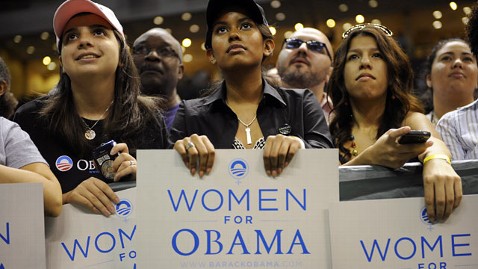
Young women vote overwhelmingly for Democrats – is it working for them?

Brad Wilcox tweeted this article from the leftist The Daily Progress. Let’s see what it says, then I’ll comment.

The article identifies three reasons why women are poorer than men: single motherhood, divorce and the “pay gap”.

Look:

During their working years, women tend to earn less than men, and when they retire, they’re more likely to live in poverty.

These are women who raised children and cared for sick and elderly family members, often taking what savings and income they had and spending it on things besides their own retirement security.

The National Institute on Retirement Security, a nonprofit research center, reports that women are 80 percent more likely than men to be impoverished at age 65 and older. Women age 75 to 79 are three times more likely.

While experts cite a pay gap as a major cause for retirement insecurity, other factors play a role, from single parenthood and divorce to the fact that women typically live longer than men.

Dr. Wilcox makes the point that this poverty is due to a retreat from marriage. That’s true. But look at the three factors the left-wing article itself cites: single motherhood, divorce and pay gap. Are these policies instances of women being victimized, or are their problems self-inflicted?

1) Single motherhood is caused by the welfare policies that young women favor when they vote overwhelmingly for bigger government. If we take money from working taxpayers, or borrow it from the next generation, and we give it to women to pay them to have fatherless children, then more women will do this. And of course this is a path to poverty. There just isn’t enough money to steal from taxpayers or borrow from future taxpayers to pay for women to have children with no man in the home who can provide for those children. People do more of what you pay them to do. The more money we give to single mothers, the more fatherless children we get, and it creates a host of problems that we can’t continue to pay for as a society, e.g. – crime. The mistake was paying women to make poor decisions in the first place, but welfare spending a policy that most young, unmarried women support. They’re not victims, they’re doing this to themselves.

This new Prager University video from Larry Elder explains why women embrace single motherhood:

We’re paying them to make bad decisions, and it creates more poverty.

2) No-fault divorce was caused by the radical feminism that many young, unmarried women support. This policy was brought in to make it easy for women to divorce without having to have a good reason (70% of divorces are initiated by women, mostly over “unhappiness”). Feminists don’t like the idea of being “constrained” to marry a man because he is a good provider, protector and moral/spiritual leader. A strong man is intimidating – he will want to make decisions and lead, and we can’t let him do that. A better idea is to marry a man who doesn’t provide, protect or lead – that way, we don’t have to respect him or let him lead. Naturally, when this entertaining, irresponsible man is unable to provide, then women divorce him and find themselves poor and unable to remarry – having lost their youth and beauty to “fun” men. No-fault divorce is not a policy that men supported. It is a policy that feminists supported, because they want to be able to nuke relationships that don’t make them feel happy. The most volatile, short-lived relationships are lesbian relationships, because women naturally expect relationships to fulfill them instead of expecting relationships to be tough and challenging. There just isn’t a path to prosperity for women into old age if they value feeling happy over self-sacrificial love and moral obligations. We need to teach women to prefer marriage-capable of men instead of fun, entertaining, no-leadership men. We need to teach women to make commitments that override their changing feelings. The problem of divorce is self-inflicted.

3) Lastly, the pay gap. I have written before about how the pay gap is largely related to women’s own choices about what to study, what job to take, and how many hours to work. It is simply not possible for a woman to earn as much as a man when she does a degree in English, women’s studies or other nonsense. Men don’t study what we want to study. We study things we hate – like petroleum engineering and software engineering. We do this so that we can provide for a wife and children, so that we can get what we we want most: respect and the (earned) authority to lead a home. Most men are commitment machines. We hate fun, we want to do hard things, and to be respected for being reliable and steady. The problem of the “pay gap” is self-inflicted.

So, in conclusion, yes – many women are poorer than men, especially as they age. But their poverty is self-inflicted. They are poor because they embraced ideas that would make them poorer. Three ideas destroyed their prosperity: single mother welfare, no-fault divorce, and following your heart in education and career. None of these things will provide women with security or prosperity – especially now that the debt has doubled to $20 trillion, and there is no more to borrow to continue the government-as-sugar-daddy plan of feminists. No amount of reassurance from pious pastors and permissive parents can save women from the consequences of their own irrational embrace of radical feminism. It turns out that there is no escape from economics, and the universe does not magically adjust to make the feelings and intuitions of entitled Disney princesses “work out”.

Maggie Gallagher does not like the message of the movie “La La Land”

Marriage and family
Marriage and family

I own a couple of books written by Maggie Gallagher, (“The Abolition of Marriage” and “The Case for Marriage”).

Here is an excerpt from her review of La-La Land, posted at The Stream: (excerpt contains spoilers)

The story begins as a classic story of two beautiful young people who meet in L.A. — a “city of magic, city of stars,” as the haunting lyric puts it, but clearly no longer City of Angels. Together they pursue their dreams both of love and success. Sebastian wants to become a jazz club singer. Mia wants to be a famous actress. The dramatic climax of the film comes after Sebastian at some personal sacrifice has given Mia the shot at her dreams, dreams she had given up on. And she chooses those dreams over him.

[…]In La La Land, [the director] chose to sharpen the clash between love and ambition. He does so in three ways:

  1. By making the choice to leave love behind the woman’s choice, rather than the man’s, brilliantly (in the commercial sense) situating the film among the emerging and popular female empowerment dramas in which women learn they do not need a man to be happy and fulfilled.
  2. By making the man a genuine hero — how else do you describe a guy who, after a woman has broken up with him and run home to Ohio to hide in the safety of her parents’ house, drives all night to deliver to her the message that she has a callback audition to a major movie? (She didn’t leave a forwarding address so he can’t just call her and let her know.)
  3. By portraying the obstacle to love as so feeble that it’s hard to imagine why it should destroy true love: Mia has to go to Paris for 6 months to make her movie. It’s her big break. Of course she has to go. But what is a love that cannot survive a few months in Paris? Is there no Skype? Are there no intercontinental flights?

One young online commentator described this twist on the iconic musical narrative, this “bittersweet ending,” as being more realistic, more grounded. I find it difficult to get into that young man’s head. How one can believe that however hard it is to find true love these days, becoming a famous Hollywood actress is a more “realistic” dream? Mia is not the loser for making this choice. She becomes famous and finds a new love, who seem a nice man, and they have a baby. She has it all, and has chosen correctly, because dreams are not transferable, but people can be replaced.

The message of the movie is clear: a good man is easier to find than a good career – especially a career that is fun, thrills and popularity. Follow your heart, and all these things will be added unto you.

She concludes with this:

[…]La La Land is a strange postmodern exercise in nostalgia, which tried to give us all the romantic feelings of the classic Hollywood musicals before ripping them away from us and substituting the idea that it is work alone on which we can rely.

If you Google La La Land, this synopsis pops up: “With modern day Los Angeles as the backdrop, this musical about everyday life explores what is more important: a once-in-a-lifetime love or the spotlight.”

I know a lot of Christian women who delay marriage because they want the spotlight.

Don’t give your money to Hollywood leftists

I don’t go to movie theaters except once every 1-3 years, because I don’t want to give Hollywood my money. If I like a movie, I buy it later on DVD for less than $10. The last movie I saw in the theater was “13 Hours”. I rarely see anything in the themes of popular movies (or popular music) that is true, good or beautiful. This movie does nothing to make me question my stewardship of my dollars. What I end up spending my money on these days is World War 2 and Korean War history audio books. Nothing in those books hurts my character. Reading military history helps me to be thankful and humble.

Consider Romans 12:1-2:

Therefore I urge you, brethren, by the mercies of God, to present your bodies a living and holy sacrifice, acceptable to God, which is your spiritual service of worship.

And do not be conformed to this world, but be transformed by the renewing of your mind, so that you may prove what the will of God is, that which is good and acceptable and perfect.

And Phil 4:8:

Finally, brethren, whatever is true, whatever is honorable, whatever is right, whatever is pure, whatever is lovely, whatever is of good repute, if there is any excellence and if anything worthy of praise, dwell on these things.

I don’t want to explain to God later why I gave the money he entrusted to me to radical leftists. What is frustrating to me about movies, (and entertainment in general, including far-left ESPN), is that all too often, my friends seem to think that my choice of entertainment is not something that God cares about.