
Tag Archives: Public Sector

Are public sector union employees paid too much?

From the Competitive Enterprise Institute. (H/T ECM)

Excerpt:

The most recent BLS release on employee compensation (issued December 9, 2009) states that, during September 2009, “[p]rivate industry employer compensation costs averaged $27.49 per hour worked,” while, “[s]tate and local government compensation costs averaged $39.83 per hour worked” — a difference of over $12.00 an hour.

Moreover, a greater proportion of public employees get benefits, and they get greater employer contributions.

[,,,]And still that’s not all. As Don Bellante of the University of South Florida, David Denholm of the Public Service Research Foundation, and I note in our Cato Institute study on the topic, another benefit unionized government workers get is job security unlike any found in the private sector.

[…]Even worse, the greatest costs associated with public sector unions often do not become apparent for many years, in the form of pensions.

There’s a lot more here. It’s a nightmare. I try not to sound too upset about it, but it really is bad. Speaking as a private sector employee, I cannot afford ME and adult day care for government-employees who aren’t even accountable to their customers.
Unemployment for young Americans surges to record high of 52 percent

Here’s a story from the New York Post. (H/T Gateway Pundit)

Excerpt:

“The unemployment rate for young Americans has exploded to 52.2 percent — a post-World War II high, according to the Labor Dept. — meaning millions of Americans are staring at the likelihood that their lifetime earning potential will be diminished and, combined with the predicted slow economic recovery, their transition into productive members of society could be put on hold for an extended period of time.”

“The number represents the flip-side to the Labor Dept.’s report that the employment rate of 16-to-24 year olds has eroded to 46.6 percent — the lowest ratio of working young Americans in that age group, including all but those in the military, since WWII.”

And they’ll have to pay for the trillions that Obama is adding to our national debt, too.

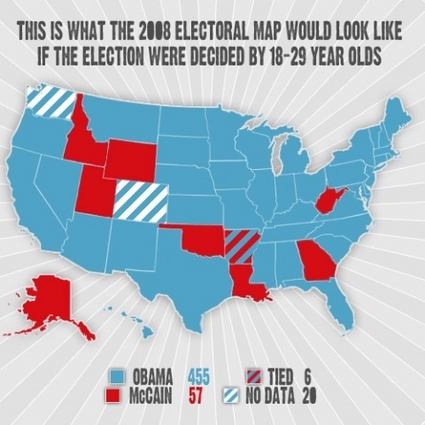
Remember, young people really liked Obama during the election:

I’m thinking that those young people should be more careful about considering a politician’s voting record instead of listening to their government-funded public school teachers. It seems to be that government-run public schools will always indoctrinate children to vote for bigger government, and that means higher unemployment in the private sector, especially for entry-level job-seekers. Maybe the young people didn’t think that far ahead, but then they should be more cautious about forming opinions without asking their parents for input.

You may also be interested in a wonderful video linked here that shows several prominent Democrats assuring us that the stimulus bill was needed to create millions of jobs and keep unemployment below 8%. They don’t understand economics – they’re Democrats. The know less about economics than my keyboard. If young people want to learn about economics, then they need to read Thomas Sowell and Walter Williams. Those are the two greatest living economists, and they teach economics so that regular people like me can understand.

How much are federal government employees being paid during the recession?

Story from USA Today. (H/T National Review via ECM)

Excerpt:

Federal employees making salaries of $100,000 or more jumped from 14% to 19% of civil servants during the recession’s first 18 months — and that’s before overtime pay and bonuses are counted.

Federal workers are enjoying an extraordinary boom time — in pay and hiring — during a recession that has cost 7.3 million jobs in the private sector.

The highest-paid federal employees are doing best of all on salary increases. Defense Department civilian employees earning $150,000 or more increased from 1,868 in December 2007 to 10,100 in June 2009, the most recent figure available.

When the recession started, the Transportation Department had only one person earning a salary of $170,000 or more. Eighteen months later, 1,690 employees had salaries above $170,000.

The average private sector salary is about $40,000. The average federal worker makes over $71,000.