Tag Archives: Public Policy

Dr. George Yancey: advice for responding to hostility from non-Christians

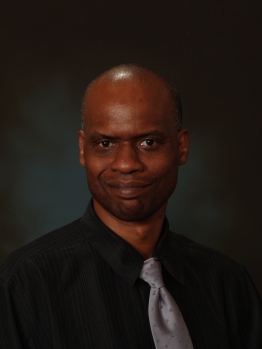
Dr. George Yancey
Dr. George Yancey

This article contains an interview with Dr. George Yancey, who does research on bias against Christians. It appeared in the Christian Post.

Here’s the introduction to the interview:

What should Christians do about the hostile environment they increasingly face? In a Christian Post interview, professor George Yancey talks about his new book written for fellow Christians, Hostile Environment: Understanding and Responding to Anti-Christian Bias.

Christianophobia exists among a powerful elite subculture in the United States, University of North Texas sociologists Yancey and David Williamson wrote in So Many Christians, So Few Lions: Is There Christianophobia in the United States? While that book was written in an academic voice, in Hostile Environment, Yancey writes as a Christian speaking to fellow Christians, and offers some guidance on how Christians should respond to that anti-Christian hostility.

In an email interview with CP, Yancey said he appreciated the opportunity to speak from the heart to fellow believers about how he thinks Christians should respond to Christianophobia.

The early chapters summarize much of his work in So Many Christians, So Few Lions and helps readers understand the sources of Christianophobia. The middle chapters, “Are Christians Responsible for Christianophobia” and “Trouble Within” discuss ways to deal with hypocrisy, sin and dysfunction within the Church. The latter chapters deal more specifically with ways to confront anti-Christian bigotry.

Yancey is also careful throughout the book to distinguish between the discrimination against Christians in the United States and the violence against Christians in other parts of the world. He does not use the word “persecution,” for instance, to describe the negative experiences of Christians domestically.

“Christians are not being persecuted, but religious discrimination and bigotry in our society can affect us. We should combat that discrimination and bigotry when it rears its ugly head,” he wrote.

Here’s the part that I thought was the most interesting:

CP: What do people with Christianophobia want from Christians?

Yancey: In a nutshell they want Christians to shut up and stay in their homes and churches.

Individuals with Christianophobia have a great deal of pre-capita social and cultural power as they are more likely to be white, male, educated and wealthy than other Americans. They indicated in my research that they believe they know what is best for our society, and perhaps that is because they possess such power.

They also argue that Christians are leading us back to the “Dark Ages,” want to set up a theocracy, and oppose science. They also demand that Christians do not proselytize others since they believe that Christians are not very intelligent or are trying to manipulate others for money or power.

These beliefs and stereotypes provide them with justification to assert that they, and not Christians, should run our society and government. For this reason it is not surprising that they want Christians to stay out of the public square.

People with Christianophobia at least superficially value the ideals of religious neutrality. They perceive themselves as non-biased. So while they want to exclude Christians from the public square, they are unlikely to support measures that overtly single out Christians for punishment. This allows them to hold on to a social identity that is linked to “tolerance.”

However, they have a willingness to support measures that disproportionately punish Christians, or remove Christians from the public square, as long as such punishment or removal can be justified with non-bigoted reasons. This is similar to the concept of disparate impact that has been discussed as a part of the racial problems in the United States.

Other Christian apologists who read my blog sometimes ask me why I write so much issues outside of Christian apologetics, since that’s what I am most interested in. Well, I have encountered the attitude that Dr. Yancey is talking about when I was in university, and in the workplace as well. I understand that these very educated non-Christians think that Christians have no reasons for believing what we believe. They think it’s all superstition and bigotry. And so, they are alarmed by the idea that we are voting for public policies based on irrationality. One reason why I talk a lot about politics to get Christians thinking about policies, and reasons why we should support and oppose specific policies. Specifically, I want Christians who believe in policies that are consistent with the Bible to be able to discuss those policies with non-Christians by appealing to public, testable evidence.

But there’s another reason to talk about evidence outside of the Bible on this blog. And that reason is so that Christians understand that their faith is not private, nor is it meant to produce good feelings, nor to make them feel liked. Christianity is about truth, and we need to be studying science, history and philosophy, and making connections between what the Bible says to public, testable knowledge when we talk about our faith. We need to counter the perception that we are “dangerous” because we are irrational by being skilled at having conversations about what we believe and why. It can’t just be superstition or “this is how I was raised”. That’s what atheists find scary. They do not find it scary when we can explain ourselves. And that’s why we need to get really good at explaining how Christianity relates to these other areas. And not just explaining, but being persuasive using arguments and evidence, too.

Ryan T. Anderson: background on the same-sex marriage case before the Supreme Court

This Daily Signal article is a great summary of everything that a lay-person like me or you ought to know about the case that is going to be decided by the Supreme Court.

Here are a few of the points I thought were most interesting:

2. The overarching question before the Supreme Court is not whether a male–female marriage policy is the best, but only whether it is allowed by the Constitution. The question is not whether government-recognized same-sex marriage is good or bad policy, but only whether it is required by the Constitution.

Those suing to overturn male-female marriage laws thus have to prove that the man–woman marriage policy that has existed in the United States throughout our entire history is prohibited by the Constitution. They cannot successfully so argue.

3. As Supreme Court Justice Samuel Alito pointed out two years ago, there are two different visions of what marriage is on offer. One view of marriage sees it as primarily about consenting adult romance and care-giving. Another view of marriage sees it as a union of man and woman—husband and wife—so that children would have moms and dads.

Our Constitution is silent on which of these visions is correct, so We the People have constitutional authority to make marriage policy.

The debate over whether to redefine marriage to include same-sex relationships is unlike the debate over interracial marriage. Race has absolutely nothing to do with marriage, and there were no reasonable arguments ever suggesting it did.

Laws that banned interracial marriage were unconstitutional and the Court was right to strike them down. But laws that define marriage as the union of a man and woman are constitutional, and the Court shouldn’t strike them down.

4. The only way the Court could strike down state laws that define marriage as the union of husband and wife is to adopt a view of marriage that sees it as an essentially genderless institution based primarily on the emotional needs of adults and then declare that the Constitution requires that the states (re)define marriage in such a way.

Equal protection alone is not enough. To strike down marriage laws, the Court would need to say that the vision of marriage that our law has long applied equally is just wrong: that the Constitution requires a different vision entirely.

But the Constitution does not require a new vision of marriage.

Advocates for the judicial redefinition of marriage cannot reasonably appeal to the authority of Windsor, to the text or original meaning of the Fourteenth Amendment, to the fundamental rights protected by the Due Process Clause, or to Loving v. Virginia. So, too, one cannot properly appeal to the Equal Protection Clause or to animus or Lawrence v. Texas.

Nor can one say that gays and lesbians are politically powerless, so one cannot claim they are a suspect class. Nor can one say that male–female marriage laws lack a rational basis or that they do not serve a compelling state interest in a narrowly tailored way, as explained in Heritage Foundation legal memorandum “Memo to Supreme Court: State Marriage Laws Are Constitutional.”

7. Redefining marriage to make it a genderless institution fundamentally changes marriage: It makes the relationship more about the desires of adults than the needs—or rights—of children. It teaches that mothers and fathers are interchangeable.

I think that’s the fundamental question in the marriage debate. The question is, is marriage a relationship that is geared towards producing children, and locking in husbands and wives together in an exclusive, permanent relationship so that those children have two people who are biologically-related to them who are nearby to watch over them and care for them. When I think about what it is like to be a little child, or even a little animal, it is obvious to me that we should be aggressive about encouraging and celebrating couples who have children and then stick together to raise them. It’s a hard, self-sacrificial job. It’s not about self-centered hedonism. It’s about doing the right thing to provide for the needs of children as they grow up. Marriage isn’t about grown-ups being happy, it’s about regulating sex for the benefit of children, and society as a whole. We do better together as a society with natural marriage.

Pastor Matt: five books Christians should read to understand politics and public policy

I agree with this list by Pastor Matt.

About Pastor Matt:

Hello, my name is Matt and I am a book addict (i.e., well read, sophisticated, sad and lonely here is evidence).  But I want my sickness to help you.  I have been a political junkie since 1992 when I was recruited by my then Congressman to work for him. I then ran several campaigns including helping a businessman win a seat in the U.S. House in 1994.  I spent two years working in the House during the Gingrich years of 1995-1997.  I then attended seminary and law school but have remained a political and public policy junkie.  During this week’s political dust-ups, I read a lot of statements from Christians that qualify as “bumper sticker” logic at best.  So, for those interested, here are five books every Christian leader should read if they want to truly understand politics and public policy.

The list:

  1.  A Patriot’s History of the United States: From Columbus’s Great Discovery to the War on Terror by Larry Schweikart and Michael Allen
  2. The Heritage Guide to the Constitution by Ed Meese, Ed. (Regnery 2005)
  3. Basic Economics by Thomas Sowell (Basic Books 2010)
  4. Politics According to the Bible by Wayne Grudem (Zondervan 2010)
  5. The Poverty of Nations: A Sustainable Solution by Wayne Grudem and Barry Asmus (Crossway 2013)

I think it’s nice to see that pastor Wayne Grudem appears twice in the list. He has a PhD from Cambridge University and is the best theologian who writes books about economic and political issues. (Notice how I left room for Pastor Matt to be the best overall on economics and political issues!)

Here’s the detail on number three:

Basic Economics by Thomas Sowell (Basic Books 2010).  Most Christian leaders (and apparently most Americans) have a poor understanding of economics.  Most seem to believe wealth is fixed (it isn’t), incentives and effectiveness are secondary to fairness (they aren’t), etc. Sowell, a long time professor of economics who has taught at Cornell and UCLA, has penned a long but very reader friendly work that you should take chapter-by-chapter.

On this blog, I feature Thomas Sowell a lot. The good thing about him is that even if you can’t buy his book, you can read lots of his current events stuff for free. In fact, he wrote a great column recently explaining the government shutdown that I think everyone should read. You can also get great sermons on politics and public policy from Wayne Grudem’s “Essentials” class.