
Tag Archives: Property

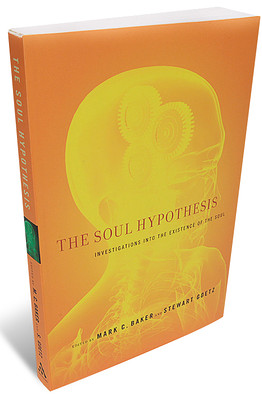
New collection of essays published to defend mind-body dualism

Here’s the new book on J.P. Moreland’s web site.

Full text:

In the Soul Hypothesis: Investigations into the Existence of the Soul (Continuum), co-editors Mark C. Baker and Stewart Goetz have assembled an impressive interdisciplinary team of scholars to address questions about the existence and nature of the soul.

“The Soul of the Matter” – Charles Taliaferro
“Minds, Brains and Brains in Vats” – Daniel N. Robinson
“Brains and Souls; Grammar and Speaking” – Mark Baker
“Making Things Happen: Souls in Action” – Stewart Goetz
“Energy of the Soul” – Robin Collins
“The Measure of All Things: Quantum Mechanics and the Soul” – Dean Zimmerman
“From Seeing to Seer” – Hans Halvorson
“Souls Beastly and Human” – William Hasker
“A Scientific Case for the Soul” – Robin Collins

You can preview the book here.

The book is unique is combining philosophical and scientific arguments for dualism, and the result is a rigorous, exciting, persuasive presentation of the issues and a stimulating challenge to so much of the reductionism that reigns in the sciences. As was noted in a recent review of the book in the WSJ,

Sooner or later, the contributors to “The Soul Hypothesis” warn, scientists will pinpoint the exact three neurons whose firing accompanies the thought of our deciding to make a phone call or, if you prefer, deciding to get up and get a beer from the refrigerator. As ever more such micro-couplings are observed, we will—so scientists tell us with unseemly glee— gradually come to see that our cherished conscious life is nothing but a long series of electrical impulses, not an autonomous realm of free will and free thought. Co-editor Mark C. Baker cites the psychologist Steven Pinker, who finds it plausible to say that neural “activity in the brain” simply “is the mind.”

The book’s contributors set out this scientific challenge fully and engagingly, but they also expose its fallacies. They note, for instance, that even if two things differ in their essential nature, as do mental thoughts and physical actions—or legislatures and laws—there is no reason why the one can’t cause the other. As David Hume argued, what establishes our idea of cause and effect is the regular “conjunction” of two events. That a physical act regularly follows a mental decision suggests, as co-editor Stewart Goetz writes, that the one is “causing” the other and that voluntary human action exists.

The Soul Hypothesis is an excellent text that is sure to provoke a vigorous dialog about its content. I highly recommend it.

I really would like to be able to use this argument more – I just need a good book. I’m a big admirer of Charles Taliaferro. I even met him once at a conference!

Average Canadian family spends 42% of its income on taxes

Story here from the libertarian Fraser Institute.

Excerpt:

The total tax bill for the average Canadian family has increased at a much faster rate since 1961 than any other single household expenditure, according to a new study released today by the Fraser Institute, Canada’s leading public policy think tank. The Canadian Consumer Tax Index 2010, which calculates the total tax bill of the average Canadian family, found that taxes have increased by a whopping 1,624% since 1961. In contrast, expenditures on housing increased by 1,198%, food by 559%, and clothing by 526% from 1961 to 2009. “Taxes have grown much more rapidly than any other single expenditure item for Canadian families to the point where taxes from all levels of government take a greater part of a family’s income than basic necessities such as food, clothing, and housing,” said Niels Veldhuis, the study’s co-author and the Institute’s senior economist.

How much do Canadians pay in taxes?

The Canadian Consumer Tax Index calculates the total tax bill of the typical Canadian family by adding up the various taxes that the family pays to federal, provincial, and local governments. These include direct taxes such as income taxes, sales taxes, Employment Insurance and Canadian Pension Plan contributions, as well as “hidden” taxes such as import duties, excise taxes on tobacco and alcohol, amusement taxes, and gas taxes.

This year’s index shows that even though family incomes have increased significantly since 1961, the total tax bill has increased at a much higher rate.

  • In 2009, the average Canadian family earned an income of $69,175 and paid total taxes equaling $28,878-41.7 per cent of its income.
  • In 1961, the average Canadian family earned an income of $5,000 and paid $1,675 in total taxes-33.5 per cent of its income.

Taxes have become the most significant item that Canadian consumers now face in their budgets,” Veldhuis said.

So the typical Canadian family, pays 42% of their family income in taxes. FORTY-TWO PERCENT. Remember, Canada has a VAT tax, which is what Obama is apparently considering to pay for all his spending on bailouts for his rich Democrat buddies.

The Fraser Institute is the equivalent of our Cato Institute. I don’t agree with either of them on many things, (e.g. – Darwinism), but on the topic of taxes being too high, I agree with them both.

Fiscal and social conservatives unite in new free e-book “Indivisible”

There’s a new book that just came out from the Heritage Foundation, my favorite think tank.

Here’s an excerpt from the introduction by Jay Richards:

To listen to media and political strategists is to get the impression that American public life is a checklist of issues. Some are known as “social” issues (marriage, family) and some are known as “economic” (international trade, wages). There may be some good reasons for this distinction, but when we itemize and divide these topics into two separate categories, we fail to convey the underlying unity of the principles behind the American Experiment in ordered liberty. In reality, the two groups of issues are interdependent. For instance, a free economy cannot long exist in a culture that is hostile to it. The success of free market economic policies depends on important cultural and moral factors such as thrift, delayed gratification, hard work, and respect for the property of others. A virtuous and responsible populace derives, in turn, from strong families, churches, and other civil institutions.

Conversely, economic issues have a strong influence on culture and the institutions of civil society. High taxes, for example, put pressure on families and force parents to spend more time in the workforce, leaving less time to devote to their spouses and children. When government expands spending and control in education, it crowds out parental responsibility; when it expands its role in providing social welfare services, it tends to erode a sense of responsibility among churches and other groups doing good work to help neighbors in need.

The connections are such that the individual issues rarely fit neatly and exclusively into one set or the other. An “economic” issue is rarely exclusively about economics. For instance, poverty in America is often as much a moral and cultural problem as an economic problem. Reducing such poverty depends on civil institutions that inculcate virtue and responsibility as well as policies that promote economic freedom and discourage dependency. Most poverty among children in America is not caused by a lack of jobs but rather by factors such as family breakdown, negligent or absentee parents, substance abuse, or other social pathologies. To consider American poverty in strictly economic terms is to fail to see the full scale of issues involved in this problem.

[…]The following essays are intended as a concise exploration of the link between liberty and human dignity and of the policy issues that tend to cluster around these two themes in American life. This collection brings together a number of well-known social and economic conservatives. To encourage cross-fertilization of their ideas, those known as social conservatives have written on themes normally identified with economic conservatives, and vice versa. The authors highlight economic arguments for issues typically categorized as “social” and social/moral arguments for “economic” issues. Each author focuses on a single topic, briefly summarized below, that is associated with either social or economic conservatives or, in some cases, both.

That’s also one of the main purposes of my blog, to show how fiscal conservatives and social conservatives depend on each other.

Here are the essays and authors:

  • Civil Society: Moral Arguments for Limiting Government – Joseph G. Lehman
  • Rule of Law: Economic Prosperity Requires the Rule of Law – J. Kenneth Blackwell
  • Life: The Cause of Life Can’t be Severed from the Cause of Freedom – Representative Paul Ryan
  • Free Exchange: Morality and Economic Freedom – Jim Daly with Glenn T. Stanton
  • Marriage: The Limited-Government Case for Marriage – Jennifer Roback Morse, Ph.D.
  • Profit: Prophets and Profit – Marvin Olasky, Ph.D.
  • Family: Washington’s War on the Family and Free Enterprise – Stephen Moore
  • Wages: The Value of Wages – Bishop Harry R. Jackson, Jr.
  • Religion:  Why Faith Is a Good Investment – Arthur Brooks, Ph.D., and Robin Currie
  • International Trade: Why Trade Works for Family, Community, and Sovereignty – Ramesh Ponnuru
  • Culture: A Culture of Responsibility – Edwin J. Feulner, Ph.D.
  • Property: Property and the Pursuit of Happiness – Representative Michele Bachmann
  • Environment: Conserving Creation – Tony Perkins
  • Education: A Unified Vision for Education Choice – Randy Hicks

Seeing the names of people paired with these topics just blows my mind. It would be as though William Lane Craig were suddenly to write a book defending free market capitalism or the war on Islamic terrorism. It’s just WEIRD. And you’ll notice that many of the Wintery Knight’s favorite people are in there; Paul Ryan, Michele Bachmann, Jennifer Roback Morse.  I also like Stephen Moore’s writing a lot.

The entire book is available for free as a PDF download, or you can order it from the Heritage Foundation. I ordered 10 copies of everything at the store, because I wanted a bunch to give away to all my friends. I think this is the perfect gift to give someone who doesn’t see the relevance of public policy to Christianity, marriage and parenting. There is no such thing as an informed Christian who is fiscally liberally or socially liberal.

Oh, and by the way: Ryan/Bachmann 2012 for the win!