Tag Archives: Pro-Abortion

Gosnell movie set to open in October 2018 in 100 theaters

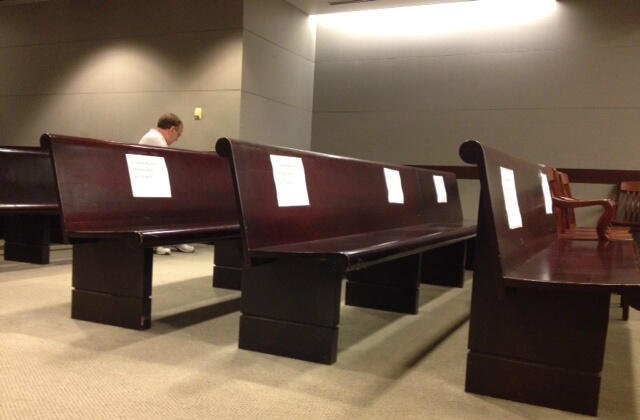
Empty benches where the mainstream media was supposed to be during the trial
Empty benches where the mainstream media ought to be during the Gosnell trial

At the time of the Gosnell story, I remember that there was a nationwide, wall-to-wall media blackout. Every single mainstream media source was colluding with the others not to report on the story. It was impossible to get news for weeks, until finally the mainstream media’s pro-abortion, pro-infanticide bias became the story, and they had to start reporting on the trial.

For example, Life News reported that it took ABC News 56 days to begin covering the story, and they only did it because pro-lifers marched on their headquarters:

Fifty six days after the grisly trial of abortionist Kermit Gosnell began, ABC broke its self-imposed blackout and finally offered coverage.

World News anchor Diane Sawyer belatedly told viewers that Gosnell was convicted on three counts of first degree murder against newborn babies, as well as on a slew of other charges. Terry Moran explained, “For two months, jurors heard often shocking, grisly testimony.” He described the details as a “house of horrors.” A house of horrors that ABC took 56 days to notice.

As the Media Research Center has aggressively documented, ABC went from March 18, 2013 (the trial’s start) through Monday afternoon with no coverage. Yet during the same time, the network devoted a staggering 187 minutes (or 70 segments) to other shocking criminal cases, such as Jodi Arias and Amanda Knox.

CNS News did a comparison between the Gosnell murder trial and the coverage of the gay NBA player:

In the eight days since NBA player Jason Collins announced he was gay, the news media have covered the story in 2,381 places. But in the first eight days of the trial of Dr. Kermit Gosnell and his “House of Horrors” abortion business, the media covered the story in 115 places, meaning that Collins’ “gay” news received more than 1,970.4% more news coverage.

Given the media blackout, I wanted to blog about the new movie about the Gosnell murders. Although the Gosnell movie was filmed in 2015, it’s only being released next month. It turns out that the same sort of people who covered up for Gosnell in the mainstream media also got the release of the movie delayed.

A National Review story by the director explains what the movie is about and why its release was delayed.

Excerpt:

The film has a gritty “just the facts, ma’am” style, is well acted, with powerful, moving performances by Dean Cain, Sarah Jane Morris, and Michael Beach, among many others, and moves like a bullet train. So why has it taken three years to be released?

I realize, looking back, that I was quite naïve about how this film would be received. I truly believed that if we did it the right way, even the so-called Hollywood Left would appreciate our fairness in telling the story, see its value, and, furthermore, share our goals in getting this important story before the public.

Sadly, I was wrong. As I said, this town runs on fear — the fear not only of failure but, more insidiously, of being shunned because of your political opinions. […]More than once, I was asked questions like “Are you crazy?” or “Are you sure you want to do this?”

[…]Fear is destructive and dangerous. Fear is what allowed Gosnell to commit multiple murders. The powers-that-be were afraid to allow inspections of his clinic, even after multiple complaints, for fear of being called racist or “anti-woman.”

I was looking for some background on the two people behind the Gosnell movie, and I found an article by Terrell Clemmons over on the Salvo magazine web site. It turns out that the filmmakers were neutral on abortion before they looked into investigation of the Gosnell abortion clinic.

Excerpt:

Phelim McAleer was in Pennsylvania in early 2013 doing a series of screenings of his film FrackNation. As he often did when travelling, he checked the local paper for interesting court cases underway, and a case concerning a doctor in Philadelphia caught his attention. And so it happened that on one of his days off, he walked into the courtroom where abortionist Kermit Gosnell was standing trial for a slew of charges including (but not limited to) murder, infanticide, and multiple violations of state abortion law.

Phelim had seen a lot in his twenty-five years in journalism (he started his career in a part of Northern Ireland known as “Bandit Country”), but the evidence he saw that day in Room 304 of the Philadelphia Justice Center surpassed anything he’d previously encountered. The photos displayed up on a big screen—pictures of well-formed babies, some of whose necks had been snipped with scissors after live birth—were more horrific than anything he’d ever seen. All of this was shocking in itself, but what was even more astounding to him as a journalist was that the press gallery behind him was completely empty. There were no national journalists covering this case. Not one. How could this be?

He returned home to Los Angeles and told his journalist partner and wife, Ann McElhinney, that he had found the next project they would work on. At first, Ann wanted nothing to do with it. This subject was foreign territory for them, way outside their wheelhouse. Besides, both she and Phelim had always considered themselves neutral on abortion. Why venture into such a hornet’s nest?

Phelim ordered the court transcripts anyway, and Ann read them. Afterward, she agreed, Yes, they would make this film. It was more than an assent or a shared inclination. It was a conviction. Here was information of significant public interest, and it was shameful that no one was putting it out. A film about this had to be made; therefore, they would make it.

The film will open in 100 theaters, and when I looked, I saw that it was actually going to be a drive for me to get to the closest one.

It’s not surprising to me that the atheists in the mainstream media would seek to suppress the Gosnell story by not covering it. When you jettison objective morality from your worldview, you tend to fall back on a definition of morality that is more like “peer approval”. The mainstream media probably just thinks, if fewer people know the truth about this story, then they’ll still think I’m a good person for being pro-abortion. They lied and covered-up because their personal sense of moral goodness was at stake.
Can unborn babies feel pain at 20 weeks?

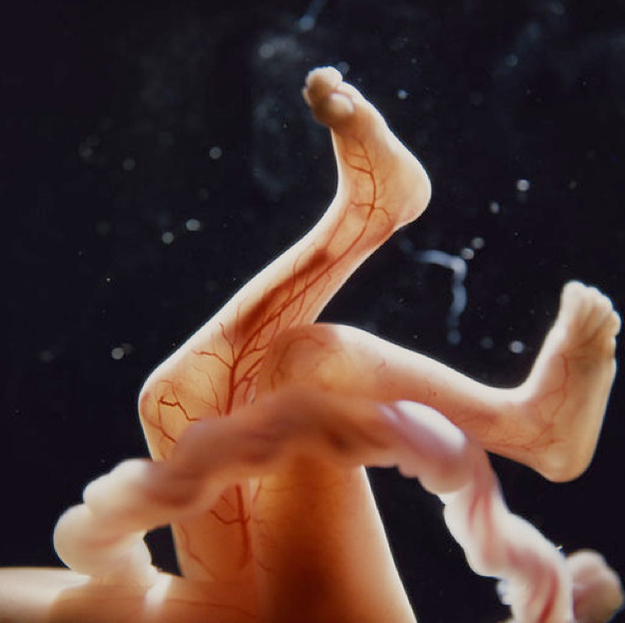
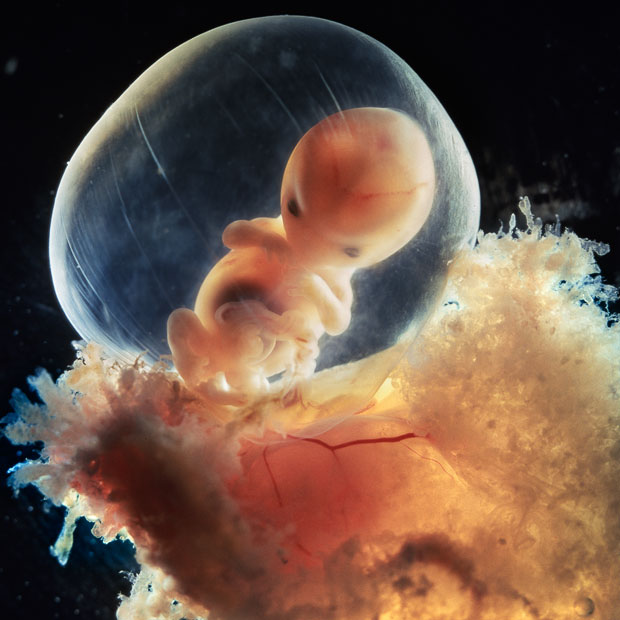
Unborn Baby - 10 weeks old
Unborn Baby – 10 weeks old

On Monday night, The Senate voted 51-46  in opposition to a measure that would have banned abortions on unborn children 20 weeks and older. The legislation was titled the “Pain-Capable Unborn Child Protection Act”.

National Review has the story:

The Senate failed this evening to pass the Pain-Capable Unborn Child Protection Act, which would’ve banned abortions after 20 weeks, after Democrats filibustered the bill. In a 51–46 vote, the bill failed to make it out of debate and to a final floor vote.

Two Republicans — Susan Collins of Maine and Lisa Murkowski of Alaska — continued their support for abortion by crossing the aisle to vote with the Democrats against the bill. Meanwhile, three Democrats — Joe Manchin of West Virginia, Bob Casey Jr. of Pennsylvania, and Joe Donnelly of Indiana — broke ranks and voted with Republicans in favor of the legislation. The vote split along similar party lines in 2015, the last time the Senate considered similar legislation.

[…]The bill was based on scientific evidence showing that fetuses have the capacity to feel pain beginning at 20-weeks’ gestation.

The Daily Signal posted an article on the evidence for the proposition that unborn children 20 weeks and older feel pain.

Excerpt:

According to a 2006 study from the International Association for the Study of Pain, “The available scientific evidence makes it possible, even probable, that fetal pain perception occurs well before late gestation.” The study goes on to say that pain perception develops in the “second trimester,” “well before the third trimester.”

A 2012 study by the American Association of Pharmaceutical Scientists concludes, “the basis for pain perception appear[s] at about 20 to 22 weeks from conception.”

And another 2012 study that was published in the journal Fetal Diagnosis and Therapy found that “ … from the second trimester onwards, the fetus reacts to painful stimuli … [T]hese painful interventions may cause long-term effects.” The authors of this study recommend that unborn children be given painkillers during “potentially painful procedures” such as surgeries—or, I would add, such as abortions.

There are many more studies like these but the consensus is clear: The science at a minimum suggests that unborn children can feel pain at 20 weeks—can feel the abortionists’ knife and suction tube as it rips them apart in the womb. That possibility alone should have us rushing to ban abortion at 20 weeks.

20 weeks is pretty far along in the pregnancy process. It’s way past the time when babies can feel pain, and close to the point where they are actually viable outside the womb.

A little while back, I blogged about a little baby who was delivered at 22 weeks, and survived:

If the Senate had passed the bill, then Trump would have signed it into law, which is very different than his predecessor Obama. Obama, you’ll remember, voted several times in favor of infanticide, as a state senator in Illinois. As president, he threatened to veto any ban on abortions after 20 weeks. When people were voting for Obama as president, that’s what they were voting for.

So, what’s the answer to a defeat like this? Well, we have to get more persuasive. We have to get more convincing. We have to learn how to get comfortable having conversations with safe, open-minded moderates about abortion. People aren’t afraid to talk about abortion if you just stick to the scientific evidence, and reason about what we know for certain.

Fortunately for pro-lifers, making the pro-life case is an easy things to learn how to do. You just need an introductory book. If you haven’t yet gotten a book on how to be convincing, then pick up “The Case for Life”, written by Scott Klusendorf. It’s the best introductory book, and you get the benefit of his experience debating abortion advocates in formal debates. If you can’t get the book, then you can just watch a lecture featuring Scott Klusendorf, and see how he does it.

If you could rescue EITHER embryos OR a 5-year-old, what would you do?

I'm Scheming Unborn Baby, and I approve this study
I’m Scheming Unborn Baby, and I approve this message

I overheard Ben Shapiro talking about some pro-abortion tweet that went viral on Twitter. Basically, the snarky pro-abortion person tried to make the case that unborn children don’t deserve legal protections because people have a moral intuition to save a 5-year-old instead of an embryo, if they can only choose one. The best response to this dilemma comes from Robert George, professor at Princeton University and Christopher Tollefsen.

Their article was posted at The Public Discourse.

Excerpt:

We agree that considering the case as described by Sandel, most people in Jones’s circumstances would choose to rescue the girl. However, this by no means shows that human embryos are not human beings or that they may be deliberately killed to produce stem cells, or in an abortion.

The first thing to notice is that the case as described is not, in fact, analogous to the suggestion that we should perform embryo-destructive research for the benefits it might provide us, or to the suggestion that it is permissible to abort an unborn human being. In both such cases, we are being invited to kill, or authorize the killing of, human embryos or fetuses in order to provide benefits to others. But in the fire scenario, there is no killing; the deaths of the embryos who are lost when Jones opts to save the girl are not killings—no one is acting to destroy the embryos or cause their deaths—but rather are the kind of death we accept as side effects in various cases in which, for example, acting to save one or some persons means that we are unable to save another or others.

Second, there are differences between the embryos and the five-year-old girl that are or can be morally relevant to the decision concerning whom to rescue. For example, the five-year-old will suffer great terror and pain in the fire, but the embryos will not. Moreover, the family of the five-year-old presumably loves her and has developed bonds of attachment and affection with her that will mean much greater grief in the event of her death than in the event of the death of the embryos. While these concerns would not justify killing, they can play a legitimate role in determining how we may allocate scarce resources and, in some cases, whom we may or should rescue. Often, the (or at least a) morally correct decision cannot be made just on the numbers—a point that even utilitarians are willing to acknowledge. And so, for example, it is morally relevant in some cases where choices of whom to rescue must be made that a person we could save is (for example) our own son or daughter, even if saving him or her means that we cannot save, say, three of our neighbors’ children who end up perishing in the fire from which we saved our own child.

The analogy, like Judith Jarvis Thomson’s violin analogy, completely ignores the fact that in a pregnancy, the baby is created as a result of the decisions of the mother and the father of the baby. This is not some stranger, this is their child. And in the case of abortion, it’s not being done to save a 5-year-old. I once heard of a case where a woman killed her unborn child so she wouldn’t look fat on the beach, during her vacation. Hardly a morally sufficient reason.

I really liked this:

The possibility that resources might be used and even, perhaps, lives risked to save the frozen embryos calls to mind the story with which we began our book Embryo: A Defense of Human Life. In 2005, in the aftermath of Hurricane Katrina, a police crew in New Orleans did save a canister of fourteen hundred human embryos from a hospital. Our book began with Noah, one of those embryos, who sixteen months later emerged, via Caesarean section, into the light of the world and his parents’ love. But if those officers had never made it to Noah’s hospital, or if they had abandoned those canisters of liquid nitrogen, the toll of Katrina would have been fourteen hundred human beings higher than it already was, and Noah, sadly, would have perished before having the opportunity to meet his loving family.

The harm of abortion is exactly like the harm of murder in general… each act deprives a person of all of their future. And this against the victim’s will, and without adequate moral justification.

An embryo has a unique genetic signature different from his mother, different from his father. He is a different person, and, if given shelter and food, he will grow up just like any of us do. Is it such a terrible thing to give food and shelter to another human being, that was created as a direct result of the choices of grown-ups? We don’t get to resort to murder of others just in order to make our own lives easier, do we?