
Tag Archives: Person

Brian Auten interviews pro-life debater Scott Klusendorf

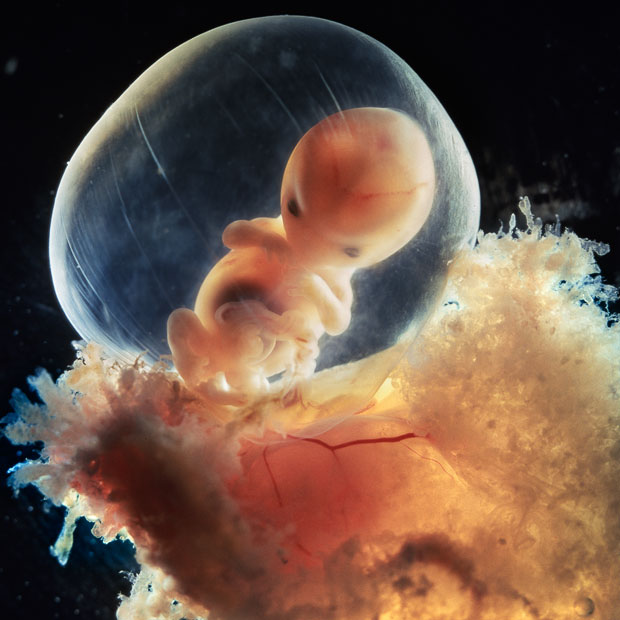
Unborn baby scheming about pro-life apologetics

Scott Klusendorf is the director of the excellent Life Training Institute, and he’s been interviewed by Brian Auten on Apologetics 315.

Details of the interview:

Today’s interview is with Scott Klusendorf, president of Life Training Institute. LTI is the first place to look for excellent resources to get better equipped to defend the pro-life position. Scott talks about defining abortion and its terms, the issue of the debate, the legal history of abortion, defending the pro-life view using science and philosophy, the four pillars of the pro-life argument, answering a litany of objections to the pro-life position, the right and wrong use of emotional appeals, taking on the right tone in the debate, how to get better equipped, and more.

Grab the MP3 file here at Apologetics 315.

The article Scott mentions “How to Defend Your Pro-Life Views in 5 Minutes or Less” is worth the read, and it’s a good summary of some of the points he makes in the lecture.

If you like this interview, please be sure and buy the best basic book on pro-life apologetics – Scott Klusendorf’s “The Case for Life“.

And there is actually a full transcript, and here’s an excerpt:

BA: Great stuff. Now I want you to go into these pillars if you will of defending the pro-life position with science and philosophy, and in your web site prolifetraining.com one of the things that you provide is sort of a four point acronym, some would say sled S-L-E-D. Can you lay out what those main pillars are and their relevance to the issue?

SK: Well as I mentioned a moment ago, pro-life advocates argue that elective abortion unjustly takes the life of a developing human being, and we defend that claim using science and philosophy. We use science to determine what kind of thing the unborn is, and we use philosophy to show that there’s no relevant deference between the embryos we once were and the adults we are today that would justify killing us at that earlier stage of development. Scientifically, as I mentioned just moments ago embryology text books worldwide indicate that from the very beginning you and I were distinct living whole human beings. You can’t see that I’m doing this right now, Brian, but at the moment I’m picking cells off the back of my hand. These cells, which we call somatic cells, contain my entire DNA and coding. But you don’t thing I just committed mass murder by sending a couple hundred of those puppies hurling to their deaths on the floor in front of me. And the reason is, you know that these cells though they contain my DNA and coding are merely part of a larger human being, me. They are not distinct whole living organisms the way that you were when you were an embryo. The way I was when I was an embryo. In other words, there is a difference in kind between each of our bodily cells and the embryonic human beings we once were. That’s what science teaches us; that’s what the science of embryology lays down for us.Philosophically, we argue using that SLED acronym that you mentioned a moment ago that there’s no difference between that embryo we once were and the adult we are today. The adults we are today that justify killing us at that earlier stage of development and as Steven Schwarz points out, the differences between that embryo and the adult that you are today are one of size, level of development, environment and degree of dependency. Think of the acronym SLED and you will remember those four differences. Size, yeah you were smaller as an embryo, but since when does body size determine the rights that you have. Shaquille O’Neal, the seven foot two basketball star with the Boston Celtics, is a foot taller than I am, but he doesn’t have a greater right to life simply because he’s bigger.

Level development? Sure, we were less developed as embryos but since when is a matter of principal does that mean we can kill you? Two-year-old girls are less developed than twenty-year-old young women. We don’t think though the two year old girl has less to a right to life simply because she can’t function at the level that the twenty year old can. Level of size, I should say level of development. What about environment; where you are located there is the letter “E” in that SLED acronym. You were once in the womb now you’re out but sense when does were you are determine what you are? When you walk from your living room into the studio to do this interview. You changed location but you didn’t stop being you. When I jump on an airplane and fly from Atlanta to London’s Heathrow airport. I get off the plane I’m in a new location, but I’m the same being as I was when I left Atlanta. If that’s true how does a journey of eight inches down the birth canal suddenly change me from non-human, non-valuable thing that we can kill? To a valuable human being that we can’t kill. And the answer is, if I wasn’t already human and valuable I’m not going to get there by changing my address. And then finally, degree of dependency—yes we depended on our mother for survival but sense when does dependency on another human being mean we can kill you? Conjoined twins depend on each other for survival and unless one of the twins is killing its partner we don’t go ahead and slit the throat of both twins simply because they can’t live independent of each other. Size, level of development, environment, degree of dependency, think “SLED” those are the only four differences between that embryo you once were and the adult you are today. And the pro-lifer would argue that not one of those four differences justifies killing you at that earlier stage.

You can see Scott in a debate about abortion right here.

And if you like that interview, I have some more things for you to read from Dr. Francis Beckwith.

Learn more by reading

Frank Beckwith is the author of “Defending Life: A Moral and Legal Case Against Abortion Choice“. He wrote that book for Cambridge University Press, a top academic press. But before Cambridge University Press, Beckwith wrote easy-to-understand essays for the Christian Research Journal.

Here are four essays that answer common arguments in favor of legalized abortion.

I have a copy of Dr. Beckwith’s previous book “Politically Correct Death”, which I read bit-by-bit on my lunch hours 10 years ago. Excellent stuff.

Brian Auten interviews pro-life debater Scott Klusendorf

Unborn baby scheming about making abortion unthinkable

Scott Klusendorf is a tough, practical pro-life debater. When you listen to him talk about moral issues, it’s like listening to Tim Tebow talk about running the two-minute offense. Even if you are not into bio-ethics, you will have a good time listening to him work through the topics. Anyone who likes to understand issues strategically and operationally will enjoy this interview. It’s extremely practical because Scott is the top pro-life debater in the world. He has had to defend all of his views on the field.

Details:

Today’s interview is witth Scott Klusendorf, president of Life Training Institute. LTI is the first place to look for excellent resources to get better equipped to defend the pro-life position. Scott talks about defining abortion and its terms, the issue of the debate, the legal history of abortion, defending the pro-life view using science and philosophy, the four pillars of the pro-life argument, answering a litany of objections to the pro-life position, the right and wrong use of emotional appeals, taking on the right tone in the debate, how to get better equipped, and more.

Click here to get the 45 minute interview. The article he mentions “How to Defend Your Pro-Life Views in 5 Minutes or Less” is worth the read, and it’s a good summary of some of the points he makes in the lecture.

If you like this interview, please be sure and buy the best basic book on pro-life apologetics – Scott Klusendorf’s “The Case for Life“. I do have to mention that Scott is an evangelical Christian. Evangelicals are very much into understanding and debating pro-life and pro-marriage positions – we want to understand and we want to explain why we believe what we believe.

Learn more by reading

You can learn more by reading basic pro-life apologetics… from Francis Beckwith. You might recognize Frank Beckwith as the author of “Defending Life: A Moral and Legal Case Against Abortion Choice“. He wrote that book for Cambridge University Press, a top academic press. But before Cambridge University Press, Beckwith wrote easy-to-understand essays for the Christian Research Journal.

Here are four essays that answer common arguments in favor of legalized abortion.

Part I. The Appeal to Pity

Excerpt:

Anyone who keeps up with the many pro-choice demonstrations in the United States cannot help but see on pro-choice placards and buttons a drawing of the infamous coat hanger. This symbol of the pro-choice movement represents the many women who were harmed or killed because they either performed illegal abortions on themselves (i.e., the surgery was performed with a “coat hanger”) or went to unscrupulous physicians (or “back-alley butchers”). Hence, as the argument goes, if abortion is made illegal, then women will once again be harmed. Needless to say, this argument serves a powerful rhetorical purpose. Although the thought of finding a deceased young woman with a bloody coat hanger dangling between her legs is — to say the least — unpleasant, powerful and emotionally charged rhetoric does not a good argument make.

The chief reason this argument fails is because it commits the fallacy of begging the question. In fact, as we shall see, this fallacy seems to lurk behind a good percentage of the popular arguments for the pro-choice position. One begs the question when one assumes what one is trying to prove. Another way of putting it is to say that the arguer is reasoning in a circle. For example, if one concludes that the Boston Celtics are the best team because no team is as good, one is not giving any reasons for this belief other than the conclusion one is trying to prove, since to claim that a team is the best team is exactly the same as saying that no team is as good.

The question-begging nature of the coat-hanger argument is not difficult to discern: only by assuming that the unborn are not fully human does the argument work. If the unborn are not fully human, then the pro-choice advocate has a legitimate concern, just as one would have in overturning a law forbidding appendicitis operations if countless people were needlessly dying of both appendicitis and illegal operations. But if the unborn are fully human, this pro-choice argument is tantamount to saying that because people die or are harmed while killing other people, the state should make it safe for them to do so.

Part II. Arguments from Pity, Tolerance, and Ad Hominem

Excerpt:

A woman who becomes pregnant due to an act of either rape or incest is the victim of a horribly violent and morally reprehensible crime. Although pregnancy as a result of either rape or incest is extremely rare, [1] there is no getting around the fact that pregnancy does occur in some instances.

[…]Despite its forceful appeal to our sympathies, there are several problems with this argument. First, it is not relevant to the case for abortion on demand, the position defended by the popular pro-choice movement. This position states that a woman has a right to have an abortion for any reason she prefers during the entire nine months of pregnancy, whether it be for gender-selection, convenience, or rape. [3] To argue for abortion on demand from the hard cases of rape and incest is like trying to argue for the elimination of traffic laws from the fact that one might have to violate some of them in rare circumstances, such as when one’s spouse or child needs to be rushed to the hospital. Proving an exception does not establish a general rule.

[…]Fourth, this argument begs the question by assuming that the unborn is not fully human. For if the unborn is fully human, then we must weigh the relieving of the woman’s mental suffering against the right-to-life of an innocent human being. And homicide of another is never justified to relieve one of emotional distress. Although such a judgment is indeed anguishing, we must not forget that the same innocent unborn entity that the career-oriented woman will abort in order to avoid interference with a job promotion is biologically and morally indistinguishable from the unborn entity that results from an act of rape or incest. And since abortion for career advancement cannot be justified if the unborn entity is fully human, abortion cannot be justified in the cases of rape and incest. In both cases abortion results in the death of an innocent human life. As Dr. Bernard Nathanson has written, “The unwanted pregnancy flows biologically from the sexual act, but not morally from it.” [5]Hence, this argument, like the ones we have already covered in this series, is successful only if the unborn are not fully human.

Part III. Is The Unborn Human Less Than Human?

(No excerpt)

Part IV. When Does a Human Become a Person?

Excerpt:

Some ethicists argue that the unborn becomes fully human sometime after brain development has begun, when it becomes sentient: capable of experiencing sensations such as pain. The reason for choosing sentience as the criterion is that a being that cannot experience anything (i.e., a presentient unborn entity) cannot be harmed. Of course, if this position is correct, then the unborn becomes fully human probably during the second trimester and at least by the third trimester. Therefore, one does not violate anyone’s rights when one aborts a nonsentient unborn entity. [13]

There are several problems with this argument. First, it confuses harm with hurt and the experience of harm with the reality of harm. [14] One can be harmed without experiencing the hurt that sometimes follows from that harm, and which we often mistake for the harm itself. For example, a temporarily comatose person who is suffocated to death “experiences no harm,” but he is nevertheless harmed. Hence, one does not have to experience harm, which is sometimes manifested in hurt, in order to be truly harmed.

Second, if sentience is the criterion of full humanness, then the reversibly comatose, the momentarily unconscious, and the sleeping would all have to be declared nonpersons. Like the presentient unborn, these individuals are all at the moment nonsentient though they have the natural inherent capacity to be sentient. Yet to countenance their executions would be morally reprehensible. Therefore, one cannot countenance the execution of some unborn entities simply because they are not currently sentient.

Someone may reply that while these objections make important points, there is a problem of false analogy in the second objection: the reversibly comatose, the momentarily unconscious, and the sleeping once functioned as sentient beings, though they are now in a temporary state of nonsentience. The presentient unborn, on the other hand, were never sentient. Hence, one is fully human if one was sentient “in the past” and will probably become sentient again in the future, but this cannot be said of the presentient unborn.

There are at least three problems with this response. First, to claim that a person can be sentient, become nonsentient, and then return to sentience is to assume there is some underlying personal unity to this individual that enables us to say that the person who has returned to sentience is the same person who was sentient prior to becoming nonsentient. But this would mean that sentience is not a necessary condition for personhood. (Neither is it a sufficient condition, for that matter, since nonhuman animals are sentient.) Consequently, it does not make sense to say that a person comes into existence when sentience arises, but it does make sense to say that a fully human entity is a person who has the natural inherent capacity to give rise to sentience. A presentient unborn human entity does have this capacity. Therefore, an ordinary unborn human entity is a person, and hence, fully human.

Second, Ray points out that this attempt to exclude many of the unborn from the class of the fully human is “ad hoc and counterintuitive.” He asks us to “consider the treatment of comatose patients. We would not discriminate against one merely for rarely or never having been sentient in the past while another otherwise comparable patient had been sentient….In such cases, potential counts for everything.” [15]

Third, why should sentience “in the past” be the decisive factor in deciding whether an entity is fully human when the presentient human being “is one with a natural, inherent capacity for performing personal acts?” [16] Since we have already seen that one does not have to experience harm in order to be harmed, it seems more consistent with our moral sensibilities to assert that what makes it wrong to kill the reversibly comatose, the sleeping, the momentarily unconscious, and the presentient unborn is that they all possess the natural inherent capacity to perform personal acts. And what makes it morally right to kill plants and to pull the plug on the respirator-dependent brain dead, who were sentient “in the past,” is that their deaths cannot deprive them of their natural inherent capacity to function as persons, since they do not possess such a capacity.

These four essays are a very good introduction to common responses to pro-abortion arguments. I recommend that people get familiar with this, as once you look into it, you will see that the abortion issue can be debated with as much confidence as William Lane Craig defends Christian theism. You will have the same access to scientific evidence and rational arguments on this topic, and so you will have the upper hand. And that’s fun.

Philosopher Doug Groothuis explains the logic of the pro-life position

At Christian Post, an article by Douglas Groothuis. (H/T Mary)

Here’s the most useful bit:

When we separate personhood from humanity, we make personhood an achievement based on the possession of certain qualities. But what are these person-constituting qualities? Some say a basic level of consciousness; others assert viability outside the womb; still others say a sense of self-interest (which probably does not obtain until after birth). All of these criteria would take away humanity from those in comas or other physically compromised situations.4 Humans can lose levels of consciousness through injuries, and even infants are not viable without intense and sustained human support. Moreover, who are we to say just what qualities make for membership in the moral community of persons?5 The stakes are very high in this question. If we are wrong in our identification of what qualities are sufficient for personhood and we allow a person to be killed, we have allowed the wrongful killing of nothing less than a person. Therefore, I argue that personhood should be viewed as a substance or essence that is given at conception. The fetus is not a lifeless mechanism that only becomes what it is after several parts are put together—as is the case with a watch or an automobile. Rather, the fetus is a living human organism, whose future unfolds from within itself according to internal principles. For example, the fertilized ovum contains a complete genetic code that is distinct from that of the mother or father. But this is not a mere inert blueprint (which is separable from the building it describes); this is a living blueprint that becomes what its human nature demands.

Yet even if one is not sure when personhood becomes a reality, one should err on the side of being conservative simply because so much is at stake. That is, if one aborts a fetus who is already a person, one commits a deep moral wrong by wrongfully killing an innocent human life. Just as we do not shoot target practice when we are told there may be children playing behind the targets, we should not abortion fetuses if they may be persons with the right not to be killed. As I have argued, it cannot be disputed that abortion kills a living, human being.

Many argue that outside considerations experienced by the mother should overrule the moral value of the human embryo. If a woman does not want a pregnancy, she may abort. But these quality of life considerations always involve issues of lesser moral weight than that of the conservation and protection of a unique human life (which considers the sanctity or innate and intrinsic value of a human life).6 An unwanted pregnancy is difficult, but the answer is not to kill a human being in order to end that pregnancy.

I think that the real question in the abortion debate right now is whether a living organism with a human nature and a human genetic code that is distinct from its mother and father deserves the right to life, or whether it needs to develop some other capability in order to be worthy of protection from violence.

Consider something from philosopher Francis J. Beckwith.

Excerpt:

Some argue that personhood does not arrive until brain waves are detected (40 to 43 days).11Others, such as Mary Anne Warren,12 define a person as a being who can engage in cognitive acts such as sophisticated communication, consciousness, solving complex problems, self-motivated activity and having a self-concept. This would put the arrival of personhood at some time after birth. Still others, such as L. W. Sumner, 13 hold a more moderate position and argue that human personhood does not arrive until the fetus is sentient, the ability to feel and sense as a conscious being. This, according to Sumner, occurs possibly as early as the middle weeks of the second trimester of pregnancy and definitely by the end of that trimester.

Although these criteria differ from each other in important ways, they all have one thing in common: each maintains that if and only if an entity functions in a certain way are we warranted in calling that entity a person. Defenders of these criteria argue that once a human being, whether born or unborn, acquires a certain function or functions–whether it is brain waves, rationality, sentience, etc.– it is then and only then that a person actually exists. Those who defend these personhood criteria typically make a distinction between “being a human” and “being a person.” They argue that although fetuses are members of the species homo sapiens, and in that sense are human, they are not truly persons until they fulfill a particular set of personhood criteria.

Although functional definitions of personhood may tell us some conditions that are sufficient to say that a being is a person, they are not adequate in revealing to us all the conditions that are sufficient for a particular being to be called a person. For example, when a human being is asleep, unconscious, and temporarily comatose, she is not functioning as a person as defined by some personhood criteria. Nevertheless, most people would reject the notion that a human being is not a person while in any of these states. In other words, while personhood criteria, such as the ones presented by Warren can tell us that a being is a person, these criteria are not adequate to declare a being a non-person: The exercise of rational thought tells us that a being is a person; when that person is sleeping, and thus is not exercising rational thought, that lack of exercise of the thought function does not make her a non-person at that time. Consequently, it seems more consistent with our moral intuitions to say that personhood is not something that arises when certain functions are in place, but rather is something that grounds these functions, whether or not they are ever actualized in the life of a human being. Thus, defining personhood strictly in terms of function is inadequate.

If you are pro-life because of your feelings, or because someone told you to be, you ought to know that being pro-life is quite rational and supported by medical evidence. People who are pro-abortion are pro-abortion because they want recreational sex without the complications of having to care for the consequences (babies!) of their own actions. Well, guess what. We ought to care about not hurting other people. If grown-up’ selfish pursuit of happy feelings conflicts with another person’s right to life, then maybe we need to take a step back from being happy and start trying to be good instead.