Tag Archives: Missions

Making a difference as a Christian: advice on fundraising, ministry, and missions

Ratio Christi event at Ohio State University featuring Frank Turek
Ratio Christi event at Ohio State University featuring Frank Turek (10/12/2015)

What’s the ideal balance between work and missions? In this post, I will argue against going abroad to do full-time missions.

Do apologetics ministry in your spare time, and work full-time

A full-time job and part-time ministry makes the most sense from a cost-benefit point of view. I have friends who are software engineers who studied enough science, history, and philosophy part-time, who are able to do public debates with atheists, which influence many more people than one-on-one interactions. One of my friends has several Masters degrees, and is in a PhD program, but his full-time career is in software and network management. He is 100% self-funded. He has worked in a successful apologetics career with a full-time career in technology, and he is debt-free. This is the best option . Your debts get paid off. Your resume stays gap-free. You bring a nest egg to your future spouse. You can afford to have children. You can afford a stay-at-home mom. You can afford either homeschooling or private schools, should you decide to go that route.

You have to start saving and investing early if you want to be independent in your old age. With full-time work and part-time ministry, you still make a difference for Christ and His Kingdom over time, while avoiding a financial crisis that could cost you your family, your friends, and even your faith. This is an especially wise way to proceed, given the economic struggles we are likely to face from housing bubbles, student loan bubbles, rising interest rates, entitlement crises, state pension underfunding, environmental regulations, the ever increasing national debt, demographic crisis, etc. Read the culture and be cautious about the future.

Use the Internet to make a difference in other countries for free

One cost-effective way to make a difference is by using the Internet to reach other countries. You can work full-time, and then use your spare time to blog. This blog gets an average of 24,000 page views per week. About 45% of that traffic comes from NON-USA countries. If you keep working full-time and just start a blog for free, then you can maintain your gap-free resume and have a much easier time marrying and raising children.

The university next door is a great place to have an influence

I do think full-time ministry is OK in two cases: if you don’t go abroad, or if you go abroad with a full-time job or full-ride scholarship. My friend Eric Chabot was able to host Frank Turek at Ohio State University last night (see photo above), for example. He got a great crowd. He is donation-driven, but he runs a lean operation since he lives near the campus where he serves. When it comes to having an impact, the American university is the place to make a difference. We have enough trouble in our own country, especially in the universities, where so many young people lose the faith of their childhood – there’s no need to travel and incur heavy expenses.  I think it also makes sense financially to go abroad for missions, if you get a scholarship that pays your way or if you have a job offer where you can work full-time and do missions part-time. What does not make sense is sending an unskilled missionary to a foreign country at the cost of tens of thousands of dollars that could be used much more efficiently in smaller, effective Eric-Chabot-style operations.

Your feelings and desires are not God speaking to you

Now some people who want to go into overseas missions will tell me that they feel led to go. This method of decision making is not Biblical, as I explained in one of my previous posts. If you believe the Bible, then feelings are a pretty poor way of determining what God wants from you. In fact, left to themselves, humans typically choose what feels best for them, not what does best for God. If God really calls you to do something, like he called Jonah, then you probably won’t feel like doing it. Missionary work is especially suspect when God is supposedly calling you to go to a country that you always dreamed of traveling to while you were a non-Christian. Normally, conversion causes you to have different desires – not the same desires you had as a non-Christian. Unless you hear an audible voice, like an Old Testament prophet would, then it’s best not to think that God is speaking through your feelings and desires. A good book to read on this is “Decision Making and the Will of God“, by Garry Friesen.

Don’t go into missions in order to have fun or go on an adventure

I am suspicious of people who try to turn Christianity into a mechanism for achieving the same goals that non-Christians want to achieve. These days, it seems as if everyone wants to travel to exotic places. If there is evidence of hedonistic, fun-pursuing, thrill-seeking behavior in your past, then consider that you may just want an “adventure”. I have a friend who went to Russia for a year just after graduating college, and she admitted to me that she just went “to have an adventure”. To me, that’s not a good reason to spend thousands of dollars, and put gaps in your resume. It’s not a cost-effective way to make a difference, given the other alternatives. Your goal should be to make yourself defensible so that you can put out a sustained effort that lasts, not burn out and then be ineffective for the rest of your life. Think about what J. Warner Wallace says about living wisely and prudently so you position yourself to make a steady contribution in the second half of your life. Don’t wreck your long-term impact for short-term fun. God will not honor that.

Don’t go into missions to make up for an immoral past

Anyway, if you look in your past and see lots of wild behavior – drinking, drugs, premarital sex, cohabitation, abortions, gambling, divorces, etc., then consider that you may be interested in missions for the wrong reasons. You don’t need to go on a missions trip to dramatically declare to everyone that you are now completely reformed from your wild party days. I actually managed to talk a friend out of a short-term missions trip who felt that it was a good way to do something meaningful to “make up” for her past. By being responsible with her job and saving money, she’s managed to avoid burning out, and to instead put out a steady stream of effective activities. And she was financially stable enough to get married and have children, as well – another excellent way to make a difference.

Do not go into missions if your resume and balance sheet do not demonstrate maturity

We already talked about the need for sound planning in the Bible study we did with Wayne Grudem.  The Bible praises hard work, stewardship, prudence and wisdom. And this is especially true for people who are getting older and need to be thinking about marriage, children and retirement. It’s not a good witness for Christians to be financially unstable. When you are able to stand on your own two feet financially, and help others from your earnings, you gain credibility with non-Christians. We don’t want people to think that we are doing this for the money. The best option is to be self-funded, like Paul and his tent-making-funded ministry.

By the way, if you’d like to read a related post by Eric Chabot, this one is a good one.

Should Christians be motivated by the fear of missing out (FOMO)?

Theology that hits the spot

Dina was off from her stressful job last week, so we spent some time talking over some articles that we found on the culture. We specifically talked about what is motivating young people, so I wanted to write something about that.

FOMO: Fear Of Missing Out

Here’s a leftist New York Times article explaining where FOMO comes from:

It’s known as FOMO, or “fear of missing out,” and refers to the blend of anxiety, inadequacy and irritation that can flare up while skimming social media like Facebook, Twitter, Foursquare and Instagram. Billions of Twitter messages, status updates and photographs provide thrilling glimpses of the daily lives and activities of friends, “frenemies,” co-workers and peers.

[…]When we scroll through pictures and status updates, the worry that tugs at the corners of our minds is set off by the fear of regret, according to Dan Ariely, author of “Predictably Irrational” and a professor of psychology and behavioral economics at Duke University. He says we become afraid that we’ve made the wrong decision about how to spend our time.

[…]A friend who works in advertising told me that she felt fine about her life — until she opened Facebook. “Then I’m thinking, ‘I am 28, with three roommates, and oh, it looks like you have a precious baby and a mortgage,’ ” she said. “And then I wanna die.”

It’s like they want to run a race to do fun and exotic things with their peers, and not finish last.

Anyway, I want to begin this post with examples of FOMO behavior I have personally encountered.

FOMO Travel

Dina and I read and discussed this article by Alain de Botton in The European – notice the emphasis on travel and having fun, sophisticated experiences:

We’re continually being bombarded with suggestions about what we might do (go jet skiing, study in Colorado, visit the Maldives or see the Pyramids). We’re always hearing of the amazing things friends have done or are going to do: ‘there was this great bar we all went to …’; ‘she’s getting married in a little country church, then we’re having a picnic…’; ‘the sun was glinting on Sydney Harbour…’ There are endless hints of the allure of life in other places: an article about family-friendly restaurants in Brooklyn, a crime novel set in Trieste, the departure board at the airport with its list of places only a plane trip away: Moscow, Bangkok, Addis Ababa… The modern world makes sure we know at all times just how much we’re missing. It is a culture in which intense and painful doses of FOMO (Fear Of Missing Out) are almost inevitable.

What’s interesting is this – how does FOMO travel affect young, unmarried Christians?

Travel through missions work seems to be the FOMO activity of choice for at least a few young, unmarried Christians. One of my best friends who is married to another of my best friends told me about her missions trip to a European country. I asked her why she did it, since it meant lost savings, lost earnings, lost work experience, etc. (She gave up a year of earnings, and she had a great job in engineering). Her answer was that she did it for the adventure. I have a hard time hearing Jesus say that he was going to do something because he was bored and wanted an adventure. Especially when it’s $30,000 in costs, $60,000 of lost income, and lost work experience – per year. This was before the time of the Internet, though, when missionary work actually made sense. I just don’t think it’s worth spending that kind of money for the impact you make. The people I know who went on missionary trips just wanted to feel spiritual, look spiritual, and have a fun “life experience” vacation. One missionary told me that she was desperate to get away from her boring mid-Western roots.

If you really want to share Christ effectively with people in other countries, then you can start a blog and pay the tiny costs for it out of your earnings from your day job – that’s what I do. I get more people from Europe reading my blog than I could contact in a year of missionary work. I Skype with the people who are interested in Christianity from these countries (Scotland, Northern Ireland, England, Canada, etc.), as well. Meanwhile, I keep working my not-exciting job, so my savings increase, and my resume remains gap-less. This is good stewardship of finances, and self-denial prepares your character for the hard work of marriage and parenting. The Bible says that those who do not work should not eat. And Paul says that he built tents so that no one could accuse him of taking on missionary work for financial gain.

You can tell whether a person is sincere in their missionary intentions by looking at how responsible they’ve been in their decision-making. If a person has gone into debt paying for fun, thrilling activities like skydiving, ziplining, surfing, etc., then it’s FOMO travel. We must look past the spiritual smokescreen, and tell young people to grow up.

After all, if defending God’s honor was the missionary’s main goal, then the real battlefield would be the university.

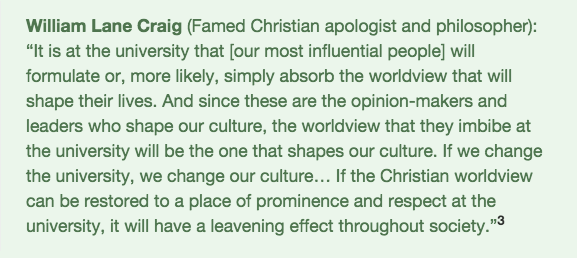
Bill Craig puts it best:

If serving God is your goal, look to the university

There is already a perfectly fine university right next door – no need to fly to Europe to find one! Remember, the university that took your faith away, or maybe the faith of someone you cared about? Yeah, it’s still there in your home town! And it’s still ruining the lives of thousands of young people. It seems to me that it’s better stewardship to stay here and work, then give money to groups like Reasonable Faith. And you can start a blog, teach in church and invite scholars to the local university, too. That costs almost nothing, and it produces better results.

What about Jesus?

Sometimes, it’s a good idea to look beyond the words of the Bible and reflect on the overall message of it at a higher level. When I look in the Bible, I see that Jesus went through a lot of suffering in obedience to God in order to secure the salvation of people who did not even like him. And it’s from this sacrifice on our behalf that his claim on our obedience comes. There are things that I don’t like to do that I do anyway because they work to serve God. Jesus life’s ambition was not to do things that were easy, or that made him happy. Experienced Christians do things that are not fun, because these things are right and because they solve the real problem.

Samaritan’s Purse physician contracts Ebola while serving in Liberia

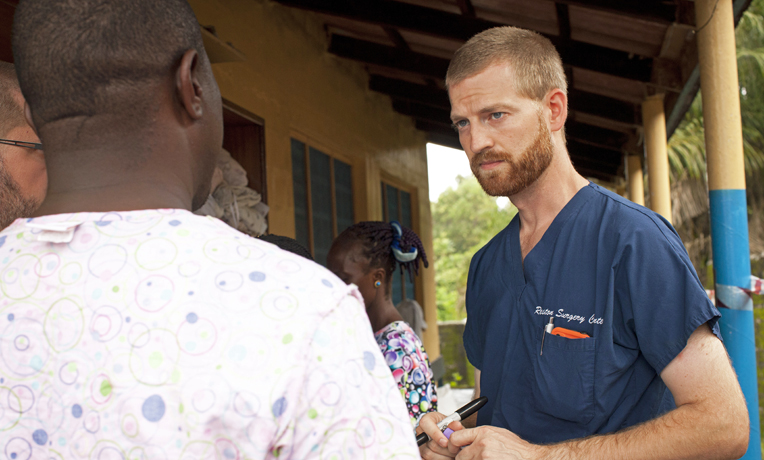
Dr. Kent Brantly
Dr. Kent Brantly

Here’s the story from the Samaritan’s Purse web site.

Excerpt:

Dr. Kent Brantly and Nancy Writebol are in stable but grave condition. Dr. Brantly took a slight turn for the worse overnight. But even as he battles to survive Ebola, he received a remarkable gift from a patient he had helped to save.

“Dr. Brantly received a unit of blood from a 14-year-old boy who had survived Ebola because of Dr. Brantly’s care,” Samaritan’s Purse President Franklin Graham said. “The young boy and his family wanted to be able to help the doctor that saved his life.”

[…]Dr. Brantly, a family practice physician, was serving in Liberia through our post-residency program before joining the medical team responding to the Ebola crisis. His wife and two children had been living with him in Liberia but flew home to the U.S. before he started showing any signs of illness.

Last week, Dr. Brantly recognized that he had symptoms associated with Ebola, and immediately isolated himself.

[…]The deadly disease, which causes massive internal bleeding and has a mortality rate of 60 to 90 percent in most situations, has claimed more than 725 lives.

[…]“There’s an incredible level of braveness in Kent,” Robert Earley, president and CEO of JPS Health Network, told the Fort Worth Star-Telegram. “You don’t meet people like this every day.”

Yahoo News has more about this fine man:

Even from his own sickbed in Africa, American physician Kent Brantly continues putting the well-being of others before his own.

Brantly, a medical missionary in West Africa, and fellow American Nancy Writebol both contracted Ebola last weekend. They spent the past several days under quarantine and are struggling to survive.

On Wednesday, an experimental serum arrived in Monrovia, Liberia, but there was only enough dosage for one patient.

“Dr. Brantly asked that it be given to Nancy Writebol,” said Franklin Graham, president of Samaritan’s Purse, the Christian humanitarian organization Brantly is working for.

Late Thursday, officials at Emory University Hospital near the Centers for Disease Control and Prevention in Atlanta confirmed that one of the two aid workers will soon be brought to a special high-security ward there. The name of the patient was not revealed.

Brantly’s gesture of letting Writebol have the serum fits the description of selflessness and sacrifice the 33-year-old’s family back in the U.S. has given.

“Kent prepared himself to be a lifetime medical missionary,” his mother, Jan Brantly, told The Associated Press on Monday. “His heart is in Africa.”

After the merciful move for Writebol, a local family made its own offering to Brantly.

If you are a person who prays, say a prayer for this brave Christian man.