
Tag Archives: Military

How the weak Democrat foreign policy caused the Syria crisis, and what to do now

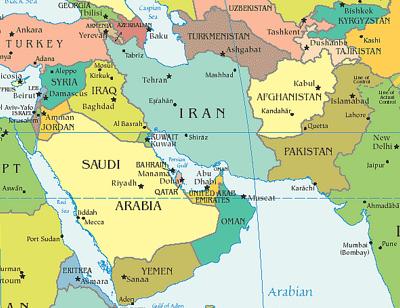
Map of the Middle East

The UK Telegraph’s Nile Gardiner explains how Democrat foreign policy made the current crisis in Syria worse.

Excerpt:

Bashar al-Assad’s regime in Syria is monstrous. A hundred thousand civilians have died at its hands in the last two years, and more than a million Syrians have fled the country since it began its war of attrition against rebel groups. It is almost certainly responsible for the massacre of up to 1,300 people in a suburb of Damascus last week through the use of chemical weapons. Many of the victims included women and children. Assad is a Baathist thug of the highest order, a figure of unremitting evil with few parallels in the modern world. The downfall of his dictatorship cannot come soon enough, and no peace can be realistically achieved in Syria until Assad goes.

In the face of Assad’s brutality, however, Washington and the West as a whole have been largely impotent. The White House’s strategy has been one of abject confusion, with no clear leadership from the president. Barack Obama’s approach has been one of “leading from behind,” a phrase first coined by one of his own advisers. He has been content to farm out US foreign policy to a feckless United Nations, and has kowtowed to a ruthless Moscow, which views Syria as a client state, a useful bulwark against American influence in the Middle East, and a thorn in the side of the world’s superpower.

The Russian “reset,” pioneered by Hillary Clinton as Secretary of State, has been one of the biggest foreign policy flops of the modern era, involving an extraordinary degree of deference towards a major strategic adversary. Clinton, it should be recalled, referred to Assad as “a reformer” as recently as April 2011, while former House Speaker Nancy Pelosi, as well as former Senate Foreign Relations Committee chairman John Kerry, made a number of trips to Damascus to meet with Assad prior to the civil war.

Similarly, the Obama administration has been content to allow the Iranians to plough money, arms and military personnel into Syria in support of Assad, providing a vital lifeline for the pariah state. Washington’s engagement strategy with Tehran has been a massive folly, simply emboldening the Mullahs with no consequences.

My Dad and I were talking about what the United States should do now to deter the use of chemical weapons, and we came up with two alternatives. Use our covert operations capability (such as it is) to kill Assad or go with a tactical military strike against the top of the Assad regime – either surface-to-surface missiles or standoff air strike. I think that Obama has weakened the clandestine services so much over the years by exposing their methods, exposing their sources, prosecuting them for doing their jobs, etc. that they are not strong enough to do the job. So it’s going to have to be a more messy military strike against the top level of the Assad regime, if the goal is to solve the problem.

Foreign policy expert Bret Stephens writes about that option in the Wall Street Journal.

Excerpt:

Should President Obama decide to order a military strike against Syria, his main order of business must be to kill Bashar Assad. Also, Bashar’s brother and principal henchman, Maher. Also, everyone else in the Assad family with a claim on political power. Also, all of the political symbols of the Assad family’s power, including all of their official or unofficial residences. The use of chemical weapons against one’s own citizens plumbs depths of barbarity matched in recent history only by Saddam Hussein. A civilized world cannot tolerate it. It must demonstrate that the penalty for it will be acutely personal and inescapably fatal.

[…]As it is, a strike directed straight at the Syrian dictator and his family is the only military option that will not run afoul of the only red line Mr. Obama is adamant about: not getting drawn into a protracted Syrian conflict. And it is the one option that has a chance to pay strategic dividends from what will inevitably be a symbolic action.

[…]On Monday John Kerry spoke with remarkable passion about the “moral obscenity” of using chemical weapons, and about the need to enforce “accountability for those who would use the world’s most heinous weapons against the world’s most vulnerable people.” Amen, Mr. Secretary, especially considering that you used to be Bashar’s best friend in Washington.

[…]The world can ill-afford a reprise of the 1930s, when the barbarians were given free rein by a West that had lost its will to enforce global order. Yes, a Tomahawk aimed at Assad could miss, just as the missiles aimed at Saddam did. But there’s also a chance it could hit and hasten the end of the civil war. And there’s both a moral and deterrent value in putting Bashar and Maher on the same list that once contained the names of bin Laden and Anwar al-Awlaki.

The rest of the article evaluates alternatives like striking Syria’s chemical weapons dumps, but concludes that a strike against the top of the Assad regime as the best option, if the goal is to solve the problem. I am not even sure if it is possible to get the top of the Assad regime this way, since we need intelligence to know where they are, and maybe even to point LTIDs at the targets. That can’t be done with the push of a button. These options require intelligence work to have been done up front, and we haven’t done it. Now we are stuck with the need to deter chemical weapon use, but we have few options and fewer capabilities.

There are two problems with Bret Stephens’ preferred scenario. First, the Assad regime has the backing of the Russians and the Iranians. They might not like it if we took out their puppet and his helpers. Second, the influence of the moderates in the Syrian opposition is uncertain. We don’t have a clear ally in the Syrian opposition, like we do in Egypt with the Egyptian army. From what I am hearing, the rebels are significantly Al Qaeda. We could have been cultivating those relationships with the moderate faction, but we were not doing that. So the whole thing is very risky. It didn’t need to be this bad, but we elected the pacificist multiculturalist moral relativist CYA Democrats in charge, and they’ve made a mess of the Middle East. Instead of elevating the Muslim Brotherhood in Libya and Egypt, we should have been focused like a laser beam on Syria. We weren’t engaged like we should have been.

To quote again from Nile Gardiner’s UK Telegraph article:

Syria is not Iraq or Afghanistan, where the United States had clear-cut military objectives and national interests at stake when it went to war. The conflict in Syria is further complicated by the rise of Islamist groups with links to al-Qaeda, who have thrived amidst the chaos, and in some cases have targeted the Christian minority in the country. The Obama administration has made little serious effort to cultivate pro-Western, non-Islamist rebels in Syria, whose influence has waned, while the Islamists have gained strength.

Ultimately, the Syrian debacle has exposed the emptiness of the Obama doctrine, one that is based upon hand-wringing, appeasement, and the scaling back of American power. President Obama has been content to weaken US influence, while playing a back seat role on the world stage. There are many things the White House could have done to erode Assad’s regime over the past two years while strengthening the hand of pro-Western rebels, including aggressively challenging Iranian support for Damascus, forcefully standing up to Moscow at the UN Security Council, coordinating support for the Free Syrian Army among the Gulf States and Turkey, and pressuring the Saudis to crack down on Islamist networks fueling al-Qaeda-tied groups in Syria.

But, of course, the Obama administration did none of those things, because those things would require leadership and vision.

By the way, in case you are wondering where Syria’s chemical weapons came from, the most likely scenario is that they were moved from Iraq. We had reliable intelligence before the Iraq war that Saddam had chemical weapons, and evidence emerged later that Iraq’s WMDs were moved to Syria.

UPDATE: Ralph Peters who is an expert in foreign policy is saying no to the strike idea. He prefers do nothing to an effective strike (the Bret Stephens option). But Peters doesn’t think that Obama will do an effective strike. So I am not sure what to do now. I am hearing that the opposition is not moderate in any way, and we shouldn’t be helping them at all by attacking Assad.

If you want to annoy the left, then raise your children to be like Texas senator Ted Cruz

Texas Republican senator Ted Cruz

Here’s a profile in National Review of my one of my favorite senators.

Excerpt:

The party’s highest-profile Texans, George W. Bush and Rick Perry, tended to match inarticulateness with cowboy swagger and lend themselves to mockery as intellectual lightweights. Bush went to Yale and Harvard Business School, yet no one naturally thinks of him as an Ivy Leaguer. The two Lone Star State governors played into the Left’s stereotypes so nicely that if they didn’t exist, the New York Times editorial board would have had to invent them.

Cruz is different — a Princeton and Harvard man who not only matriculated at those fine institutions but excelled at them. Champion debater at Princeton. Magna cum laude graduate at Harvard. Supreme Court clerkship, on the way to Texas solicitor general and dozens of cases before the U.S. Supreme Court.

Cruz is from the intellectual elite, but not of it, a tea-party conservative whose politics are considered gauche at best at the storied universities where he studied. He is, to borrow the words of the 2008 H.W. Brands biography of Franklin D. Roosevelt, a traitor to his class.

Democrats and liberal pundits would surely dislike Cruz no matter where he went to school, but his pedigree adds an element of shocked disbelief to the disdain. “Princeton and Harvard should be disgraced,” former Pennsylvania governor Ed Rendell exclaimed on MSNBC, as if graduating a constitutionalist conservative who rises to national prominence is a violation of the schools’ mission statements.

[…]In a Washington Post column a year ago, Dana Milbank noted Cruz’s schooling and concluded that his tea-party politics must be a put-on, that he is, underneath it all, an “intellectually curious, liberal-arts conservative.” Note the insulting assumption that an interest in books and ideas immunizes someone from a certain kind of conservative politics.

One of the Left’s deepest prejudices is that its opponents are stupid, and Cruz tramples on it. At hearings, Cruz has the prosecutorial instincts of a . . . Harvard-trained lawyer. Watching Attorney General Eric Holder try to fend off Cruz’s questioning on the administration’s drone policy a few months ago was like seeing a mouse cornered by a very large cat.

Cruz hasn’t played by the Senate rules that freshmen should initially be seen and not heard. In fact, he joined the upper chamber with all the subtlety of a SWAT team knocking down a drug suspect’s front door.

For people who care about such things — almost all of them are senators — this is an unforgivable offense. At another hearing, as Cruz says that the highest commitment of senators should be to the Constitution, another senator can be heard muttering that he doesn’t like being lectured. Chairman Pat Leahy (probably the mutterer) eventually cuts him off and informs him he hasn’t been in the Senate very long.

Cruz lacks all defensiveness about his positions, another source of annoyance to his opponents, who are used to donning the mantle of both intellectual and moral superiority.

And here’s a quick review of where Ted Cruz came from:

Rafael Cruz, the father of Texas Sen. Ted Cruz, invigorated the crowd during tonight’s FreedomWorks Free the People event.

Describing his own personal journey escaping Cuba and working hard to build a life for himself in the U.S., the elder Cruz noted comparisons that he believes exist between Fidel Castro’s governance and President Barack Obama’s executive actions.

Upon rising to power, he said that Castro, like Obama, spoke about hope and change. While the message sounded good at the time, it didn’t take long for socialism to take root in his home country. And he paid the price.

For his part in the revolution — one that many originally assumed would yield a more vibrant country — Cruz was punished while in Cuba.

“I was in prison,” he said. “I was tortured, but by the grace of God I was able to leave Cuba on a student VISA and came to the greatest country on the face of the earth.”

Cruz described his efforts working as a dishwasher in America and paying his own way through the University of Texas. From there, he built a life for himself — one that was filled with experiences that caused him to greatly appreciate the country that had given him so much.

His plight in Cuba colored his American experience

“You can’t understand a loss of rights unless you’ve experienced it,” Cruz told TheBlaze following the speech.

His unique perspective leaves Cruz with the ability, he argues, to see the troubling signs surrounding socialism. Young people in America today, he told TheBlaze, take for granted the rights and privileges that the U.S. has afforded them.

Fascinating.

Now people always complain when I say that I am trying to find a wife with the background, education, experience and temperment to raise effective, influential children. I have a whole list of influential people I want to clone, in fact. I want a William Lane Craig, a Wayne Grudem, a Michael Licona, a Guillermo Gonzales, an Ann Gauger, a Jennifer Roback Morse, a Scott Klusendorf, a Mark Regnerus, and… a Ted Cruz. And I’ve saved the money to be able to get at least a few of those, too. The truth is that I had some of the experiences that Cruz’s father had, and if he can make a Ted Cruz, then so should I be able to. They have to come from somewhere!

Now of course it’s hard to guarantee outcomes when it comes to raising children, but there are some things you can prepare for. You can study things you hate that are hard, and save your money for Ph.D tuition. You can go to grad school yourself and publish research. You can look for a wife who shows the ability to nurture people so that they get better and rise higher. And maybe, you might just raise the next Ted Cruz. I think the old adage “if you aim at nothing, then you will surely hit it” is a good saying for marriage. If you are going to put hundreds of thousands of dollars and decades of your life into a marriage, then you should aim at something. You might hit it. You’re not just there to make another person feel good – you’re there to make the marriage serve God. Raising influential, effective children is one way of doing that. But it doesn’t happen by accident. And it isn’t necessarily going to be “fun”.

By the way, my Canadian readers might like to know that Cruz was born in Calgary, Alberta – the most conservative city in Canada. And it shows. You guys up north still have your Stephen Harper and your Ezra Levant, but we took your Ted Cruz and your Mark Steyn. We need them more than you do!

Related posts

AF first sergeant faces reprisals from gay boss for refusing to affirm homosexuality

Here’s the first one from Fox News.

Excerpt:

Monk has served as a first sergeant at Lackland Air Force Base in San Antonio since 2011. He recently returned from a deployment and discovered he had a new commander – an open lesbian.

“In one of our first meetings, she was talking about her promotion and she mentioned something about a benediction,” Monk told Fox News. “She said she wanted a chaplain but objected to one particular chaplain that she called a bigot because he preached that homosexuality is a sin.”

“She then said, ‘I don’t know what kind of people actually believe that kind of crap,’” Monk said, recalling the meeting. “I knew I was going to have a rough time in this unit and I would have to be very careful what I said.”

That moment came when Monk was called in to advise the commander on a disciplinary matter involving an Air Force instructor accused of making comments objecting to gay marriage.

And then Monk had to advise his lesbian officer about someone who disagreed with homosexuality:

Seven people filed complaints about the remarks. It then became Monk’s job to advise the commander on disciplinary action.

“Her very first reaction was to say, ‘we need to lop off the head of this guy,’” Monk said. “The commander took the position that his speech was discrimination.”

Monk suggested she use the incident as a learning experience – a way to teach everyone about tolerance and diversity.

“I don’t believe someone having an opinion for or against homosexuality is discriminatory,” Monk told Fox News.

From that point, Monk said he was told that he wasn’t on the same page as the commander and if I didn’t get on the page they were on, they would find another place for me to work.”

“I’m being chastised about what’s going on,” he said. “I’m told that members of the Air Force don’t have freedom of speech. They don’t have the right to say anything that goes against Air Force policy.”

Monk, who is a devout evangelical Christian, said he met with the young instructor and told him that he was fighting for him.

“He was really concerned,” he said. “He said he felt like he was on an island – that he couldn’t be who he is anymore. He didn’t understand why somebody would be offended.”

The instructor was eventually punished by having a letter of counseling placed in his official file.

Monk soon found himself in a very similar position after his commander ordered him to answer a question about whether people who object to gay marriage are guilty of discrimination.

“She said, ‘Sgt. Monk, I need to know if you can, as my first sergeant, if you can see discrimination if somebody says that they don’t agree with homosexual marriage,’” he said. “I refused to answer the question.”

Monk said to answer would have put him in a legal predicament.

“And as a matter of conscience I could not answer the question the way the commander wanted me to,” he said.

I actually wanted to joint the military when I was young. But I knew that if I ever disagreed with my superiors on issues like abortion or gay marriage, that I would have trouble transferring my skills to a new career. I chose to go into computer science so that I could get my skills without being censored or sanctioned by teachers who didn’t agree with me. I wanted to avoid having to change who I was because someone else disagreed with me and wanted to push their views on me by exercising power. I had read about what atheists did to Christians in communist countries, and I didn’t want to be exposed to that. I knew that I had to choose a field where I could always take my skills and leave if I sensed danger.