
Tag Archives: Meaning

Obama pushes for gay marriage at second inauguration

From Life Site News. (links removed)

Excerpt:

 President Barack Obama forcefully advanced the homosexual agenda in his second inaugural address this afternoon, saying redefining marriage must be enacted “by [God’s] people here on earth.”

[…]“Our journey is not complete until our gay brothers and sisters are treated like anyone else under the law – for if we are truly created equal, then surely the love we commit to one another must be equal as well,” the president said.

Although the president trumpeted his support for redefining marriage during the presidential campaign, he promised to leave the issue to be settled by the states. However, his decision to include gay ‘marriage’ in an inaugural address alongside issues such as green energy, amnesty for illegal immigrants, and robust entitlement programs, which he has pledged to actively champion, suggests it may be part of the president’s legislative, or administrative, agenda.

The president wove homosexual activism into multiple aspects of the inaugural ceremonies.

A clergyman who supports the homosexual movement gave the benediction in place of a pastor who supports the traditional family.

Luis León, the rector of St. John’s Episcopal Church just across the street from the White House, has been described by MSNBC as a “pro-gay Episcopal priest.”

[…]Leon replaced Rev. Louie Giglio, who was pressured out of giving the benediction by homosexual activists who had discovered a sermon he delivered in the 1990s offering a “Christian response to homosexuality.”

[…]At another juncture in the inaugural festivities, poet Richard Blanco earned the distinction of becoming the first gay Hispanic poet ever to read a poem during an inauguration.

If gay marriage is legalized, then speaking and acting like an authentic Christian ill be much harder. Dr. Robert P. George explains why that’s so in Public Discourse.

Excerpt:

Since most liberals and even some conservatives, it seems, apparently have no understanding at all of the conjugal conception of marriage as a one-flesh union—not even enough of a grasp to consciously consider and reject it—they uncritically conceive marriage as sexual-romantic domestic partnership, as if it just couldn’t possibly be anything else. This is despite the fact that the conjugal conception has historically been embodied in our marriage laws, and explains their content (not just the requirement of spousal sexual complementarity, but also rules concerning consummation and annulability, norms of monogamy and sexual exclusivity, and the pledge of permanence of commitment) in ways that the sexual-romantic domestic partnership conception simply cannot. Still, having adopted the sexual-romantic domestic partnership idea, and seeing no alternative possible conception of marriage, they assume—and it is just that, an assumption, and a gratuitous one—that no actual reason exists for regarding sexual reproductive complementarity as integral to marriage. After all, two men or two women can have a romantic interest in each other, live together in a sexual partnership, care for each other, and so forth. So why can’t they be married? Those who think otherwise, having no rational basis, discriminate invidiously.

[…]Thus, advocates of redefinition are increasingly open in saying that they do not see these disputes about sex and marriage as honest disagreements among reasonable people of goodwill. They are, rather, battles between the forces of reason, enlightenment, and equality—those who would “expand the circle of inclusion”—on one side, and those of ignorance, bigotry, and discrimination—those who would exclude people out of “animus”—on the other. The “excluders” are to be treated just as racists are treated—since they are the equivalent of racists. Of course, we (in the United States, at least) don’t put racists in jail for expressing their opinions—we respect the First Amendment; but we don’t hesitate to stigmatize them and impose various forms of social and even civil disability upon them and their institutions. In the name of “marriage equality” and “non-discrimination,” liberty—especially religious liberty and the liberty of conscience—and genuine equality are undermined.

The fundamental error made by some supporters of conjugal marriage was and is, I believe, to imagine that a grand bargain could be struck with their opponents: “We will accept the legal redefinition of marriage; you will respect our right to act on our consciences without penalty, discrimination, or civil disabilities of any type. Same-sex partners will get marriage licenses, but no one will be forced for any reason to recognize those marriages or suffer discrimination or disabilities for declining to recognize them.” There was never any hope of such a bargain being accepted. Perhaps parts of such a bargain would be accepted by liberal forces temporarily for strategic or tactical reasons, as part of the political project of getting marriage redefined; but guarantees of religious liberty and non-discrimination for people who cannot in conscience accept same-sex marriage could then be eroded and eventually removed. After all, “full equality” requires that no quarter be given to the “bigots” who want to engage in “discrimination” (people with a “separate but equal” mindset) in the name of their retrograde religious beliefs. “Dignitarian” harm must be opposed as resolutely as more palpable forms of harm.

[…][T]here is, in my opinion, no chance—no chance—of persuading champions of sexual liberation (and it should be clear by now that this is the cause they serve), that they should respect, or permit the law to respect, the conscience rights of those with whom they disagree. Look at it from their point of view: Why should we permit “full equality” to be trumped by bigotry? Why should we respect religions and religious institutions that are “incubators of homophobia”? Bigotry, religiously based or not, must be smashed and eradicated. The law should certainly not give it recognition or lend it any standing or dignity.

The lesson, it seems to me, for those of us who believe that the conjugal conception of marriage is true and good, and who wish to protect the rights of our faithful and of our institutions to honor that belief in carrying out their vocations and missions, is that there is no alternative to winning the battle in the public square over the legal definition of marriage. The “grand bargain” is an illusion we should dismiss from our minds.

You can read about some examples of attacks against proponents of traditional marriage in my secular case against same-sex marriage.
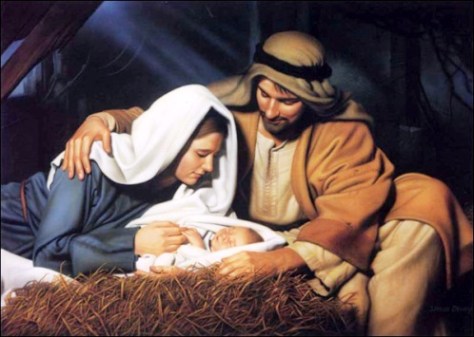
Why do people celebrate Christmas?

It’s the time of year when we explain what Christianity is about.

God exists

Basically, we know from a variety of scientific arguments that the universe was created and fine-tuned for life by an intelligent agent that existed causally prior to the beginning of the universe, because this agent brought the universe into being. Our purpose as humans is to enter into a two-way loving relationship with this Creator/Designer of the universe. This is the only way that we can ultimately be happy and fulfilled.

We avoid God

Now, when you look at human experience, none of us is interested in finding out about the character of this Creator/Designer, because we are afraid that if we find out too much about him then we will have our freedom to do as we please constrained by the demands of a relationship with an all-powerful, all-good being. Just knowing that such a person exists and has a character distinct from our own is enough to cause us to flee from him so that we can stay autonomous from the obligations of the moral law that he expects us to follow.

Christians believe that this universal desire to avoid an all-powerful, all-good God who will judge us is a result of bad behaviors inherited by us from the very first rebellion against God by our ancestors. Ever since that rebellion, the capability for relating to God has been lost, because we no longer have the ability to stop our rebellion against God. Christians call the first rebellion of our ancestors “The Fall of Man”.

What does this rebellion look like for us today? Well, we want to do whatever we want, in order to be happy, and to ignore God’s demands. We want to have happy feelings, including security, community and being morally good, all without a relationship with God. We want to acquire and rearrange matter for our selfish ends without acknowledging and honoring the Creator/Designer of that matter. And, of course, we would like other people to affirm, voluntarily or involuntarily, that our rebellion against God is really the height of moral goodness.

Additionally, some people imagine that God, if he exists at all, must desire our happiness. And of course when their needs are not met by this invented God, then they become even more bitter at God, and eventually decide that God could not really exist since their selfish needs are not being met by him. It never seems to occur to us humans that some pain and suffering may be permitted by God in order to turn our attention away from pleasure and security in this life, and back towards a relationship with him.

This is the mess we find ourselves in. This propensity for turning away from God and trying to pursue selfish happiness and security apart from a relationship with God is what the Bible calls “sin”. Every single one of us deserves severe punishment for refusing to pursue a genuine two-way love relationship with the God who is there. That is the mess we are in before Jesus appears to address this problem.

Jesus saves the day

I cannot say much about how Jesus solves the problem of rebellion against God, because that is really the story of Easter, and today we are dealing with the story of Christmas. But I can say that the solution to the problem requires that God step into history to communicate with his creatures and to perform actions in order to be reconciled with them. That is the message of Christmas: God is stepping into history to do something to end our rebellion. Easter is the story of what he does.

This is talked about in the Bible in John 1, for example.

John 1:1-5:

1In the beginning was the Word, and the Word was with God, and the Word was God.

2He was with God in the beginning.

3Through him all things were made; without him nothing was made that has been made.

4In him was life, and that life was the light of men.

5The light shines in the darkness, but the darkness has not understood it.

You can substitute the word “Word” there for Logos, which really means logic or reason or wisdom. This is a person with a divine nature, identified with the eternal being of God, who exists causally prior to the creation of the universe, who is going to take on an additional human nature, including a human body. (Christians believe that there is one divine “what” being and three divine “who” persons). Software engineers, you can think of Jesus having two natures as multiple inheritance in C++.

And it continues in John 1:10-14:

10He was in the world, and though the world was made through him, the world did not recognize him.

11He came to that which was his own, but his own did not receive him.

12Yet to all who received him, to those who believed in his name, he gave the right to become children of God—

13children born not of natural descent, nor of human decision or a husband’s will, but born of God.

14The Word became flesh and made his dwelling among us. We have seen his glory, the glory of the One and Only, who came from the Father, full of grace and truth.

Here the word grace doesn’t mean like a graceful ballet dancer. It means an instance of mercy received from a superior. A person (a “who”) identified with the divine being (a “what”) has decided to make us a top-down offer of mercy.

The same message of God stepping into history is found in the Christmas carols that people sing at Christmas.

Christmas carols

Here’s the best one, “O, Holy Night“, and it says:

O holy night! The stars are brightly shining.
It is the night of the dear Savior’s birth.
Long lay the world in sin and error pining,
Till He appeared and the soul felt its worth.

When we were in rebellion, we had lost our most valuable capacity – the capacity of being in a direct relationship with God. And if the newborn baby Jesus can accomplish his mission (and he did), then we are going to regain that capacity for a direct relationship with God.

Now look at “Hark! The Herald Angels Sing“, which one of my favorites:

Hark! The herald angels sing,
“Glory to the newborn King!
Peace on earth and mercy mild,
God and sinners reconciled.”

Basically, as I often say, there are only two kinds of people in the world. There are people who are willing to respond to the offer of a relationship with God, with all the little sacrifices and compromises that a relationship entails, and then there are people who are not willing to respond. For the people who are willing to respond, the appearance of Jesus is the best thing that could possibly happen, because now we are finally going to have a chance to deal directly with God, face-to-face, to find out what he is like, and change ourselves to be more like him, with his help.

And that is why people celebrate Christmas. It’s the anniversary of the birth of Jesus. It is the story of God stepping into history to be reconciled with his rebellious creatures. It’s the story of the divine Logos subjecting himself to the life of a creature in order to rescue us from our sinful, self-destructive rebellion. This love for undeserving creatures is above and beyond the call of duty. We didn’t love him, but instead he loved us first, and he loved us enough to come down here and suffer with us so that we could be reconciled with God.

MERRY CHRISTMAS!

What is the meaning of Advent? Why do Christians celebrate Advent?

Calendar of Christian Holidays and festivals

Advent is:

Advent is the season that begins the liturgical year. It consists of four Sundays starting with the Sunday closest to November 30th. The word advent is derived from the Latin adventus, which means “coming” or “arrival.” In the societies of the Roman empire, the word adventus referred to the arrival of a person of dignity and great power — a king, emperor, or even one of the gods. For Christians, Advent is the time when the church patiently prepares for the coming of the King of Kings, Jesus Christ. On a personal spiritual level, Advent is a time when we should long for a new breaking in of God’s Spirit upon us.

Here is a good post about the story of Advent by Rev. Donald Sensing at Sense of Events blog.

Excerpt:

They were not a wealthy couple. They got by all right in Nazareth because Joseph was a carpenter, a skilled job, but he didn’t make enough money for the finer things of life. Like everyone else in their country, Joseph and Mary relied heavily on their extended families to help them get through the lean times. And when they were doing well, there was always a third cousin or an aunt twice removed who wasn’t, so they helped as much as they could.

To say it was inconvenient to leave Nazareth to travel to Bethlehem would be the greatest of understatements. They had not counted on leaving Nazareth before the child was born. In fact, they didn’t think they would leave Nazareth ever. But a decree had gone out from the Roman emperor that the whole empire would have to pay a special tax. For some reason, the rulers of Judea decided that they may as well take a census while they were at it. Because of the tribal and clannish nature of society, the authorities ordered everyone to go to their ancestral hometowns to be counted and pay the tax.

Protests that some people could not make the trip, such as the aged and infirm, were simply met with rebuff. So Mary, very late in pregnancy, was compelled to schlep down the Jordan River valley on the back of a donkey. The journey by road was about ninety miles, plus having to climb more than 1,300 feet in altitude, so the trip took more than a week. You can’t travel fast leading a donkey on foot carrying a very pregnant woman.

They arrived in Bethlehem on yom rishon, which simply means, “the first day of the week,” the Jews having a specific name for a day of the week only for the Sabbath, the last day of the week. On the Sabbath, they had not traveled because religious law forbade long-distance travel on that day. Besides, they had needed the rest. So on Sunday afternoon, yom rishon, they reached Bethlehem, just one couple among hundreds of families arriving for the census.

Joseph was a lineal descendant of King David, whose hometown had been Bethlehem. Joseph never made too much of his royal ancestry. Certainly, he was not the only descendant of David, and just as certainly, Joseph never thought about claiming the ancient throne. The Jews had lived under foreign domination for hundreds of years, first by the Greeks and then the Romans. The idea of regaining political independence was simply absurd. There was no way successfully to fight the Roman army, as dozens of Mediterranean nations had discovered.

The little town of Bethlehem lacked the infrastructure to cope with a large influx of people needing to stay for several days at a minimum. The early arrivers had gained lodging with relatives, but the small houses filled up fast. There were few inns in the town that had filled well before Joseph and Mary got to town.

Joseph tried to gain lodging at an inn, but the owner was unyielding. He explained that to take them in, he’d have to throw someone else out. He would not have such dishonor on his head, pregnant Mary or no.

“Try the outside of town,” the man said. “There may be a few homes there with space for a kinsman.”

Click here to read the rest. This is a good post to send to people who don’t know what Christmas is about.