
Tag Archives: Marriage

The downside of the soul mate / fairy tale view of relationships


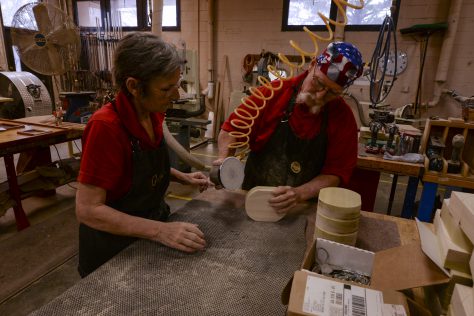
Husband and wife doing some woodworking together

(Image: Husband and wife doing some woodworking together)

Astonishing article from the leftist Huffington Post, of all places. (links removed)

Excerpt:

As millennial women, we were groomed for a white knight fantasy. From childhood favorites such as Snow White to adult rom-com staples such as How to Lose a Guy in Ten Days or Sleepless in Seattle, the media perpetuates a romantic storyline in which compatibility and lasting romance is something effortless, built on chance, sustained by good looks, fun dates and electric sexual chemistry. These story lines shape our expectations for romantic happiness. It is not enough to find someone with whom we are mostly compatible, who would make a good parent, with whom we could learn and grow wrinkly; now, we expect a perfect fit and an easy, instantaneous “connection.” In short, we want a soul mate. But it is this desire for a soul mate that is actually the undoing of our happy ending.

A “soul mate” is defined as one who is ideally suited to us, perfectly completes us, one with whom the relationship feels easy and natural. With them, a relationship is just “meant to be”… A survey of young adults conducted by the National Marriage Project found that while 84% of young adults report finding a marriage partner “very important,” a full 94% of young adults say they would like to marry a soul mate, and 73% of people ages 18 – 29 believe that there is a soul mate out there for them.

Wow. That doesn’t sound like a good approach to me. My approach has always been to pick the girl who was most willing to learn new things. And then to explain to her my vision for marriage and see if I could get her to work independently on that plan before I married her. I don’t favor this soul mate approach at all.

Does the “soul mate” approach work?

We heard that those who get married later and possess a college degree have fewer divorces and more stable marriages. So we spend our twenties trying to find ourselves through travel, accumulating degrees and building a career. Marriage will be the capstone of our achievements, and nothing less than tying the knot with a soul mate will suffice. But the tragic irony is that soul mate thinking makes us increasingly likely to divorce. A study of 1,400 married men and women shows that people who hold soul mate orientations are 150% more likely to end up divorced than those who do not.

The widespread cultural belief in “soul mate ideology” undermines our chances at happiness because it makes us passive receivers of idyllic romantic expectations. Further, it fosters self-centeredness; one rarely longs to be a soul mate for someone else, which would require effort. For this reason, believing in soul mates is one of the most dis-empowering belief systems we can adopt. As millennials, we pride ourselves on actively pursuing the life we want to live, rather than simply accepting whatever hand we are dealt. We are innovative, passionate, proactive and not afraid to take risks. Yet, there is a disconnect when it comes to our desire for lasting love. Though there are prospects around us, we forgo taking the concrete steps needed to build happy compatible relationships because we do not “feel a spark.” We are passively waiting on the sidelines for love to “happen,” and then wonder why it is so difficult.

I’ve always felt that the soul mate approach was like the evil villain in opposition to my noble plan-based approach. My approach is to pick a woman who wants to learn and work hard. Explain your marriage plan to her, and how your marriage plan serves God. My marriage plan accomplishes four goals, for example. 1) Influence the university with apologetics, 2) influence the church with apologetics, 3) provide a model of a good marriage to people in the community, including co-workers, college students and neighbors, and 4) raise effective, influential children who will have an impact for God. Now if you are a Christian woman raised in a church that affirms the soul mate / fairy tale view of marriage with this “God has a wonderful plan for your life” stuff, then a specific, non-emotional plan from a man is the last thing you want to hear about.

Their solution is for people to work at compatibility:

Compatibility is something co-created through intentionality and conscious choice. It involves mutual sacrifice, effort and commitment for the sake of the other’s benefit. A recent study found that of the couples who demonstrate above average daily generosity, 50% of them report being “very happy” in marriage; among the low generosity scores, only 14% can say the same. As studies indicate, selflessness is required to create mutual compatibility. It is not instantaneous, nor does it usually begin with true love’s kiss.

We both know from experience that there are some you naturally connect with and others you do not. This is not a call towards forced attraction or companionship. But, our romantic futures should not be placed in the hands of blind chance. It is time we roll up our sleeves and shift our expectations from unattainable perfection to realistic romance, one that accounts for imperfection. We must understand that work in a relationship is a necessary key to success, rather than an indication of imminent failure. We will be letting go of a tired plot line that sets us up for disappointment and embracing an active role in our own unique story.

How refreshing to know that we do not have to be perfect to be lovable, and that our romantic success is not solely dependent on finding the “right” fit, but instead built through cultivating daily moments of generosity, sacrifice and conscious coupling.

So in my case, I am looking for a woman who listens to the plan, develops the skills for the plan and then independently engages in activities to achieve the goals of the plan. In the past, I have had women listen to the plan carefully, including my motivations and experiences that caused me to choose this plan. And they have been willing to read books, listen to lectures, watch debates, to gain the skills needed to make a difference. And they have even engaged independently with activities like public speaking, teaching classes, and so forth. But none of the women who had done that accepted the soul mate / fairy tale view of marriage. They all wanted to hear a good plan, learn useful skills and then get to work. Big difference.

How the presence and quality of fathers affects belief in God

Here’s an article by Paul Copan which points out how father presence/absence and father quality affects belief and disbelief in God.

Excerpt:

Seventh, the attempt to psychologize believers applies more readily to the hardened atheist. It is interesting that while atheists and skeptics often psychoanalyze the religious believer, they regularly fail to psychoanalyze their own rejection of God. Why are believers subject to such scrutiny and not atheists? Remember another feature of Freud’s psychoanalysis — namely, an underlying resentment that desires to kill the father figure.

Why presume atheism is the rational, psychologically sound, and default position while theism is somehow psychologically deficient? New York University psychology professor Paul Vitz turns the tables on such thinking. He essentially says, “Let’s look into the lives of leading atheists and skeptics in the past. What do they have in common?” The result is interesting: virtually all of these leading figures lacked a positive fatherly role model — or had no father at all.11

Let’s look at some of them.

  • Voltaire(1694–1778): This biting critic of religion, though not an atheist, strongly rejected his father and rejected his birth name of François-Marie Arouet.
  • David Hume(1711–76): The father of this Scottish skeptic died when Hume was only 2 years old. Hume’s biographers mention no relatives or family friends who could have served as father figures.
  • Baron d’Holbach(1723–89): This French atheist became an orphan at age 13 and lived with his uncle.
  • Ludwig Feuerbach (1804–72): At age 13, his father left his family and took up living with another woman in a different town.
  • Karl Marx(1818–83): Marx’s father, a Jew, converted to being a Lutheran under pressure — not out of any religious conviction. Marx, therefore, did not respect his father.
  • Friedrich Nietzsche(1844–1900): He was 4 when he lost his father.
  • Sigmund Freud(1856–1939): His father, Jacob, was a great disappointment to him; his father was passive and weak. Freud also mentioned that his father was a sexual pervert and that his children suffered for it.
  • Bertrand Russell(1872–1970): His father died when he was 4.
  • Albert Camus(1913–60): His father died when he was 1 year old, and in his autobiographical novel The First Man, his father is the central figure preoccupation of his work.
  • Jean-Paul Sartre(1905–80): The famous existentialist’s father died before he was born.12
  • Madeleine Murray-O’Hair (1919–95): She hated her father and even tried to kill him with a butcher knife.
  • We could throw in a few more prominent contemporary atheists not mentioned by Vitz with similar childhood challenges:
  • Daniel Dennett (1942–): His father died when he was 5 years of age and had little influence on Dennett.13
  • Christopher Hitchens (1949–): His father (“the Commander”) was a good man, according to Hitchens, but he and Hitchens “didn’t hold much converse.” Once having “a respectful distance,” their relationship took on a “definite coolness” with an “occasional thaw.” Hitchens adds: “I am rather barren of paternal recollections.”14
  • Richard Dawkins (1941–): Though encouraged by his parents to study science, he mentions being molested as a child — no insignificant event, though Dawkins dismisses it as merely embarrassing.15

Moreover, Vitz’s study notes how many prominent theists in the past — such as Blaise Pascal, G.K. Chesterton, Karl Barth, and Dietrich Bonhoeffer — have had in common a loving, caring father in their lives.16

Not only is there that anecdotal evidence, but there is also statistical evidence.

Excerpt:

In 1994 the Swiss carried out an extra survey that the researchers for our masters in Europe (I write from England) were happy to record. The question was asked to determine whether a person’s religion carried through to the next generation, and if so, why, or if not, why not. The result is dynamite. There is one critical factor. It is overwhelming, and it is this: It is the religious practice of the father of the family that, above all, determines the future attendance at or absence from church of the children.

If both father and mother attend regularly, 33 percent of their children will end up as regular churchgoers, and 41 percent will end up attending irregularly. Only a quarter of their children will end up not practicing at all. If the father is irregular and mother regular, only 3 percent of the children will subsequently become regulars themselves, while a further 59 percent will become irregulars. Thirty-eight percent will be lost.

If the father is non-practicing and mother regular, only 2 percent of children will become regular worshippers, and 37 percent will attend irregularly. Over 60 percent of their children will be lost completely to the church.

Let us look at the figures the other way round. What happens if the father is regular but the mother irregular or non-practicing? Extraordinarily, the percentage of children becoming regular goesupfrom 33 percent to 38 percent with the irregular mother and to 44 percent with the non-practicing, as if loyalty to father’s commitment grows in proportion to mother’s laxity, indifference, or hostility.

[…]In short, if a father does not go to church, no matter how faithful his wife’s devotions, only one child in 50 will become a regular worshipper. If a father does go regularly, regardless of the practice of the mother, between two-thirds and three-quarters of their children will become churchgoers (regular and irregular). If a father goes but irregularly to church, regardless of his wife’s devotion, between a half and two-thirds of their offspring will find themselves coming to church regularly or occasionally.

A non-practicing mother with a regular father will see a minimum of two-thirds of her children ending up at church. In contrast, a non-practicing father with a regular mother will see two-thirds of his children never darken the church door. If his wife is similarly negligent that figure rises to 80 percent!

The results are shocking, but they should not be surprising. They are about as politically incorrect as it is possible to be; but they simply confirm what psychologists, criminologists, educationalists, and traditional Christians know. You cannot buck the biology of the created order. Father’s influence, from the determination of a child’s sex by the implantation of his seed to the funerary rites surrounding his passing, is out of all proportion to his allotted, and severely diminished role, in Western liberal society.

Basically, anyone who doesn’t have a benevolent, involved father is going to have an more difficult time believing that moral boundaries set by an authority are for the benefit of the person who is being bounded. The best way to make moral boundaries stick is to see that they apply to the person making the boundaries as well – and that these moral boundaries are rational, evidentially-grounded and not arbitrary. It is therefore very important to children to be shepherded by a man who studied moral issues (including evidence from outside the Bible) in order to know how to be persuasive to others. If you want your child to be religious and moral, you have to pick a man who is religious and moral. And it can’t just be a faith commitment that he makes, he can just lie about that. Women ought to check whether men are bound to what they believe by checking what they’ve read. A man usually acts consistently with what he believes, and beliefs only get formed when a man informs himself through things like reading.

My advice to Christian women is this. When you are picking a man, be sure and choose one who is already invested in Christian things and producing results. It’s very unlikely that he’s going to start from nothing after you marry him. If you value your kids, make a man’s interest in developing and acting on a Christian worldview the main thing you are looking for.

Gay marriage debate: Michael Brown debates Eric Smaw on same-sex marriage

About the debate:

On April 21, 2011 at 7:30pm at UCF’s Health and Public Affairs Building (Room 119), Rollins College professor, Dr. Eric Smaw and author and seminary professor Dr. Michael L. Brown will debate the question “Should same sex marriage be legalized in America?” The event will be held at 4000 Central Florida Blvd and is open to the public. After the formal portion of the debate, Brown and Smaw will field questions from the audience.

About the speakers:

Dr. Smaw will be responding in the affirmative. He earned his Ph.D. in Philosophy of Law from the University of Kentucky in 2005. His areas of expertise are philosophy of law, international law, human rights, ethics, and modern philosophy. He has published articles on human rights, terrorism, and cosmopolitanism. His most recent publication is “Swaying in the Balance: Civil Liberties, National Security, and Justice in Times of Emergency”.

Dr. Brown will be responding in the negative. He earned his Ph.D. in Near Eastern Languages and Literatures from New York University and is a nationally known evangelical lecturer and radio host. He is the author of numerous scholarly articles and twenty books, including the recently published study “A Queer Thing Happened to America”, which is quickly being recognized as the definitive work on the history and effects of gay activism on American culture.

Here are the first two parts:

Part 1 of 10:

Part 2 of 10:

The rest of the segments are here.

Summaries of the opening speeches

Summary of Dr. Brown’s opening speech:

There is no compelling reasons by the state should change the definition of marriage

The reason the state conveys benefits for marriage is because marriage is beneficial for the state

Traditional marriage is recognized by the state for several reasons:
– it domesticates men
– it protects women
– it provides a stable, nurturing environment for children

Marriage has three public purposes:
– to bind men and women together for RESPONSIBLE procreation
– to get the benefit
– to provide children with two parents who are bonded to them biologically
– to create the next generation of people to keep the society going

Normally, opposite sex couples create children

Homosexual couples can NEVER create children together

Men and women are differences that are complementary

Monogamy is the norm for opposite sex couples.

For gay men, open relationships / cheating is the norm.
This is because women have a tempering effect on sexuality.

There is no evidence that recognizing same-sex civil unions and marriages have changed this trend.

Same-sex marriage guarantees that children will either not have a father or a mother
So which of the sexes is dispensable when raising children?

For example, consider Dawn Stefanowicz, who grew up with a gay father and no mother
She never got a chance to see a man model love and protect a women within a marriage
That makes an enormous difference in a woman’s life – in the way she relates to men

Even with scientific advancements, every baby has a mother and a father

If we change the definition of marriage so that it is based on consent, then why limit it to just two people
If marriage is not the union of male and female, then why have only TWO people
In Canada, you have civil liberties lawyers arguing for for polygamy
In the United States, Professor David Epstein was in a consensual relationship with his daughter
Should incestuous relationships also be celebrated as marriage? Why not?
Should polyamorous relationships also be celebrated as marriage? Why not?

Sexual orientation is not the same as race
Men are women are different in significant ways, but different races are not
You need separate bathrooms for men and women, but not for people of different races

Summary of Dr. Smaw’s opening speech: (He ended his speech after only 10 minutes)

You can redefine marriage so that it no longer based on the public purposes he mentioned (controlling procreation, fusing complementary male and female natures, providing children with mothers and fathers who are biologically linked to them, providing children with a comparatively stable development environment that offers comparatively less instability, promiscuity and domestic violence rates compared to cohabitation, etc.), but is instead based on consent and feelings, and that redefinition of marriage won’t open marriage up to polygamy, polyamory, etc.

If you like feminism, then you should allow same-sex marriage

If you like abortion rights, then you should allow same-sex marriage

Homosexuals participate in society by working at various jobs, so they are participating in society

Homosexuals should be given the same tax breaks as married people because they work at various jobs for money

Working at a job for money achieves the same public purpose as procreating and staying together to raise children in a stable environment

You can listen to the rest for the rebuttals, and cross-examination. Oh yes – there was cross-examination! It starts two thirds of the way through Part 5, if you want to jump to it. And sparks were flying! There is also Q&A from the audience of students.

This is such a great debate – I love to hear two passionate guys disagreeing about something. I love to hear both sides of the issues. There is always something to learn by listening to the other side. It makes me more effective and more tolerant when I stand up to defend my side of the argument.

By the way, my own secular case against same-sex marriage is right here, if you want to see how I would debate this issue. Also check out the recent studies on the effects of gay parenting on children.