Tag Archives: J. P. Moreland

J. Gresham Machen on the relationship between knowledge and faith

Christian scholarship is the new Crusade

Most of my readers are familiar with William Lane Craig and J.P. Moreland – they are two of the most famous Christian apologists out operating today. They both cite a person named “J. Gresham Machen”, and today I want to tell you more about this person.

William Lane Craig quotes him in this chapel address to Wheaton College students. (I am adding some context to Craig’s citation: Craig started the quote at “False ideas…” and ended it at “…harmless delusion”)

We are all agreed that at least one great function of the Church is the conversion of individual men. The missionary movement is the great religious movement of our day. Now it is perfectly true that men must be brought to Christ one by one. There are no labor-saving devices in evangelism. It is all hard-work.

And yet it would be a great mistake to suppose that all men are equally well prepared to receive the gospel. It is true that the decisive thing is the regenerative power of God. That can overcome all lack of preparation, and the absence of that makes even the best preparation useless. But as a matter of fact God usually exerts that power in connection with certain prior conditions of the human mind, and it should be ours to create, so far as we can, with the help of God, those favorable conditions for the reception of the gospel. False ideas are the greatest obstacles to the reception of the gospel. We may preach with all the fervor of a reformer and yet succeed only in winning a straggler here and there, if we permit the whole collective thought of the nation or of the world to be controlled by ideas which, by the resistless force of logic, prevent Christianity from being regarded as anything more than a harmless delusion.

I was actually in the audience when he gave this speech – I was there for the philosophy conference.

So Craig is citing J. Gresham Machen. What about Moreland?

Here’s an essay that Moreland wrote for Christian Leadership Ministries, the faculty arm of Campus Crusade for Christ.

He cites he exact same passage by J. Gresham Machen, as well, only he starts his citation at “God usually exerts…”.

So that’s Craig and Moreland. Citing the same passage, by the same writer. Interesting.

So who is this J. Gresham Machen anyway?

Here’s the bio:

J. Gresham Machen was professor of New Testament at Princeton Theological Seminary before becoming one of the founders of Westminster Theological Seminary and the Orthodox Presbyterian Church (OPC). This address on The Scientific Preparation of the Minister, was delivered September 20, 1912, at the opening of the one hundred and first session of Princeton Theological Seminary, and in substance (previously) at a meeting of the Presbyterian Ministers’ Association of Philadelphia, May 20, 1912. It was first published in The Princeton Theological Review, Vol. 11, 1913.

And Craig and Moreland are citing this essay, which you can read online for free. If you want to know what makes the Wintery Knight the Wintery Knight, this is the place to find your answers.

The essay was published in the Princeton Theological Review in 1913. The essay explains what the church should have done, but didn’t. And the only way out of the mess we are in now is to go back to the fork in the road and make the right turn this time.

You really need to read the essays I linked to by Craig, Moreland and Machen. It will open your eyes and show you how there can be so many Christians attending church on Sundays, and yet they have so little impact on the culture as a whole.

Autobiographical note

When I was a young man, I was exposed to the writings of William Lane Craig, J.P. Moreland, Walter L. Bradley, Greg Koukl, Hugh Ross, and Philip E. Johnson – and they changed my life. It really does make a big difference to young people when they are engaged at an intellectual level, with logic and evidence. I had no other connections to the church at that time. No one in my family, and none of my friends, were religiously inclined. I had no felt needs for religion. But approaching Christianity as knowledge worked for me. Before my conversion, I never attended the feminized church. And I was never told that Christianity was opposed to logic and evidence. Imagine my surprise to see what was being taught in the church compared to the public, testable claims to knowledge in the Bible, and the public, testable claims to knowledge that Christians scholars made in their books.

This passage from R.C. Sproul and John Gerstner in their otherwise useless book on Christian apologetics was formative for me, as well:

Secularism, on the other hand, is a post-Christian phenomenon carrying in its baggage, a conscious rejection of the Christian world view. It supplants the Christian consensus with its own structured view of reality. Less barbaric on the surface than paganism, secularism adopts a benevolent paternalism toward the not yet enlightened Christian who continues the practice of an anachronistic faith. Wearing a benign mask, the secularist loudly proclaims his commitment to religious tolerance on behalf of those weak-minded souls who still cannot bear to face a hostile, or worse, an indifferent universe, without the narcotic effect of ecllesiastical opium. The church is safe from vicious persecution at the hands of the secularist, as educated people have finished with stake-burning circuses and torture racks. No martyr’s blood is shed in the secularist West – so long as the church knows her place and remains quietly at peace on her modern reservation. Let the babes pray and sing and read their Bibles, continuing steadfast in their intellectual retardation; the church’s extinction will come not by sword of pillory, but by the quiet death of irrelevance. It will pass away with a whimper not a bang. But let the church step off the reservation, let her penetrate once more the culture of the day and the Janus-face of secularism will change from benign smile to savage snarl.

This is the problem we are facing today. We have changed Christianity into “faith” instead of KNOWLEDGE.
Dealing with objections to Christian apologetics

I found this post on the Possible Worlds blog. (H/T Apologetics 315)

He deals with the following five objections:

  1. You can never argue anyone into the kingdom.
  2. Doesn’t the Bible say to stay away from philosophy?
  3. We should do apologetics from the Word of God only.
  4. Apologetics removes the faith component.
  5. Only the select few can get involved in apologetics, therefore I have no reason to do it.

The fifth one, “not everyone has to do apologetics”, is the one I hear the most often from people:

That is simply not true! As Christians we have an obligation to engage in apologetics! 1 Peter 3:15 says, “But sanctify the Lord God in your hearts: and be ready always to give an answer to every man that asketh you a reason of the hope that is in you with meekness and fear.”

Peter’s message, in context, is that even in the face of persecution, we may suffer for our good lifestyle in Christ. If this is the case, give every man an answer for why you are doing that. I’m willing to bet Peter’s apologetic went along the lines of his sermon in Acts 2. In this sermon, Peter appealed to fulfilled Old Testament prophecy as well as eyewitness testimony of the Resurrection. Sounds like apologetics to me!

But what about those whose intellectual talents are somewhat lacking? Did Peter really expect them to be able to give a reason? Yes. Inasmuch as one is able, he must present an apologetic for Christ. Suppose one cannot follow complex philosophical arguments. What can he do? He may argue from personal experience or a changed life. He may point someone who is interested in the direction of apologetic resources. In essence, any Christian should learn as much as he is able to learn. Almost every Christian I know is capable of presenting the common-sense cosmological argument (“whatever begins to exist had a cause, the universe began to exist, therefore the universe had a cause”).

Not only is apologetics defensible and important in bringing certain types of people to Christ, it is also commanded of every believer. The Bible never commands the level of skill of an apologist, just that the believer holds and expresses a reason for his hope. The more I study the stronger in faith I become. There are always questions I will be unable to answer, but God has answered so many more in such wonderful ways I just have to trust him!

I hear that objection most from people who think that the Christian life consists of being happy and having the feeling that God does really appreciate you caring about him and trying to serve him effectively. I don’t think that is the right way to have a relationship with another person. You have to get to know them and incorporate their character and goals into your decision making. You accommodate them. You serve them.

I found some more reasons why people don’t do apologetics:

  1. Christians don’t seem to care that Christianity is routinely ridiculed
  2. Christians think that faith means belief in the absence of evidence and argument
  3. Christians are not aware of the tremendous intellectual resources available
  4. Christians are more concerned about being “nice” and “tolerant”
  5. Christians don’t want to take the time to study issues thoroughly

The post has my comments on those reasons.

The fact of the matter is that God’s existence and character are under attack, and what works is reason and evidence. Not feelings, not stories, and not being nice. Anyone can be nice. Christianity needs to be presented as TRUE, (by nice people).

My thoughts on this question are here. This is one of my favorite posts.

I’ve noticed that Christian women are often complaining about how to make men take an interest in them. I think the two best things to do to fix that is to get really good at fiscal conservatism and really good at apologetics. Men want women who are marriage-friendly (fiscally conservative) and who put their own happiness second to defend others (apologetics). That’s what fiscal conservatism and apologetics tells a man about your character. If a woman advocates for redistributing wealth to the poor through government, then she is opposed to traditional male rols (provider/protector) and has no idea how marriage is supposed to work in practice. If a woman makes excuses about why she does not have to know how to defend God’s existence and character, then she doesn’t have the ability to care about the needs and goals of others in relationships. Just because a woman says she wants marriage and to be a mother, it doesn’t mean she actually wants that. She may just want people (big and small) to make her happy but without having to care about what they want.

New collection of essays published to defend mind-body dualism

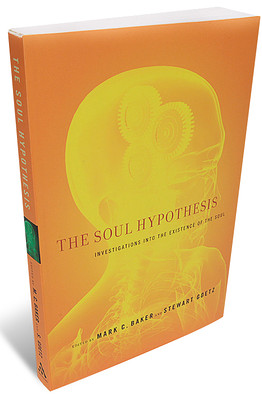
Here’s the new book on J.P. Moreland’s web site.

Full text:

In the Soul Hypothesis: Investigations into the Existence of the Soul (Continuum), co-editors Mark C. Baker and Stewart Goetz have assembled an impressive interdisciplinary team of scholars to address questions about the existence and nature of the soul.

“The Soul of the Matter” – Charles Taliaferro
“Minds, Brains and Brains in Vats” – Daniel N. Robinson
“Brains and Souls; Grammar and Speaking” – Mark Baker
“Making Things Happen: Souls in Action” – Stewart Goetz
“Energy of the Soul” – Robin Collins
“The Measure of All Things: Quantum Mechanics and the Soul” – Dean Zimmerman
“From Seeing to Seer” – Hans Halvorson
“Souls Beastly and Human” – William Hasker
“A Scientific Case for the Soul” – Robin Collins

You can preview the book here.

The book is unique is combining philosophical and scientific arguments for dualism, and the result is a rigorous, exciting, persuasive presentation of the issues and a stimulating challenge to so much of the reductionism that reigns in the sciences. As was noted in a recent review of the book in the WSJ,

Sooner or later, the contributors to “The Soul Hypothesis” warn, scientists will pinpoint the exact three neurons whose firing accompanies the thought of our deciding to make a phone call or, if you prefer, deciding to get up and get a beer from the refrigerator. As ever more such micro-couplings are observed, we will—so scientists tell us with unseemly glee— gradually come to see that our cherished conscious life is nothing but a long series of electrical impulses, not an autonomous realm of free will and free thought. Co-editor Mark C. Baker cites the psychologist Steven Pinker, who finds it plausible to say that neural “activity in the brain” simply “is the mind.”

The book’s contributors set out this scientific challenge fully and engagingly, but they also expose its fallacies. They note, for instance, that even if two things differ in their essential nature, as do mental thoughts and physical actions—or legislatures and laws—there is no reason why the one can’t cause the other. As David Hume argued, what establishes our idea of cause and effect is the regular “conjunction” of two events. That a physical act regularly follows a mental decision suggests, as co-editor Stewart Goetz writes, that the one is “causing” the other and that voluntary human action exists.

The Soul Hypothesis is an excellent text that is sure to provoke a vigorous dialog about its content. I highly recommend it.

I really would like to be able to use this argument more – I just need a good book. I’m a big admirer of Charles Taliaferro. I even met him once at a conference!