
Tag Archives: Human Rights

Gay marriage debate: Michael Brown debates Eric Smaw on same-sex marriage

About the debate:

On April 21, 2011 at 7:30pm at UCF’s Health and Public Affairs Building (Room 119), Rollins College professor, Dr. Eric Smaw and author and seminary professor Dr. Michael L. Brown will debate the question “Should same sex marriage be legalized in America?” The event will be held at 4000 Central Florida Blvd and is open to the public. After the formal portion of the debate, Brown and Smaw will field questions from the audience.

About the speakers:

Dr. Smaw will be responding in the affirmative. He earned his Ph.D. in Philosophy of Law from the University of Kentucky in 2005. His areas of expertise are philosophy of law, international law, human rights, ethics, and modern philosophy. He has published articles on human rights, terrorism, and cosmopolitanism. His most recent publication is “Swaying in the Balance: Civil Liberties, National Security, and Justice in Times of Emergency”.

Dr. Brown will be responding in the negative. He earned his Ph.D. in Near Eastern Languages and Literatures from New York University and is a nationally known evangelical lecturer and radio host. He is the author of numerous scholarly articles and twenty books, including the recently published study “A Queer Thing Happened to America”, which is quickly being recognized as the definitive work on the history and effects of gay activism on American culture.

Here are the first two parts:

Part 1 of 10:

Part 2 of 10:

The rest of the segments are here.

Summaries of the opening speeches

Summary of Dr. Brown’s opening speech:

There is no compelling reasons by the state should change the definition of marriage

The reason the state conveys benefits for marriage is because marriage is beneficial for the state

Traditional marriage is recognized by the state for several reasons:
– it domesticates men
– it protects women
– it provides a stable, nurturing environment for children

Marriage has three public purposes:
– to bind men and women together for RESPONSIBLE procreation
– to get the benefit
– to provide children with two parents who are bonded to them biologically
– to create the next generation of people to keep the society going

Normally, opposite sex couples create children

Homosexual couples can NEVER create children together

Men and women are differences that are complementary

Monogamy is the norm for opposite sex couples.

For gay men, open relationships / cheating is the norm.
This is because women have a tempering effect on sexuality.

There is no evidence that recognizing same-sex civil unions and marriages have changed this trend.

Same-sex marriage guarantees that children will either not have a father or a mother
So which of the sexes is dispensable when raising children?

For example, consider Dawn Stefanowicz, who grew up with a gay father and no mother
She never got a chance to see a man model love and protect a women within a marriage
That makes an enormous difference in a woman’s life – in the way she relates to men

Even with scientific advancements, every baby has a mother and a father

If we change the definition of marriage so that it is based on consent, then why limit it to just two people
If marriage is not the union of male and female, then why have only TWO people
In Canada, you have civil liberties lawyers arguing for for polygamy
In the United States, Professor David Epstein was in a consensual relationship with his daughter
Should incestuous relationships also be celebrated as marriage? Why not?
Should polyamorous relationships also be celebrated as marriage? Why not?

Sexual orientation is not the same as race
Men are women are different in significant ways, but different races are not
You need separate bathrooms for men and women, but not for people of different races

Summary of Dr. Smaw’s opening speech: (He ended his speech after only 10 minutes)

You can redefine marriage so that it no longer based on the public purposes he mentioned (controlling procreation, fusing complementary male and female natures, providing children with mothers and fathers who are biologically linked to them, providing children with a comparatively stable development environment that offers comparatively less instability, promiscuity and domestic violence rates compared to cohabitation, etc.), but is instead based on consent and feelings, and that redefinition of marriage won’t open marriage up to polygamy, polyamory, etc.

If you like feminism, then you should allow same-sex marriage

If you like abortion rights, then you should allow same-sex marriage

Homosexuals participate in society by working at various jobs, so they are participating in society

Homosexuals should be given the same tax breaks as married people because they work at various jobs for money

Working at a job for money achieves the same public purpose as procreating and staying together to raise children in a stable environment

You can listen to the rest for the rebuttals, and cross-examination. Oh yes – there was cross-examination! It starts two thirds of the way through Part 5, if you want to jump to it. And sparks were flying! There is also Q&A from the audience of students.

This is such a great debate – I love to hear two passionate guys disagreeing about something. I love to hear both sides of the issues. There is always something to learn by listening to the other side. It makes me more effective and more tolerant when I stand up to defend my side of the argument.

By the way, my own secular case against same-sex marriage is right here, if you want to see how I would debate this issue. Also check out the recent studies on the effects of gay parenting on children.
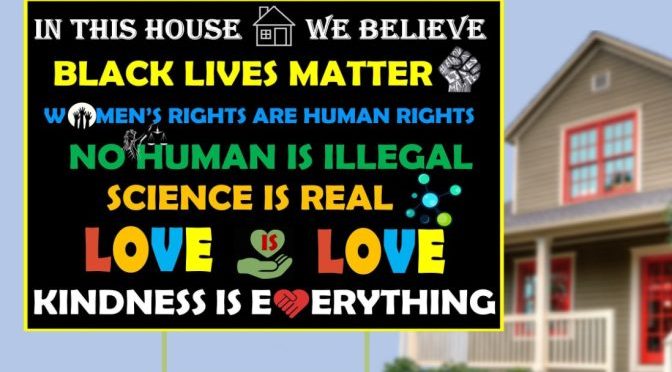
Pro-gay web site tells real story of the Matthew Shepard murder

A fascinating article from the pro-gay web site The Advocate.

Excerpt:

What if nearly everything you thought you knew about Matthew Shepard’s murder was wrong? What if our most fiercely held convictions about the circumstances of that fatal night of October 6, 1998, have obscured other, more critical, aspects of the case? How do people sold on one version of history react to being told that facts are slippery — that thinking of Shepard’s murder as a hate crime does not mean it was a hate crime? And how does it color our understanding of such a crime if the perpetrator and victim not only knew each other but also had sex together, bought drugs from one another, and partied together?

None of this is idle speculation; it’s the fruit of years of dogged investigation by journalist Stephen Jimenez, himself gay. In the course of his reporting, Jimenez interviewed over 100 subjects, including friends of Shepard and of his convicted killers, Aaron McKinney and Russell Henderson, as well as the killers themselves (though by the book’s end you may have more questions than answers about the extent of Henderson’s complicity).  In the process, he amassed enough anecdotal evidence to build a persuasive case that Shepard’s sexuality was, if not incidental, certainly less central than popular consensus has lead us to believe.

And here are the details:

But in what circumstances does someone slam a seven-inch gun barrel into their victim’s head so violently as to crush his brain stem? That’s not just flipping out, that’s psychotic — literally psychotic, to anyone familiar with the long-term effects of methamphetamine. In court, both the prosecutor and the plaintiffs had compelling reasons to ignore this thread, but for Jimenez it is the central context for understanding not only the brutality of the crime but the milieu in which both Shepard and McKinney lived and operated.

By several accounts, McKinney had been on a meth bender for five days prior to the murder, and spent much of October 6 trying to find more drugs. By the evening he was so wound up that he attacked three other men in addition to Shepard. Even Cal Rerucha, the prosecutor who had pushed for the death sentence for McKinney and Henderson, would later concede on ABC’s 20/20 that “it was a murder that was driven by drugs.”
No one was talking much about meth abuse in 1998, though it was rapidly establishing itself in small-town America, as well as in metropolitan gay clubs, where it would leave a catastrophic legacy. In Wyoming in the late 1990s, eighth graders were using meth at a higher rate than 12th graders nationwide. It’s hardly surprising to learn from Jimenez that Shepard was also a routine drug user, and — according to some of his friends — an experienced dealer. (Although there is no real evidence for supposing that Shepard was using drugs himself on the night of his murder).

Despite the many interviews, Jimenez does not entirely resolve the true nature of McKinney’s relationship to Shepard, partly because of his unreliable chief witness. McKinney presents himself as a “straight hustler” turning tricks for money or drugs, but others characterize him as bisexual. A former lover of Shepard’s confirms that Shepard and McKinney had sex while doing drugs in the back of a limo owned by a shady Laramie figure, Doc O’Connor. Another subject, Elaine Baker, tells Jimenez that Shepard and McKinney were friends who had been in sexual threesome with O’Connor. A manager of a gay bar in Denver recalls seeing photos of McKinney and Henderson in the papers and recognizing them as patrons of his bar. He recounts his shock at realizing “these guys who killed that kid came from inside our own community.”

Not everyone is interested in hearing these alternative theories. When 20/20 engaged Jimenez to work on a segment revisiting the case in 2004, GLAAD bridled at what the organization saw as an attempt to undermine the notion that anti-gay bias was a factor; Moises Kaufman, the director and co-writer of The Laramie Project, denounced it as “terrible journalism,” though the segment went on to win an award from the Writers Guild of America for best news analysis of the year.

There are valuable reasons for telling certain stories in a certain way at pivotal times, but that doesn’t mean we have to hold on to them once they’ve outlived their usefulness. In his book, Flagrant Conduct, Dale Carpenter, a professor at the University of Minnesota Law School, similarly unpicks the notorious case of Lawrence v. Texas, in which the arrest of two men for having sex in their own bedroom became a vehicle for affirming the right of gay couples to have consensual sex in private. Except that the two men were not having sex, and were not even a couple. Yet this non-story, carefully edited and taken all the way to the Supreme Court, changed America.

In different ways, the Shepard story we’ve come to embrace was just as necessary for shaping the history of gay rights as Lawrence v. Texas; it galvanized a generation of LGBT youth and stung lawmakers into action. President Obama, who signed the Hate Crimes Prevention Act, named for Shepard and James Byrd Jr., into law on October 28, 2009, credited Judy Shepard for making him “passionate” about LGBT equality.

I think that it’s good that The Advocate posted this correction to the story. I admire them for being willing to tell the truth about the story. However, note that the author is not sorry that a fake version of the case was used to push the gay agenda forward. Now what if the same willingness to twist the truth was shared by the gay activists who are redefining the issues in the culture as a whole? What if the people who are pushing the gay agenda in schools, in the media, in the workplace, and elsewhere, had the same willingness to twist the truth in order to advance their cause?

It’s also helpful to understand the media bias angle of this story. Are they really interested in telling the truth? Or is there something else going on there? How much of a story was the attack on the Family Research Council building by a gun-wielding gay activist compared to the Matthew Shepard story? How much of a story is the persecution of Christians in the Middle East compared to the Matthew Shepard story? How much of a story is the loss of basic human rights like free speech and religious liberty here at home when compared to the Matthew Shepard story?

Breitbart has more about what really happened to Matthew Shepard.

Gay marriage debate: Michael Brown debates Eric Smaw on same-sex marriage

About the debate:

On April 21, 2011 at 7:30pm at UCF’s Health and Public Affairs Building (Room 119), Rollins College professor, Dr. Eric Smaw and author and seminary professor Dr. Michael L. Brown will debate the question “Should same sex marriage be legalized in America?” The event will be held at 4000 Central Florida Blvd and is open to the public. After the formal portion of the debate, Brown and Smaw will field questions from the audience.

About the speakers:

Dr. Smaw will be responding in the affirmative. He earned his Ph.D. in Philosophy of Law from the University of Kentucky in 2005. His areas of expertise are philosophy of law, international law, human rights, ethics, and modern philosophy. He has published articles on human rights, terrorism, and cosmopolitanism. His most recent publication is “Swaying in the Balance: Civil Liberties, National Security, and Justice in Times of Emergency”.

Dr. Brown will be responding in the negative. He earned his Ph.D. in Near Eastern Languages and Literatures from New York University and is a nationally known evangelical lecturer and radio host. He is the author of numerous scholarly articles and twenty books, including the recently published study “A Queer Thing Happened to America”, which is quickly being recognized as the definitive work on the history and effects of gay activism on American culture.

Here are the first two parts:

Part 1 of 10:

Part 2 of 10:

The rest of the segments are here.

Summaries of the opening speeches

Summary of Dr. Brown’s opening speech:

There is no compelling reasons by the state should change the definition of marriage

The reason the state conveys benefits for marriage is because marriage is beneficial for the state

Traditional marriage is recognized by the state for several reasons:
– it domesticates men
– it protects women
– it provides a stable, nurturing environment for children

Marriage has three public purposes:
– to bind men and women together for RESPONSIBLE procreation
– to get the benefit
– to provide children with two parents who are bonded to them biologically
– to create the next generation of people to keep the society going

Normally, opposite sex couples create children

Homosexual couples can NEVER create children together

Men and women are differences that are complementary

Monogamy is the norm for opposite sex couples.

For gay men, open relationships / cheating is the norm.
This is because women have a tempering effect on sexuality.

There is no evidence that recognizing same-sex civil unions and marriages have changed this trend.

Same-sex marriage guarantees that children will either not have a father or a mother
So which of the sexes is dispensable when raising children?

For example, consider Dawn Stefanowicz, who grew up with a gay father and no mother
She never got a chance to see a man model love and protect a women within a marriage
That makes an enormous difference in a woman’s life – in the way she relates to men

Even with scientific advancements, every baby has a mother and a father

If we change the definition of marriage so that it is based on consent, then why limit it to just two people
If marriage is not the union of male and female, then why have only TWO people
In Canada, you have civil liberties lawyers arguing for for polygamy
In the United States, Professor David Epstein was in a consensual relationship with his daughter
Should incestuous relationships also be celebrated as marriage? Why not?
Should polyamorous relationships also be celebrated as marriage? Why not?

Sexual orientation is not the same as race
Men are women are different in significant ways, but different races are not
You need separate bathrooms for men and women, but not for people of different races

Summary of Dr. Smaw’s opening speech: (He ended his speech after only 10 minutes)

You can redefine marriage so that it no longer based on the public purposes he mentioned (controlling procreation, fusing complementary male and female natures, providing children with mothers and fathers who are biologically linked to them, providing children with a comparatively stable development environment that offers comparatively less instability, promiscuity and domestic violence rates compared to cohabitation, etc.), but is instead based on consent and feelings, and that redefinition of marriage won’t open marriage up to polygamy, polyamory, etc.

If you like feminism, then you should allow same-sex marriage

If you like abortion rights, then you should allow same-sex marriage

Homosexuals participate in society by working at various jobs, so they are participating in society

Homosexuals should be given the same tax breaks as married people because they work at various jobs for money

Working at a job for money achieves the same public purpose as procreating and staying together to raise children in a stable environment

You can listen to the rest for the rebuttals, and cross-examination. Oh yes – there was cross-examination! It starts two thirds of the way through Part 5, if you want to jump to it. And sparks were flying! There is also Q&A from the audience of students.

This is such a great debate – I love to hear two passionate guys disagreeing about something. I love to hear both sides of the issues. There is always something to learn by listening to the other side. It makes me more effective and more tolerant when I stand up to defend my side of the argument.

By the way, my own secular case against same-sex marriage is right here, if you want to see how I would debate this issue. Also check out the recent studies on the effects of gay parenting on children.