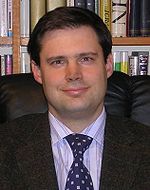
Peter J. Williams is the Warden (CEO) of Tyndale House and a member of the Faculty of Divinity in the University of Cambridge. He received his MA, MPhil and PhD, in the study of ancient languages related to the Bible from Cambridge University. After his PhD, he was on staff in the Faculty of Divinity, Cambridge University (1997–1998), and thereafter taught Hebrew and Old Testament there as Affiliated Lecturer in Hebrew and Aramaic and as Research Fellow in Old Testament at Tyndale House, Cambridge (1998–2003). From 2003 to 2007 he was on the faculty of the University of Aberdeen, Scotland, where he became a Senior Lecturer in New Testament and Deputy Head of the School of Divinity, History and Philosophy. In July 2007 he became the youngest Warden in the history of Tyndale House. He also retains his position as an honorary Senior Lecturer in Biblical Studies at the University of Aberdeen.
Summary of the lecture:
What if the stories about Jesus are legendary?
were the gospels transmitted accurately?
were the gospels written in the same place as where the events happened?
do the gospel authors know the customs and locations where the events happened?
do the gospels use the right names for the time and place where the events took place?
do the gospels disambiguate people’s names depending on how common those names were?
how do the New Testament gospels compare to the later gnostic gospels?
how do the gospels refer to the main character? How non-Biblical sources refer to Jesus?
how does Jesus refer to himself in the gospels? do the later Christians refer to him that way?
how does Jesus teach? do later Christians teach the same way?
why didn’t Jesus say anything about early conflicts in the church (the Gentiles, church services)?
did the writers of the gospels know the places where the events took place?
how many places are named in the gospels? how about in the later gnostic gospels?
are the botanical details mentioned in the gospels accurate? how about the later gnostic gospels?
And here are the questions from the audience:
how what about the discrepancies in the resurrection narratives that Bart Ehrman is obsessed with?
what do you think of the new 2011 NIV translation (Peter is on the ESV translation committee)?
how did untrained, ordinary men produce complex, sophisticated documents like the gospels?
is oral tradition a strong enough bridge between the events and the writers who interviewed the eyewitnesses?
what does the name John mean?
why did the gospel writers wait so long before writing their gospels?
do you think that Matthew and Luke used a hypothetical source which historians call “Q”?
which gospel do critical historians trust the least and why?
I really enjoyed watching this lecture. He’s getting some of this material from Richard Bauckham’s awesome book “Jesus and the Eyewitnesses”, so if you aren’t familiar with it, you can get an idea of what’s in it. Peter Williams is a lot of fun to listen to – an excellent speaker.
This lecture is based on the book “Truth in Religion” by famous philosopher Mortimer J. Adler. At the time of writing the book, he was not a Christian, but there is still a lot of value in the book for Christians who are trying to understand what religion should really be about.
About the speaker
The speaker is one of my top 3 favorite speakers of all time in Christian apologetics, Dr. Walter Bradley. (The other two are Dr. Stephen C. Meyer and Dr. Michael Strauss)
Dr. Bradley received his B.S. in Engineering Science and his Ph.D. in Materials Science from the University of Texas in Austin.
Dr. Bradley taught for eight years at the Colorado School of Mines before assuming a position as Professor of Mechanical Engineering at Texas A&M University (TAMU) in 1976.
During his 24 years at Texas A&M, Dr. Bradley served as Head of the Department of Mechanical Engineering at Texas A&M University and as Director of the Polymer Technology Center, and received five College of Engineering Research Awards. He has received over $4,500,000 in research grants and has published over 140 technical articles and book chapters. He has also co-authored “The Mystery Of Life’s Origin: Reassessing Current Theories. He is a Fellow of the American Society for Materials and of the American Scientific Affiliation and serves as a consultant for many Fortune 500 companies.
some propositions are true culturally – just for certain groups in certain times (cultures)
some proposition are true trans-culturally – true independently of what anyone wants or feels
Mathematical truth is trans-cultural – it is true regardless of cultural fashions
Scientific truth is trans-cultural – it is true regardless of cultural fashions
Some truths are not like this – cooking traditions, clothing traditions and greeting traditions
These kinds of truths are NOT trans-cultural, they vary by culture
The question is – is religion true like math and science, or true depending on the culture
Some people think that your religion depends on where you were born or what your family believes
Religions make conflicting claims about the way the world really is, so they can’t all be true
And these conflicts are at the core of the religions – who God is, how can we be related to him, etc.
So if religions convey trans-cultural truth, then either one is true or none are true
If they are not trying to convey trans-cultural truth, then they are not like math and science
Let’s assume that religion is the same as trans-cultural truth
How can we know which religion is true? 1) the laws of logic, 2) empirical testing against reality
Logical consistency is needed to make the first cut – self-contradictory claims cannot be true
To be true trans-culturally, a proposition must at least NOT break the law of non-contradiction
According to Mortimer Adler’s book, only Christianity, Judaism and Islam are not self-contradictory
All the others can be excluded on the basis of overt internal contradictions on fundamental questions
The others that are self-contradictory can be true culturally, but not trans-culturally
The way to proceed forward is to test the three non-contradictory religions against science and history
One of these three may be true, or they could all be false
We can test the three by evaluating their conflicting truth claims about the historical Jesus
Famous skeptics have undertaken studies to undermine the historical Jesus presented in the Bible
Lew Wallace, Simon Greenleaf and Frank Morrison assessed the evidence as atheists and became Christians
There is a lot of opposition in culture to the idea that one religion might be true
But if you take the claims of Jesus at face value, he claims to be the unique revelation of God to mankind
Either he was telling the truth about that, or he was lying, or he was crazy
So which is it?
Why don’t religious people ask if their religion is true?
People seem to be chicken these days about claiming that their religion is true. It’s easier to say that my religion is true for me, and your religion is true for you – reduce it to personal preferences. So long as everyone is sincere about what they believe, then that’s the most important thing, right?
But it is NOT TRUE that you can believe whatever you want as long as you are sincere – sincerity doesn’t mean that you can’t be mistaken. I can jump off the top of the Sears Tower and be sincere in my belief that I will float down like a feather, but that doesn’t make my belief true. If you want to have a good relationship with God, you have to know things about him, not just have sincere beliefs. You have to know whether he exists and what he is like – really. It’s not enough to have sincere beliefs that are not actually true.
I think that God’s existence and character can be assessed and known based on logic and evidence. I think that God exists independently of whether I want him to or not, and I think that his character and desires are not the same as my character and desires. And I don’t really care what my neighbors think of my disagreeing with them, my goal is not to keep silent and to just get along with them and be happier in my community.
God’s first commandment to us is not to love our neighbor – that’s number two. Number one is to love him. And how can we love him, if we don’t want to know him. And how can we love him, if we don’t tell people the truth about him when they ask us?
That message is not going to win us a lot of friends, but our job as Christians is to tell how and why God stepped into history. Jesus expects us to be his ambassadors and to carry out the task of evangelism faithfully, and to suffer with him and – if necessary – to be rejected like he was rejected.
James Crossley is my favorite atheist ancient historian, such a straight shooter. He’s on the skeptical left, but he has a no-baloney way of talking that I really like. I was so excited to summarize this, and there’s not a speck of snark in this summary. Crossley dates the gospel of Mark 37-43 A.D., far earlier than most scholars. Justin Brierley does a great job as moderator. Gary Habermas is OK, but he is not familiar with any useful arguments for God’s existence, (kalam, fine-tuning, origin of life, Cambrian explosion, etc.), and that is a problem in this debate.
Christian philosopher and historian Gary Habermas has been at the forefront of the ‘minimal facts’ approach as evidence for the resurrection of Jesus.
He debates the commonly agreed facts with agnostic New Testament scholar James Crossley and they discuss whether the miracle of the resurrection can be a historically valid explanation of the evidence.
Note: this is the first of two shows they are doing together!!
Habermas: the minimal facts are the facts that even the majority of skeptical scholars will accept
Habermas list of minimal facts: (near universal acceptance)
Jesus died by Roman crucifixion
After his death, his disciples had experiences that they believed were appearances of the risen Jesus
The disciples were transformed by their experiences and proclaimed his resurrection and were willing to die for their belief in the resurrection
The proclamation of his resurrection was early
James was converted by a post-mortem experience
Paul was converted by a post-mortem experience
Habermas list of widely-accepted facts:
Burial for Jesus in a private tomb
The private tomb found empty
The disciples despaired after Jesus was crucified
The proclamation of the resurrection started in Jerusalem
Changing the worship day from Saturday to Sunday
Crossley’s views on the minimal and widely-accepted facts:
Crossley: I am in broad agreement with what Gary said
Crossley: “the resurrection appearances are some of the hardest, best evidence we have” because it’s in early 1 Cor 15:3-8 creed
Crossley: people were convinced that they had seen the risen Christ
The burial in a private tomb:
Crossley: I have my doubts about the private tomb burial and the empty tomb
Crossley: Mark’s gospel has the burial in a private tomb by Joseph of Arimethea, and Mark is the earliest gospel
Crossley: I don’t have a doubt, it’s just that there are other possible alternatives, and then the tradition was invented later – but that’s just a possibility
Crossley: there is not enough evidence to make a decision either way on the burial
The empty tomb:
Habermas: there are multiple lines of evidence for the empty tomb
Habermas: the reason it’s not one of my minimal facts is because a quarter to a third of skeptical scholars reject it
The transformation of the followers of Jesus:
Crossley: “yes, clearly, I don’t think you can argue with that, it’s fairly obvious”
The conversions of James and Paul:
Crossley: “yes, because it’s based on 1 Corinthians 15:3-8, that report, that was handed on to him”
Where Habermas and Crossley agree:
Habermas: you agree with the 6 facts in the minimal facts list, and you have problems with 2 of 5 facts from the widely accepted list
Crossley: Yes
The empty tomb:
Crossley: Two problems: first, 1 Corinthians 15:3-8 doesn’t mention it, but it “probably assumes the idea that Jesus left behind an empty tomb when resurrected, I am convinced by some of the conservative arguments on that one, but it’s not hard evidence for there actually being an empty tomb”
Crossley: Second, “the other early source we have ends with no resurrection appearances”, it makes him a bit skeptical of the empty tomb
Habermas: the empty tomb is not a minimal fact, I want 90% agreement by skeptical scholars for it to be a minimal fact
Habermas: I have never included the empty tomb in my list of minimal facts
Brierley: William Lane Craig puts it in his list of minimal facts
Habermas: It is very well attested, so if that’s what you mean, then it’s a minimal fact, but it doesn’t have the 90% agreement like the other minimal facts
Habermas: I have 21 arguments for the empty tomb, and none of them require early dating of sources or traditional authorship of the gospels, e.g. – the women discovered the empty tomb, the pre-Markan source, the implications of 1 Cor 15 has some force, the sermons summary in Acts 13 which Bart Ehrman dates to 31 or 32 A.D. has putting a body down and a body coming up without being corrupted
Why is 1 Corinthians 15:3-8 more respected as a source than the gospels?
Habermas: There is a unanimous New Testament conclusion, across the board, from conservative to liberal, that in 1 Cor 15:3-8 Paul is presenting creedal data, Richard Bauckham says that this goes back to the early 30s A.D., Paul got this from the eyewitnesses he mentions in Galatians 1 and 2
Crossley: [reads 1 Corinthians:3-8 out loud], now that’s a tradition that’s handed on, this is Paul, we know this is Paul, writing mid-50s, this is kind of gold, this is the evidence I wish we had across the board
Why doesn’t James accept the resurrection:
Crossley: Historians should not conclude that the supernatural is real, concluding the supernatural is outside of history
Crossley: I am more interested in what people believed at that time
Brierley: as a historian, are you required to give an explanation of the commonly-accepted facts
Crossley: yes, historians must give their explanation for the facts
Crossley: we know people have visions, and how the cultural context determines the content of visions, e.g. – the background of martyrdom
Brierley: so you would go for the hallucination hypothesis?
Crossley: yes, but I prefer not to use that word
Should historians rule out the supernatural?
Habermas: let’s not ask what caused the event, let’s just see if the disciples thought they saw him before he died, that he died on the cross, and then believed they saw him after he died, like you might see someone in the supermarket
Habermas: I’m not asking whether a miracle occurred, I just want to know whether Jesus was seen after he died on the cross
Crossley: that sounds like the angle I’m coming at this from
Crossley: the problem is that there is a supernatural element to some of the appearances, so it’s not a supermarket appearances
Brierley: it’s not angels and hallelujah in the sky
Habermas: nothing like that, no light in the early accounts, fairly mundane
Does James agree that people believed they saw Jesus after his death?
Crossley: yes, I think that’s fairly clear that we do
Crossley: but historians cannot prove claims that what happened to Jesus was supernatural
Brierley: your view is so far from what I see on Internet atheists sites, where they say it’s all legendary accumulation, fairy tales
Crossley: I’m perfect comfortable with the idea – and I think it happened – that people created stories, invented stories
Crossley: there are too many cases where people are sincerely professing that they thought they saw Jesus after his death
Would you expect the disciples to have visions of a resurrected Jesus if nothing happened to him?
Habermas: the dividing line is: did something happen to Jesus, or did something happen to his disciples?
Habermas: the view that people were seeing a kind of ghostly Jesus (non-bodily) – a Jedi Jesus – after his death is a resurrection view, but I hold to a bodily resurrection view
Brierley: N.T. Wright says a resurrected Jesus was contrary to expectations – should we expect the disciples to have a vision of Jesus as resurrected?
Crossley: Wright generalizes too much thinking that there was a single view of the resurrection (the general resurrection at the end of the age), there are a variety of views, some are contradictory
Crossley: Herod Antipas thought that Jesus might be John the Baptist returned from the dead, and he knew Jesus was flesh and blood, there is the story of the dead rising in the earthquake in Matthew, there are stories of the resurrection in Maccabees, and this would influence what people expected
Habermas: the earliest Christian view was *bodily* resurrection
Crossley: yes, I think that’s right
Crossley: In Mark 6, they thought Jesus was a ghost, so there is room for disagreement
Why should a historian not rule out a supernatural explanation?
Habermas: to get to supernatural, you have to go to philosophy – it’s a worldview problem
Habermas: he predicted his own death and resurrection
Habermas: one factor is the uniqueness of Jesus
Habermas: the early church had belief in the bodily resurrection, and a high Christology out of the gate
Habermas: you might look at evidence for corroborated near-death experiences that raise the possibility of an afterlife
Crossley: I’m content to leave it at the level of what people believe and not draw any larger conclusions
Crossley: regarding the predicting his own death, the gospels are written after, so it’s not clear that these predictions predate Jesus’ death
Crossley: it’s not surprising that Jesus would have predicted his own death, and that he might have foreseen God vindicating him
If you admit to the possibility of miracles, is the data sufficient to conclude that the best explanation of the facts is resurrection?
Crossley: If we assume that God exists, and that God intervenes in history, and that this was obvious to everyone, then “of course”
Brierley: Are you committed to a naturalistic view of history?
Crossley: Not quite, broadly, yes, I am saying this all I can do
Brierley: should James be open to a supernatural explanation?
Habermas: if you adopt methodological naturalism,it colors how look at the data is seen, just like supernaturalism does



 WINTERY KNIGHT