
Tag Archives: God

Does the word atheism mean “a lack of belief in God”?

Making sense of the meaning of atheism

First, let’s see check with the Stanford University Encyclopedia of Philosophy.

Excerpt:

‘Atheism’ means the negation of theism, the denial of the existence of God.

Stanford University is one of the top 5 universities in the United States, so that’s a solid definition. To be an atheist is to be a person who makes the claim that, as a matter of FACT, there is no intelligent agent who created the universe. Atheists think that there is no God, and theists think that there is a God. Both claims are objective claims about the way the world is out there, and so both sides must furnish forth arguments and evidence as to how they are able to know what they are each claiming.

Philosopher William Lane Craig has some thoughts on atheism, atheists and lacking belief in God in this reply to a questioner.

Question:

In my discussions with atheists, they  are using the term that they “lack belief in God”. They claim that this is different from not believing in God or from saying that God does not exist. I’m not sure how to respond to this. It seems to me that its a silly word-play and is logically the same as saying that you do not believe in God.
What would be a good response to this?
Thank you for your time,

Steven

And here is Dr. Craig’s full response:

Your atheist friends are right that there is an important logical difference between believing that there is no God and not believing that there is a God.  Compare my saying, “I believe that there is no gold on Mars” with my saying “I do not believe that there is gold on Mars.”   If I have no opinion on the matter, then I do not believe that there is gold on Mars, and I do not believe that there is no gold on Mars.  There’s a difference between saying, “I do not believe (p)” and “I believe (not-p).”   Logically where you place the negation makes a world of difference.

But where your atheist friends err is in claiming that atheism involves only not believing that there is a God rather than believing that there is no God.

There’s a history behind this.  Certain atheists in the mid-twentieth century were promoting the so-called “presumption of atheism.” At face value, this would appear to be the claim that in the absence of evidence for the existence of God, we should presume that God does not exist.  Atheism is a sort of default position, and the theist bears a special burden of proof with regard to his belief that God exists.

So understood, such an alleged presumption is clearly mistaken.  For the assertion that “There is no God” is just as much a claim to knowledge as is the assertion that “There is a God.”  Therefore, the former assertion requires justification just as the latter does.  It is the agnostic who makes no knowledge claim at all with respect to God’s existence.  He confesses that he doesn’t know whether there is a God or whether there is no God.

But when you look more closely at how protagonists of the presumption of atheism used the term “atheist,” you discover that they were defining the word in a non-standard way, synonymous with “non-theist.”  So understood the term would encompass agnostics and traditional atheists, along with those who think the question meaningless (verificationists).  As Antony Flew confesses,

the word ‘atheist’ has in the present context to be construed in an unusual way.  Nowadays it is normally taken to mean someone who explicitly denies the existence . . . of God . . . But here it has to be understood not positively but negatively, with the originally Greek prefix ‘a-’ being read in this same way in ‘atheist’ as it customarily is in . . . words as ‘amoral’ . . . . In this interpretation an atheist becomes not someone who positively asserts the non-existence of God, but someone who is simply not a theist. (A Companion to Philosophy of Religion, ed. Philip Quinn and Charles Taliaferro [Oxford:  Blackwell, 1997], s.v. “The Presumption of Atheism,” by Antony Flew)

Such a re-definition of the word “atheist” trivializes the claim of the presumption of atheism, for on this definition, atheism ceases to be a view.  It is merely a psychological state which is shared by people who hold various views or no view at all.  On this re-definition, even babies, who hold no opinion at all on the matter, count as atheists!  In fact, our cat Muff counts as an atheist on this definition, since she has (to my knowledge) no belief in God.

One would still require justification in order to know either that God exists or that He does not exist, which is the question we’re really interested in.

So why, you might wonder, would atheists be anxious to so trivialize their position?  Here I agree with you that a deceptive game is being played by many atheists.  If atheism is taken to be a view, namely the view that there is no God, then atheists must shoulder their share of the burden of proof to support this view.  But many atheists admit freely that they cannot sustain such a burden of proof.  So they try to shirk their epistemic responsibility by re-defining atheism so that it is no longer a view but just a psychological condition which as such makes no assertions.  They are really closet agnostics who want to claim the mantle of atheism without shouldering its responsibilities.

This is disingenuous and still leaves us asking, “So is there a God or not?”

So there you have it. We are interested in what both sides know and what reasons and evidence they have to justify their claim to know. We are interested in talking to people who make claims about objective reality, not about themselves, and who then go on to give reasons and evidence to support their claims about objective reality. There are atheists out there that do make an objective claim that God does not exist, and then support that claim with arguments and evidence. Those are good atheists, and we should engage in rational conversations with them. But clearly there are some atheists who are not like that. How should we deal with these “subjective atheists”?

Well, my advice is to avoid them. They are approaching religion non-cognitively. When you engage in serious discussions with people about God’s existence, you only care about what people know and what they can show to be true.
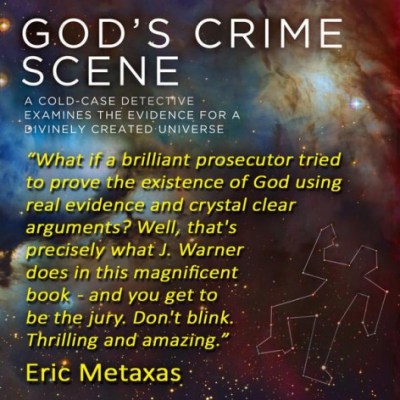
How do atheists try to accommodate the Big Bang in their worldview?

J. Warner Wallace: God's Crime Scene
J. Warner Wallace: God’s Crime Scene

OK, so J. Warner Wallace has a new book out and it’s about science and God. I know, because I saw pictures of his reading list, that he has read tons and tons of atheists like Carl Sagan, Lawrence Krauss and so on.

He’s writing about some of the things he learned from all this reading on his blog, and I wanted to link to something about Lawrence Krauss trying to accommodate the Big Bang within his worldview of atheism.

Wallace writes:

One of the key pieces of evidence in the universe is simply it’s origin. If our universe began to exist, what could have caused it’s beginning? How did everything (all space, time and matter) come into existence from nothing? One way atheist physicists have navigated this dilemma has simply been to redefine the terms they have been using. What do we mean when we say “everything” or “nothing”? At first these two terms might seem rather self-explanatory, but it’s important for us to take the time to define the words. As I’ve already stated, by “everything” we mean all space, time and matter. That’s right, space is “something”; empty space is part of “everything” not part of “nothing”. For some of us, that’s an interesting concept that might be hard to grasp, but it’s an important distinction that must be understood. When we say “nothing”, we mean the complete absence of everything; the thorough non-existence of anything at all (including all space time and matter). These two terms, when defined in this way, are consistent with the principles of the Standard Cosmological Model, but demonstrate the dilemma. If everything came from nothing, what caused this to occur? What is the non-spatial, atemporal, immaterial, uncaused, first cause of the universe? A cause of this sort sounds a lot like a supernatural Being, and that’s why I think many naturalists have begun to redefine the terms.

Lawrence Krauss, Arizona State University Professor (School of Earth and Space Exploration and Director of the Origins Initiative) wrote a book entitled, “A Universe from Nothing: Why There Is Something Rather than Nothing”. As part of the promotion for the book, Krauss appeared on the Colbert Report where he was interviewed by comedian Stephen Colbert. During the interview, Krauss tried to redefine “nothing” to avoid the need for a supernatural first cause:

“Physics has changed what we mean by nothing… Empty space is a boiling, bubbling brew of virtual particles popping in and out of existence… if you wait long enough, that kind of nothing will always produce particles.” (Colbert Nation, June 21st, 2012)

Now if you’re not careful, you might miss Krauss’ subtle redefinition. In describing the sudden appearance of matter (“particles”), Krauss assumes the prior existence of space (“empty space”) and time (“if you wait long enough”). If you’ve got some empty space and wait long enough, matter appears. For Krauss, the “nothing” from which the universe comes includes two common features of “everything” (space and time), and something more (virtual particles). This leaves us with the real question: “Where did the space, time and virtual particles come from (given all our evidence points to their origination at the beginning of our universe)?” Krauss avoids this inquiry by moving space and time from the category of “something” to the category of “nothing”.

If you’ve got a teenager in your house, you might recognize Krauss’ approach to language. I bet you’ve seen your teenager open the refrigerator door, gaze at all the nutritious fruits and vegetables on the shelves, then lament that there is “nothing to eat.”

I used to say that when I was a teenager, but I grew out of it. I didn’t go on the Comedy Channel and try to convince everyone that what I was saying about the refrigerator was scientific.

Anyway, here is a debate between William Lane Craig and Lawrence Krauss, if you want to see how Krauss defends his “refrigerator has nothing to eat” view of cosmology. I know everybody and even many Christians all think that we have something to hide when it comes to science, but if you would just watch these debates, you would see that there is nothing to fear from science at all. We own it.

Meanwhile, I want to show you that this is not at all rare among atheists.

Look, here is Peter Atkins explaining how he makes the Big Bang reconcile with his atheism – and notice that it’s a completely different view than Krauss:

So, just who is this Peter Atkins, and why is he a good spokesman for atheism?

From his Wikipedia bio.

Peter William Atkins (born August 10, 1940) is an English chemist and a fellow and professor of chemistry at Lincoln College of the University of Oxford. He is a prolific writer of popular chemistry textbooks, including Physical Chemistry, 8th ed. (with Julio de Paula of Haverford College), Inorganic Chemistry, and Molecular Quantum Mechanics, 4th ed. Atkins is also the author of a number of science books for the general public, including Atkins’ Molecules and Galileo’s Finger: The Ten Great Ideas of Science.

[…]Atkins is a well-known atheist and supporter of many of Richard Dawkins’ ideas. He has written and spoken on issues of humanism, atheism, and what he sees as the incompatibility between science and religion. According to Atkins, whereas religion scorns the power of human comprehension, science respects it.

[…]He was the first Senior Member for the Oxford Secular Society and an Honorary Associate of the National Secular Society. He is also a member of the Advisory Board of The Reason Project, a US-based charitable foundation devoted to spreading scientific knowledge and secular values in society. The organisation is led by fellow atheist and author Sam Harris.

Now watch that 6-minute video above. Peter Atkins thinks that nothing exists. He thinks he doesn’t exist. He thinks that you don’t exist. This is how atheism adapts to a world where the Big Bang creation event is fact.

I think Peter Atkins should join Lawrence Krauss on the Comedy Channel and present that view. I would laugh. Wouldn’t you?

Bible study: why would a loving God make a terrible place like Hell?

Theology that hits the spot

It’s time for us to take a look in the Bible and make some sense of it, again. Today’s question is really “what does God expect us to be doing with our lives?” but I wanted the title of this post to be more eye-catching for non-Christians.

Why do people go to Hell?

Let’s start with finding out what we are supposed to be doing, and then we’ll know why there is a place like Hell for people who don’t do that to be separated from God.

Everyone has a moral obligation to choose how to use their time wisely during their life time. People everywhere, in all times and places, have had the choice of whether to spend more time thinking about the “big questions” or more time having fun and being selfish. Thinking about the big questions logically leads a person to making discoveries about God’s existence and character. Once the people who think about the “big questions” discover the answers to those big questions, they are morally obligated to use their free will to love God using all their capabilities.

Bible verse break:

Deuteronomy 4:27-30:

27 The Lord will scatter you among the peoples, and only a few of you will survive among the nations to which the Lord will drive you.

28 There you will worship man-made gods of wood and stone, which cannot see or hear or eat or smell.

29 But if from there you seek the Lord your God, you will find him if you seek him with all your heart and with all your soul.

30 When you are in distress and all these things have happened to you, then in later days you will return to the Lord your God and obey him.

At a bare minimum, loving God also means obeying the moral law. But I think there is a lot more to loving God than just obeying rules. Each person is also obligated to engage in and support enterprises that help others to know God as he really is. If a person fails to use their free will to love God, then that person is sinning. Notice that on my view, being nice to your neighbor is relatively unimportant compared to being nice to God. Jesus’ first commandment is to love God, and that vertical dimension is much more important than horizontal dimension of loving your neighbor.

Bible verse break, again – this time Paul is explaining what he does to love God:

Philippians 1:3-19:

3 I thank my God every time I remember you.

4 In all my prayers for all of you, I always pray with joy

5 because of your partnership in the gospel from the first day until now,

6 being confident of this, that he who began a good work in you will carry it on to completion until the day of Christ Jesus.

7 It is right for me to feel this way about all of you, since I have you in my heart and, whether I am in chains or defending and confirming the gospel, all of you share in God’s grace with me.

8 God can testify how I long for all of you with the affection of Christ Jesus.

9 And this is my prayer: that your love may abound more and more in knowledge and depth of insight,

10 so that you may be able to discern what is best and may be pure and blameless for the day of Christ,

11 filled with the fruit of righteousness that comes through Jesus Christ—to the glory and praise of God.

12 Now I want you to know, brothers and sisters, that what has happened to me has actually served to advance the gospel.

13 As a result, it has become clear throughout the whole palace guard and to everyone else that I am in chains for Christ.

14 And because of my chains, most of the brothers and sisters have become confident in the Lord and dare all the more to proclaim the gospel without fear.

15 It is true that some preach Christ out of envy and rivalry, but others out of goodwill.

16 The latter do so out of love, knowing that I am put here for the defense of the gospel.

17 The former preach Christ out of selfish ambition,not sincerely, supposing that they can stir up trouble for me while I am in chains.

18 But what does it matter? The important thing is that in every way, whether from false motives or true, Christ is preached. And because of this I rejoice.

Yes, and I will continue to rejoice,

19 for I know that through your prayers and God’s provision of the Spirit of Jesus Christ what has happened to me will turn out for my deliverance.

So we are supposed to be telling people the gospel, which is the good news about who God is, and what he has done for us to bring us into a right relationship with him, despite our lack of curiosity about him, and our focus on ourselves instead of him. The pre-condition to loving God and sharing the gospel is knowing what his character is really like. Most people are born into a certain religion or learn it from their parents or their culture and they either adopt it without thinking or they reject it without thinking. They are not interested in investigating who God is using reason and evidence, including scientific and historical evidence.

On the Christian view, the best thing you can possibly do with your time is to investigate whether God is real, and what he is like. It’s wrong to say that investigating doesn’t matter or that all religions are the same. In fact, when you actually look into these things like you do any other area of knowledge, with logic and evidence, you do arrive at knowledge of who God is. And that’s because God has left clues of who he is in the natural world and in history – he expects us to be looking for him. He is as real as any other person you know, and his character is as defined as any other person you know.

Bible verse break:

Acts 17:26-27:

26 From one man he made all the nations, that they should inhabit the whole earth; and he marked out their appointed times in history and the boundaries of their lands.

27 God did this so that they would seek him and perhaps reach out for him and find him, though he is not far from any one of us.

I think that the result of any honest investigation is going to be that the Christian religion is going to be found to be more true in its major claims than any other religion. I.e. – people who conduct an honest investigation are going to find that the Christian claims about the universe coming into being out of nothing, and of Jesus rising from the dead, etc. will be validated by the progress of science and historical inquiry.

But since people have a natural tendency to focus on making themselves happy, not many investigations occur. They know that if Christianity is true, they would have to engage in radical self-denial and self-sacrificial love. They know they would have to sober, be chaste, be different, and not be liked because of their exclusive view. And people don’t want to do that, so an honest investigation never even gets started.

Instead, what you find non-Christians doing is hoping in speculations to justify their flight from the demands of the God who is there. We want to be free to make ourselves happy, and that means that we have to keep the real God who is there and who is not silent at arms length. That’s what non-Christians do – they use their time on Earth to push God away so they can focus on themselves and their own happiness. In fact, even Christians do it, which is why we rely on Jesus as a sacrifice for our sin. We could come near to God and work on the things that he would like us to work on without some way to get past our own rebellion. For those who grasp the sacrifice of Jesus as an atonement for our rebellion, cooperation with God becomes possible.

One of the problems that Christians have today is that we do not really understand what sin is. We think that sin is about hurting other people or making other people feel bad. But actually, the sinfulness of a person has little to do with that, and much more to do with how we respond to God. We have a moral obligation to know God and to include God in all of our decision making. Hell is the place that God has made for people who turn away from him. A person chooses Hell when she refuses to investigate whether God is there and who God is, so that she does not have to adjust her choices to respect God.