
Tag Archives: Freedom

Pastor Matt discusses his past experiences as an atheist

A long journey through the night

Don’t worry, he was an atheist then, and now he’s pastor Matt, thanks to God’s grace.

In this post Pastor Matt talks about why he was once an atheist. (Note: I have just been informed that the link to the post is now broken, but fear not, the blog is being put back up somewhere new)

Excerpt:

I am sometimes asked, by both skeptics and believers alike, why I was once an atheist and what convinced me to become a Christian.  I will answer the latter in another post but let me deal with the former now.

I am a “PK” or “preacher’s kid.”  My father served as the founding pastor of the largest church in southern Ohio.  It is a non-denominational, evangelical congregation that grew very quickly.

As a PK, I was privy to a lot of “inside information” and it was not encouraging.  I learned men and women who sang hymns with passion and shouted “Amen!” with gusto during the sermon were cheating on their spouse or on their taxes.

By the time I was a teenager I understood why those who called themselves Christians lived secret lives–they wanted to believe but really didn’t.  I understood because I became one of them.

I was an active member of an ’80′s evangelical youth group.  So, I rocked out to Stryper, had comedian Pat Hurley tapes and volunteered for the children’s ministry, which consisted of videotaping episodes of Superbook and The Flying House for the kids.  However, I actually seriously doubted if God even existed.

I was struggling with the normal sins of a teenager and begged for help in prayer.  I also petitioned God on a regular basis to feel His presence but that didn’t happen either.

I eventually came to the conclusion that Christianity simply didn’t work.  I declared myself an atheist at age fifteen and remained an unbeliever for the next ten years.

I ran away from home at age fifteen as well eventually making my way to Hollywood.  During those days I partied like it was 1999 (until 1997) and like Aldous Huxley is quoted as saying decades before, I came to not even want God to be real because even the possibility interfered with my desire to create my own morality.

Christianity is not something where you just profess it and suddenly you are automatically perfect. You get the gift of eternal life immediately by faith in Christ, but becoming more like Christ takes time. It’s easier to act consistently with the teachings of Christ if you have spent the time studying, practicing and growing as a Christian. You shouldn’t expect perfect behavior on day one – that is crazy. You should expect that as your beliefs become more solid, then your outward actions will change naturally. And often what you hear at home and in the church is not the best for finding truth through investigation and debate.

It would be terrible to have to put out “good” actions when you never settled the questions of what is true and how are we going to apply what is true in our own decisions. Sometimes, I think that young Christians face too much pressure to appear to be perfect when no one has been willing to help them work through the grounding for the behaviors they are expected to display. And I think a lot of the behaviors they are expected to display are either not important or not Biblical. Behaving like a  Christian should be natural – it should proceed from free inquiry, not dogmatism.

Now I’m skipping a lot, but here is his advice for people who were in his situation:

I’ll get to my conversion later but keep in mind: (1) just because a person attends a church, even if they are a PK, that he or she truly comprehends the Gospel because I didn’t a full understanding; (2) pastors need to constantly remind their parishioners that sin is easy and living for Christ is difficult because believers are part of a cosmic struggle; (3) the spiritual disciplines are invaluable especially so for young people; and (4) there are many solid arguments for the existence of God and few for materialism and all Christians deserve to know them.

I’ve spent some time mentoring young Christians who had fallen away for some period of  time, and I always make a point of asking them why. Their answer is usually something like this: “I knew that what I was doing was wrong, but I didn’t care because no one else cared.” The first thing to do with a person who is rebelling is to get in there and start to ask them questions and get involved in helping them to succeed in their lives. People do bad things because they feel that no one cares. So you better start caring for these young people, whether they are smart, dumb, pretty, ugly, poor, rich, popular, unpopular – it doesn’t matter. They all have souls, and they were all made to know God. Get in there and be real with them before they make a mess of their lives.

What is the difference between capitalism and socialism?

Over 100,000 Venezuelans pouring into Colombia from the Venezuela in order to buy food
Over 100,000 Venezuelans cross into Colombia in order to buy food

(This photo H/T Prager University)

One country that has done a good job of implementing socialism is Venezuela.

Here is an article from March 2013 from Slate, a web site that strongly favors socialism. The headline is “Hugo Chavez’s economic miracle: The Venezuelan leader was often marginalized as a radical. But his brand of socialism achieved real economic gains”. The author is “a senior writer for the International Business Times”.

He writes:

Chavez became the bugaboo of American politics because his full-throated advocacy of socialism and redistributionism at once represented a fundamental critique of neoliberal economics, and also delivered some indisputably positive results. Indeed, as shown by some of the most significant indicators, Chavez racked up an economic record that a legacy-obsessed American president could only dream of achieving.

What did Chavez do, precisely, that caused the Venezuelan economic to boom? Well, he nationalized private industry and redistributed wealth from job creators and entrepreneurs to the poor.

As The Week correctly put it, while “Chavez’s policies of redistribution and nationalization of oil assets endeared him to Venezuela’s working class” and produced many laudable results, the country’s “oil-centric economy has taken away resources from other areas that are badly in need of development.”

OK, so that’s pretty much what the Democrat party wants to do in the United States as well. Nationalize the energy sector, nationalize health care, etc. Let the government take over the private sector industries in order to eliminate “inequalities”. Raise taxes, and redistribute the money to the low income people via social programs, also known as welfare.

So, how does it work? Is socialism really an “economic miracle”?

Here is the latest from Venezuela, as reported by CNN Money. (H/T William)

Excerpt:

Venezuelans cried at the sight of fully-stocked supermarket shelves in Colombia.

Pregnant women, children and even elderly Venezuelans crossed into Colombia on Sunday after the border was temporarily reopened, allowing them to buy basic foods and toiletries — rare commodities in their home country.

Tearful Venezuelans had gone weeks without basic food items like milk, flour and toilet paper. It’s a sad but common part of daily life today in crisis-ridden Venezuela, a country that has the world’s largest proven reserves of oil. Colombian officials estimate that about 100,000 Venezuelans crossed the border.

Venezuela is expected to dive deeper into the abyss this year, according to new projections published Wednesday by the International Monetary Fund.

The IMF forecasts Venezuela’s economy will shrink 10% this year, worse than its previous estimate of 8%. It also estimates that inflation in Venezuela will catapult to 700% this year, up from the earlier guess of about 480%.

“Venezuela’s economic condition continues to deteriorate,” says Alejandro Werner, chief Latin America economist at the IMF. The estimates for growth and inflation are the worst worldwide.

The numbers are just the tip of the iceberg. Venezuela is deep into a humanitarian crisis — people are dying in ill-equipped hospitals and many live without basic food items. Venezuela can’t pay to import goods because its government is desperately strapped for cash after years of mismanagement of its funds, heavy spending on poorly-run government programs, and lack of investment on its oil fields.

[…]It’s all even more tragic given that despite Venezuela’s oil abundance, its state-run oil company, PDVSA, is broke. Venezuela’s oil production fell to a 13-year low in June, according to OPEC, of which it’s a member.

That’s what you get when you let the government take over the free enterprise system, or even when you just stifle the free market with burdensome regulations and high taxes. That’s what socialists in Venezuela did. That’s what the Democrat party would do. They’re  two sides of the same coin.

Dennis Prager

Dennis Prager put out a good video recently explaining the problems with socialism:

Why would anyone prefer a system that encourages some people to feel entitled to what other people create and earn? We want a system that is focused on serving your neighbor – not stealing from them.

Arthur Brooks

If you would like a very brief introduction to capitalism, also known as the free enterprise system or the free market system, then you can watch the videos below, featuring Arthur Brooks, president of the American Enterprise Institute.

Here is the first one, which explains the myths that most Americans are taught about capitalism in school and in the culture:

An important advantage of capitalism is that it lifts people out of poverty. The poorest people in America live much better than the wealthy in Venezuela.

And the second video explains what capitalism offers to individuals for their fulfillment, which socialism does not:

Earned success makes people happier, which is at least as important as the wealth benefit.

We can compare the results of each system by looking at where it’s been tried. Capitalism lifts people out of poverty – all the people in the society who are willing to work are lifted out of poverty. Even the people who can’t work in a capitalist society enjoy the benefits of charity from their neighbors – when people do well, they give more money away. Socialism drives those who work and those who don’t work into poverty, and eliminates charity. No one has anything to share when everyone is poor.

Related posts

Atheist Jerry Coyne explains why morality is impossible for atheists

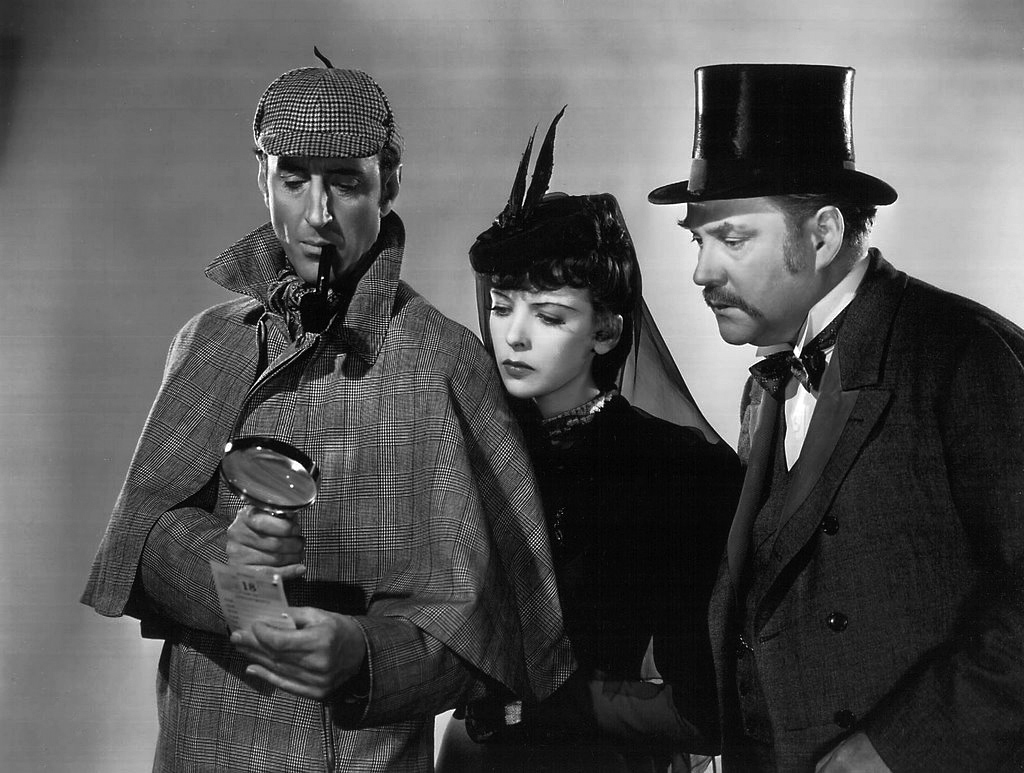
Sherlock Holmes and John Watson about to do philosophy

Let’s review what you need in your worldview in order to have a rationally grounded system of morality.

You need 5 things:

1) Objective moral values

There needs to be a way to distinguish what is good from what is bad. For example, the moral standard might specify that being kind to children is good, but torturing them for fun is bad. If the standard is purely subjective, then people could believe anything and each person would be justified in doing right in their own eyes. Even a “social contract” is just based on people’s opinions. So we need a standard that applies regardless of what people’s individual and collective opinions are.

2) Objective moral duties

Moral duties (moral obligations) refer to the actions that are obligatory based on the moral values defined in 1). Suppose we spot you 1) as an atheist. Why are you obligated to do the good thing, rather than the bad thing? To whom is this obligation owed? Why is rational for you to limit your actions based upon this obligation when it is against your self-interest? Why let other people’s expectations decide what is good for you, especially if you can avoid the consequences of their disapproval?

3) Moral accountability

Suppose we spot you 1) and 2) as an atheist. What difference does it make to you if you just go ahead and disregard your moral obligations to whomever? Is there any reward or punishment for your choice to do right or do wrong? What’s in it for you?

4) Free will

In order for agents to make free moral choices, they must be able to act or abstain from acting by exercising their free will. If there is no free will, then moral choices are impossible. If there are no moral choices, then no one can be held responsible for anything they do. If there is no moral responsibility, then there can be no praise and blame. But then it becomes impossible to praise any action as good or evil.

5) Ultimate significance

Finally, beyond the concept of reward and punishment in 3), we can also ask the question “what does it matter?”. Suppose you do live a good life and you get a reward: 1000 chocolate sundaes. And when you’ve finished eating them, you die for real and that’s the end. In other words, the reward is satisfying, but not really meaningful, ultimately. It’s hard to see how moral actions can be meaningful, ultimately, unless their consequences last on into the future.

Theism rationally grounds all 5 of these. Atheism cannot ground any of them.

Let’s take a look at #4: free will and see how atheism deals with that.

Atheism and free will?

Here’s prominent atheist Jerry Coyne’s editorial in USA Today to explain why atheists can’t ground free will.

Excerpt:

And that’s what neurobiology is telling us: Our brains are simply meat computers that, like real computers, are programmed by our genes and experiences to convert an array of inputs into a predetermined output. Recent experiments involving brain scans show that when a subject “decides” to push a button on the left or right side of a computer, the choice can be predicted by brain activity at least seven seconds before the subject is consciously aware of having made it. (These studies use crude imaging techniques based on blood flow, and I suspect that future understanding of the brain will allow us to predict many of our decisions far earlier than seven seconds in advance.) “Decisions” made like that aren’t conscious ones. And if our choices are unconscious, with some determined well before the moment we think we’ve made them, then we don’t have free will in any meaningful sense.

If you don’t have free will, then you can’t make moral choices, and you can’t be held morally responsible. No free will means no morality.

Here are some more atheists to explain how atheists view morality.

William Provine says atheists have no free will, no moral accountability and no moral significance:

Let me summarize my views on what modern evolutionary biology tells us loud and clear — and these are basically Darwin’s views. There are no gods, no purposes, and no goal-directed forces of any kind. There is no life after death. When I die, I am absolutely certain that I am going to be dead. That’s the end of me. There is no ultimate foundation for ethics, no ultimate meaning in life, and no free will for humans, either.

Richard Dawkins says atheists have no objective moral standards:

In a universe of blind physical forces and genetic replication, some people are going to get hurt, other people are going to get lucky, and you won’t find any rhyme or reason in it, or any justice. The universe that we observe has precisely the properties we should expect if there is, at bottom, no design, no purpose, no evil and no good, nothing but blind, pitiless indifference… DNA neither knows nor cares. DNA just is. And we dance to its music. (Richard Dawkins, River Out of Eden: A Darwinian View of Life (1995))

When village atheists talk about how they can be moral without God, it’s important to ask them to justify the minimum requirements for rational morality. Atheists may act inconsistently with their worldview, believing in free will, expecting praise and blame for complying with the arbitrary standards of their peer group, etc. But there is nothing more to morality on atheism that imitating the herd – at least when the herd is around to watch them. And when the herd loses its Judeo-Christian foundation – watch out. That’s when the real atheism comes out – the atheism that we’ve seen before in countries that turned their backs on God, and the moral law. When God disappears from a society, anything is permissible.