Have the rich gotten richer? Indeed they have, Bill Whittle says in his latest Afterburner — but so have the poor. As wealth expands, living standards rise, and Whittle shows just exactly how it did over the last 40 years in the US. In fact, he argues that the better comparison is not between the rich and the poor in this country, but between the American poor and the average citizen in Europe, Asia, and Africa…
The ultimate arguments are this: what exactly does “poor” mean, and what is the best way to alleviate poverty? If poor in the US is defined such that 97.7% of those households have televisions, 98% have refrigerators, almost 40% have computers, and 78% have air conditioning, then we’re defining “poverty” rather loosely — and that’s the point. The Left wants the definition as wide as possible in order to keep more Americans on public-subsidy rolls, which then incentivizes them to support larger and more intrusive government.
What is the best way to alleviate real poverty? The data Whittle presents shows that a dynamic economy based on private property and capital choice lifts the living standard for everyone. Europe went in the nanny-state direction, and now their average qualifies as our poor, at least by living-standard metrics. That’s something to keep in mind while we debate the nature of safety nets, government spending, and fiscal reform.
Kay Bailey Hutchinson has retired from the Senate, and George Will thinks that Republican candidate Ted Cruz is the man to replace her.
Excerpt:
For a conservative Texan seeking national office, it could hardly get better than this: In a recent 48-hour span, Ted Cruz, a candidate for next year’s Republican Senate nomination for the seat being vacated by Republican Kay Bailey Hutchison, was endorsed by the Club for Growth PAC, FreedomWorks PAC, talk-radio host Mark Levin and Erick Erickson of RedState.com.
For conservatives seeking reinforcements for Washington’s too-limited number of limited-government constitutionalists, it can hardly get better than this: Before he earned a Harvard law degree magna cum laude (and helped found the Harvard Latino Law Review) and clerked for Chief Justice William Rehnquist, Cruz’s senior thesis at Princeton — his thesis adviser was professor Robert George, one of contemporary conservatism’s intellectual pinups — was on the Constitution’s Ninth and 10th amendments. Then as now, Cruz argued that these amendments, properly construed, would buttress the principle that powers not enumerated are not possessed by the federal government.
Robbie George??? Robbie George??? Holy snouts! That guy is one of the top academic pro-lifers. Every Christian apologist knows about Robbie George. It’s the law! Well, it isn’t. But it should be!
I continue:
At age 14, Cruz’s father fought with rebels (including Fidel Castro) against Cuba’s dictator, Fulgencio Batista. Captured and tortured, at 18 he escaped to America with $100 sewn in his underwear. He graduated from the University of Texas and met his wife — like him, a mathematician — with whom he founded a small business processing seismic data for the oil industry.
By the time Ted Cruz was 13, he was winning speech contests sponsored by a Houston free-enterprise group that gave contestants assigned readings by Frederic Bastiat, Friedrich Hayek and Ludwig von Mises. In his early teens he traveled around Texas and out of state giving speeches. At Princeton, he finished first in the 1992 U.S. National Debate Championship and North American Debate Championship.
As Texas’s solicitor general from 2003 to 2008, Cruz submitted 70 briefs to the U.S. Supreme Court, and he has, so far, argued nine cases there. He favors school choice and personal investment accounts for a portion of individuals’ Social Security taxes. He supports the latter idea with a bow to the late Daniel Patrick Moynihan, who said such accounts enable the doorman to build wealth the way the people in the penthouse do.
Regarding immigration, Cruz, 40, demands secure borders and opposes amnesty for illegal immigrants but echoes Ronald Reagan’s praise of legal immigrants as “Americans by choice,” people who are “crazy enough” to risk everything in the fundamentally entrepreneurial act of immigrating.
He is a hard-core Republican. He has Republican experiences: legal immigrant, fought communism, studied something that required actual work, founded a small business, etc. This is the prototypical Republican!
Ted Cruz has fought to protect innocent human life. He played a leading role in several important cases, including defense of the partial-birth abortion ban, parental consent laws, and prohibiting state funds from going to abortion. These cases have all been part of the ongoing effort to ensure that every child in America receives the protection and respect he or she deserves.
Authored an amicus brief for 13 states, successfully defending the federal Partial Birth Abortion Ban Act. The ban was upheld 5-4 before the U.S. Supreme Court;
Authored an amicus brief for 18 states, successfully defending the New Hampshire parental notification law. The law was upheld 9-0 before the U.S. Supreme Court [note: this brief was awarded the Best Brief Award from the National Association of Attorneys General for U.S. Supreme Court briefs written in 2005-06];
Successfully defended Texas’s Rider 8, which prohibits state funds for groups that provide abortions, winning unanimously before the Fifth Circuit court of appeals.
Ted Cruz has worked hard in defense of traditional marriage, including his intervention in a case protecting Texas marriage laws. In addition, he has fought on the federal level to defend marriage between one man and one woman as the fundamental building block of society.
When a Beaumont state court granted a divorce to two homosexual men who had gotten a civil union in Vermont, Cruz, under the leadership of Attorney General Greg Abbott, intervened in defense of the marriage laws of the State of Texas, which successfully led to the court judgment being vacated;
Worked with Attorney General Abbott to send a letter to Congress in support of the federal Defense of Marriage Act.
He has lots of nice actions related to lots of conservative policies on that page. What a resume! Energy production, voter fraud prevention, border security, legal firearm ownership – you name it, this guy has been fighting for conservative principles. Like Michele Bachmann, (and unlike RINO Mitt Romney), he has actually tried to do pro-life and pro-marriage things. We don’t just have to take his word for it, he has the actions to prove his words. Just look at the list of issues on his page!
It’s so funny, because on that page, he says this: “You say you believe in these principles. Show me. When have you fought for conservative principles and what have you accomplished?” This is exactly the question we should be asking of any political candidate. Show. Me. The. Record.
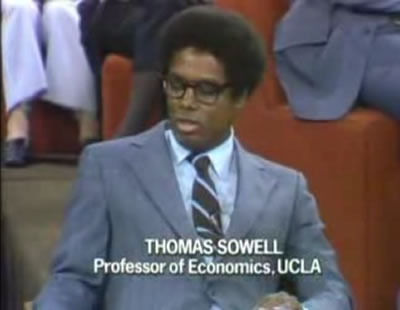
The policies of this administration make it risky to lend money, with Washington politicians coming up with one reason after another why borrowers shouldn’t have to pay it back when it is due, or perhaps not pay it all back at all. That’s called “loan modification” or various other fancy names for welshing on debts. Is it surprising that lenders have become reluctant to lend?
Private businesses have amassed record amounts of cash, which they could use to hire more people — if this administration were not generating vast amounts of uncertainty about what the costs are going to be for ObamaCare, among other unpredictable employer costs, from a government heedless or hostile toward business.
As a result, it is often cheaper or less risky for employers to work the existing employees overtime, or to hire temporary workers who are not eligible for employee benefits. But lack of money is not the problem.
Those who are true believers in the old-time Keynesian economic religion will always say that the only reason creating more money hasn’t worked is because there has not yet been enough money created. To them, if QE2 hasn’t worked, then we need QE3. And if that doesn’t work, then we will need QE4, etc.
Like most of the mistakes being made in Washington today, this dogmatic faith in government spending is something that has been tried before — and failed before.
[…]It is not politically possible for either the Federal Reserve or the Obama administration to leave the economy alone and let it recover on its own.
Both are under pressure to “do something.” If one thing doesn’t work, then they have to try something else. And if that doesn’t work, they have to come up with yet another gimmick.
All this constant experimentation by the government makes it more risky for investors to invest or employers to employ, when neither of them knows when the government’s rules of the game are going to change again. Whatever the merits or demerits of particular government policies, the uncertainty that such ever-changing policies generate can paralyze an economy today, just as it did back in the days of FDR.


 WINTERY KNIGHT