Tag Archives: Federal Budget

When all else failed, Republicans will try conservative ideas

Jennifer Rubin over at Pajamas Media writes that the GOP has had enough with the Democrats’ big-spending socialist agenda, and they are ready to try something completely different: small government conservatism. Instead of just being the party of “NO”, the GOP intends to market a series of common sense conservative policies directly to Americans.

Rubin writes:

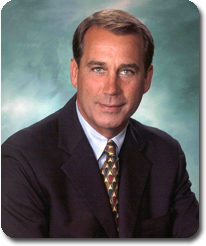
Minority Leader John Boehner has a new video out listing a number of Republican themes and promising a Republican alternative budget from reformer Rep. Paul Ryan. The themes are simple: lower taxes, restrain the growth of government, a market-based health care plan, domestic energy development, and ending bailout mania. Boehner’s video does not have many details, but its core message is clear: Republicans are tired of being the punching bag for an administration that wishes to paint itself as the only source of ideas capable of solving the country’s problems.

But I didn’t like John Boehner’s video as much as this one from Rep. Paul Ryan:

He can make the case in the House of Representatives:

And look, he can take on the leftist news media, too:

Fun! Rubin continues with some links to wonderful policy ideas:

Truth be told, for months, Republicans inside and outside of government have been throwing out ideas on how to revive the economy.  Americans for Tax Reform has ten ideas to help small business. Newt Gingrich has twelve ideas to promote job growth and recovery. And budget draftsman Paul Ryan has had “A Road Map for America’s Future” for some time. But the mainstream media is uninterested in reading through all of this, much of the conservative blogosphere is too invested in carping about the shortcomings of elected leaders and in fighting among themselves, and the president, of course, has made a habit of disparaging his opposition’s lack of creative ideas.

the task here is to capture the public’s dissatisfaction with the Democrats’ bailout and pork-laden approach to governance and remind voters that Republicans in fact do have ideas — ones that favor lower taxes and less spending.

As soon as I read this, I rushed over to the Cato Institute to see their take on Ryan’s plan, and I found an article by Michael D. Tanner.

He likes Ryan’s plan:

Health Care: Ryan would reform our employment-based insurance system by replacing the current tax exclusion for employer-provided insurance with a refundable tax credit of $2,500 for individuals, and $5,000 for families. This would encourage employers to take the money they currently spend providing health insurance and give it directly to workers, who could then use it to purchase competitive, personally owned insurance plans. That would be insurance that met their needs, not those of their bosses, and people wouldn’t lose it if they lost their jobs.

Ryan would also allow workers to shop for insurance across state lines. That would mean residents of states like New Jersey and New York, where regulation has made insurance too expensive for many people, could buy their insurance in states where it cost less. And increased competition would help bring insurance costs down for all of us.

Since I am a clean-living, never-married single guy, this would basically add a bunch of money to my take home pay. More money for donations to Reasonable Faith and the Discovery Institute! So far so good!

Tanner continues:

Social Security: Like Medicare, Social Security is hurtling toward insolvency. Rep. Ryan would preserve the program unchanged for current recipients and workers older than age 55, but he would allow younger workers to invest part of their Social Security taxes privately through personal accounts. Unlike the present system, workers would own the funds in their accounts, and when they died, they could pass any remaining funds on to their heirs.

Taxes: Rep. Ryan would radically simplify today’s hopelessly complex, cumbersome and bureaucratic tax code. He would give filers a choice: They could pay their taxes under existing law, or they could choose a new simplified code, with just two tax rates (10 percent on the first $100,000 for joint filers; $50,000 for individuals, and 25 percent above that).

Human Events has some more details on the tax policy:

The tax reform aspect of the bill is appealing, offering a simplified tax system that has only two rates and eliminates the alternative minimum tax (AMT) and the death tax. The bill also abolishes taxes on interest, capital gains and dividends among other aggressive tactics that will make a noticeable, long term change.

And this interesting quotation from Ryan:

“Our fate is not inevitable…we can change it,” he said. “I want to be the Paul Revere of fiscal policy in this country.”

Now, that two-tier tax plan was one of the reasons why I preferred for Fred Thompson in the primaries… but the rest of my party wanted style, instead of substance. You blithering toadies! Who cares how warm his belly is? He opposes taxes and abortion, you hamster-brains! Oh, well. There’s always 2012, where we can try to run Mark Sanford, Bobby Jindal or maybe even Michele Bachmann!

For more on Ryan’s plan, here is an article in the Wall Street Journaltat he wrote. (H/T Western Standard Shotgun Blog)
Obama’s federal budget: thinking beyond stage one

House Republican Leader John Boehner

Everyone who reads Thomas Sowell knows that the most important question to ask when talking about any economic proposal is “And Then What Happens?” That was the point of his one-two punch of introductory books on economics, “Basic Economics: A Citizen’s Guide to the Economy” and “Applied Economics: Thinking Beyond Stage One”. Don’t examine the intentions of the proposal. Examine the incentives it creates.

But this idea goes back even earlier to Henry Hazlitt, who wrote about it in “Economics in One Lesson”. (The link goes to a statement of the “one lesson”)

…the whole of economics can be reduced to a single lesson, and that lesson can be reduced to a single sentence:

The art of economics consists in looking not merely at the immediate but at the longer effects of any act or policy; it consists in tracing the consequences of that policy not merely for one group but for all groups.

Well, what are the long-term effects of Obama’s federal budget, for all groups?

Congressman John Boehner has a breakdown of some of the budget numbers on his blog.

The President’s budget calls for $1.4 trillion in new taxes that will affect every American.  There’s a $646 billion “cap and trade” energy tax; a $636 billion tax on income and small businesses; new  taxes on investors by raising capital gains and dividend rates; a resurrection of the death tax; and a reduction in charitable deductions which will result in $4 billion less in donations each year to charities across America.

But it’s worse than that. A while back, I wrote about how Obama wanted to discriminate against religious schools by denying them renovation funds. In the budget, he continues his anti-religious trend by de-funding private charities. This is the part that Christians who voted for Obama need to pay attention to, because this matters to us.

Boehner notes:

The proposed reduction in charitable deductions is especially troubling, since it would hurt charities at a time when American families are struggling and in need of assistance.

But remember, when government expands, the state becomes more secular. The capabilities and influence of private religious groups decreases as the state de-funds them and takes over their duties. Instead of people depending on their neighbors’ charity, they now depend on the state. Instead of letting workers decide where to give charity, workers are forced to fund secular government programs.

Boehner cites this Wall Street Journal piece:

According to the Center on Philanthropy at Indiana University, total itemized contributions from the highest income households would have dropped 4.8% — or $3.87 billion — in 2006 if the Obama policy had been in place.  That year, Americans gave $186.6 billion to charity, more than 40% from those in the highest tax bracket.  A back of the envelope calculation by the Tax Policy Center, a left-of-center think tank, estimates the Obama plan will reduce annual giving by 2%, or some $9 billion.

Before Obama’s budget, you might have given charity to a Crisis Pregnancy Center. Now that money could be spent by the government on coerced abortions abroad. Before Obama’s budget, you might have given charity to support William Lane Craig’s web site Reasonable Faith. Now that money could be spent destroying human embryos. Elections matter.

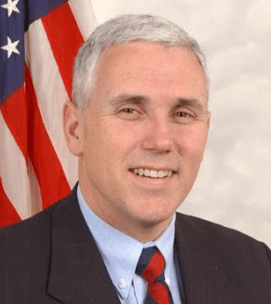
Representative Mike Pence

Congressman Mike Pence goes over the budget numbers on his blog.

The following is a summary of the Administration’s plans to increase taxes by $1.4 trillion over the next ten years.

Taxing Small Businesses: In 2010, the President’s budget will increase taxes on all taxpayers that earn more than $250,000. The majority of the burden for this $637 billion tax increase will be borne by small businesses that pay taxes as individuals. Small businesses create 60 to 80 percent of all new jobs in America. These new taxes will stifle job creation and economic growth in the midst of a recession.

Taxing Energy Consumers: The budget also proposes to raise taxes by $646 billion on consumers of oil, coal, and natural gas through a complicated “cap and tax” program that will increase the cost of energy for every American. These carbon-based fuels provide about 85% of all energy output in the U.S. This new tax will increase the cost of energy by up to $3,128 per household annually, taking more money out of the pockets of hard working families struggling to pay their bills each month.

Taxing Investors Part I: Under the President’s budget, taxes on capital gains and dividends would increase from 15 to 20 percent, increasing taxes on investors by $338 billion over ten years. These taxes would directly affect investors and shareholders, including many 401k holders and pension funds, most impacted by the declining stock market and would further discourage investments during a time when new investments are essential to jumpstarting our economy.

Taxing Charitable Giving: The budget also caps the value of itemized deductions at 28% for those with an income over $250,000 (married) and $200,000 (single), which will reduce charitable giving by $9 billion a year. The current economic crisis has severely damaged charitable organization’s ability to provide for people who are most affected by the recession, and the budget would leave these charities with at least a $9 billion deficit.

Taxing Death: The budget reinstates the death tax scheduled to be fully repealed in 2010. According to the Joint Committee on Taxation, the death tax has “broad economic effects” and one study has found that the death tax is responsible for lowering overall employment by 1.5 million jobs.

Taxing Investors Part II: The budget would more than double taxes on carried interest, increasing taxes up from the capital gains rate (15%) to the income tax rate (35%). Carried interest is interest gained on profits from investments and is generally used to pay investment fund managers based on the fund’s performance for investors. This tax hike is yet another attack on profit, private equities, and investments in the middle of a recession.

High taxes and big spending is not good for business, and therefore not good for job growth. I predict double-digit unemployment (around 12%) by year’s end as a result of this socialist budget.

Already, Gateway Pundit is reporting that Caterpillar has laid off 2,454 employees, with more layoffs on the way. Hot Air has video on the layoffs here: Obama saying that his bailout will reduce layoffs, and the CEO saying that the bailout will not prevent layoffs.

Ooops.

Assessing Obama’s 5-point plan for education reform

Found this article on Mercator Net, an Australian site that is really getting my attention with the quality and scope of their articles. This is more than just politics, it’s policy analysis. Here’s Kevin Ryan’s article on Obama’s education plan.

The plan is composed of 5 points:

He promises his administration will promote five reforms in particular: major funding for early childhood education; increased funding for and emphasis on standards and assessment; new funding to recruit, educate and reward teachers; a substantial increase in the number of the country’s charter schools and new funding for programs to expanding life-long learning with a special emphasis on all American’s having another year of education.

Obama is obviously equating more spending with better student performance, an approach that I like to analogize as throwing gasoline on a fire to put it out. The rest of the article deals with the policy implications of the 5 points. The article contains a couple of examples.

Here’s one of the examples:

Historically, it is a very modern idea that money will buy a quality education. Our current experience with funding education hardly supports such a view. Arguably the worst school system in America, the Washington DC schools spends the most dollars per pupil, US$16,650. On the other hand, Utah schools, which relative to the rest of the nation, are outstanding schools spend a third, $5,700, of what is spent in the nation’s capital.

Here’s an excerpt from the analysis of the 5 points:

Every one of the President’s five-point plan means more jobs and influence for the teachers’ union. More early childhood means more teachers and administrators, even though the effects pre-kindergarten and day care are increasingly in doubt. (Finland, whose students recently earned the highest scores in international achievement tests, doesn’t send its children to school until they are seven years old) The Obama Plan ought perhaps be called the NEA’s Full Employment Plan.

Having every America spend an additional year in a classroom sounds wonderful. It will mean a staggering increase tax dollars to fund such an increase. On the other hand, the opportunity costs for an individual student staying away from meaningful salaried work will also be huge.

The article concludes its analysis of the plan with this observation about Obama’s personal life:

As a Chicago politician and now as president, he has exercised school choice for the education of his two daughters, while, de facto, denying it to those parents without his income. The fact of the President’s stonewalling parents’ efforts to get real educational choice, plus the picture of his daughters being driven out the their tony private school, passing the orange school busses delivering Washington’s children to those failing public schools, is the unstated message of his speech.

The article does not mention that Obama himself went to expensive private schools. As Michelle Malkin says, be skeptical that his education will help anyone but teacher’s unions.

I will be tracking the education and health care plans that Obama has proposed closely, to find out who really will benefit from his big government approach.