Tag Archives: Family

The most important thing Christian parents need to focus on with their children

A family praying and reading the Bible

I know what you’re thinking – I’m going to say apologetics. But I was actually having a talk with a young women who found the arguments for God convincing, but wasn’t sure whether she was ready for a personal relationship with the God of the Bible. It got me thinking about my past and what it was about the God of the Bible that caused me to make a commitment.

If I had to say what it is that cause me to take Christianity seriously, including accepting Jesus as my Leader (more than just as my Savior), it would be the conviction that God was lining things up in my life to show himself to me. This was particularly welcome because I could see that I had not been blessed with the best situation in life to start out with.

Sean McDowell has a recent post about it, and since he is an expert in apologetics, I’m inclined to agree with him.

He writes:

In his book The Four Loves, C.S. Lewis makes a distinction between “Gift-love” and “Need-love.” As for Gift-love, he gives the example of a father who works and plans for the future well being of his family, even though he will die without seeing them benefit. As for Need-love, Lewis gives the example of a lonely and frightened child who comes to its mother’s arms for comfort and protection. Such love is neither selfish nor improper, because children are intended to have nurturing mothers, and mothers are intended to care for their kids.

According to Lewis, God’s love for mankind is entirely Gift-love: “The Father gives all He is and has to the Son. The Son gives Himself back to the Father, and gives Himself to the world, and for the world to the Father, and thus gives the world (in Himself) back to the Father too.” God does not need our love or worship. Rather, He freely loves us as an extension of His grace.

But our love for God is different. While we may be able to offer God Gift-love, our love is primarily need based. Lewis explains: “But man’s love for God, from the very nature of the case, must always be very largely, and must often be entirely, a Need-love.” We desperately need God in both this world and the next.

And then Lewis makes an additional (and helpful) distinction—while our objective need for God will never change, our awareness of that need can. And if our awareness of the need for God fades, then so may our faith. Thus, Lewis says:

There seems no reason for describing as hypocritical the short-lived piety of those whose religion fades away once they have emerged from “danger, necessity or tribulation.” Why should they not have been sincere? They were desperate and howled for help. Who wouldn’t?

In other words, if someone believes in God because of an immediate need for safety or comfort, then as soon as the danger or pain ends, so may the faith. How does this relate to students? Think about it. If a young person believes in God for social or relational needs in the family, church, or school, then when those needs fade, so will his or her faith. If belief in God fulfills some external need, then as soon as that need fades, or another venue provides satisfaction of that need, the student will likely abandon his or her faith (or minimally, have a marginalized faith).

The whole post is worth reading, because no less than Sean McDowell himself had a moment like this where he realized his own sinfulness and had to rely on Jesus for his forgiveness.

Judging from his tweets, I know that Sean is obsessed with super-heroes like Spider-Man, and so he would not be comparing himself to his peers in terms of righteousness. That sort of distance between you and Spider-Man can be really grating for boys. Inside, we feel like we are meant to be super-heroes. Many young men go into apologetics because they see it as a super-power. The problem of not measuring up is very strong for us, because we see the demands of Christianity as much greater than mere church attendance. I imagine that as Sean engaged with people using his apologetics super-power, he probably realized how difficult it was to know everything and give an answer to everyone. That’s above and beyond the standard shortcomings or pride, anger, hatred, and so on that are inside of every person.

We are not super-heroes but we need to have super-human righteousness (that is, perfect righteousness) in order to stand before our Creator and Designer. The only solution is to rely on the imputed righteousness of Jesus for our super-hero status. It is a good and healthy thing to take on Jesus as King, and to imitate him. But when we fail, we must also rely on him as Savior. And thank God the Father for that provision of salvation. And indeed, I myself think of Jesus as Savior in the moments where I am conscious of my own sin. But I need to think about him more than that, and I’ll explain how next.

In my case, I wanted to be a super hero growing up, but I knew I wasn’t coming from a family or a background that made super-heroes. I was saved in a non-Christian home where, thanks to my hands-off “parents”, I was on a very dark path to failure. In fact, I can see where I would have ended up by just looking at where my older brother is now. That disaster is what my parents, my schools, my culture, etc. produced in him, and it would have been me except for God stepping in to make himself known. I get excited about God as initiator and architect of salvation (not without my free will to trust). When God architects a divine appointment for me to use my prepared abilities in his defense or in mentoring little ones, I praise God as author of salvation. But I forget that Christ is the one who allows me to be clean enough to participate in this plan.

My ambition from small was to be a super-hero, and this later turned into great respect for people in the military, especially those who are awarded the Medal of Honor, like Michael Murphy. I want God to give me the Medal of Honor, too. But sin ruins my ambition every day. When I am called out to serve and am found faithful and competent, I need to remember that what makes me fit for service is Christ’s sacrifice on the cross. His shed blood is the cape that I put on when it is my turn to come off the bench and be who I was designed to be. It is very important to me that the God I serve is the kind of God who won’t turn away from me when I fall short.

New study: regular churchgoers and married people most satisfied with their love life

Marriage and family
Marriage and family

One of the curious things about me is that I love to read studies in order to understand what to do in order to reach a goal. My goal is to find the “best practices” that are likely to achieve good outcomes for things I am trying to do. One of the things that we should all be concerned about is having a good love life. Well, believe it or not, there are studies about that!

Consider this article from Science Daily.

Excerpt:

Regular churchgoers, married people or those who enjoy harmonious social ties are most satisfied with their love life. This also goes for people who are currently in love or who experience the commitment and sexual desire of their partners, says Félix Neto and Maria da Conceição Pinto of the Universidade do Porto in Portugal. Their findings, published in an article in Springer’s journal Applied Research in Quality of Life, look at the influences on love life satisfaction throughout one’s adult life.

The researchers associate love with the desire to enter into, maintain, or expand a close, connected, and ongoing relationship with another person. In turn, love life satisfaction is a purely subjective, overall measurement of someone’s actual enjoyment of love. To investigate the factors that influence this across various age groups, 1,284 adult Portuguese women and men ranging between 18 and 90 years old were asked to evaluate and weigh specific facets of their own love lives by using the Satisfaction With Love Life Scale.

[…]While education does not impact a person’s love life satisfaction, religious involvement does. The finding that believers and regular churchgoers are positive about their love lives is in line with previous studies that associate religious involvement with better mental health and greater satisfaction with life and sexual relationships in general.

Previously, I blogged about a study reported in USA Today, which showed that people who attend church have lower divorce rates than those who don’t attend church.

Excerpt:

It’s been proclaimed from pulpits and blogs for years — Christians divorce as much as everyone else in America.

But some scholars and family activists are questioning the oft-cited statistics, saying Christians who attend church regularly are more likely to remain wed.

[…]The various findings on religion and divorce hinge on what kind of Christians are being discussed.

Wright combed through the General Social Survey, a vast demographic study conducted by the National Opinion Research Center at the University of Chicago, and found that Christians, like adherents of other religions, have a divorce rate of about 42%. The rate among religiously unaffiliated Americans is 50%.

When Wright examined the statistics on evangelicals, he found worship attendance has a big influence on the numbers. Six in 10 evangelicals who never attend had been divorced or separated, compared to just 38% of weekly attendees.

[…]Brad Wilcox, director of the National Marriage Project at the University of Virginia, agrees there’s been some confusion.

“You do hear, both in Christian and non-Christian circles, that Christians are no different from anyone else when it comes to divorce and that is not true if you are focusing on Christians who are regular church attendees,” he said.

Wilcox’s analysis of the National Survey of Families and Households has found that Americans who attend religious services several times a month were about 35% less likely to divorce than those with no religious affiliation.

Nominal conservative Protestants, on the other hand, were 20% more likely to divorce than the religiously unaffiliated.

“There’s something about being a nominal ‘Christian’ that is linked to a lot of negative outcomes when it comes to family life,” Wilcox said.

Whenever I talk to atheists about marital satisfaction and marital stability, they always tell me these myths about how atheists divorce less, have more and better sex, and are happier in their marriages than religious people. But when I ask them for studies, they don’t have any. It’s like they believe things without any evidence at all.

In addition, atheists have lower marriage rates than religious people. That’s not surprising, since marriage only works if both people are willing to give up on pleasure in the moment in order to build something together, over the long term.

Now clearly, there are going to be atheists with great marriages that never break up. But individual cases do not overturn peer-reviewed research studies. The fact is that marriage is an institution that is soaked through with moral values and moral obligations. If you think that morality is just arbitrary customs and conventions that vary by time and place, as is logically consistent with atheism, then the odds are that you won’t be able to stay married for long – if you even get married at all.

Lori Alexander is right: serious Christian men prefer debt-free virgins without tattoos

Marriage stability vs sexual partners,(Teachman et al. JAMF, August 2010)

Christian writer Lori Alexander recently wrote a blog post (H/T Lindsay) urging Christian women to do 3 things:

  1. be a virgin before marriage
  2. be debt-free before marriage
  3. don’t get any tattoos

She also urged women to be cautious about college, because it often gets them into debt. I disagree with her a little here. I always urge young women to earn a STEM degree in college, then work a few years to pay off their loans (if any) before marrying. This is because women, like men, need to have the experience of doing something hard that they don’t “feel” like doing, in order to grow. STEM degrees teach young people that the world doesn’t revolve around them, and that their feelings don’t matter when trying to solve a problem in the real world. It’s a very useful way for women and men to break themselves out of the desire for free and easy happiness that is so common in our time.

Lori’s article drew enormous opposition from both secular and Christian sources. So far, the only people defending her are men’s rights sites, like Dalrock (Christian) and Spawny (non-Christian). Every other “Christian” blog or news site that I read disagreed her article, and argued that premarital sex was no big deal, that having debt was no big deal, and that having tattoos was no big deal.

Let’s take a look at her three points, then I’ll explain why her article is largely correct, and why she is correct about what she asserts about the criteria that godly men have for women.

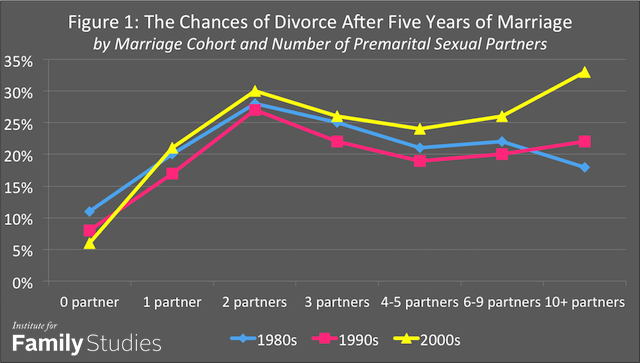
Even one non-husband premarital sex partner raises risk of divorce

Virginity

Regarding her first point, virginity is commanded by the Bible, it’s in line with peer-reviewed studies on marriage quality and stability. The reason that people find this difficult is that they want the freedom to give in to sexual desires without feeling shame. They want to believe that there is no permanent effect. It doesn’t help that parents and pastors are terrified of telling young people, and young women in particular, that promiscuity harms marital stability. Right now, the culture is drowning in feminism. Feminism tells women that the traditional male roles of provider, protector, and spiritual leader are “sexist”. The “best” men are good-looking pro-abortion bad boys. If a Christian woman is not able to think through the meaning of sex with respect to marriage enough to control herself, it seriously harms the stability of her future marriage.

Starting and Mid-Career salaries by profession (click for larger image)

Debt-free

Regarding her second point, almost everything a serious Christian man might plan to do for Christ with his marriage is impacted by finances. From education, to marriage timing, to number of children, to home ownership, early investment, to the success of children. to age of retirement. Less money means fewer choices, and less ability to counter challenges. Think of how important money for legal defense is to Christian-owned businesses who are being persecuted, for example. The reason that many people find the Bible’s teaching on stewardship difficult is that they don’t want to exercise self-control with money if they don’t feel like it. They want to waste money seeking fun and thrills, and then act like their poverty could not be avoided. Being debt-free is an indicator of practical wisdom and self-control in a woman.

Hugh Hewitt's "In, But Not Of", Chapter 9: Tattoos, Don't
Chapter 9 of Hugh Hewitt’s “In, But Not Of: A Guide to Christian Ambition”

Tattoos

Tattoos are a problem for serious Christian men for several reasons. First, they cost money and for no gain, and can even cause you losses in your career. Second, most people get them because of low self-esteem or vanity or to look rebellious or to look dangerous. None of these motivations should be acted upon by someone with a robust Christian worldview. The money could be better used on charity, or investments, etc. Women show what their priorities really are by how they spend their money and time. Show me a woman’s bookshelf, and I’ll tell you how seriously she has thought about what it means to be a Christian in all areas of life. Instead of showing me your tattoos to demonstrate your “spirituality”, show me your apologetics books, to demonstrate your intellectual engagement. And tell me how you used that information to engage in conversations with educated non-Christians to answer their challenges to your faith. That way I’ll know that you use your money to train do hard things in order to have an influence for Christ in serious, practical, effective ways. A woman who can defend her faith and discuss Christianity with non-Christians is demonstrating her ability to raise Christian children in a secular society.

A family praying and reading the Bible

The goal of marriage is to serve God

Today, young people have been taught to follow their hearts, and to deny that there is any authority or practical wisdom that should govern their decisions. They always imagine themselves to be exempt from moral rules, statistics, cause and effect, etc. They think they know better than everyone else – even though they do almost no research on their own. Every adviser who tells them to study computer science instead of creative writing is wrong. Their same-age friends know more about what causes divorces than peer-reviewed research papers. And money should be spent on skydiving and zip-lining, regardless of what financial experts like Dave Ramsey might say.

A woman who has made many mistakes cannot fix those mistakes with words. Rationalizations, evasions, and blame-shifting do not work to show that there has been real repentance. The man can only assess whether grace has caused any real re-prioritization of goals by evaluating her outward actions over a long period of time. Furthermore, if a woman who has made mistakes attacks those who correct her from Bible’s teachings on chastity, stewardship, etc., then it’s a sign that there is no real repentance.

Choosing a wife wisely doesn’t mean that Christian men treat OTHER Christian women poorly. Christian men love all the Christian women. We care for them and support them. But when a man chooses a wife, he is choosing someone who will have more influence on his ability to serve God than anyone else. In my case, the goals for my marriage involve making a difference with apologetics in the church, having many children who will receive the educations and careers they need to have an influence, influencing government to promote Christian-friendly policies, charitable giving, mentoring young Christians, modeling a good marriage to others, and having a home that can serve to host discussions about issues that matter. These things are not free – they take careful planning and execution to achieve.

Lori’s advice is  intended for men who are serious about making their marriage produce a return for God. Men who are chaste themselves. Men who accept the Bible as an authority. Men who earned STEM degrees, instead of easy nonsense degrees that don’t lead to good careers. Men who earn 6-figure salaries, who buy houses for cash, and who are on track have a 7-figure net worth by age 50. Men who made good decisions cannot risk marrying someone who hasn’t prepared for marriage. The wrong woman in the home could ruin the man’s effort to produce a marriage that gives glory to God.

Not every man intends to achieve something for God with his marriage, but those who do need to choose a woman who has demonstrated ability at doing the job. For example, if the job requires marital fidelity, then chastity is a good indicator that the woman has the necessary self-control. If the job requires frugality, and practicality, then being debt-free, having a STEM degree, and having some private sector work experience are good indicators that she’s qualified for the role. Nothing valuable in life is ever been achieved by being lazy, wild and irresponsible. Serious Christian men look for wives who have applied themselves to difficult tasks that they didn’t feel like doing, who achieved success by remaining committed to the plan, in spite of their unhappy feelings and unmet desires.

We have a problem in the church such that we aren’t serious about teaching young people to develop marriage-ready character and to make serious plans for marriage. We are teaching them to follow their hearts, and that their feelings and desires are clues about God’s will for their happiness. We are teaching them to be uncomfortable with responsibilities, expectations and obligations to others. We are teaching them not to do their own research. We are teaching them not to make practical, wise plans. We are teaching them to ATTACK those who try to get them to be serious about doing what is likely to work. This approach is not working.

My own criteria for a wife are more demanding than Lori’s. My advice there is only for serious Christian men who want their marriage to serve God.