Tag Archives: Evolution

Are the Galapagos finch beaks evidence of Darwinian evolution?

I have a key that will unlock a puzzling mystery

Jonathan Wells has an article about it at Evolution News.

It says:

When Charles Darwin visited the Galápagos Islands in 1835, he collected specimens of the local wildlife. These included some finches that he threw into bags, many of them mislabeled. Although the Galápagos finches had little impact on Darwin’s thinking (he doesn’t even mention them in The Origin of Species), biologists who studied them a century later called them “Darwin’s finches” and invented the myth that Darwin had correlated differences in the finches’ beaks with different food sources (he hadn’t). According to the myth, Darwin was inspired by the finches to formulate his theory of evolution, thoughaccording to historian of science Frank Sulloway “nothing could be further from the truth.”

In the 1970s, biologists studied a population of medium ground finches on one of the islands in great detail. When a severe drought left only large, hard-to-crack seeds, 85 percent of the birds perished. The survivors had beaks that were about 5 percent larger than the average beak size in the original population. The biologists estimated that if similar droughts occurred once every ten years, the population could become a new species in only 200 years. In a 1999 booklet defending evolution, the U.S. National Academy of Sciences called the finches “a particularly compelling example” of the origin of species.

But after the drought, birds with smaller beaks flourished again, and the average beak size of the population returned to normal. No net evolution had occurred. No matter; Darwin’s finches became an icon of evolution that is still featured in most biology textbooks.

In the 1980s, a population of large ground finches, with larger beaks than the medium ground finches, migrated to the island. When a drought in 2004-2005 again reduced the food supply, the medium and large ground finch populations both declined. But since even the largest beaks among the medium ground finches were no match for the beaks of the large ground finches, the latter pretty much monopolized the larger seeds and the former had to make do with smaller seeds. This time, the medium ground finches that survived the drought had beaks that were smaller than the average size in the original population. Biologists studying the finches argued that birds with smaller beaks were better able to eat the tiny seeds that were left after the large ground finches ate the big ones, and they concluded that this was again an example of “evolutionary change.”

[…]Wait a minute. Average beak size increased slightly during one drought, only to return to normal after the rains return. Then average beak size decreased slightly during another drought. A region of DNA is correlated with beak size. And somehow that tells us how finches evolved in the first place?

There is an important distinction to make between micro-evolution and macro-evolution. Changes within a type is micro-evolution. Evolving a new organ type or body plan is macro-evolution. There is plenty of evidence for micro-evolution, but no evidence for macro-evolution.

What needs to be proven by the Darwinists is that the same process that results in different average beak size in a population of finches after a drought can create the finches in the first place. I think that Darwinists are credulous – they believe what they want to believe because they want to believe it, even if the evidence is incredibly weak. Darwinists must demonstrate that heritable variations can result in the generation of new organ types and body plans. Changes in average beak size is not interesting. What is needed is to show how the beaks, much less the wings, evolved in the first place.

Icons of Evolution

Jonathan has actually written about a number of  misleading things that you may mind in Biology textbooks.

Here are the sections in his book “Icons of Evolution“:

  • The Miller-Urey Experiment
  • Darwin’s Tree of Life
  • Homology in Vertebrate Limbs
  • Haeckel’s Embroys
  • Archaeopteryx–The Missing Link
  • Peppered Moths
  • Darwin’s Finches
  • Four-Winged Fruit Flies
  • Fossil Horses and Directed Evolution
  • From Ape to Human: The Ultimate Icon

Dr. Wells holds a Ph.D in Molecular and Cell Biology from the University of California at Berkeley.

New study: rising oxygen levels rejected as explanation of Cambrian explosion

Christianity and the progress of science

So, just to refresh everyone, the Cambrian explosion was an event that occurred about 543 million years ago. In a very short period of time, less than 10 million years, probably 3-5 million, all of the major animal body plans emerged.

Here’s what the Cambrian explosion looks like:

Cambrian Explosion
Cambrian Explosion

The Darwinian theory says that there should be precursors to all of the new phyla that appear. But we have never been able to find any precursors. We’ve been looking in the fossil record for the slow transition from simple life to complex life that Darwin predicted, but we’ve never been able to find anything that explains the sudden emergence of the body plans in the Cambrian explosion.

There is no known naturalistic explanation for the rapid emergence of these “phyla”. But, naturalists were holding out hope that maybe a sudden rise in the level of oxygen might have “triggered” the required increase in complexity.

This is from Science Daily.

Excerpt:

Oxygen is crucial for the existence of animals on Earth. But, an increase in oxygen did not apparently lead to the rise of the first animals. New research shows that 1.4 billion years ago there was enough oxygen for animals — and yet over 800 million years went by before the first animals appeared on Earth.

Animals evolved by about 600 million years ago, which was late in Earth’s history. The late evolution of animals, and the fact that oxygen is central for animal respiration, has led to the widely promoted idea that animal evolution corresponded with a late a rise in atmospheric oxygen concentrations.

“But sufficient oxygen in itself does not seem to be enough for animals to rise. This is indicated by our studies,” say postdoc Emma Hammarlund and Professor Don Canfield, Nordic Center for Earth Evolution, University of Southern Denmark.

[…]The new study is published in the journal Proceedings of National Academy of Sciences.

[…]The results differ from other studies and raise several questions, such as: Why then did animals rise so late in Earth’s history?

“The sudden diversification of animals probably was a result of many factors. Maybe the oxygen rise had less to do with the animal revolution than we previously assumed,” says Hammarlund.

Now look here. I don’t see how a rise in oxygen level can create new body plans. Body plans are written in sequences of symbols – in proteins and DNA. I can no more believe that a rise in oxygen levels could create new animal body plans than I could believe that raising the level of oxygen in a computer lab could explain the new code that is being written by the software engineers. Body plans are information, and new body plans require new information. Information comes from software engineers – intelligent agents – not from rising oxygen levels.

In any case, the hypothesis was falsified. It isn’t the first time a naturalistic hypothesis for the Cambrian explosion was shot down (see below) and it won’t be the last.

Related posts

Atheist Jerry Coyne explains why morality is impossible for atheists

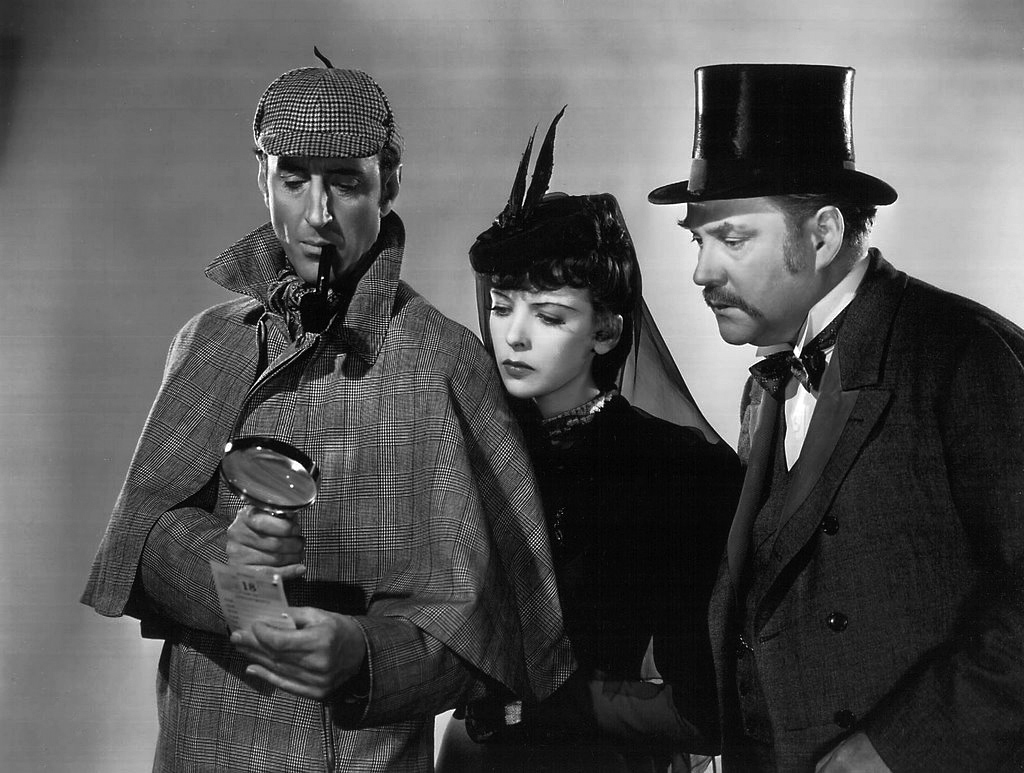
Sherlock Holmes and John Watson about to do philosophy

Let’s review what you need in your worldview in order to have a rationally grounded system of morality.

You need 5 things:

1) Objective moral values

There needs to be a way to distinguish what is good from what is bad. For example, the moral standard might specify that being kind to children is good, but torturing them for fun is bad. If the standard is purely subjective, then people could believe anything and each person would be justified in doing right in their own eyes. Even a “social contract” is just based on people’s opinions. So we need a standard that applies regardless of what people’s individual and collective opinions are.

2) Objective moral duties

Moral duties (moral obligations) refer to the actions that are obligatory based on the moral values defined in 1). Suppose we spot you 1) as an atheist. Why are you obligated to do the good thing, rather than the bad thing? To whom is this obligation owed? Why is rational for you to limit your actions based upon this obligation when it is against your self-interest? Why let other people’s expectations decide what is good for you, especially if you can avoid the consequences of their disapproval?

3) Moral accountability

Suppose we spot you 1) and 2) as an atheist. What difference does it make to you if you just go ahead and disregard your moral obligations to whomever? Is there any reward or punishment for your choice to do right or do wrong? What’s in it for you?

4) Free will

In order for agents to make free moral choices, they must be able to act or abstain from acting by exercising their free will. If there is no free will, then moral choices are impossible. If there are no moral choices, then no one can be held responsible for anything they do. If there is no moral responsibility, then there can be no praise and blame. But then it becomes impossible to praise any action as good or evil.

5) Ultimate significance

Finally, beyond the concept of reward and punishment in 3), we can also ask the question “what does it matter?”. Suppose you do live a good life and you get a reward: 1000 chocolate sundaes. And when you’ve finished eating them, you die for real and that’s the end. In other words, the reward is satisfying, but not really meaningful, ultimately. It’s hard to see how moral actions can be meaningful, ultimately, unless their consequences last on into the future.

Theism rationally grounds all 5 of these. Atheism cannot ground any of them.

Let’s take a look at #4: free will and see how atheism deals with that.

Atheism and free will?

Here’s prominent atheist Jerry Coyne’s editorial in USA Today to explain why atheists can’t ground free will.

Excerpt:

And that’s what neurobiology is telling us: Our brains are simply meat computers that, like real computers, are programmed by our genes and experiences to convert an array of inputs into a predetermined output. Recent experiments involving brain scans show that when a subject “decides” to push a button on the left or right side of a computer, the choice can be predicted by brain activity at least seven seconds before the subject is consciously aware of having made it. (These studies use crude imaging techniques based on blood flow, and I suspect that future understanding of the brain will allow us to predict many of our decisions far earlier than seven seconds in advance.) “Decisions” made like that aren’t conscious ones. And if our choices are unconscious, with some determined well before the moment we think we’ve made them, then we don’t have free will in any meaningful sense.

If you don’t have free will, then you can’t make moral choices, and you can’t be held morally responsible. No free will means no morality.

Here are some more atheists to explain how atheists view morality.

William Provine says atheists have no free will, no moral accountability and no moral significance:

Let me summarize my views on what modern evolutionary biology tells us loud and clear — and these are basically Darwin’s views. There are no gods, no purposes, and no goal-directed forces of any kind. There is no life after death. When I die, I am absolutely certain that I am going to be dead. That’s the end of me. There is no ultimate foundation for ethics, no ultimate meaning in life, and no free will for humans, either.

Richard Dawkins says atheists have no objective moral standards:

In a universe of blind physical forces and genetic replication, some people are going to get hurt, other people are going to get lucky, and you won’t find any rhyme or reason in it, or any justice. The universe that we observe has precisely the properties we should expect if there is, at bottom, no design, no purpose, no evil and no good, nothing but blind, pitiless indifference… DNA neither knows nor cares. DNA just is. And we dance to its music. (Richard Dawkins, River Out of Eden: A Darwinian View of Life (1995))

When village atheists talk about how they can be moral without God, it’s important to ask them to justify the minimum requirements for rational morality. Atheists may act inconsistently with their worldview, believing in free will, expecting praise and blame for complying with the arbitrary standards of their peer group, etc. But there is nothing more to morality on atheism that imitating the herd – at least when the herd is around to watch them. And when the herd loses its Judeo-Christian foundation – watch out. That’s when the real atheism comes out – the atheism that we’ve seen before in countries that turned their backs on God, and the moral law. When God disappears from a society, anything is permissible.