
Tag Archives: Evidence

Greg Koukl responds to cultists knocking on his door

Here’s a commentary from Greg Koukl. He talks about dealing with Mormons, and what their approach to evangelism says about them.

Here’s the problem:

When LDS missionaries knocked on my brother Dave’s door while he was working, he took off his tool belt and sat down to talk with them. When he began to press them on their case, though, they took offense. “We just came here to share our point of view and now you are trying to have an argument with us,” they said. “We’re not here to argue with people. We just want to talk about our view and our experience.” Dave pointed out that they knocked on his door for the purpose of changing his point of view. They weren’t just “sharing.”

Sometimes they’ll take another tack. When you try to offer evidence counter to their view they’ll say, “You’re persecuting us.” I have heard that as well. I’m not sure if LDS missionaries are actually taught to take that approach when challenged. Maybe they just see it modeled by their mentors, or maybe they have a persecution complex, but this is ready on their lips the minute you offer an objection to their point of view.

How do you get around that? If those young men I saw pedaled up to my house and knocked on my door, I’d want to politely set some ground rules.

And here is the ground rule for dealing with Mormons:

Here’s the way I’d introduce the first question: “Great. I’d be glad to talk to you. I just want to be clear on a couple of things before we get going. Do you think your religion is actually true, I mean really true?”

Now this is a “yes” or “no” question. Either they’ll say “yes” which is the right answer, because they do think their religion is true and that’s why they’re proselytizing or they’ll say “no,” in which case I would ask, “If you don’t think Mormonism is true, then why are you knocking at my door?” So they are probably not going to say that. They might say, “Well, it’s true for us.” Then I’m going to ask what that means. If it is just “true” for them that is, just their opinion that works for them then why should I listen? I have my own “truths” that work for me. What we are getting at is the fact that they actually believe their view about religion is right and ours is wrong. It’s not just true for them. That’s why we should change our religion and become Mormon.

Of course, that’s a politically incorrect way of putting it, and they may be uneasy having their position stated so baldly. (I had one LDS young man say, “I would never say anyone else is wrong in their religious view,” a statement he ultimately retracted after my probing questions forced him to think a little more carefully about that remark in light of his missionary efforts.) To ease the discomfort you might say, “I’m not in the least offended by that view. My religion is a missionary religion, too. We think we’re right and others are wrong in so far as they differ from our beliefs. I just want us both to be clear on our positions. We both think we’re right and the other is mistaken. That’s all.”

We continue. “Okay, so you believe your view is correct. That’s why you’re here. If my view is different from yours, then mine is incorrect and I should change my view if I’m a reasonable person and become a Mormon. So what this discussion is about is who’s view is true, yours or mine. Is that fair? Great — come on in.”

I can remember like yesterday my encounters with Mormons in high school. I told them about the evidences for the Big Bang, and then asked them to square their view of eternally existing matter with the Big Bang. And they replied “we don’t really try to make our religion fit with what science shows”. Later on when I started working, I got into a debate with another Mormon. I noticed she was reading the Book of Mormon. So I asked her why she had chosen Mormonism out of all the other faiths. And she said “because it makes me feel good”. It just doesn’t seem like Mormonism is a religion that you arrive at after some careful investigation, because none of the ones I’ve know or read seem to be able to defend it to me when I ask them.

Here’s another commentary from Greg Koukl. In this one, he gets a visit from Jehovah’s Witnesses. They come to his door, ring the door bell and ask him if he wants some of their apocalyptic literature.

So Greg says this:

“I’m a Christian pastor,” I said, directing my comments to the younger convert, the one less influenced by the Watchtower organization and more open to another viewpoint.  “In fact, I’m studying theology right now.”  I held up the tome I’d been reading, Turretin’s 18th century Institutes of Eclentic Theology.

“It’s clear we have some differences, including the vital issue of the identity of Jesus.  I believe what John teaches in John 1:3, that Jesus is the uncreated Creator.  This makes Him God.”

And they run away!

“You’re entitled to your opinion and we’re entitled to ours,”  was all she said.  No question, no challenge, no theological rejoinder.  This was a dismissal, not a response.  She turned on her heels and started for the next house–young cadet in tow–in search of more vulnerable game.

Greg reflects:

Third, they don’t take the issue of truth very seriously.  Religious evangelism is a persuasive enterprise; the evangelist is trying to change people’s minds.  He thinks his view is true and other views are false.  He also thinks the difference matters.  Follow the truth, you win; follow a lie, you lose–big time.  A commitment to truth (as opposed to a commitment to an organization) means an openness to refining one’s own views, increasing the accuracy in understanding, constantly searching for more precision in thinking.

A challenger could always turn out to be a blessing in disguise, an ally instead of an enemy.  An evangelist who’s convinced of his view would want to hear the very best arguments against it.  One of two things is going to happen.

He may discover that some objections to his view are good ones.  The rebuttal helps him make adjustments and corrections in his thinking, refining his knowledge of the truth.  Or it may turn out he’s on solid ground after all.  Developing answers to the toughest arguments against him strengthens both his witness and his own confidence in his religion.

But my visitors didn’t wait to hear my thoughts to inform their own beliefs, so they might know the truth more accurately.  They didn’t pause to hear the reasons I reject the Watchtower’s authority, so they might try to refute me and gain confidence in their own view.

I remember my own days of dealing with Jehovah’s Witnesses who were trying to convert a member of my family. They came back to our door and I stepped outside the house and shut the door behind me. Then I asked them about the failed predictions for the end of the world that their organization had made, especially 1914, 1975 and so forth. They had never heard of the predictions that their organization had made, so I showed them the printouts I had made. Then I asked them why I should trust their organization to tell me the truth, if they were trying to make these prophetic statements and failing so miserably. They left and never came back.
Responding to the objection: who are you to say?

This article is from Greg Koukl of Stand to Reason.

Excerpt:

Today I was thinking about a concept that came up in conversation, a challenge raised to Christians who offer their point of view. The challenge is: “Who are you to say?”

This question it comes up in one of two contexts. The first one is secular. You’ll hear it quite frequently when another person disagrees with your point of view, especially a moral one. They immediately challenge you with, “Who are you to say?”

Taken at face value this is an attack on you . It’s a response that focuses on the person, not the argument. Instead of dealing with a person’s point, you attack the individual in some way. This is called an ad hominem , a type of informal fallacy. An ad hominem might be when you say, “You jerk. You’re just stupid,” or, “What do you know?” or something of that order. It’s a form of name calling.

There are lots of sophisticated ways people use ad hominem that slip by us in addition to the obvious ones just mentioned. “Who are you to say?” is one of them. It’s a challenge addressed to the person and not the argument.

The challenge comes up in a second context, when Christians with positions of visibility challenge those inside the church who disagree with them. They sometimes refer to their attackers as “heresy hunters” to disparage them. (Some, I guess, might have called me that, though I don’t know specifically if I’ve been labeled in that way.) This is the same kind of comment as, “Who are you to say? Who made you in charge? What right do you have to challenge my doctrine?”

This question is completely irrelevant. Here’s why.

Click here for the rest.

I had an answer to this question before I read his article, and now I have a much better understanding of this objection. That’s what you get from Greg Koukl – clear thinking Christianity.

J. Gresham Machen on the relationship between knowledge and faith

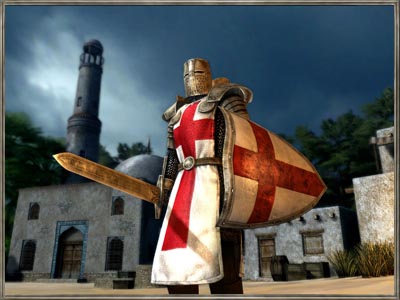
Christian scholarship is the new Crusade

Most of my readers are familiar with William Lane Craig and J.P. Moreland – they are two of the most famous Christian apologists out operating today. They both cite a person named “J. Gresham Machen”, and today I want to tell you more about this person.

William Lane Craig quotes him in this chapel address to Wheaton College students. (I am adding some context to Craig’s citation: Craig started the quote at “False ideas…” and ended it at “…harmless delusion”)

We are all agreed that at least one great function of the Church is the conversion of individual men. The missionary movement is the great religious movement of our day. Now it is perfectly true that men must be brought to Christ one by one. There are no labor-saving devices in evangelism. It is all hard-work.

And yet it would be a great mistake to suppose that all men are equally well prepared to receive the gospel. It is true that the decisive thing is the regenerative power of God. That can overcome all lack of preparation, and the absence of that makes even the best preparation useless. But as a matter of fact God usually exerts that power in connection with certain prior conditions of the human mind, and it should be ours to create, so far as we can, with the help of God, those favorable conditions for the reception of the gospel. False ideas are the greatest obstacles to the reception of the gospel. We may preach with all the fervor of a reformer and yet succeed only in winning a straggler here and there, if we permit the whole collective thought of the nation or of the world to be controlled by ideas which, by the resistless force of logic, prevent Christianity from being regarded as anything more than a harmless delusion.

I was actually in the audience when he gave this speech – I was there for the philosophy conference.

So Craig is citing J. Gresham Machen. What about Moreland?

Here’s an essay that Moreland wrote for Christian Leadership Ministries, the faculty arm of Campus Crusade for Christ.

He cites he exact same passage by J. Gresham Machen, as well, only he starts his citation at “God usually exerts…”.

So that’s Craig and Moreland. Citing the same passage, by the same writer. Interesting.

So who is this J. Gresham Machen anyway?

Here’s the bio:

J. Gresham Machen was professor of New Testament at Princeton Theological Seminary before becoming one of the founders of Westminster Theological Seminary and the Orthodox Presbyterian Church (OPC). This address on The Scientific Preparation of the Minister, was delivered September 20, 1912, at the opening of the one hundred and first session of Princeton Theological Seminary, and in substance (previously) at a meeting of the Presbyterian Ministers’ Association of Philadelphia, May 20, 1912. It was first published in The Princeton Theological Review, Vol. 11, 1913.

And Craig and Moreland are citing this essay, which you can read online for free. If you want to know what makes the Wintery Knight the Wintery Knight, this is the place to find your answers.

The essay was published in the Princeton Theological Review in 1913. The essay explains what the church should have done, but didn’t. And the only way out of the mess we are in now is to go back to the fork in the road and make the right turn this time.

You really need to read the essays I linked to by Craig, Moreland and Machen. It will open your eyes and show you how there can be so many Christians attending church on Sundays, and yet they have so little impact on the culture as a whole.

Autobiographical note

When I was a young man, I was exposed to the writings of William Lane Craig, J.P. Moreland, Walter L. Bradley, Greg Koukl, Hugh Ross, and Philip E. Johnson – and they changed my life. It really does make a big difference to young people when they are engaged at an intellectual level, with logic and evidence. I had no other connections to the church at that time. No one in my family, and none of my friends, were religiously inclined. I had no felt needs for religion. But approaching Christianity as knowledge worked for me. Before my conversion, I never attended the feminized church. And I was never told that Christianity was opposed to logic and evidence. Imagine my surprise to see what was being taught in the church compared to the public, testable claims to knowledge in the Bible, and the public, testable claims to knowledge that Christians scholars made in their books.

This passage from R.C. Sproul and John Gerstner in their otherwise useless book on Christian apologetics was formative for me, as well:

Secularism, on the other hand, is a post-Christian phenomenon carrying in its baggage, a conscious rejection of the Christian world view. It supplants the Christian consensus with its own structured view of reality. Less barbaric on the surface than paganism, secularism adopts a benevolent paternalism toward the not yet enlightened Christian who continues the practice of an anachronistic faith. Wearing a benign mask, the secularist loudly proclaims his commitment to religious tolerance on behalf of those weak-minded souls who still cannot bear to face a hostile, or worse, an indifferent universe, without the narcotic effect of ecllesiastical opium. The church is safe from vicious persecution at the hands of the secularist, as educated people have finished with stake-burning circuses and torture racks. No martyr’s blood is shed in the secularist West – so long as the church knows her place and remains quietly at peace on her modern reservation. Let the babes pray and sing and read their Bibles, continuing steadfast in their intellectual retardation; the church’s extinction will come not by sword of pillory, but by the quiet death of irrelevance. It will pass away with a whimper not a bang. But let the church step off the reservation, let her penetrate once more the culture of the day and the Janus-face of secularism will change from benign smile to savage snarl.

This is the problem we are facing today. We have changed Christianity into “faith” instead of KNOWLEDGE.