Tag Archives: Energy

American Spectator praises Australia’s bold new conservative leader

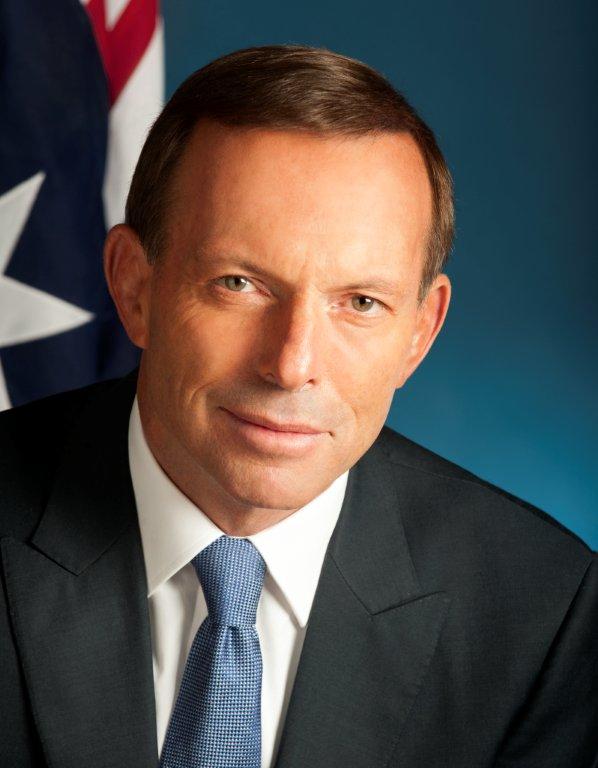
Tony Abbott, Prime Minister of Australia

Well, I think we can get some encouragement from this article from the American Spectator.

Let’s take a look at his policies and appointments:

On economic policy, his government has moved in the opposite direction of those who favor Dodd-Frank-like behemoth approaches to the financial industry. Instead it’s opted to simplify regulation. As the minister responsible for the reform bluntly pointed out, “no amount of legislation will ever be a guarantee against another Storm Financial.” Indeed it’s often excessive regulation that creates opportunities for financial shenanigans by industry insiders.

Regarding the welfare state, Abbott’s minister for Social Security, Kevin Andrews (another conservative politician-thinker), has announced a major overhaul of a welfare system that was starting to drift in a distinctly European-direction. Predictably the left are up in arms. But so too are those rent-seeking Australian businesses who now find themselves dealing with a government uninterested in subsidizing them. That’s nothing, however, to the fury that greeted Abbott’s disbanding of the climate-change bureaucracy established by the preceding Labor government.

[…]The first sign of Abbott’s seriousness about obstructing the left’s long march through the institutions was his government’s appointment of the policy-director of the center-right Institute of Public Affairs to the nation’s Human Rights Commission. This was widely seen as the beginning of an effort to re-balance an organization long criticized as monolithically left-wing. Since then Abbott has indicated that major changes are coming to the ABC: Australia’s government-funded institutional — and ideological — equivalent of the BBC.

[…]Along the same lines, Abbott’s education minister, Christopher Pyne, has initiated a review of the national curriculum implemented by the previous government. A moment’s glance at the curriculum’s treatment of history soon illustrates the extent to which it seeks to downplay Australia’s indisputably Western heritage. In the words of Sydney’s Cardinal George Pell, “Europe, Britain and the United States are mentioned 76 times, while Asia is referred to on more than 200 occasions.” This disparity is odd because although Australia is certainly in Asia, no objective observer could say that Australia is “of” Asia. Moreover, while Australian students learn about “Gaia” and other deep-green fantasies in grade 9, many Australian universities find they need to put the same students through remedial English classes once they begin college.

Then there are Abbott’s initial steps on the international stage. Take, for instance, his recent remarks at Davos. Much of the address was devoted to pushing a strong free trade agenda and insisting that governments should let business do what it does best: promote lasting economic growth. “After all,” Abbott said, “government doesn’t create wealth; people do, when they run profitable businesses.”

In the same speech, however, Abbott made the conservative point that economic prosperity and freedom can’t be sustained in a value-neutral world. Nor did Abbott shy away from relentlessly pressing one of the most important moral arguments for free trade articulated long ago by Adam Smith: that economic freedom, combined with the right institutions, radically reduces poverty faster than any other approach. “No country,” Abbott added, “has ever taxed or subsidized its way to prosperity.”

All in all, the address added up to a solid integration of sound economics with conservative principles. That’s what makes Abbott different from, say, Canada’s Stephen Harper or Spain’s Mariano Rajoy. Abbott happily engages in the indispensable task of moral suasion in favor of conservative positions. What’s more, he’s quite good at it. With his rare combination of plain-speaking and intellectual substance, Abbott makes conservative ideas sound, well, reasonable to the average voter.

Now, I personally thought that prime minister Stephen Harper of Canada was the best leader of any nation out there, but I had not been following Australian politics as much as I should be, and now I think I’ll give the crown to Abbott. He seems to have a good fusionist view that integrates economic policy and social policy, and that makes him better than Harper, in my view. I would like to see Abbott flex his muscles on foreign policy, as well. Something to look forward to.

State department: not building the Keystone XL pipeline could increase greenhouse gas emissions

From CNS News.

Excerpt:

Not building the 875-mile Keystone XL Pipeline could result in the release of up to 42 percent more greenhouse gases than would be released by building it, according to the State Department.

Not building the pipeline “is unlikely to significantly impact the rate of extraction in the [Canadian] oil sands or the continued demand for heavy crude oil at refineries in the United States,” the department noted in a long-awaited environmental report released January 31st.

But the “No Build” option is likely to result in an increased number of oil spills, six more deaths annually, and up to 42 percent higher greenhouse gas (GHG) emissions, the State Department concluded.

The proposed 36-inch pipeline would transport 830,000 barrels of crude oil each day from western Canada through the Bakken oil fields of Montana and South Dakota before connecting to an existing pipeline in Nebraska on its way to Gulf Coast refineries.

The project will create an estimated 42,100 jobs and add $3.4 billion to the U.S. economy.

This report follows last week’s report showing that the pipeline would have no major environmental impact.

Excerpt:

The long-delayed Keystone XL oil pipeline cleared a major hurdle toward approval Friday, a serious blow to environmentalists’ hopes that President Barack Obama will block the controversial project running more than 1,000 miles from Canada through the heart of the U.S.

The State Department reported no major environmental objections to the proposed $7 billion pipeline, which has become a symbol of the political debate over climate change. Republicans and some oil- and gas-producing states in the U.S. — as well as Canada’s minister of natural resources — cheered the report, but it further rankled environmentalists already at odds with Obama and his energy policy.

Now the State Department is one of the most liberal departments in the government. Unfortunately, this has not appeased the great climate science experts in Hollywood, who donate so much money to Democrat election campaigns. So long as the money keeps flowing from the high school drop-out celebrities, don’t expect this pipeline to get built. For the Democrats, it’s all about staying in power.

Related Posts

Dr. Robin Collins explains two kinds of cosmic fine-tuning

I was busy working my way through “Debating Christian Theism“, a book published by Oxford University Press in August 2013. It features about 20 different topics from science, to philosophy, to history. For each topic, there is an essay by a world-class scholar in favor, and one opposed. So you get both sides of many interesting issues, at a very advanced level. The section on cosmic fine-tuning features a chapter written by Dr. Robin Collins.

About Robin Collins:

Robin Collins (PhD, University of Notre Dame, 1993), is professor of philosophy at Messiah College, Grantham, PA specializing in the area of science and religion.  He has written over twenty-five articles and book chapters on a wide range of topics, such as the fine-tuning of the cosmos as evidence for the existence of God, evolution and original sin, the Doctrine of Atonement, Asian religions and Christianity, and Bohm’s theory of quantum mechanics.  Some of his most recent articles/book chapters are “Philosophy of Science and Religion” in The Oxford Handbook of Science and Religion, “Divine Action and Evolution” in The Oxford Handbook of Philosophical Theology (2009)  “The Multiverse Hypothesis: A Theistic Perspective,” in Universe or Multiverse? (Cambridge University Press), and “God and the Laws of Nature,” in Theism or Naturalism: New Philosophical Perspectives (Oxford University Press, forthcoming).  He recently received a grant from the John Templeton Foundation to finish a book that presents the case for design based on physics and cosmology,  tentatively entitled The Well-Tempered Universe: God, Cosmic Fine-tuning, and the Laws of Nature.

The fine-tuning argument

Here’s a short article where Collins gives TWO examples of the fine-tuning. He is very modest in his argument, merely asserting that the fine-tuning is more compatible with theism than it is with atheism.

Excerpt:

Science is commonly thought to have undercut belief in God. As Nobel Prize winning physicist Steven Weinberg famously remarked, “the more we find out about the universe, the more meaningless it all seems.” Yet, the discoveries of modern physics and cosmology in the last 50 years have shown that the structure of the universe is set in an extraordinarily precise way for the existence of life; if its structure were slightly different, even by an extraordinarily small degree, life would not be possible. In many people’s minds, the most straightforward explanation of this remarkable fine-tuning is some sort of divine purpose behind our universe.

This fine-tuning falls into three categories: the fine-tuning of the laws of nature, the fine-tuning of the constants of physics, and the fine-tuning of the initial conditions of the universe. “Fine-tuning of the laws of nature” refers to the fact that if the universe did not have precisely the right combination of laws, complex intelligent life would be impossible. If there were no universal attractive force (law of gravity), for example, matter would be dispersed throughout the universe and the energy sources (such as stars) needed for life would not exist. Without the strong nuclear force that binds protons and neutrons together in the nucleus, there would not be any atoms with an atomic number greater than hydrogen, and hence no complex molecules needed for life. And without the Pauli-exclusion principle, all electrons would fall to the lowest orbital of an atom, undercutting the kind of complex chemistry that life requires.

Some fundamental physical numbers governing the structure of the universe—called the constants of physics—also must fall into an exceedingly narrow range for life to exist. For example, many have estimated that the cosmological constant—a fundamental number that governs the expansion rate of empty space—must be precisely set to one part in 10120 in order for life to occur; if it were too large, the universe would have expanded too rapidly for galaxies and stars to form, and if it were too small, the universe would have collapsed back on itself. As Stephen Hawking wrote in his book A Brief History of Time, “The remarkable fact is that the values of these numbers [i.e. the constants of physics] seem to have been very finely adjusted to make possible the development of life.” Finally, the initial distribution of mass energy at the time of the big bang must have an enormously special configuration for life to occur, which Cambridge University mathematical physicist Roger Penrose has calculated to be on the order of one part in 1010123. This is an unimaginably small number.

I know what you’re thinking: How do we know that non-Christian scientists acknowledge the fine-tuning of gravity in the way that Collins describes?

Well, the New Scientist actually talks about the fine-tuning of the force of gravity. And they’re not Christians.

Excerpt:

The feebleness of gravity is something we should be grateful for. If it were a tiny bit stronger, none of us would be here to scoff at its puny nature.

The moment of the universe‘s birth created both matter and an expanding space-time in which this matter could exist. While gravity pulled the matter together, the expansion of space drew particles of matter apart – and the further apart they drifted, the weaker their mutual attraction became.

It turns out that the struggle between these two was balanced on a knife-edge. If the expansion of space had overwhelmed the pull of gravity in the newborn universe, stars, galaxies and humans would never have been able to form. If, on the other hand, gravity had been much stronger, stars and galaxies might have formed, but they would have quickly collapsed in on themselves and each other. What’s more, the gravitational distortion of space-time would have folded up the universe in a big crunch. Our cosmic history could have been over by now.

Only the middle ground, where the expansion and the gravitational strength balance to within 1 part in 1015 at 1 second after the big bang, allows life to form.

Here’s a very long paper by Collins on the fine-tuning argument, where he answers several objections to the argument, including the multiverse/many-universe hypothesis. I normally make fun of the multiverse, (= the Flying Spaghetti Monster), but it actually does deserve a reasonable, fair response. (Unless Jerry asks, then it’s Flying Spaghetti Monster all the way).