Tag Archives: Emotions

Are Christians treated fairly by the public schools that their taxes pay for?

A group of feminists protesting people they disagree with

I was having a conversation about education with a co-worker this week who has four kids in public schools. She and her husband both work and pay taxes for these schools. Although the public schools are pretty good in our area, I still wish that Christians didn’t have to  pay taxes to fund these schools. It’s not just that they typically underperform. They also discriminate against Christians.

Here’s an example reported by Christian Headlines, and tweeted by the Family Research Council – a conservative think tank:

A Montana high school violated federal law and practiced religious discrimination last month when it revoked the Fellowship of Christian Athletes’ status as a school-sponsored club, a religious liberty legal group says.

Alliance Defending Freedom sent a letter Dec. 11 to Bozeman High School, threatening a lawsuit if the school does not reinstate FCA as a school-sponsored club by Dec. 18.

The school revoked FCA’s official status in November after several students raised concerns over the national organization’s stance on the definition of marriage. FCA’s statement of faith says “God instituted marriage between one man and one woman as the foundation of the family and the basic structure of human society.” FCA’s adult leaders are required to support the statement and a code of conduct that affirms a biblical definition of sexuality.

“Your actions violate federal law under the Equal Access Act and ignore 30-year Supreme Court precedent protecting the rights of religious student clubs to be treated equally with other student clubs,” the ADF letter says. “Refusing to recognize FCA as a school-sponsored club because of its religious mission and denying it the same privileges as other non-curricular clubs is illegal.”

The high school currently recognizes 34 clubs, including the Environmental Awareness Club, the Sexuality and Gender Alliance, the Human Rights Club and the Key Club. FCA, though, is not one of them.

Because of its unofficial status, the local FCA is prohibited from making schoolwide announcements or meeting on campus during non-instructional hours. Additionally, its flyers must bear a yellow sticker (which signifies that it is not school-sponsored).

This is what happens when American voters think that it’s a good idea to shovel taxpayer money into the hands of public school teachers instead of keeping their money and spending it on an education for their children that doesn’t violate their basic human rights.

Now, what I found interesting was how the school found out about the club’s “offense”.

The article says:

As Christian Headlines previously reported, the controversy began when four female students raised concerns over the national organization’s position on marriage. The students said the national organization was guilty of discriminating against LGBT individuals.

So, the club was sanctioned by the public school because four anti-Christian girls were offended that a group of Christians had Christian views on a moral issues. These girls oppose freedom of religion, and they oppose freedom of association. Why? Because they are offended, and their feelings matter more than the basic human  rights of other people.

Just to be clear, that definition of marriage comes right out of the words of Jesus.

Matthew 19:1-11:

1 Now when Jesus had finished these sayings, he went away from Galilee and entered the region of Judea beyond the Jordan.

2 And large crowds followed him, and he healed them there.

3 And Pharisees came up to him and tested him by asking, “Is it lawful to divorce one’s wife for any cause?”

4 He answered, “Have you not read that he who created them from the beginning made them male and female,

5 and said, ‘Therefore a man shall leave his father and his mother and hold fast to his wife, and the two shall become one flesh’?

6 So they are no longer two but one flesh. What therefore God has joined together, let not man separate.”

7 They said to him, “Why then did Moses command one to give a certificate of divorce and to send her away?”

8 He said to them, “Because of your hardness of heart Moses allowed you to divorce your wives, but from the beginning it was not so.

9 And I say to you: whoever divorces his wife, except for sexual immorality, and marries another, commits adultery.”

10 The disciples said to him, “If such is the case of a man with his wife, it is better not to marry.”

11 But he said to them, “Not everyone can receive this saying, but only those to whom it is given.

To be a Christian, minimally, is to be a follower of Jesus Christ. That means that we accept what Jesus teaches, on whatever he teaches about. We don’t overturn the teachings of Jesus in order to make people who are rebelling against God feel better about their rebellion. It is central to the Christian worldview that Christians care more about what God thinks of them than what non-Christians think of them.

Bible study: responsibilities and obligations in Philippians 1-4

Bible study that hits the spot

Here are some parts of Philippians that speak to an issue that I think is a problem today for many Christians – self-centeredness.

Philippians 2 talks about the importance of not being self-centered, but instead being focused on the needs of others.

Phil 2:1-8:

2 Therefore if there is any encouragement in Christ, if there is any consolation of love, if there is any fellowship of the Spirit, if any affection and compassion,2 make my joy complete by being of the same mind, maintaining the same love, united in spirit, intent on one purpose. 3 Do nothing from selfishness or empty conceit, but with humility of mind regard one another as more important than yourselves; 4 do not merely look out for your own personal interests, but also for the interests of others. 5 Have this attitude in yourselves which was also in Christ Jesus, 6 who, although He existed in the form of God, did not regard equality with God a thing to be grasped, 7 but emptied Himself, taking the form of a bond-servant, and being made in the likeness of men. 8 Being found in appearance as a man, He humbled Himself by becoming obedient to the point of death, even death on a cross.

And Phil 2:19-23:

19 But I hope in the Lord Jesus to send Timothy to you shortly, so that I also may be encouraged when I learn of your condition. 20 For I have no one else of kindred spirit who will genuinely be concerned for your welfare. 21 For they all seek after their own interests, not those of Christ Jesus. 22 But you know of his proven worth, that he served with me in the furtherance of the gospel like a child serving his father.

Nothing very complicated here, it’s important to look out for the interests of others and to be concerned about their welfare.

I think it’s a good idea to be practical about partnering with people, and instead of just speaking words like “I care” or “I’ll pray for you”, try to find out what needs to be done and do it. Solve the problem with actions. Prayer is important, of course, because so much of what happens to that other person is in God’s hands. You aren’t going to be around all the time, but God is, so talk to him about the other person and what you’re planning to do. But you must also do your part, and do it intelligently and effectively. (The New Testament book of James talks about the need to accompany good wishes with actions that solve the problem)

Also don’t just stand back and give orders while feeling righteous. Many people want to influence others by just quoting the Bible, putting on pious airs, or using mere words. This doesn’t work in any area of the real world. Instead, take a more active approach. Think about the problem that is preventing someone from serving Christ well, and then act to make it easier for the person to do the right thing.

I’ve been able to achieve good success by praying AND performing supportive actions, rather than by issuing commands or prayer alone. For example, I’ve gotten people to transition for useless careers into IT careers, got them to pay off their high-interest debts, got them to switch their majors from something useless to something useful, got them to move on from an abortion or a divorce, got them to not commit suicide, listened to their health problems, helped them pass the GRE or the GMAT or something, got them to take a better job, got them to do a public speaking engagement, taught them how to debate their atheist brother, sponsored a Christian speaker at their university, helped them recover from bad parents, etc. It’s pretty fun to partner with people to further the Kingdom, but if you just leave it at prayer and giving orders, you won’t get the same good results.

All it takes to move from prayer alone to prayer and solutions is to think about other people like a puzzle, and then sacrifice some of your time or your money to build them up. I have a lot of experience doing this, but it’s not something that I learned to do in church. Church doesn’t teach you to be practical about following the Bible intelligently and with your own initiative. It’s set up to favor emotions (singing) and passive listening. To be active, you have to think about the Bible from a higher strategic level. Think about who Jesus is, and then follow his example. Don’t read the Bible in order to just feel happy or sound pious, instead try to make a plan to really DO good. Your goal should be to achieve a result in line with Jesus’ character and goals.

By the way, part of being able to partner with other people to solve problems with actions is being capable yourself. Don’t study stupid things in college. Don’t get into debt. Don’t try to fill your days with fun and thrills. Instead, study hard things, get hard jobs in the private sector, save your money, and learn useful skills. That way, you’ll be able to do more when something more than passive words or feelings is needed. One time, a woman I knew severely hurt her hand at work. She has OCD, and liked to clean the stairs in her house every day. She has a furry cat who drops fur everywhere. So she was lugging this heavy vacuum up and down the stairs every day. And spending a lot of time ironing with an old-fashioned heavy iron, too. So I bought her a hand vacuum and a fancy new iron. With the extra time she saved, she was able to do more reading, public speaking and helping others. Doing Christianity well means making yourself strong, so you can look after others with more than just feelings, piety and prayers.

Philippians is my favorite book of the Bible. And the most important thing about Philippians is that it’s good to be focused on other people, and not on ourselves, and to think of the interests of others, not our own interests. It’s good to get down into the weeds of other people’s problems, and act to self-sacrificially to solve them. Read the book (it’s short) and see if there are not people who you could partner with by helping them solve problems so they can be more effective.

A lesson about men for marriage-minded women from the movie “High Noon”

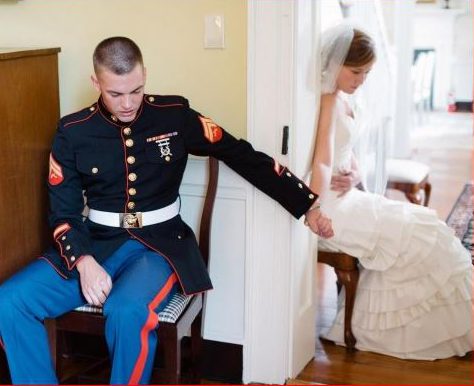
Marine prays with his wife on their wedding day

One of my favorite movies for explaining the differences between men and women is “High Noon” (1952).

Here’s the summary from IMDB:

Former marshal Will Kane (Gary Cooper) is preparing to leave the small town of Hadleyville, New Mexico, with his new bride, Amy (Grace Kelly), when he learns that local criminal Frank Miller has been set free and is coming to seek revenge on the marshal who turned him in. When he starts recruiting deputies to fight Miller, Kane is discouraged to find that the people of Hadleyville turn cowardly when the time comes for a showdown, and he must face Miller and his cronies alone.

The main theme of the film concerns Amy’s decision to break her wedding vows the very day that she makes them. She tells her new husband that he must bow to her will, and give up his male role as protector. When he explains his reasons for standing his ground to her practically (Miller will hunt them down) and morally (he has a duty protect the town), she dismisses both. She tells him that if he doesn’t run away from Miller and his gang with her, that she will get on the train and leave town by herself.

The intro of film shows the member’s of Miller’s gang assembling, and the words of the song explain the central conflict between husband and wife:

Here’s the part of the lyrics we care about:

The noonday train will bring Frank Miller.
If I’m a man I must be brave
And I must face that deadly killer
Or lie a coward, a craven coward,
Or lie a coward in my grave.

O to be torn ‘twixt love and duty!
S’posin’ I lose my fair-haired beauty!
Look at that big hand move along
Nearin’ high noon.

He made a vow while in State’s Prison,
Vow’d it would be my life or his’n
I’m not afraid of death, but O,
What will I do if you leave me?

Do not forsake me O my darlin’
You made that promise when we wed.
Do not forsake me O my darlin’
Although you’re grievin’, I can’t be leavin’
Until I shoot Frank Miller dead.

What’s interesting is that his new wife Amy apparently does not understand the meaning of wedding vows or the natural roles of good men as protectors of the weak, and fighters against evil. Although she vowed to stick by him and help him, the minute anything threatening appears that makes her feel unhappy, she abandons her vows and abandons her man. Let’s break down her mistakes now, using actual conversations from the movie.

First, she doesn’t understand or respect the man she married as a man:

Kane: [while riding out of town] It’s no good. I’ve got to go back, Amy.

Amy: Why?

Kane: This is crazy. I haven’t even got any guns.

Amy: Then let’s go on. Hurry.

Kane: No, that’s what I’ve been thinkin’. They’re making me run. I’ve never run from anybody before.

Amy: I don’t understand any of this.

Kane: [after looking at his vest watch] Well, I haven’t got time to tell ya.

Amy: Then don’t go back, Will.

Kane: I’ve got to. That’s the whole thing. [He turns the buggy around and rides back into town]

Her feelings and her desires for the world to be a happy place for her are so strong that they cloud her judgment.

Second, she doesn’t understand the threat posed by evil men:

More:

Kane: I sent a man up five years ago for murder. He was supposed to hang. But up North, they commuted it to life and now he’s free. I don’t know how. Anyway, it looks like he’s coming back.

Amy: I still don’t understand.

Kane: He was always wild and kind of crazy. He’ll probably make trouble.

Amy: But that’s no concern of yours, not anymore.

Kane: I’m the one who sent him up.

Amy: Well, that was part of your job. That’s finished now. They’ve got a new marshal.

Kane: He won’t be here until tomorrow. Seems to me I’ve got to stay. Anyway, I’m the same man with or without this. [He pins his badge on his vest]

Amy: Oh, that isn’t so.

Kane: I expect he’ll come lookin’ for me. Three of his old bunch are waiting at the depot.

Amy: That’s exactly why we ought to go.

Kane: They’ll just come after us, four of ’em, and we’d be all alone on the prairie.

Amy: We’ve got an hour.

Kane: What’s an hour?…What’s a hundred miles? We’d never be able to keep that store, Amy. They’d come after us and we’d have to run again, as long as we live.

Amy: No we wouldn’t, not if they didn’t know where to find us. Oh Will! Will, I’m begging you, please let’s go.

Kane: I can’t.

Amy: Don’t try to be a hero. You don’t have to be a hero, not for me.

Kane: I’m not trying to be a hero. If you think I like this, you’re crazy.

Instead of recognizing how her feelings are deceiving her about the threat and trusting her husband, she tries to force him to accept her mistaken view of reality by threatening to abandon him.

One of Kane’s ex-girlfriends has a talk with Amy, which helps her to understand who Kane is, and what is expected of her:

Amy: That man downstairs, the clerk, he said things about you and Will. I’ve been trying to understand why he wouldn’t go with me, and now all I can think of is that it’s got to be because of you…Let him go, he still has a chance. Let him go.

Helen: He isn’t staying for me. I haven’t spoken to him for a year – until today. I am leaving on the same train you are…What kind of woman are you? How can you leave him like this? Does the sound of guns frighten you that much?

Amy: I’ve heard guns. My father and my brother were killed by guns. They were on the right side but that didn’t help them any when the shooting started. My brother was nineteen. I watched him die. That’s when I became a Quaker. I don’t care who’s right or who’s wrong. There’s got to be some better way for people to live. Will knows how I feel about it.

Helen: I hate this town. I always hated it – to be a Mexican woman in a town like this.

Amy: I understand.

Helen: You do? That’s good. I don’t understand you. No matter what you say. If Kane was my man, I’d never leave him like this. I’d get a gun. I’d fight.

Amy: Why don’t you?

Helen: He is not my man. He’s yours.

Helen understands the need for a wife to stand by her man. But Amy’s response to evil is to shut her eyes and focus on feeling good and being happy. Notice that her “better way” is unspecified – it’s just a feeling she has that pacificism and no-violence will somehow “work” to stop evil. But in reality, pacifism is not a “better way” of dealing with evil – it does not work. Her pacifist response not only does not make evil go away, it actually encourages more evil. Weakness emboldens evildoers, and laying down your arms provokes them to do more evil. Will Kane knows this, but she won’t listen to him.

You can watch the final gunfight here, as well as Amy’s final decision:

So, this is why I really recommend this movie as a discussion-starter when you like a girl and are thinking of marrying her. It clarifies the essential problem with many young women today not being ready for marriage. To be fair, most women come around to respect their husbands and his different roles after they get married. However, the risk of divorce is so dangerous that it makes sense to bring it up for discussion before the marriage happens. Marriage is supposed to be an engine to serve God, and the success of that enterprise cannot be left to chance. You can’t just rely on the fact that she says the words of the vow, you have to check to see if she has a habit of keeping her promises when it goes against her own self-interest.

Ask yourself: Who are you, as a man? And does your woman accept that you have obligations to stand up to evil and do good ? Will she support you in your battle against evil, or will the marriage just be about her feelings and desires? I would especially beware of women who think that God is speaking to them through their feelings and desires. Look at her friends: are they practical and successful? Or are they irresponsible, unaccountable and reckless? Look at her father: does he have a plan for her, and does he lead her to be practical, frugal and hard-working? If you are not going to get an ally and a supporter in a wife, then you will not be able to serve God well, as a married man. Think about it.