Tag Archives: Election

Health premiums up $4,865 since Obama promised to lower them $2,500

Should we pick a candidate based on our emotional response to his confidence?

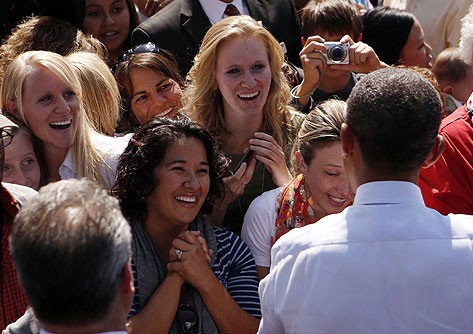
Barack Obama had a lot of confident words and personal charisma during his campaign speeches in 2008. Many young people want to believe that their positive emotional reaction to confident words will somehow make plans “work out”. But can you really compel the universe to give you goodies just by having positive feelings? Does your emotional response to handsome looks and confident words mean that somehow the universe will give you what you desire?

I want to use this article from Investors Business Daily to illustrate the importance of not picking a President based on confident words and personal charisma.

It says:

Employer-based health insurance premiums climbed 4.2% this year for family plans, according to an annual Kaiser Family Foundation report. That’s up from 3% the year before.

Since 2008, average family premiums have climbed a total of $4,865.

The White House cheered the news, saying it was a sign of continued slow growth in premium costs.

[…]”We will start,” Obama said back in 2008, “by reducing premiums by as much as $2,500 per family.”

That $2,500 figure was Obama’s mantra on health care. You can watch the video if you don’t believe it.

And Obama wasn’t talking about government subsidized insurance or expanding Medicaid or anything like that. He specifically focused on employer provided health care.

For “people who already have insurance, and the employers who are providing it,” he said at one campaign event, “we will work to lower your premiums by up to $2,500 per family.”

Let’s watch the video. I want everyone to see how confident a clown can sound when he lies about being able to solve problems that he knows nothing about.

He had no record of achievement in this area. None, Zero, Zip. And the same goes for his claims about keeping your doctor, keeping your health care plan, and so on.

But America voted to elect him. There were a lot of voters who did not want to think too hard about economics in 2008, and again in 2012. They did not want to have to put in any work to study the achievements of the candidate in the area of health care policy, to see if he had actually done anything to reduce health care premiums. They had a problem: health care costs are too high. A charismatic clown stepped forward and made their fears go away with confident talk. They made a decision to believe him. They wanted to believe that serious problems could be solved by the words of a charismatic clown, so that they would then be saved from having to evaluate the records of the candidates, to see which of them had put in place policies that had solved similar problems in their past. That’s too much work for the American voter. Better to just pick the one who seems to be able to solve the problem based on surface qualities, like confident words that produce emotional reactions. The universe will adjust because we have a positive attitude.

This is an attitude that no practical engineer like me could take. It’s a recipe for disaster. Nothing important in life – from designing e-commerce web sites, to developing cures to sickness, to constructing jet fighters – is conducted in such a stupid, emotional way.

Now, I’m pretty angry that two of my candidates, Rick Perry and Scott Walker, are out of the 2016 election. And why? Because an unqualified leftist clown is ruining the process with brash, insulting confident talk. Again, we are dealing with a clown who has no record of actual problem-solving in the areas where the American people need problems solved.

This article from Investors Business Daily explains:

Which of these two sounds like someone on an ego trip, someone content to let the Middle East go up in flames and, like Barack Obama, someone overconfident in his own abilities to persuade others? And which sounds like he would practice the sober, principled foreign policy of Ronald Reagan as president?

Yet it is the latter, Scott Walker, who was just forced to drop out of the race, the reality TV star front-runner having sucked so much air out of the room that it was becoming impossible to survive. He laudably called it his patriotic duty to depart, thus consolidating the opposition to Trump.

Walker is one of the most successful governors in the country, having brought unemployment down from over 8% to about 4.5%, and turning Big Labor’s targeting him for destruction into three successive electoral victories in a blue state.

A week ago a governor with a longer record of accomplishment, in a state Americans are flocking to for its vibrant jobs-rich economy, was also forced to drop out. In doing so, Rick Perry of Texas made a statement affirming his rock-ribbed commitment to free-market principles, traditional values and a strong America on the world stage.

Perry and Walker are both leaders of substance. Eight years of the inexperienced, self-obsessed Obama had many Republicans concerned about 2016 looking to the governors’ mansions for someone with a proven track record of actually solving crises and reversing misguided big-government policies. These two may have been the most accomplished figures in the nation in that regard. How is it that they are early dropouts?

Political journalists are having a ball dissecting the ins and outs of fundraising and styles of campaign managing to explain Walker and Perry’s exit. But there is no ignoring the 800-pound loudmouth in the room.

In Donald Trump, the left’s caricature of conservatism — the bombast, the misogyny, the hype-above-substance — is defeating the real thing.

I do hiring interviews in my company. I always make sure to ask questions to test the claims on the candidate’s resume. It’s not hard to find out whether a person knows how to do what they claim to know how to do. Many of the people who show up for interviews try to finesse their way through engineering questions with confident talk, and emotional appeals. We don’t hire them. Why is it so hard for the American people to understand what is at stake here?
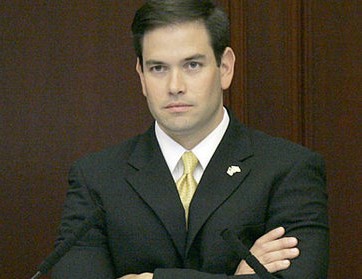
Scott Walker campaign leaders sign up with Marco Rubio

Florida Senator Marco Rubio

Story from the Weekly Standard.

Excerpt:

Four members of Scott Walker’s Iowa campaign are now aligning with Marco Rubio. With the Wisconsin governor exiting the presidential race Monday, the Walker campaign’s network of activist supporters in the early primary states are free to endorse other candidates.

In Iowa, three county chairs and a university student leader are now supporting Rubio, the Florida senator. Melody Slater of Lee County, Matt Giese of Dubuque County, and Alan Ostergren of Muscatine County, have all shifted their support for Rubio.

“While I am saddened by the news of Governor Walker’s campaign ending, I am proud to join Senator Rubio’s team. His conservative, positive vision is exactly what this country needs,” said Slater in a statement to THE WEEKLY STANDARD.

“Senator Rubio has the vision and ideas that are needed to lead us into the new American century,” said Giese. “I’m looking forward to serving on Senator Rubio’s Iowa team.”

“Marco’s optimistic vision for the 21st century is exactly what our country needs. In the coming months, I look forward to helping Marco win the Iowa caucuses,” said Ostergren.

In addition, Brittany Gaura, an Iowa State University student who co-chaired Iowa Students for Walker, is also endorsing Rubio. “As much as I support Governor Walker, I know it is a critical time in this nation’s history. I am supporting Marco for the positive vision and strong leadership he will bring to America’s future,” she said.

Rubio has also picked up support from the chairman of Walker’s New Hampshire campaign as well as an early supporter of Walker’s in South Carolina.

Well, many of you sent me messages on Facebook and Twitter about the sad news that Walker, my #2 candidate, had dropped out of the race. This is a huge loss for America, since Walker’s plan to reform public sector labor unions would have changed the direction of the country, given how labor unions donate so much money to Democrat candidates.

So where do I stand now? My favorite candidate is Bobby Jindal, then Ted Cruz, then Marco Rubio. That’s strictly on conservative principles and conservative achievements. Rubio is the most electable, but I am angry with him for flirting with amnesty. However, he has repudiated his involvement with that movement. I would be happy with any of these three candidates.

These candidates are not conservative enough for me

These candidates are Republicans, but they are too liberal on fiscal issues:

  • Jeb Bush (amnesty)
  • John Kasich (Medicare funding, big government)
  • Mike Huckabee (he is a tax and spend Democrat)
  • RIck Santorum (not conservative enough)
  • Christie (DREAM act, Medicare funding)
  • Carly Fiorina (DREAM act, illegal immigration)

These candidates are Republicans, but they are too liberal on social issues:

  • Rand Paul (crime, abortion & marriage)
  • Jeb Bush (way too liberal on gay marriage and gay activism)
  • Carly Fiorina (civil unions, religious liberty)
  • Chris Christie (marriage)
  • Lindsay Graham (liberal on abortion, marriage, SCOTUS judges)
  • John Kasich (abortion, marriage and religious liberty)
  • Carly Fiorina (soft on crime)

These candidates are Republicans, but they are too liberal on national security and foreign policy issues:

  • Rand Paul (naive isolationist, wrong on every national security and foreign policy issue there is)
  • John Kasich (he is John Kerry)
  • Ben Carson (Iraq war opposition)
  • Chris Christie (has a national security problem re: Muslims and CAIR, Iraq war opposition)

Donald Trump is not a Republican, he is too liberal on every single issue there is, regardless of his clown-talk. His unstable shrieking is just a baby squealing for attention, understanding nothing and with no awareness of facts. He is a nobody, and should not even be running for President.

Scott Walker’s plan to reform public sector unions

Political contributions to public sector unions
Political contributions to public sector unions (click for larger image)

(Source: OpenSecrets.org)

I am not sure if I really explained the importance of Scott Walker’s plan to rein in public sector unions in my last post.

Basically, public sector unions generate a lot of money from forced collection of union dues, and they turn around and use that money to donate to politicians who are in favor of growing government. Unions want bigger government, because they make more money if government grows.

This Wall Street Journal article explains that unions donate mostly to Democrats.

Excerpt:

Corporations and their employees… tend to spread their donations fairly evenly between the two major parties, unlike unions, which overwhelmingly assist Democrats. In 2008, Democrats received 55% of the $2 billion contributed by corporate PACs and company employees, according to the Center for Responsive Politics. Labor unions were responsible for $75 million in political donations, with 92% going to Democrats.

So how much money are we talking about?

Total political contributions in 2014 election cycle
Total political contributions in 2014 election cycle (click for larger image)

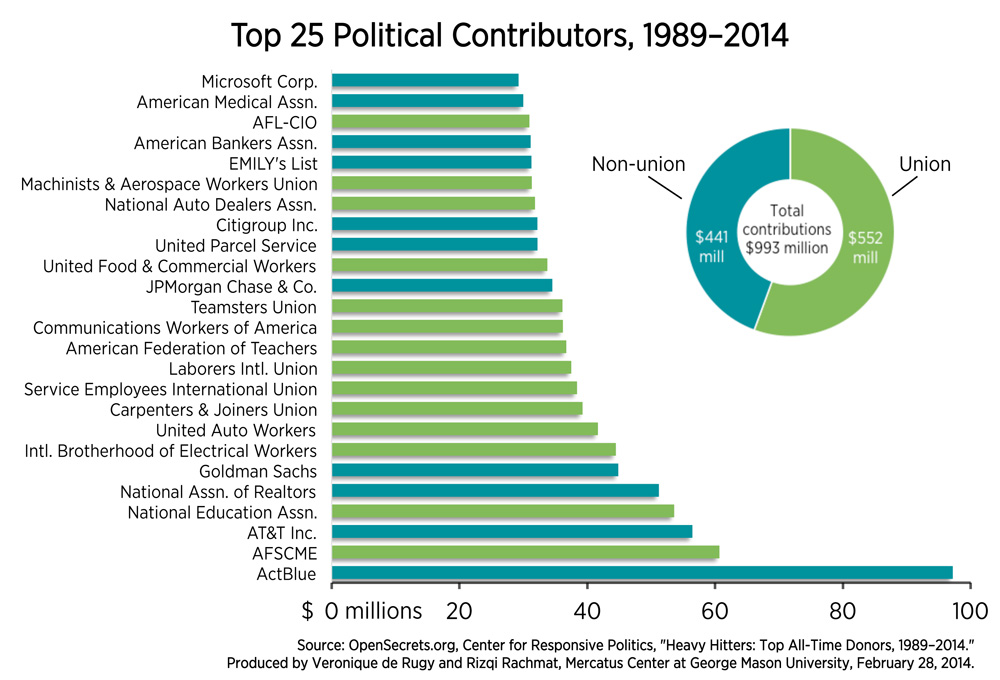
To see how much unions control government, take a look at this story from National Review, written by economist Veronique to Rugy.

It says:

  • The top campaign donor of the last 25 years is ActBlue, an online political-action committee dedicated to raising funds for Democrats. ActBlue’s political contributions, which total close to $100 million, are even more impressive when one realizes that it was only launched in 2004. That’s $100 million in ten years.
  • Fourteen labor unions were among the top 25 political campaign contributors.
  • Three public-sector unions were among the 14 labor groups: the American Federation of State, County, and Municipal Employees; the National Education Association; and the American Federation of Teachers. Their combined contributions amount to $150 million, or 15 percent of the top 25’s approximately $1 billion in donations since 1989.
  • Public- and private-sector unions contributed 55.6 percent — $552 million — of the top 25’s contributions.

Where does the money go? The Daily Caller notes:

“Nearly all of labor’s 2012 donations to candidates and parties – 90 percent – went to Democrats,” the report from CRP concluded. “Public sector unions, which include employees at all levels of government, donated $14.7 million to Democrats in 2014.”

But someone has a plan to do something about this: Scott Walker.

This Investors Business Daily article by economist Veronique de Rugy explains what he would do to the unions if elected President in 2016.

She writes:

Wisconsin Gov. Scott Walker just proposed a plan to overhaul the country’s labor laws, called “My Plan to Give Power to the People, Not the Union Bosses.”

It would do that by expanding employee choice and holding unions accountable to their members.

One of the main underlying themes of the Republican presidential hopeful’s private-sector reforms is transferring power and decision-making from unions to their members.

For instance, the plan would guarantee employees’ rights by strengthening secret-ballot elections. Under current law, unions have ways to work around the protections, making such elections less than secret. The change would protect workers from retaliation by not disclosing their choices to unions during workplace elections.

Though federal laws outlaw extortion, the Supreme Court has ruled that they usually do not apply to unions. Walker’s plan would change that to protect workers from threats, violence and extortion from unions.

Similarly, his reforms would protect whistleblowers who report wrongdoing on the part of a union from being fired or discriminated against.

[…][Public sector unions]… also make the government less effective and more expensive.

That’s why a President Walker would work with Congress to prohibit public employee unions altogether. Meanwhile, he would implement taxpayer and paycheck protections.

As Heritage Foundation labor economist James Sherk explained for National Review, “Walker proposes cracking down on the use of ‘union time’ — that is, allowing federal employees to work for their unions at taxpayer expense.

“He also wants to stop unions from using federal resources to collect the portion of dues that they spend on political causes and lobbying.”

Walker’s plan also would establish a nationwide right-to-work law, making voluntary union dues the default option for all private- and public-sector workers. It would give workers the freedom to choose whether they want to be in a union or not.

States that want to take this freedom away from their workers would have to affirmatively vote to opt out of right-to-work status.

[…]The Walker plan includes many more reforms, such as a repeal of the Davis-Bacon wage controls, which alone could save taxpayers nearly $13 billion over the next 10 years. If implemented, it would be a giant step toward freeing businesses, employers, workers and taxpayers from the incredible burden imposed on them by federal labor laws and union bosses.

Why should we believe that he’ll really do it? Well, unlike some of the talker candidates, Walker has already done it in his state. And it worked – a $3.6 billion dollar deficit was erased.

If you are concerned about the growth of government, and all that that entails, e.g. – higher taxes, massive spending, bloated welfare state, huge levels of corruption, government waste, abortion, gay marriage, etc – then you should know that all of that is driven by the political donations of unions.

And I don’t want anyone to think that union workers are the same as union bosses. In Wisconsin, as soon as the union workers got the right to work without having the pay union dues, the vast majority of them chose not to pay union dues.