
Tag Archives: Economist

526 economists, including 5 Nobel prize winners, grade Romney and Obama plans

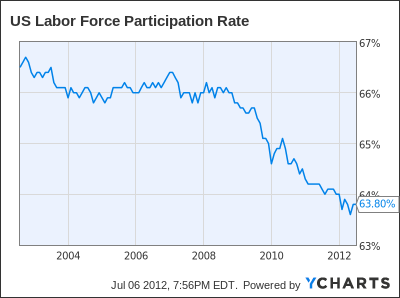
Labor Force Participation Rate

From the Daily Caller:

The 526 economists — including Nobel laureates Gary Becker, Robert Lucas, Robert Mundell, Edward Prescott, and Myron Scholes — point to six facets of Romney’s economic approach that they see as beneficial to future economic success.

  • Reduce marginal tax rates on business and wage incomes and broaden the tax base to increase investment, jobs, and living standards.
  • End the exploding federal debt by controlling the growth of spending so federal spending does not exceed 20 percent of the economy.
  • Restructure regulation to end “too big to fail,” improve credit availability to entrepreneurs and small businesses, and increase regulatory accountability, and ensure that all regulations pass rigorous benefit-cost tests.
  • Improve our Social Security and Medicare programs by reducing their growth to sustainable levels, ensuring their viability over the long term, and protecting those in or near retirement.
  • Reform our healthcare system to harness market forces and thereby reduce costs and increase quality, empowering patients and doctors, rather than the federal bureaucracy.
  • Promote energy policies that increase domestic production, enlarge the use of all western hemisphere resources, encourage the use of new technologies, end wasteful subsidies, and rely more on market forces and less on government planners.

Seven of the signatories are from Harvard University and five from Columbia University — two of President Barack Obama’s alma maters.

The economists’ statement of support pillories Obama’s economic record, claiming that his expansion of the federal government has resulted in “anemic economic recovery and high unemployment,” which will continue if his future plans are implemented.

Among the Obama policies with which the 526 economists take issue include:

  • Relied on short-term “stimulus” programs, which provided little sustainable lift to the economy, and enacted and proposed significant tax increases for all Americans.
  • Offered no plan to reduce federal spending and stop the growth of the debt-to-GDP ratio.
  • Failed to propose Social Security reform and offered a Medicare proposal that relies on a panel of bureaucrats to set prices, quantities, and qualities of healthcare services.
  • Favored a large expansion of economic regulation across many sectors, with little regard for proper cost-benefit analysis and with a disturbing degree of favoritism toward special interests.
  • Enacted health care legislation that centralizes health care decisions and increases the power of the federal bureaucracy to impose one-size-fits-all solutions on patients and doctors, and creates greater incentives for waste.
  • Favored expansion of one-size-fits-all federal rulemaking, with an erosion of the ability of state and local governments to make decisions appropriate for their particular circumstances.

We can’t afford four more years of incompetence and failure. We need to ask ourselves what economists like Thomas Sowell and Walter Williams would do. And they wouldn’t give Obama four more years. We need a change.

What would happen if Paul Ryan headed the Budget committee?

r

Rep. Paul Ryan
Rep. Paul Ryan

Politico has a profile of Paul Ryan and discusses his policy ideas.

Excerpt:

Ryan will easily win a seventh term in this swing district. But as this budget wonk is poised to take command of the Budget Committee chairmanship in a Republican House, he’s going to have to navigate factions of no-compromise conservatives and angry post-election liberals if he expects to find a Goldilocks-type solution on the federal budget.

Ryan stands to be the most important player in what may be the most consequential budget debate since the government shutdown of 1995. He is perhaps the only Republican in Congress who seems able to negotiate with both John Boehner and Barack Obama, but he still has to prove that his legendary budget expertise can be translated into real action if he’s granted the power of the Budget Committee gavel.

[…]His critics concede that Ryan is the federal official who has offered the most detailed plan — titled the “Roadmap” — that is currently on the table. Democratic budget experts have begun to measure his approach and his skills, but they voice uncertainty over whether they can do business with him.

“Because of Ryan’s open and engaging personality and intelligence, people like to deal with him. But it’s unclear whether he can reach agreement on big contentious budget issues with people on the other side of the aisle who have strong philosophical differences with him,” said Bob Greenstein, executive director of the liberal-leaning Center on Budget and Policy Priorities. “Will he be willing, despite the radical nature of his proposals, to work out significant compromises in the next two years? We shall see.”

[…]“Paul is more of a detail guy,” said Mike Sommers, policy director for Minority Leader John Boehner. “The road map takes on big issues in a serious way. It is a logical progression of his work. He is dealing in depth with the leading issue of the day.”

Former Sen. Bob Kasten (R-Wis.), who hired Ryan immediately after his 1992 graduation from Miami (Ohio) University, remains a huge fan. “His road map is the real thing on where we need to go. Even Democrats who criticize him respect Paul Ryan for having the courage to show what needs to be done.” Although many of its details may not survive, Kasten said, “the road map will become overarching in the emphasis on reducing spending in the next two years.”

Asked about Ryan’s deal-making skills, he added, “Obama will have to make a decision. If he continues with his Keynesian policies, it will be a nightmare. … Paul doesn’t want to blow up the government. He wants to see it work in a fiscally responsible way.”

As an undergraduate, Ryan majored in economics and he hoped to pursue further studies in economic modeling, notably on currency forecasting. But his job with Kasten led to staff positions with the late Rep. Jack Kemp (R-N.Y.) at Empower America and then with Sam Brownback of Kansas in both the House and the Senate. He returned to Wisconsin in 1998 to run for an open House seat and was elected at age 28 with an impressive 57 percent win.

If the Republicans take the House, he should be given the Budget Committee gavel.

Fiscally conservative Canada campaigns against global bank tax

Canadian Prime Minister Stephen Harper

Story from Breitbart.

Excerpt:

Canada will “resist” a bank tax, Industry Minister Tony Clement said Tuesday as ministers fanned out across the world to raise opposition to the proposal for avoiding another financial crisis.

“Canada is, and will remain, opposed to a tax that would penalize financial institutions that remained strong and prosperous while many of the world’s banks failed,” Clement told a press conference with Foreign Minister Lawrence Cannon.

“We will resist the bank tax here at home and we seek to convince other heads of government of the virtue of our position,” he said as senior ministers echoed his message in Mumbai, Beijing and Washington.

Attempts to reach international agreement on coordinated bank taxes at last month’s G20 and IMF meetings ran aground.

Nations including Canada and Brazil, whose banking sectors emerged largely unscathed from the financial crisis, objected to the plan, favoring higher capital reserve requirements instead.

[…]Clement said the bank tax would “encourage risky behavior” if it is used to create a bank bailout fund and “reward bad behavior” of those institutions responsible for the recent financial crisis in the first place.

As well, it would “unduly burden” Canadian banks and put them at a “competitive disadvantage” to other financial institutions.

“This tax would reach into consumers’ pockets and punish our financial institutions which have taken precautions to avoid the very turmoil that is afflicting other parts of the globe,” Clement lamented.

Stephen Harper is a fiscal conservative. He knows that low interest rates are bad, so he created tax-free savings accounts to get people to work and save their money. And he knows that people who buy houses need to be able to pay for them, and his banking policies reflect that. There is no Democrat-sponsored “Community Reinvestment Act” in Canada to allow the socialist mafia (ACORN) to pressure private banks into making risky loans. And there are no Democrats taking political contributions while blocking attempts to investigate Fannie Mae and Freddie Mac. And there are no bank bailouts!

The Conservative Party of Canada keeps its banking sector squeaky clean. They even plan to cut spending! And the Canadian people support fiscal conservatism. That’s why they aren’t facing the mess we are facing. And they have lower unemployment, too – 8.1% compared to our 9.9%. Canada is kicking our tails! How can this be? How did they manage to elect an economist, while we are stuck with this perpetually-bowing flibbertigibbet and his legions of bloviating boffins, each more corrupt and incompetent than the last? Democrats have no real-life experience! They just had rich parents!

Look at this article from the Financial Post.

Excerpt:

“In Canada, there were no taxpayer bailouts of financial institutions, so we believe there is no justification for levies on banks and financial institutions,” Harper said at a news conference following meetings with European Commission President Jose Manuel Barroso and European Council President Herman Van Rompuy.

[…]Canada and the EU are in the midst of negotiating an ambitious trade deal. The Comprehensive Economic and Trade Agreement (CETA) was launched at the 2009 Canada-EU summit and to date, three rounds of negotiations have taken place. There are at least two more to go over the next year.

The deal will give Canada greater access to the markets of the EU’s member countries and will strengthen an economic relationship that is already worth $75-billion in trade. The EU is Canada’s second-largest trading partner after the United States and is also Canada’s second-largest source of direct foreign investment, putting $162-billion into Canada in 2009.

This is grown-up fiscal policy. Government should stay out of the mortgage-lending industry, and sign as many free-trade deals as possible. The exact opposite of what the Obama administration is doing.