Tag Archives: Crime

Conservative Christian Tony Abbott wins majority in Australia

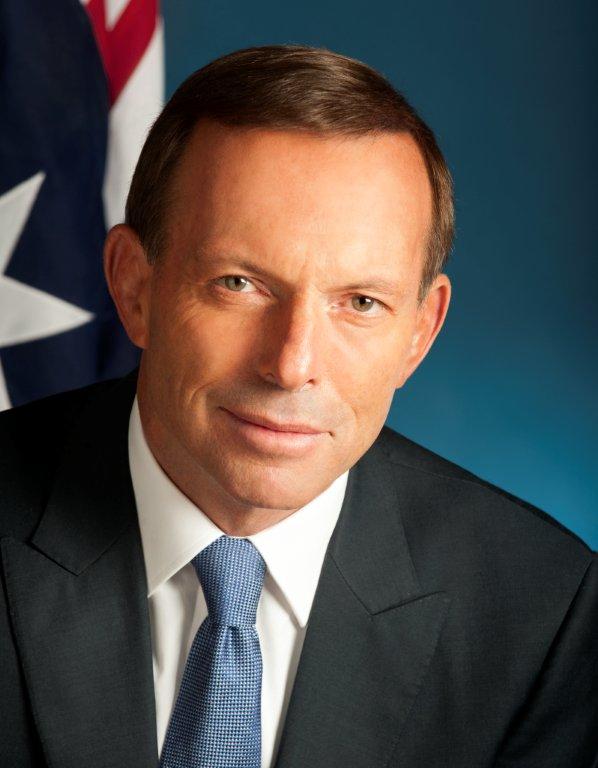
Tony Abbott, future Prime Minister of Australia

Timothy Stanley of the UK Telegraph reports that Australia has elected a Stephen Harper of their own.

Excerpt:

Tony Abbott has won the Australian election – a blow not only to the Australian Labor Party but to Left-wingers everywhere who presumed that he was too “Neanderthal” to win. Well, us Neanderthals will be having a barbie tonight and sculling some beers to celebrate. “Good on yer, mate!”

Abbott won for two reasons. First, the Australian Labor Party is going through a long-term identity crisis. The ALP was once the party of the working man (and Sheila) but in recent years it’s succumbed to the worst aspects of factional politics, becoming a magnet for liberal pressure groups desperate for their slice of the taxpayers’ pie. The party contained plenty of factions in the past but it always managed to steer a sensible middle course between them – so while it was the ALP in the 1970s that established Australia as an outward-looking, Pacific power it was also the ALP in the 1980s that recognised the need for economic reform and rejected protectionism. It’s the party of both Gough Whitlam and Les Patterson.

However, in recent years the Left gained an ascendance over the Right that undid that delicate balance. Under Gillard and Rudd, the ALP “bought” off Australia’s metropolitan elites by embracing issues like gay marriage and the green agenda – the latter threatening the livelihoods of ordinary Australians trying to drill, mine and log their way through the global recession. It invested in silly, expensive projects that turned into giveaways to client companies and unions. And it displayed all of its internal bickering in public, reducing national politics to student union shenanigans. The ALP is now severed from the base that it once represented so well, leaving the ordinary blokes and blokesses looking around for something new.

[…]On the quiet, Abbott has picked up some of the politics that the ALP abandoned. He is said to be a devotee of BA Santamaria, the Catholic thinker who tried to build a Christian Democratic movement that combined social justice and social conservatism. Abbott’s conservatism is plain to see: he rejects doctrinaire environmentalism and favours a far freer and competitive market than the ALP’s clients would ever tolerate. But he also has Santamaria’s concern for social justice: Abbott wants to introduce a scheme that would pay for parental leave to encourage mothers and fathers not only to spend more time with their children but to have more of them, too. Dig beneath that hard man image and you’ll find a politician who is considerably softer and complex. Whereas some Western conservatives seem to be entirely motivated by the desire to win (Romney, Cameron), Abbott has a philosophy and – almost unique in our materialist age – a theology.

This puts him in the George W Bush, Stephen Harper compassionate conservative tradition – the tradition that tends to attract the most votes. For while British Tories might look at Abbott’s politics and language and sneer, they would do well to remember this important distinction. Tony Abbott wins elections; David Cameron has yet to do even that.

Congratulations, Conservative Coalition!

My previous post on Tony Abbott is here, if you want to know more about his policies.

Sociologist Rodney Stark discusses whether religion is good for society

Mysterious Chris S. posted this interview with Baylor University sociologist / historian Rodney Stark.

About Rodney Stark:

Rodney Stark grew up in Jamestown, North Dakota, and began his career as a newspaper reporter. Following a tour of duty in the U.S. Army, he received his Ph.D. from the University of California, Berkeley, where he held appointments as a research sociologist at the Survey Research Center and at the Center for the Study of Law and Society. He left Berkeley to become Professor of Sociology and of Comparative Religion at the University of Washington. In 2004 he joined the faculty of Baylor University. He has published 30 books and more than 140 scholarly articles on subjects as diverse as prejudice, crime, suicide, and city life in ancient Rome. However, the greater part of his work has been on religion. He is past president of the Society for the Scientific Study of Religion and of the Association for the Sociology of Religion. He also has won a number of national and international awards for distinguished scholarship. Many of his books and articles have been translated and published in foreign languages, including Chinese, Dutch, French, German, Greek, Indonesian, Italian, Japanese, Polish, Portuguese, Romanian, Spanish, and Turkish.

Education:

  • B.A. University of Denver, 1959, Journalism.
  • M.A. University of California, Berkeley, 1965, Sociology.
  • Ph.D. University of California, Berkeley, 1971, Sociology.

Excerpt:

Q: After examining hundreds of relevant studies, what’s the biggest misconception you’ve found about the typical religious believer?

Rodney Stark: Even some leading evangelical scholars take it for granted that religious Americans are lacking in appreciation for “high culture,” for music, art, literature, and the like. Nothing could be further from the truth. The more often Americans attend religious services, the more likely they are to read newspapers, poetry, novels, and to admire writers. The same applies to liking classical music, to attending symphony concerts, operas, and stage plays, and to dislike rock ‘n roll.

Q: Some recent books, like Christopher Hitchens’ God Is Not Great, suggest that “religion poisons everything.” But your book indicates that religious belief offers society many tangible benefits. What are some of these benefits?

Rodney Stark: Religious Americans are more law abiding, have superior mental and physical health, are far more generous vis-à-vis charities, have much better family life, are more successful, and religious couples even have more satisfactory sex lives!

Q: In the book’s Conclusion you look at religion’s effect on many areas of society—crime, schooling, health, employment, welfare—and you determine that, by a conservative estimate, religion saves America over $2.6 trillion each year. What are some of the biggest contributors to this savings?

Rodney Stark: The biggest by far has to do with the criminal justice system. If all Americans committed crimes at the same level as those who do not attend religious services, the costs of the criminal justice system would about double to, perhaps, $2 trillion annually. Second is health costs. The more often people attend religious services, the healthier they are. However, the net savings involved is reduced somewhat by the fact that religious Americans live, on average, seven years longer than those who never attend religious services.

Previously, I noted how people who attend church or synagogue have much better marriage stability than atheists.

Let’s just review that with some research done by W. Bradford Wilcox:

Married couples who attend church together tend to be happier than couples who rarely or never attend services, according to sociologist W. Bradford Wilcox of the University of Virginia.

Using three nationally representative surveys – the General Social Survey (GSS), the National Survey of Families and Households (NSFH), and the National Survey of Family Growth (NSFG) – Wilcox found that married church-going Americans across denominational and racial classifications were more likely to describe themselves as “very happy” than their non-religious counterparts.

Couples who attended church regularly were also less likely to divorce than couples who seldom attended church services, Wilcox found.

“Attending church only seems to help couples when they attend together,” Wilcox told Cybercast News Service. “But when they do, they are significantly happier in their marriages, and they are much less likely to divorce, compared to couples who do not attend church. I would say that church attendance is a beneficial component of marriage when it is done together.”

Wilcox explained that regular church attendance offers certain positive benefits to a married couple: “Churches supply moral norms like sexual fidelity and forgiveness, family-friendly social networks that lend support to couples facing the ordinary joys and challenges of married life, and a faith that helps couples make sense of the difficulties in their lives-from unemployment to illness-that can harm their marriages.”

“So, in a word, the couple that prays together stays together,” said Wilcox.

[…]”Men and women who hold a religious faith and put that faith into practice by attending church on a regular basis do look different in the marital realm,” Wilcox said.

“At least in the marriage arena, faith alone doesn’t work. You’ve got to combine faith and works to enjoy a happy and stable marriage. You need the consistent message, the accountability, and the support a church community can provide to really benefit from religious faith,” he added.

This Wall Street Journal article from a while back, entitled “Look Who’s Irrational Now” argues that atheists are less skeptical than believers.

Excerpt:

The reality is that the New Atheist campaign, by discouraging religion, won’t create a new group of intelligent, skeptical, enlightened beings. Far from it: It might actually encourage new levels of mass superstition. And that’s not a conclusion to take on faith — it’s what the empirical data tell us.

“What Americans Really Believe,” a comprehensive new study released by Baylor University yesterday, shows that traditional Christian religion greatly decreases belief in everything from the efficacy of palm readers to the usefulness of astrology. It also shows that the irreligious and the members of more liberal Protestant denominations, far from being resistant to superstition, tend to be much more likely to believe in the paranormal and in pseudoscience than evangelical Christians.

The Gallup Organization, under contract to Baylor’s Institute for Studies of Religion, asked American adults a series of questions to gauge credulity. Do dreams foretell the future? Did ancient advanced civilizations such as Atlantis exist? Can places be haunted? Is it possible to communicate with the dead? Will creatures like Bigfoot and the Loch Ness Monster someday be discovered by science?

The answers were added up to create an index of belief in occult and the paranormal. While 31% of people who never worship expressed strong belief in these things, only 8% of people who attend a house of worship more than once a week did.

Even among Christians, there were disparities. While 36% of those belonging to the United Church of Christ, Sen. Barack Obama’s former denomination, expressed strong beliefs in the paranormal, only 14% of those belonging to the Assemblies of God, Sarah Palin’s former denomination, did. In fact, the more traditional and evangelical the respondent, the less likely he was to believe in, for instance, the possibility of communicating with people who are dead.

[…]Surprisingly, while increased church attendance and membership in a conservative denomination has a powerful negative effect on paranormal beliefs, higher education doesn’t. Two years ago two professors published another study in Skeptical Inquirer showing that, while less than one-quarter of college freshmen surveyed expressed a general belief in such superstitions as ghosts, psychic healing, haunted houses, demonic possession, clairvoyance and witches, the figure jumped to 31% of college seniors and 34% of graduate students.

And naturally, studies show that religious people are both more generous than their secular counterparts.

Conservative coalition leader Tony Abbott leads by 6 points in latest Australia election poll

Tony Abbott, future Prime Minister of Australia

First the latest Nielsen poll results from the Australian Broadcasting Corporation (ABC).

Excerpt:

Latest opinion polls show a further drop in support for Labor two weeks out from an election, with one indicating the Prime Minister may struggle to hold his own seat.

The Nielsen poll, published on Fairfax websites, shows Labor’s primary vote has fallen two points to 35 per cent.

After preferences, that gives the Coalition a six-point lead – 53 per cent to 47 per cent.

If the results were replicated evenly across the country on election day, Labor would lose 10 seats.

The poll of 2,500 respondents has a margin of error of 2.6 per cent.

Meanwhile, a Newspoll published in The Australian newspaper, shows Prime Minister Kevin Rudd is behind the Coalition candidate, Bill Glasson, in his Brisbane seat of Griffith.

The poll of 500 voters shows Mr Rudd trails his opponent 52 per cent to 48 per cent on a two-party preferred basis. The margin of error is 4.4 per cent.

Another Newspoll of almost 1,400 voters in the Coalition’s eight most marginal seats in Queensland shows the Coalition’s primary vote has surged eight points to 54 per cent, while the ALP’s primary vote has slipped to 32 per cent.

It shows the Coalition has a commanding two-party preferred lead of 60 per cent to Labor’s 40 per cent.

Mr Rudd’s personal support has also fallen to 39 per cent, with 49 per cent of voters across the marginal seats preferring Opposition Leader Tony Abbott.

The Coalition is is composed of the Liberal party (which is actually the conservative party) and the National party (which is also conservative).

I found an interview with Tony Abbott posted on India Today, when I searched for some keywords related to his policies. I searched for a detailed policy-oriented interview in the mainstream media, but couldn’t find much. Strangely enough, the Australian media seemed to be more concerned with gaffes and fear-mongering about Abbott’s socially conservative views. It’s as if the mainstream media is aiming for some sort of Jon Stewart coverage of the election, instead of telling us about each candidate’s plans and proposals.

Here’s some of the interview:

1. What are your plans to grow the economy?
The Liberal Party understands that successful businesses generate prosperity for the entire community by creating jobs, investing in growth and earning important export income.

We will lower costs for Australian businesses by removing Labor’s carbon tax. We will take the shackles off Australian businesses by cutting $1 billion in red tape every year. And we will boost productivity by encouraging more people into the workforce with better child care and a paid parental leave scheme and we will build 21st century infrastructure.

The economy will be strengthened by a new lowered company tax rate of 28.5% from 1 July 2015. This builds on the Coalition’s track record of delivering real tax reform focussed on cutting and simplifying taxation in Australia. Our fully funded tax cut will restore confidence in the management of Australia’s economy and boost job creation and investment.

The Coalition will also build a more diverse, world-class economy – a 5 pillar economy – to unleash Australia’s real economic potential. In particular, we will build on our strengths in manufacturing innovation, agriculture exports, advanced services, world class education and research as well as boosting mining exports.

2. The cost of living has gone up in the recent years, how will the Liberals help families cope with the rising costs?
We will start reducing cost of living pressures for families by immediately scrapping Labor’s carbon tax, taking the pressure off rapidly rising electricity and gas prices.

The average family will be $500 better off next year alone and seniors will still keep their fortnightly pension and benefit increases- all without a carbon tax. We will not proceed with Labor’s FBT changes on cars. And we will restore the Private Health Insurance Rebate as soon as we responsibly can.

3. We have a lot of small businesses in our community, how will Liberals help them? 
The Liberal Party understands the small businesses are the real job creators in the economy, employing almost half of the workforce in Australia. We will reduce costs for every business by abolishing the carbon tax, directly reducing electricity, gas and transport costs. By removing $1 billion of red tape each year, small businesses will be able to put more time, effort and resources in their ‘real’ work, rather than complying with complex and unnecessary government requirements.

The Coalition’s paid parental leave scheme will mean small businesses would no longer be disadvantaged in the ‘war for talent’, attracting and keeping quality staff.

We will also ease expense pressures on small businesses by delaying the increase of compulsory superannuation contributions to 12 per cent by a further two years.

8. Do you have a view about same-sex marriage?
There are very strong feelings on both sides of this particular issue right now. I take a conservative position on it myself. I think that we should not lightly change something which has been this way since time immemorial. But I don’t believe that I can necessarily impose my view on society for all time, all I can do is candidly and honestly tell people what my view is. I support the traditional definition of marriage as between a man and a woman. Now I know that others dispute this, because I have lots of arguments inside my own family on this subject now. But my position, it’s always been clear, it’s always been consistent, and as long as I’m in the Parliament if the issue comes up that’s the way I will vote. Whether it remains for all time the Liberal Party, and the Coalition’s position, well that will be a matter for our party, for our Coalition if it were to come up in a future Parliament.

11. Everyone is talking about the Asian Century, what does this mean for the Liberals? What are your plans?
An important element of our economic plan for Australia is to strengthen our trading relationships with Asia, welcome investment from the region, boost our exports and deepen Australia’s knowledge of and engagement with countries in Asia. We recognise the rapid emergence of both China and India and the opportunities this will afford Australia in the future.

Specifically, we will take real action to increase economic activity by fast-tracking Free Trade Agreements with China and India amongst others.

We will strengthen our diplomatic relationship and trade ties with India and boost mining exports by exporting uranium to that country.

We will help Australians gain study and work experience, strengthen the ties with the region, learn to adapt behaviour to Asian contexts and work more effectively with Asian governments.

The Coalition’s new Colombo Plan would encourage and support Australian undergraduates to study for part of their degrees in a university in the Asia-Pacific region, so promoting Australia’s deeper engagement with the region to the benefit of both.

It’s nice to see what policies a conservative would propose. We haven’t had much of that around here for a long time, have we?

The Australian election will be held on September 7th. I would appreciate it if my Australian readers can keep me informed about stories related to the election campaign.