Ants in operating theatres and maternity, cockroaches in x-ray and mice in A&E are some of the 30,000 pest infestations in NHS hospitals over the last four years, figures have revealed.
Data released under the Freedom of Information Act shows NHS hospitals in England have dealt with almost 30,000 pest infestations since 2006. Exterminators were called to deal with black ants, wasps, rodents, cluster flies, biting insects, silver fish, woodlice, bird mites, maggots, pigeons, red spiders, may bugs, mosquitoes, ladybirds, bees, mice and fleas.
The pests were found in all areas of hospitals including patient wards, operating theatres, maternity units, A&E and children’s wards as well as in kitchens, maintenance, offices and staff accommodation. On average 70 exterminators are called out each day to NHS hospitals in England and often deal with more than one infestation at a time.
When the consumers are not the ones paying the bills, and there are no competing vendors, what possible incentive is there for the service providers to provide quality service? There is no inventive, and so there is no quality service.
Consumer choice guided by transparency. We need a system where individuals choose an integrated plan that adopts the best disease-management practices, as opposed to fragmented care. Pricing and outcomes data for all tests, treatments and procedures should be posted on the Internet. Portable electronic health-care records can reduce paperwork, duplication and errors, while also empowering consumers to seek the provider that best meets their needs.
Aligned consumer interests. Consumers should be financially invested in better health decisions through health-savings accounts, lower premiums and reduced cost sharing. If they seek care in cost-effective settings, comply with medical regimens, preventative care, and lifestyles that reduce the likelihood of chronic disease, they should share in the savings.
Medical lawsuit reform. The practice of defensive medicine costs an estimated $100 billion-plus each year, according to the American Academy of Orthopaedic Surgeons, which used a study by economists Daniel P. Kessler and Mark B. McClellan. No health reform is serious about reducing costs unless it reduces the costs of frivolous lawsuits.
Insurance reform. Congress should establish simple guidelines to make policies more portable, with more coverage for pre-existing conditions. Reinsurance, high-risk pools, and other mechanisms can reduce the dangers of adverse risk selection and the incentive to avoid covering the sick. Individuals should also be able to keep insurance as they change jobs or states.
Pooling for small businesses, the self-employed, and others. All consumers should have equal opportunity to buy the lowest-cost, highest-quality insurance available. Individuals should benefit from the economies of scale currently available to those working for large employers. They should be free to purchase their health coverage without tax penalty through their employer, church, union, etc.
Pay for performance, not activity. Roughly 75% of health-care spending is for the care of chronic conditions such as heart disease, cancer and diabetes—and there is little coordination of this care. We can save money and improve outcomes by using integrated networks of care with rigorous, transparent outcome measures emphasizing prevention and disease management.
Refundable tax credits. Low-income working Americans without health insurance should get help in buying private coverage through a refundable tax credit. This is preferable to building a separate, government-run health-care plan.
These are conservative solutions – they will preserve out liberty and prosperity.
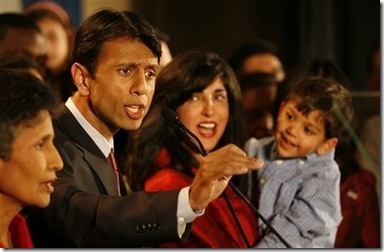
Bobby Jindal is my pick for Secretary of Health and Human Services in 2012, if he isn’t elected President. So remember his name!
American prosperity has always been driven by the steady supply of abundant, affordable energy. Particularly in Alaska, we understand the inherent link between energy and prosperity, energy and opportunity, and energy and security. Consequently, many of us in this huge, energy-rich state recognize that the president’s cap-and-trade energy tax would adversely affect every aspect of the U.S. economy.
There is no denying that as the world becomes more industrialized, we need to reform our energy policy and become less dependent on foreign energy sources. But the answer doesn’t lie in making energy scarcer and more expensive! Those who understand the issue know we can meet our energy needs and environmental challenges without destroying America’s economy.
Job losses are so certain under this new cap-and-tax plan that it includes a provision accommodating newly unemployed workers from the resulting dried-up energy sector, to the tune of $4.2 billion over eight years. So much for creating jobs.
In addition to immediately increasing unemployment in the energy sector, even more American jobs will be threatened by the rising cost of doing business under the cap-and-tax plan. For example, the cost of farming will certainly increase, driving down farm incomes while driving up grocery prices. The costs of manufacturing, warehousing and transportation will also increase.
The ironic beauty in this plan? Soon, even the most ardent liberal will understand supply-side economics.
…The Americans hit hardest will be those already struggling to make ends meet. As the president eloquently puts it, their electricity bills will “necessarily skyrocket.” So much for not raising taxes on anyone making less than $250,000 a year.
Even Warren Buffett, an ardent Obama supporter, admitted that under the cap-and-tax scheme, “poor people are going to pay a lot more for electricity.”
Meh. It’s merely excellent. Somewhat superlative.
Not nearly as good as Michele Bachmann could do, and Michele is conservative on vouchers and illegal immigration, unlikeSarah. See, Sarah writes about supply-side economics once in a while, but Michele gives passionate speeches about supply-side economics every day:
We need to make all of this clear. Cap-and-trade rations energy production, which means there will be less of it for a long time. Alternatives are not ready for the kind of mass production that would allow a complete replacement of energy, and probably won’t be for decades, if ever in some cases (notably wind power, as GreenChoice showed and as T. Boone Pickens finally realized). That means a lower standard of living that will impact America regressively, with the lowest income earners getting hit the hardest. The drain on the economy from high energy prices means less jobs and higher retail prices for goods and services, again a regressive consequence of energy rationing.
Obama and his Utopian allies promise that government will help close the gap by offering more services to the unemployed and the poor at the expense of the “rich”. What will that do? It will further handicap the economy by keeping capital out of the markets. Even worse, it will vastly expand the dependent class in America who have to go on the dole to survive. And many of those ardent liberals will be pretty happy with that outcome, too.
We need to stop this thing. It’s good that Sarah came out against it.

 WINTERY KNIGHT