
This article is from the Christian Post, and I’m blogging about it to warn you all about Facebook, and how to use it.
Story first, though:
A Christian student expelled from England’s Sheffield University because he quoted the Bible’s stance on homosexuality in a Facebook post supportive of controversial Kentucky clerk Kim Davis has lost his appeal.
Felix Ngole, a 38-year-old in his second year of study for a master’s degree in social work at the University of Sheffield in South Yorkshire was told that he is no longer a student at the university after a committee ruled he “may have caused offense to some individuals” by issuing a Facebook post last September quoting Leviticus on the Bible’s condemnation of homosexuality.
Ngole’s post came in defense of Davis, the clerk of Rowan County, Kentucky, who became the center of a media firestorm last year when she refused to allow her office to issue same-sex marriage licenses with her name and title on them because of her religious objection to same-sex marriage.
Although Ngole’s Facebook page is private and can only be seen by his friends, his post was brought to the attention of administrators at the university months later.
Ngole’s future at the university was then subjected to the “Fitness to Practice” committee, which ruled that his conservative Christian beliefs about marriage would negatively impact his “ability to carry out a role as a social worker” and that his post “transgressed boundaries which are not deemed appropriate for someone entering the social work profession.”
The committee ruled that Ngole was to be “excluded from further study on a program leading to a professional qualification.” In late February, the school informed Ngole that he would no longer be recognized as a university student.
“Your student record will be terminated shortly and your library membership and university computer account withdrawn,” Ngole was told. “You may wish to contact your funding body for advice on your financial position.”
That’s actually not such a strange thing, as similar things have happened in the United States. Alliance Defending Freedom has a post up about one case from Eastern Michigan University.

So what’s the solution to this?
Three points:
- Don’t post anything publicly on your Facebook account.
- Don’t use your real name on your Facebook account, use an alias instead.
- Don’t friend everyone who sends you a friend request unless you know them personally and know that they are sympathetic to your views on controversial issues.
Obviously, there are degrees of risk. Someone in an academic environment who doesn’t follow the news about what Christians are facing in different countries is the most at risk, especially compared to working in a private company. Not only are Christians in academia mingling with intolerant secular leftists, but you pay your money up front when you go to school, and getting into another school after being expelled is much harder than finding another job.
I actually have a friend who is a Christian apologist. He writes all about controversial subjects like intelligent design, gay marriage and Islam under his real name. And he friends pretty much anyone who sends him a friend request, including people who disagree with him on controversial issues. He likes to have a lot of friends, although I wouldn’t classify him as someone who invests deeply in other people’s lives. Publishing controversial views under his own name has actually caused him some trouble academically, where he lost a world-class PhD supervisor. And he has ignored all my warnings. Don’t be like that guy. The goal of your life is not to behave recklessly, and then get destroyed before you accomplish anything. The goal of your life is to accomplish a lot over the long term, and pray that the other side never lays a finger on you.
I used to attend an Anglican church in my home town when I was an undergraduate student. The church (St. Alban’s) was a wonderful stone building in the middle of downtown, with a frightfully small parking lot. The pastor (George) was excellent, and I remember many one-off things that he said. But most of all I remember this statement that George got out of the Book of Common Prayer:
O God, from whom all holy desires, all good counsels, and all just works do proceed; Give unto thy servants that peace which the world cannot give; that our hearts may be set to obey thy commandments, and also that by thee, we, being defended from the fear of our enemies, may pass our time in rest and quietness; through the merits of Jesus Christ our Saviour. Amen.
And he would always dismiss us with this blessing:
May the road rise up to meet you.
May the wind be always at your back.
May the sun shine warm upon your face;
the rains fall soft upon your fields
and until we meet again,
may God hold you in the palm of His hand.
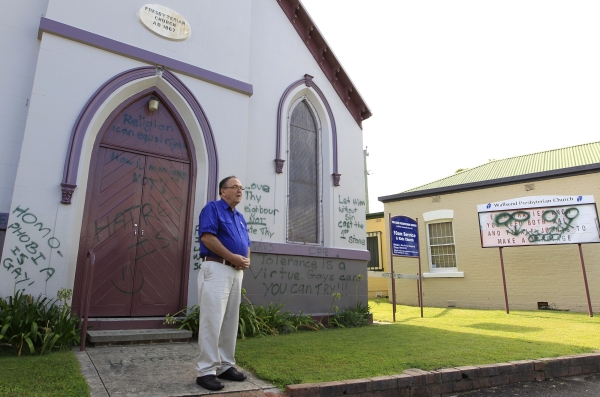
When I was in my early 20s, I used to scoff at this talk of “rest and quietness” and “wind always at your back”. I had already experienced persecution twice by that time – once in the workplace, and once at school. But I thought I was invincible. However, even back then I was tracking the censorship and persecution of Christians in countries like Canada. As time passed, I saw more cases in more countries where the secular left expelled students, got people fired, vandalized churches and private property, put people on trial, and I watched the government fine Christians for offending others with unwelcome speech. The limits on their desire to be praised for sinning disappeared. Every act of coercion became permissible in order to take away the shame and guilt.
Now that things have accelerated out of control, and even the pious pastors in their comfortable churches finally understand that secular leftism is on a collision course with free speech and freedom of religion, I find myself wishing more and more to pass my life in rest and quietness. I was careful to make a difference starting when I was young. But now rest and quietness seems like a wonderful idea as I get older. A word to the wise for you youngsters who think that you will never face persecution. Take it from someone who has faced it: it’s something to be avoided if you can, so long as you can still make a difference.


 WINTERY KNIGHT