Tag Archives: Church Attendance

New study: decline in mainline church attendance linked to progressive theology

Church attendance for progressive denominations in free fall

I’m shocked and delighted to see this new study reported in the Weekly Standard, of all places. I guess everyone has an intuition that conservative churches that focus on the Bible have been growing in attendance. And progressive churches that focus on feelings and peer approval are in decline. But now we have some numbers that link the changes in attendance  to specific theological beliefs.

Excerpt:

A literal reading of scripture and faith in an interventionist God strengthen church attendance. According to a new academic study of what drives a mainline Protestant church to die out or succeed, preaching these two theological precepts makes all the difference.

The forthcoming article, entitled “Theology Matters,” confirms a truth universally acknowledged, or reasonably intuited anyway. The Christ-optional, Gospel-as-metaphor, liberal-progressive mainline Protestantism borne of our secular age keeps so loose a lock on wandering souls that they wander away—choosing boozy brunch, perhaps, over pew-sitting.

The authors, Drs. David Haskell, Kevin Flatt and Stephanie Burgoyne, used five years’ data gathered from 2,255 attendees of Anglican, Lutheran, Presbyterian and United Church of Canada parishes across the province of Ontario. (The United Church of Canada boasts an ongoing, unsurprising self-parody in an atheist minister no one seems to have ginned up the nerve to defrock.)

Approximately half of the authors’ subjects belong to growing parishes within these three mainline denominations, the other half to shrinking ones. Their most striking survey result finds churchgoers at shrinking parishes more doctrinally committed than their ministers.

That’s true about the atheist woman who is leading one of the denominations into decline:

An ordained minister with the United Church of Canada is resisting efforts to oust her from the pulpit because she is an atheist.

“I don’t believe in … the god called God,” Gretta Vosper told the Globe and Mail. “Using the word gets in the way of sharing what I want to share.”

She said that she believes the Bible is “mythology,” and denies that Jesus is the Son of God.

The United Church of Canada has majored in progressive politics . Progressive politics is more important to them than apologetics and theology. From what I’ve read, their ministers are more likely to affirm the writings of progressive atheists like John Dominic Crossan and Marcus Borg as “infallible” than the Christian Scriptures. We have similar problems in the USA with ELCA, PCUSA, ECUSA, and other far left denominations.

Church attendance by denomination, ages 23-35

Mainline Roman Catholicism, which focuses less on the Bible and more on political goals like Obamacare, climate change alarmism and amnesty is also in decline. They are declining faster than any other denomination.

Here’s a quote from the study that breaks down the theology by change in church attendance:

When asked to agree or disagree with the statement “Jesus rose from the dead with a real, flesh-and-blood body leaving behind an empty tomb” 93% of growing church pastors agreed, 83% of growing church attendees agreed, 67% of declining church attendees agreed, and just 56% of declining church pastors agreed.

When asked if “God performs miracles in answer to prayer” 100% of the growing church pastors agreed, 90% of the growing church attendees agreed, 80% of the declining church attendees agreed, and just 44% of the declining church pastors agreed.

I think the problem is that when a minister quotes the Bible and espouses traditional theology, people can sense that this teaching is from God, because it is at odds with their selfish desires. They understand the authenticity of it, because it calls them higher. Progressives like Greta Vosper tell people that their current sinfulness is just fine, since the goal of spirituality is to look inside yourself for guidance so that you feel good. But does sinfulness really deliver results over the long term? We were designed by God for righteousness, not selfishness. I am pretty sure that Jesus knows a little more about human nature than Greta Vosper does.

Consider the words of Daniel 2:

1 In the second year of his reign, Nebuchadnezzar had dreams; his mind was troubled and he could not sleep.

2 So the king summoned the magicians, enchanters, sorcerers and astrologers to tell him what he had dreamed. When they came in and stood before the king,

3 he said to them, “I have had a dream that troubles me and I want to know what it means.”

4 Then the astrologers answered the king, “May the king live forever! Tell your servants the dream, and we will interpret it.”

5 The king replied to the astrologers, “This is what I have firmly decided: If you do not tell me what my dream was and interpret it, I will have you cut into pieces and your houses turned into piles of rubble.

6 But if you tell me the dream and explain it, you will receive from me gifts and rewards and great honor. So tell me the dream and interpret it for me.”

7 Once more they replied, “Let the king tell his servants the dream, and we will interpret it.”

8 Then the king answered, “I am certain that you are trying to gain time, because you realize that this is what I have firmly decided:

9 If you do not tell me the dream, there is only one penalty for you. You have conspired to tell me misleading and wicked things, hoping the situation will change. So then, tell me the dream, and I will know that you can interpret it for me.”

10 The astrologers answered the king, “There is no one on earth who can do what the king asks! No king, however great and mighty, has ever asked such a thing of any magician or enchanter or astrologer.

11 What the king asks is too difficult. No one can reveal it to the king except the gods, and they do not live among humans.”

12 This made the king so angry and furious that he ordered the execution of all the wise men of Babylon.

13 So the decree was issued to put the wise men to death, and men were sent to look for Daniel and his friends to put them to death.

14 When Arioch, the commander of the king’s guard, had gone out to put to death the wise men of Babylon, Daniel spoke to him with wisdom and tact.

15 He asked the king’s officer, “Why did the king issue such a harsh decree?” Arioch then explained the matter to Daniel.

16 At this, Daniel went in to the king and asked for time, so that he might interpret the dream for him.

17 Then Daniel returned to his house and explained the matter to his friends Hananiah, Mishael and Azariah.

18 He urged them to plead for mercy from the God of heaven concerning this mystery, so that he and his friends might not be executed with the rest of the wise men of Babylon.

19 During the night the mystery was revealed to Daniel in a vision. Then Daniel praised the God of heaven

20 and said:

“Praise be to the name of God for ever and ever;
wisdom and power are his.

21 He changes times and seasons;
he deposes kings and raises up others.
He gives wisdom to the wise
and knowledge to the discerning.

22 He reveals deep and hidden things;
he knows what lies in darkness,
and light dwells with him.

23 I thank and praise you, God of my ancestors:
You have given me wisdom and power,
you have made known to me what we asked of you,
you have made known to us the dream of the king.”

24Then Daniel went to Arioch, whom the king had appointed to execute the wise men of Babylon, and said to him, “Do not execute the wise men of Babylon. Take me to the king, and I will interpret his dream for him.”

25 Arioch took Daniel to the king at once and said, “I have found a man among the exiles from Judah who can tell the king what his dream means.”

26 The king asked Daniel (also called Belteshazzar), “Are you able to tell me what I saw in my dream and interpret it?”

27 Daniel replied, “No wise man, enchanter, magician or diviner can explain to the king the mystery he has asked about,

28 but there is a God in heaven who reveals mysteries. He has shown King Nebuchadnezzar what will happen in days to come. Your dream and the visions that passed through your mind as you were lying in bed are these:

29 “As Your Majesty was lying there, your mind turned to things to come, and the revealer of mysteries showed you what is going to happen.

30 As for me, this mystery has been revealed to me, not because I have greater wisdom than anyone else alive, but so that Your Majesty may know the interpretation and that you may understand what went through your mind.

People can see right through progressive “spirituality”. They see that this is man-made humanism designed to make people feel better. They know that this is just one person’s opinion, and not from God. The blind leading the blind, as the Bible says. Greta Vosper isn’t deriving her worldview from a truth-centered investigation of science, history or logic. It’s feelings all the way down, and that’s not useful to people who are looking for objective truth and purpose.
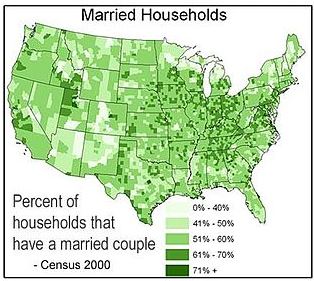
Do atheists have a lower divorce rate than Christians?

Map of marriage rate by state

Here is an article from USA Today that comments on the notion that atheists have a lower divorce rate than Christians.

Excerpt:

It’s been proclaimed from pulpits and blogs for years — Christians divorce as much as everyone else in America.

But some scholars and family activists are questioning the oft-cited statistics, saying Christians who attend church regularly are more likely to remain wed.

“It’s a useful myth,” said Bradley Wright, a University of Connecticut sociologist who recently wrote “Christians Are Hate-Filled Hypocrites … and Other Lies You’ve Been Told.”

“Because if a pastor wants to preach about how Christians should take their marriages more seriously, he or she can trot out this statistic to get them to listen to him or her.”

The various findings on religion and divorce hinge on what kind of Christians are being discussed.

Wright combed through the General Social Survey, a vast demographic study conducted by the National Opinion Research Center at the University of Chicago, and found that Christians, like adherents of other religions, have a divorce rate of about 42%. The rate among religiously unaffiliated Americans is 50%.

When Wright examined the statistics on evangelicals, he found worship attendance has a big influence on the numbers. Six in 10 evangelicals who never attend had been divorced or separated, compared to just 38% of weekly attendees.

[…]Brad Wilcox, director of the National Marriage Project at the University of Virginia, agrees there’s been some confusion.

“You do hear, both in Christian and non-Christian circles, that Christians are no different from anyone else when it comes to divorce and that is not true if you are focusing on Christians who are regular church attendees,” he said.

Wilcox’s analysis of the National Survey of Families and Households has found that Americans who attend religious services several times a month were about 35% less likely to divorce than those with no religious affiliation.

Nominal conservative Protestants, on the other hand, were 20% more likely to divorce than the religiously unaffiliated.

“There’s something about being a nominal ‘Christian’ that is linked to a lot of negative outcomes when it comes to family life,” Wilcox said.

Here’s a quote from an Oklahoma State University study that confirms the Wright and Wilcox conclusions:

History of Divorce and Religious Involvement

Those who say they are more religious are less likely, not more, to have already experienced divorce. Likewise, those who report more frequent attendance at religious services were significantly less likely to have been divorced. This pattern of findings held using various analytic techniques that test which variables differentiate persons who have been divorced from persons who have not been divorced, while controlling for other variables that might affect the interpretation of the data, such as age, age of first marriage, income, and gender. When both the global rating of religiousness and the item assessing fiequency of attendance at religious services are entered into the same analysis, the attendance item remains significantly associated with divorce history but the global religiousness item does not. This suggests that a key aspect of how religious faith affects marital relationships may be through involvement with a community of faith.

So, please do bookmark this information for the next time you hear an atheist make this argument. Obviously, you can’t expect people who are not serious about their religion to be bound by the moral duties imposed by that religion. People who attend church regularly are probably more serious about their religion, and also probably more informed about what their holy book says. If their holy book is the Bible, then there are few options for divorce.

An article from Focus on the Family by Amy Tracy explains when divorce is allowed according to the Bible.

God is very clear, however, that He hates divorce (Malachi 2:16). He also says, “So they are no longer two, but one. Therefore what God has joined together, let man not separate” (Matthew 19:6). According to the New Testament, there are two justifications for divorce: infidelity (Matthew 5:32) and desertion (1 Corinthians 7:15).

So divorce is not something a Bible believing Christian can do for frivolous reasons, unless he wants to be in rebellion against God.

The future of marriage in the church

In my own case, I learned about chastity and sobriety and courting outside the church, and in my case that means that I am still a virgin, that I don’t drink more than a beer a year, and that when I like a girl, I court her. I do think that people in the church are generally more moral than people outside the church, but that’s more because of convention rather than conviction. I don’t think it’s going to last, in other words. Church is not the place where reasons and evidence are given that help people to resist peer pressure when they enter hostile environments, like the university. And often, parents are too busy working to understand the issues and communicate them to their children.

I’ve never been in a church where they explained the hormones that are released during sex that cause you to bond to the person you’re having sex with. You would have to look in books or listen to lectures in order to understand the problem with having sex with someone you are not committed to – how it causes you to hold back your emotions for fear of a break-up. The church doesn’t have much to say about the social effects of single motherhood by choice or the effects of gay parenting on children. Nor do they have any positive vision to offer men about how they can serve God by marrying carefully.

Christians who participate in a church community will adopt some of these values, especially if they stay clear of popular culture, the university, etc. Especially if they don’t work in a very secular environment, like a high-tech company or in Hollywood. But unless Christian communities get serious about grounding their values in evidence, I wouldn’t expect this situation to go on, and you can already see young people falling away from church in record numbers when they get to university as a result of this refusal to engage. We’re doing well now, but we should move to secure our gains.

Sociologist Rodney Stark discusses whether religion is good for society

Let's take a look at the data
Let’s take a look at the data

Mysterious Chris S. posted this interview with Baylor University sociologist / historian Rodney Stark.

About Rodney Stark:

Rodney Stark grew up in Jamestown, North Dakota, and began his career as a newspaper reporter. Following a tour of duty in the U.S. Army, he received his Ph.D. from the University of California, Berkeley, where he held appointments as a research sociologist at the Survey Research Center and at the Center for the Study of Law and Society. He left Berkeley to become Professor of Sociology and of Comparative Religion at the University of Washington. In 2004 he joined the faculty of Baylor University. He has published 30 books and more than 140 scholarly articles on subjects as diverse as prejudice, crime, suicide, and city life in ancient Rome. However, the greater part of his work has been on religion. He is past president of the Society for the Scientific Study of Religion and of the Association for the Sociology of Religion. He also has won a number of national and international awards for distinguished scholarship. Many of his books and articles have been translated and published in foreign languages, including Chinese, Dutch, French, German, Greek, Indonesian, Italian, Japanese, Polish, Portuguese, Romanian, Spanish, and Turkish.

Education:

  • B.A. University of Denver, 1959, Journalism.
  • M.A. University of California, Berkeley, 1965, Sociology.
  • Ph.D. University of California, Berkeley, 1971, Sociology.

I don’t count sociologists as non-STEM, since they have to know statistics, which is math. Anyway, onto the interview.

Excerpt:

Q: After examining hundreds of relevant studies, what’s the biggest misconception you’ve found about the typical religious believer?

Rodney Stark: Even some leading evangelical scholars take it for granted that religious Americans are lacking in appreciation for “high culture,” for music, art, literature, and the like. Nothing could be further from the truth. The more often Americans attend religious services, the more likely they are to read newspapers, poetry, novels, and to admire writers. The same applies to liking classical music, to attending symphony concerts, operas, and stage plays, and to dislike rock ‘n roll.

Q: Some recent books, like Christopher Hitchens’ God Is Not Great, suggest that “religion poisons everything.” But your book indicates that religious belief offers society many tangible benefits. What are some of these benefits?

Rodney Stark: Religious Americans are more law abiding, have superior mental and physical health, are far more generous vis-à-vis charities, have much better family life, are more successful, and religious couples even have more satisfactory sex lives!

Q: In the book’s Conclusion you look at religion’s effect on many areas of society—crime, schooling, health, employment, welfare—and you determine that, by a conservative estimate, religion saves America over $2.6 trillion each year. What are some of the biggest contributors to this savings?

Rodney Stark: The biggest by far has to do with the criminal justice system. If all Americans committed crimes at the same level as those who do not attend religious services, the costs of the criminal justice system would about double to, perhaps, $2 trillion annually. Second is health costs. The more often people attend religious services, the healthier they are. However, the net savings involved is reduced somewhat by the fact that religious Americans live, on average, seven years longer than those who never attend religious services.

Previously, I noted how people who attend church or synagogue have much better marriage stability than atheists.

Let’s just review that with some research done by W. Bradford Wilcox:

Married couples who attend church together tend to be happier than couples who rarely or never attend services, according to sociologist W. Bradford Wilcox of the University of Virginia.

Using three nationally representative surveys – the General Social Survey (GSS), the National Survey of Families and Households (NSFH), and the National Survey of Family Growth (NSFG) – Wilcox found that married church-going Americans across denominational and racial classifications were more likely to describe themselves as “very happy” than their non-religious counterparts.

Couples who attended church regularly were also less likely to divorce than couples who seldom attended church services, Wilcox found.

“Attending church only seems to help couples when they attend together,” Wilcox told Cybercast News Service. “But when they do, they are significantly happier in their marriages, and they are much less likely to divorce, compared to couples who do not attend church. I would say that church attendance is a beneficial component of marriage when it is done together.”

Wilcox explained that regular church attendance offers certain positive benefits to a married couple: “Churches supply moral norms like sexual fidelity and forgiveness, family-friendly social networks that lend support to couples facing the ordinary joys and challenges of married life, and a faith that helps couples make sense of the difficulties in their lives-from unemployment to illness-that can harm their marriages.”

“So, in a word, the couple that prays together stays together,” said Wilcox.

[…]”Men and women who hold a religious faith and put that faith into practice by attending church on a regular basis do look different in the marital realm,” Wilcox said.

“At least in the marriage arena, faith alone doesn’t work. You’ve got to combine faith and works to enjoy a happy and stable marriage. You need the consistent message, the accountability, and the support a church community can provide to really benefit from religious faith,” he added.

This Wall Street Journal article from a while back, entitled “Look Who’s Irrational Now” argues that atheists are less skeptical than believers.

Excerpt:

The reality is that the New Atheist campaign, by discouraging religion, won’t create a new group of intelligent, skeptical, enlightened beings. Far from it: It might actually encourage new levels of mass superstition. And that’s not a conclusion to take on faith — it’s what the empirical data tell us.

“What Americans Really Believe,” a comprehensive new study released by Baylor University yesterday, shows that traditional Christian religion greatly decreases belief in everything from the efficacy of palm readers to the usefulness of astrology. It also shows that the irreligious and the members of more liberal Protestant denominations, far from being resistant to superstition, tend to be much more likely to believe in the paranormal and in pseudoscience than evangelical Christians.

The Gallup Organization, under contract to Baylor’s Institute for Studies of Religion, asked American adults a series of questions to gauge credulity. Do dreams foretell the future? Did ancient advanced civilizations such as Atlantis exist? Can places be haunted? Is it possible to communicate with the dead? Will creatures like Bigfoot and the Loch Ness Monster someday be discovered by science?

The answers were added up to create an index of belief in occult and the paranormal. While 31% of people who never worship expressed strong belief in these things, only 8% of people who attend a house of worship more than once a week did.

Even among Christians, there were disparities. While 36% of those belonging to the United Church of Christ, Sen. Barack Obama’s former denomination, expressed strong beliefs in the paranormal, only 14% of those belonging to the Assemblies of God, Sarah Palin’s former denomination, did. In fact, the more traditional and evangelical the respondent, the less likely he was to believe in, for instance, the possibility of communicating with people who are dead.

[…]Surprisingly, while increased church attendance and membership in a conservative denomination has a powerful negative effect on paranormal beliefs, higher education doesn’t. Two years ago two professors published another study in Skeptical Inquirer showing that, while less than one-quarter of college freshmen surveyed expressed a general belief in such superstitions as ghosts, psychic healing, haunted houses, demonic possession, clairvoyance and witches, the figure jumped to 31% of college seniors and 34% of graduate students.

And naturally, studies show that religious people are both more generous than their secular counterparts.