Mike Licona is one of my favorite Christian historians, and so I’m going to rely on him to answer the questions in this post. He explains why the four biographies in the New Testament should be accepted as historically accurate: (55 minutes)
Summary:
What a Baltimore Ravens helmet teaches us about the importance of truth
What happens to Christians when they go off to university?
The 2007 study on attitudes of American professors to evangelical Christians
Authors: Who wrote the gospels?
Bias: Did the bias of the authors cause them to distort history?
Contradictions: What about the different descriptions of events in the gospels?
Dating: When were the gospels written?
Eyewitnesses: Do the gospel accounts go back to eyewitness testimony?
This is basic training for Christians. They ought to show this lecture whenever new people show up, because pastors should not quote the Bible until everyone listening has this information straight.
Dr. Licona has a new book on the differences between the gospels coming out with Oxford University Press in 2016 (I just found out!), and so I thought it would be a good idea to re-post a lecture featuring the man himself.
He tweeted this about the new book:
The manuscript for my new book pertaining to why there are differences in the Gospels is almost complete and is scheduled to be published by Oxford University Press sometime in 2016. This book will reflect my research in Plutarch during the past 7.5 years.
I’m excited! Will definitely get this! Oxford is the most prestigious academic press, so it must be good.
Of the 20 major media outlets studied, 18 scored left of center, with CBS’ “Evening News,” The New York Times and the Los Angeles Times ranking second, third and fourth most liberal behind the news pages of The Wall Street Journal.
Only Fox News’ “Special Report With Brit Hume” and The Washington Times scored right of the average U.S. voter.
The most centrist outlet proved to be the “NewsHour With Jim Lehrer.” CNN’s “NewsNight With Aaron Brown” and ABC’s “Good Morning America” were a close second and third.
“Our estimates for these outlets, we feel, give particular credibility to our efforts, as three of the four moderators for the 2004 presidential and vice-presidential debates came from these three news outlets — Jim Lehrer, Charlie Gibson and Gwen Ifill,” Groseclose said. “If these newscasters weren’t centrist, staffers for one of the campaign teams would have objected and insisted on other moderators.”
The fourth most centrist outlet was “Special Report With Brit Hume” on Fox News, which often is cited by liberals as an egregious example of a right-wing outlet. While this news program proved to be right of center, the study found ABC’s “World News Tonight” and NBC’s “Nightly News” to be left of center. All three outlets were approximately equidistant from the center, the report found.
“If viewers spent an equal amount of time watching Fox’s ‘Special Report’ as ABC’s ‘World News’ and NBC’s ‘Nightly News,’ then they would receive a nearly perfectly balanced version of the news,” said Milyo, an associate professor of economics and public affairs at the University of Missouri at Columbia.”
The programming studied on Fox News offered a somewhat more positive picture… of Republicans and more negative one of Democrats compared with other media outlets. Fox News stories about a Republican candidate were most likely to be neutral (47%), with the remainder more positive than negative (32% vs. 21% negative). The bulk of that positive coverage went to Giuliani (44% positive), while McCain still suffered from unflattering coverage (20% positive vs. 35% negative).
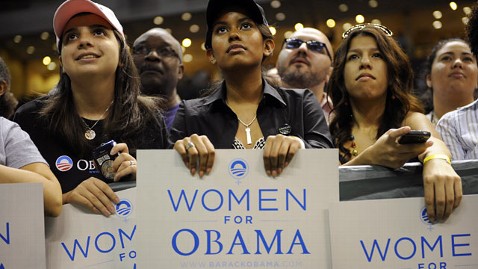
When it came to Democratic candidates, the picture was more negative. Again, neutral stories had a slight edge (39%), followed by 37% negative and 24% positive. And, in marked contrast from the rest of the media, coverage of Obama was twice as negative as positive: 32% negative vs. 16% positive and 52% neutral.
But any sense here that the news channel was uniformly positive about Republicans or negative about Democrats is not manifest in the data.”
Senior executives, on-air personalities, producers, reporters, editors, writers and other self-identifying employees of ABC, CBS and NBC contributed more than $1 million to Democratic candidates and campaign committees in 2008, according to an analysis by The Examiner of data compiled by the Center for Responsive Politics.
The Democratic total of $1,020,816 was given by 1,160 employees of the three major broadcast television networks, with an average contribution of $880.
By contrast, only 193 of the employees contributed to Republican candidates and campaign committees, for a total of $142,863. The average Republican contribution was $744.
[…]The data on contributions by broadcast network employees was compiled by CRP at the request of The Examiner and included all 2008 contributions by individuals who identified their employer as one of the three networks or subsidiaries. The data does not include contributions by employees of the three networks who did not identify their employer.
The CRP is the organization behind OpenSecrets.org, the web site that for more than a decade has put campaign finance data within reach of anybody with an Internet connection.
President Obama received 710 such contributions worth a total of $461,898, for an average contribution of $651 from the network employees. Republican presidential nominee Sen. John McCain received only 39 contributions totaling $26,926, for an average donation of $709.
MSNBC.com identified 143 journalists who made political contributions from 2004 through the start of the 2008 campaign, according to the public records of the Federal Election Commission. Most of the newsroom checkbooks leaned to the left: 125 journalists gave to Democrats and liberal causes. Only 16 gave to Republicans. Two gave to both parties.
The donors include CNN’s Guy Raz, now covering the Pentagon for NPR, who gave to Kerry the same month he was embedded with U.S. troops in Iraq; New Yorker war correspondent George Packer; a producer for Bill O’Reilly at Fox; MSNBC TV host Joe Scarborough; political writers at Vanity Fair; the editor of The Wall Street Journal’s weekend edition; local TV anchors in Washington, Minneapolis, Memphis and Wichita; the ethics columnist at The New York Times; and even MTV’s former presidential campaign correspondent.
A 2008 survey by the Pew Research Center asked media consumers three questions: which party was in control of Congress (Democrats), who was the secretary of state (Condi Rice) and who was the prime minister of Britain (Gordon Brown).
Let’s document how the viewers of “Hannity & Colmes” were better informed than Stewart’s “Daily Show” gigglers on basic political facts. Hannity viewers beat Stewart’s on the Democratic majority (84 percent to 65 percent correct answers), Condi Rice (a dramatic 73 percent to 48 percent gap) and Gordon Brown (49 percent to 36). Overall, as a percentage getting all three questions right, Hannity won 42-30.
Just keep that in mind when you are watching the mainstream media news shows. A very good site to bookmark and read is Newsbusters, which documents mainstream media bias daily.
Dr. George Yancey did a presentation at the Reasonable Faith group at UT Dallas.
Here’s the lecture: (40 minutes)
About the speaker:
Dr. George Yancey is a Professor of Sociology at the University of North Texas. He is the author of Christian works such as One Body, One Spirit: Principles of Successful Multiracial Churches (InterVarsity Press), Beyond Racial Gridlock: Embracing Mutual Responsibility (InterVarsity Press), co-author of United by Faith: The Multiracial Congregation as an Answer to the Problem of Race (Oxford University Press) and co-author of Transcending Racial Barriers (Oxford University Press). He has also authored several research articles on the topics of interracial marriage and multiracial churches. Along those lines he is also the author of Multiracial Families (Routledge) which explores the current literature on different aspects of interracial families and Neither Jew Nor Gentile (Oxford University Press) which explores racial issues on Protestant college campuses.
His BS and MS are in economics. His PhD is in sociology.
Summary of the lecture:
Is discrimination against Christians real?
Which groups draw the most animosity?
What are the characteristics of those who most oppose conservative Christians?
What do cultural progressives think about conservative Christians?
Is the animosity against conservative Christians reasonable, or is it hatred / fear?
What kinds of stereotypes dominate animosity towards Christians?
Does animosity towards Christians affect hiring decisions in academia?
Why is the problem of Christianophobia not being addressed?
I was thinking about this lecture, and I was thinking, what would I do if I ran into one of these people who were really angry with me and wanted to feed me to lions, gas me, or murder me in other nasty ways. And I guess my only answer would be to speak to them and have them defend their beliefs without allowing them to pigeonhole me with a label. Maybe just focus on one particular issue like media bias or the origin of the universe, and try to focus on evidence rather than state my conclusion. Come to think of it, if you can name people on both sides and give evidence for both sides, that seems to work really well.
The more secular and left-wing the opponent, the more you have to stick with discussing ONLY evidence, and never say your view. So, you can say “how do you work this cosmic microwave background radiation in with your worldview?” but you can’t say, “I’m a conservative evangelical Christian, and you should come to church with me”. The secular progressives seem to be very concerned that Christians vote blindly for political leaders that restrict their freedoms, so again, don’t talk about policies, talk about the reasons on both sides for those policies. For example, do this “what is the morally significant difference between an unborn human and a born human that confers a right to life?” rather than “I’m pro-life and you should be pro-life too, or I’ll put you in jail”.
I have had conversations with people on the secular left who could not name a single reason for any of my beliefs. For example, gun ownership – they had no idea that people own guns for self-defense. Or capital punishment – they had no idea that there is a deterrent effect on other people contemplating violence crimes. They simply cannot express the view of their opponents or the reasons why their opponents hold those views. Maybe that’s partly their fault for being lazy and insular, but it might also be our fault, too, for not knowing the reasons. I know that when I explain the reasons to them (on both sides) and say that this is the evidence that needs to be debated, then they do often calm down. I think that their perception that we are irrational and faith-based scares them.
I think it’s a good idea to become aware of what the research says about secular progressive attitudes towards Christians so that we know how to act around them to avoid setting them off. When you are dealing with people who have this extreme hatred of you, you probably want to chip away at them rather than just be who you are right up front. There doesn’t seem to be a lot of tolerance here, which is so strange coming from the crowd that talks the most about tolerance. We are the only ones who they think it’s ok to fire, fine, imprison, etc.

 WINTERY KNIGHT