Tag Archives: Atheists

New study: belief in free will linked to ability to behave morally and to help others

Is it possible to choose to be moral if we are machines made out of meat?

A while back I finished reading “God’s Crime Scene”, the new book by J. Warner Wallace. I wanted to post something about some studies he mentioned in Chapter 6, on free will. This is one of the places where he found evidence in a surprising area.

Wallace says that free will makes more sense if theism is true, because we have non-material souls that interact with our bodies, but are not causally determined by them. On atheism, only matter exists, and you can’t get free will (or consciousness) from matter. So atheists like Sam Harris and Alex Rosenberg, for example, deny free will, because they are materialists and atheists.

Anyway, here’s what he writes on p. 256:

In 2008, researchers from the University of Minnesota and the University of British Columbia conducted experiments highlighting the relationship between a belief in determinism and immoral behavior. They found students who were exposed to deterministic literature prior to taking a test were more likely to cheat on the test than students who were not exposed to literature advocating determinism. The researchers concluded those who deny free will are more inclined to believe their efforts to act morally are futile and are, therefore, less likely to do so.

In addition, a study conducted by researchers from Florida State University and the University of Kentucky found participants who were exposed to deterministic literature were more likely to act aggressively and less likely to be helpful toward others.” Even determinist Michael Gazzaniga conceded: “It seems that not only do we believe we control our actions, but it is good for everyone to believe it.”” The existence of free will is a common characteristic of our experience, and when we deny we have this sort of free agency, there are detrimental consequences.

I decided to look up these studies.

Here’s the abstract for first study: (2008)

Does moral behavior draw on a belief in free will? Two experiments examined whether inducing participants to believe that human behavior is predetermined would encourage cheating. In Experiment 1, participants read either text that encouraged a belief in determinism (i.e., that portrayed behavior as the consequence of environmental and genetic factors) or neutral text. Exposure to the deterministic message increased cheating on a task in which participants could passively allow a flawed computer program to reveal answers to mathematical problems that they had been instructed to solve themselves. Moreover, increased cheating behavior was mediated by decreased belief in free will. In Experiment 2, participants who read deterministic statements cheated by overpaying themselves for performance on a cognitive task; participants who read statements endorsing free will did not. These findings suggest that the debate over free will has societal, as well as scientific and theoretical, implications.

And the abstract for the second study: (2009)

Laypersons’ belief in free will may foster a sense of thoughtful reflection and willingness to exert energy, thereby promoting helpfulness and reducing aggression, and so disbelief in free will may make behavior more reliant on selfish, automatic impulses and therefore less socially desirable. Three studies tested the hypothesis that disbelief in free will would be linked with decreased helping and increased aggression. In Experiment 1, induced disbelief in free will reduced willingness to help others. Experiment 2 showed that chronic disbelief in free will was associated with reduced helping behavior. In Experiment 3, participants induced disbelief in free will caused participants to act more aggressively than others. Although the findings do not speak to the existence of free will, the current results suggest that disbelief in free will reduces helping and increases aggression.

So what to make of this?

If you’re an atheist, then you are a physical object. And like every other physical object in the universe, your behavior is determined by genetic programming (if you’re alive) and external inputs. Material objects do not have the ability to make free choices, including moral choices.

Here’s prominent atheist Jerry Coyne’s editorial in USA Today to explain why atheists can’t ground free will.

Excerpt:

And that’s what neurobiology is telling us: Our brains are simply meat computers that, like real computers, are programmed by our genes and experiences to convert an array of inputs into a predetermined output. Recent experiments involving brain scans show that when a subject “decides” to push a button on the left or right side of a computer, the choice can be predicted by brain activity at least seven seconds before the subject is consciously aware of having made it. (These studies use crude imaging techniques based on blood flow, and I suspect that future understanding of the brain will allow us to predict many of our decisions far earlier than seven seconds in advance.) “Decisions” made like that aren’t conscious ones. And if our choices are unconscious, with some determined well before the moment we think we’ve made them, then we don’t have free will in any meaningful sense.

Atheist William Provine says atheists have no free will, no moral accountability and no moral significance:

Let me summarize my views on what modern evolutionary biology tells us loud and clear — and these are basically Darwin’s views. There are no gods, no purposes, and no goal-directed forces of any kind. There is no life after death. When I die, I am absolutely certain that I am going to be dead. That’s the end of me. There is no ultimate foundation for ethics, no ultimate meaning in life, and no free will for humans, either.

(Source)

If you don’t have free will, then you can’t make moral choices, and you can’t be held morally responsible. No free will means no morality. Can you imagine trying to get into any sort of enterprise with someone who has this view of moral choices? A marriage, or a business arrangement, etc? It would be crazy to expect them to behave morally, when they don’t even think that moral choices is possible. It just excuses all sorts of bad behavior, because no one is responsible for choosing to do the right thing.

Believers in materialism are going to struggle with prescriptive morality, including self-sacrificial care and concern for others. Their worldview undermines the rationality of the moral point of view. You might find atheists acting morally for their own purposes, but their worldview doesn’t rationally ground it. This is a big problem for people who can see objective morality woven into the universe – and themselves – because they have the awareness of objective right and wrong.

Choosing to do the right thing

I think what atheists like to say is “I can be moral, too”. That’s not interesting. What is interesting is whether it is rational for you to be moral when doing the right thing sets you back. When I look at the adultery of Dawkins, the polyamory of Carrier, the divorces of Shermer and Atkins, etc. I am not seeing anything that really wows me about their ability to do the right thing when it was hard for them to do it. They all deny free will of course, and think that trying to resist temptation is a waste of time.

Wallace explains how the awareness of free will and moral choices caused him to turn away from atheism, in this blog post.

He writes:

As an atheist, I chose to cling to naturalism, in spite of the fact that I lived each day as though I was capable of using my mind to make moral choices based on more than my own opinion. In addition, I sought meaning and purpose beyond my own hedonistic preferences, as though meaning was to be discovered, rather than created. I called myself a naturalist while embracing three characteristics of reality that simply cannot be explained by naturalism. As a Christian, I’m now able to acknowledge the “grounding” for these features of reality. My philosophical worldview is consistent with my practical experience of the world.

I think atheists who want to be honest about their own experience of first-person consciousness, free will, moral realism, etc. will do well to just accept that theism rationally grounds all of these things, and so you should accept theism. Theism is real. If you like morality, and want to be a virtuous person, then you should accept theism.

William Lane Craig answers: how can the four gospels be independent sources?

Investigation in progress

Previously, I blogged about the historical criteria that historians use to evaluate documents. One of the criteria is “multiple independent sources”. If a story is reported in multiple independent sources, then historians are more likely to evaluate it as historically accurate. But how about the four gospels? Are they independent sources? The answer might not be what you expect.

Here’s how the question was put to Dr. Craig:

The latest video, “Did Jesus Rise From the Dead,” is especially compelling, but I had a question about it. In the part one video, you cite as evidence, the Gospels plus Acts and First Corinthians and you refer to them as “independent” and “unconnected” sources. But this isn’t exactly true, is it? After all, two of these books were written by the same author, Luke, and so Luke and Acts are connected by authorship. Furthermore, isn’t it true that much information relayed in Matthew and Luke were taken from Mark? This two facts would make it untrue to call the Gospels “independent” and “unconnected” would they not?

Here’s the video he’s talking about:

Dr. Craig answers the question in his latest question of the week. I think this answer is important for those who aren’t aware of how the gospels are organized.

He writes:

The objection is based on a simple misunderstanding. It assumes that the sources I’m referring to are the books of the New Testament.  But that’s not what I’m talking about.

New Testament critics have identified a number of sources behind the New Testament, sources on which the New Testament authors drew. For example, Matthew and Luke drew not only upon Mark as a source but also upon a source which scholars designate “Q,” which appears to have been a source containing Jesus’ sayings or teachings. Thus, if you could show that a saying in Matthew or Luke appears in both Mark and Q, that would count as multiple, independent attestation.

What does this mean? It means that although there is overlap between Matthew and Luke, called “Q”, there are actually three independent sources there: Matthew’s source, called M. Luke’s source, called L. And the material common to Matthew and Luke, which therefore PRE-DATES Matthew and Luke, called Q.

Dr. Craig lists out several independent sources in his full reply:

  1. the pre-Markan Passion story used by Mark
  2. the rest of the gospel of Mark has a source
  3. Matthew’s source (M)
  4. Luke’s source (L)
  5. John’s gospel which is very different from Mark, Luke and Matthew
  6. the sermons in Acts have a source
  7. the early creed found in Paul’s 1 Corinthians 15

So if you are trying to lay out something from the New Testament, and you can find it in two of these sources, and at least one of them is very early, you’re in pretty good shape.

Although the questioner and the other critics might question the “minimal facts” that pass the historical tests, many of these facts are not questioned by even atheistic scholars.

Here’s a useful tip for non-professionals who want to disagree with Dr. Craig. Dr. Craig publishes his arguments in academic presses like Oxford University Press, not to mention scholarly peer-reviewed journals. He’s also debated his ideas against famous atheist historians like Gerd Ludemann, Marcus Borg, James Crossley, Bart Ehrman, etc. So it’s probably a good idea for people who want to disagree with him to first read some academic literature, or at least ask a professional. Before you post your YouTube video. You could even just ask a professional atheist historian. They will tell you what’s wrong with an argument like your “the sources are not independent” argument. Just check yourself before you post something in public. A lot of people who are still puzzling out these questions will look at a mistake like this, and immediately dismiss atheism as a sloppy, anti-intellectual worldview.

You can watch more of Dr. Craig’s videos in his playlist, here. These are especially useful for people who want to get the overall scope of the battlefield before deciding where to focus in study. Everybody should know about all of these arguments regardless of where you choose to specialize.

Second black man found dead at home of wealthy LGBT Democrat megadonor

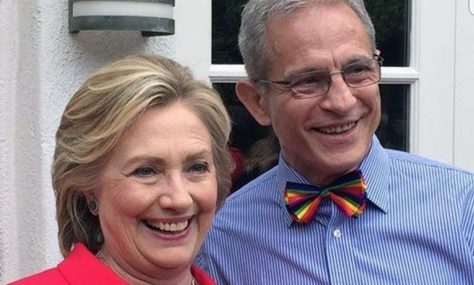
Wealthy Democrat Ed Buck and wealthy Democrat Hillary Clinton
Wealthy Democrat donor Ed Buck and wealthy Democrat Hillary Clinton

I’m not going to have a lot to say about this as commentary, because I just want to stick with the facts. Please be restrained with your comments.

Story from Fox News:

A man died early Monday at the West Hollywood home of prominent Democratic donor Ed Buck, his attorney confirmed to Fox News — 17 months after a male escort died in the same apartment.

[…]Buck, a well-known figure in LGBT political circles, has given more than $500,000 to a range of Democratic groups and candidates — including former President Barack Obama, former Secretary of State Hillary Clinton and Los Angeles Mayor Eric Garcetti.

In July of last year, prosecutors declined to file charges against Buck in the death of Gemmel Moore, a male escort whose body was found in Buck’s apartment in July 2017. According to a coroner’s report, Buck’s apartment was full of drug paraphernalia, including 24 syringes containing brown residue, five glass pipes with white residue and burn marks, a plastic straw with possible white residue, clear plastic bags with white powdery residue and a clear plastic bag containing a piece of crystal-like substance.

Moore’s death initially was ruled an accidental methamphetamine overdose, but the Los Angeles County Sheriff’s Office re-opened the investigation after writings in Moore’s journal implicated Buck in his drug use.

The well-known pro-LGBT web site The Advocate reported that the second man was also a young black man. And they had more about the diaries of the first victim:

“I’ve become addicted to drugs and the worst one at that,” Moore wrote in his journal in December 2016. “Ed Buck is the one to thank. He gave me my first injection of crystal meth.”

[…]Community activists like Jasmyne Cannick have accused Los Angeles officials of declining to prosecute Buck in 2017 thanks to his contributions to powerful politicians such as Hillary Clinton, California Gov. Jerry Brown, L.A. Mayor Eric Garcetti, and numerous West Hollywood City Council members.

The Advocate reported that the second death is also the result of an overdose of drugs.

Not the first time

This is not the first time that a wealthy LGBT Democrat has gotten himself into trouble.

The far-left New York Times reports:

The mayor of Seattle, Ed Murray, said on Tuesday that he would resign after announcing in May that he would not seek a second term. Several men have comeforward to accuse Mr. Murray of sexually abusing them decades ago, when they were underage.

The announcement came just hours after The Seattle Times published a story with an account by a fifth man, Mr. Murray’s cousin, who said Mr. Murray had abused him in the 1970s.

[..]Mr. Murray, 62, a Democrat, is the city’s first openly gay mayor, and had served in the State Legislature for many years before being elected in 2013.

[…]The liberal Mr. Murray is generally considered a father of Washington’s same-sex marriage law, which he pressed in the State Legislature for years.

The radically-leftist New York Times isn’t about to tell you what this Democrat gay-marriage activist actually did – that’s not news that’s fit to print. For that you have to go to Life Site News.

This happens a lot

Here’s another story from the far-left CNN, of all places. Headline: “Obama backer, Democratic fundraiser Terry Bean charged in sexual abuse case”.

Excerpt:

A prominent supporter of President Barack Obama and co-founder of the Human Rights Campaign was arrested last week on charges of sodomy and sexual abuse related to what authorities said was an encounter with a juvenile male.

Terrence Bean, 66, a major Democratic donor and a celebrated gay-rights activist, was indicted on two felony charges of sodomy and a misdemeanor count of sexual abuse by a grand jury and arrested in Oregon Wednesday, according to a statement from the Portland Police Bureau.

[…]The charges relate to an alleged encounter the two had with a 15-year-old boy in Oregon last year, The Oregonian reported.

[…]Bean, a real-estate developer and co-founder of the Gay and Lesbian Victory Fund and the Human Rights Campaign, is a powerful figure in Democratic politics.

The Oregonian reported that he helped raise more than half a million dollars for Obama’s 2012 re-election campaign, and Federal Election Commission records show he’s contributed thousands to Democrats, including former Secretary of State Hillary Clinton, Senate Majority Leader Harry Reid and others.

Photos posted online show him with the Obamas, House Minority Leader Nancy Pelosi and aboard Air Force One with the President.

In remarks at a 2009 Human Rights Campaign dinner, President Obama thanked Bean, calling him a “great friend and supporter.”

Again, a reminder to be careful with your comments. This is not the sort of content that the tech leaders at Google, Apple, Facebook, Twitter, YouTube, etc. want to see, so we have to be careful to stick to the facts.